







In the winter of 2025, my friends and I started a cult. We called it the Shattered Way, having broken off from a larger cult called the Path of Echoes. Our goal was to commune with the ghosts that had haunted the city of Doskvol since the Gates of Death broke open a thousand years ago. The spirit of the Gates, whom we called Thanata, had appeared to each of us, calling upon us to help her lost souls return home. We set up shop in an abandoned cathedral and have since been hard at work acquiring resources and building our street cred. Of course, as is typical of Doskvol, such work generally includes lying, cheating, stealing, and more than a few violent skirmishes.
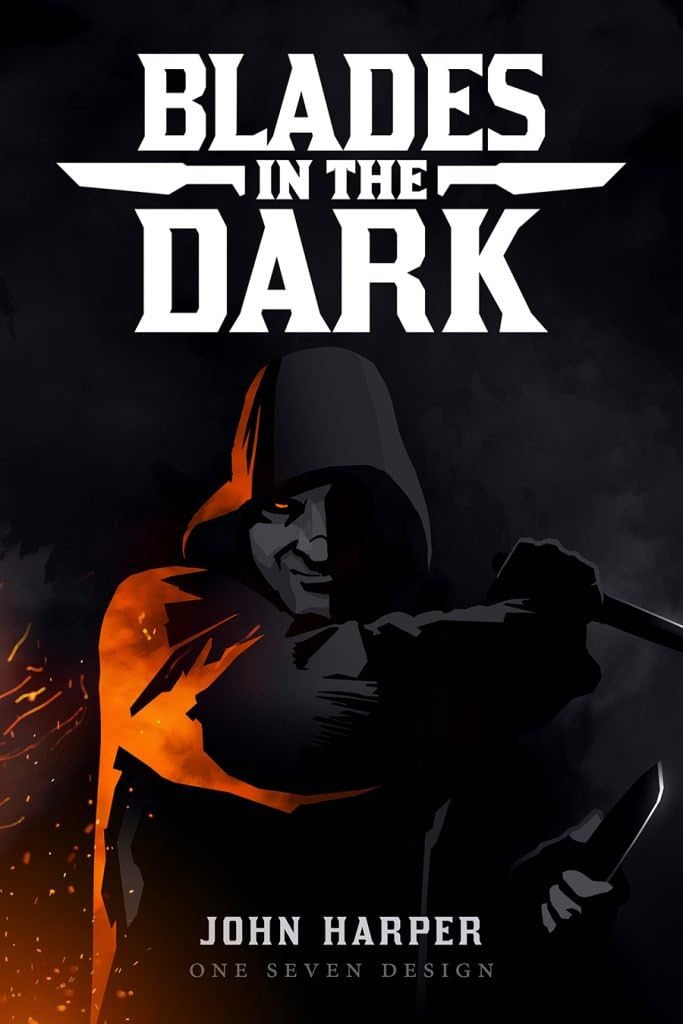
At this point, you’re probably wondering what on earth I’m talking about — or maybe you’ve already caught on. I confess: the Shattered Way isn’t a real cult. It’s the setup for our Blades in the Dark campaign.
TTRPGs: A Crash Course
Created in 2017, Blades in the Dark has since become one of the most beloved tabletop role-playing games, or TTRPGs. It’s not hard to see why: the world of Doskvol is rich with lore and narrative potential, teeming with spirits and scoundrels. (If you’re a Six of Crows fan, you’ll find a lot to enjoy.)
I’m far from a TTRPG expert, but Blades isn’t my first rodeo. Before the cult, under the guidance of our wonderful game master (GM), Joshua, we were searching for the Avatar. Our motley crew of benders and runaways scoured the Earth Kingdom and the Southern Water Tribe with Azulon, Crown Prince of the Fire Nation, hot on our heels. And before that, like many people, I cut my teeth on Dungeons & Dragons sessions orchestrated by various friends. These sessions were our way of staying connected, first through COVID and then after graduation. (Ironically, as of writing this, I have never played a TTRPG at an actual tabletop. All the campaigns I’ve participated in have been conducted over Zoom or Discord.)
Many different TTRPG systems exist, and though the mechanics can vary between them, you’ll generally see some common elements. First, campaigns are typically organized by a game master, or GM (dungeon master/DM for D&D). The GM oversees gameplay, narrates the story, keeps track of game rules, and acts as all the non-player characters, or NPCs. The other players each take on the role of a character within the game — the player characters, or PCs. Character building is probably my favorite part of the process. You and your fellow players each come to the table with different backstories, skill sets, personalities, and even vices. Half the fun of any campaign is discovering how your characters mesh — or clash.
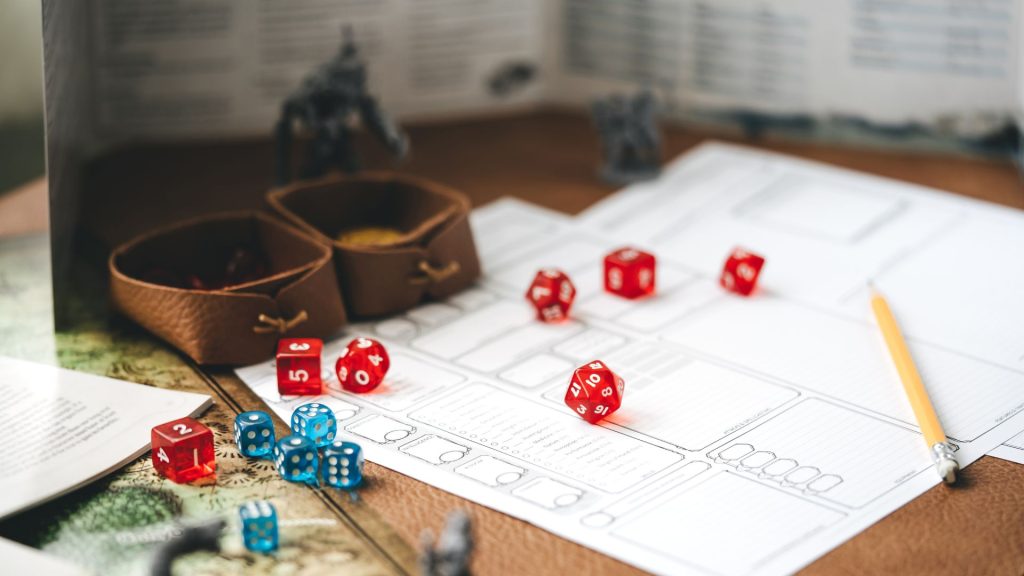
Another core element of many TTRPGs is chance, usually determined by dice rolls. Players and GMs use dice rolls to determine how successful an action is, as well as how much damage you might cause — or take. Certain qualities your character has — strengths, weaknesses, experience, or even physical traits — can affect your chances of success. One bad roll could take your character out of the game for good. Improvising around this unpredictability helps keep the game spontaneous and exciting, allowing the players to take the story in unexpected directions.
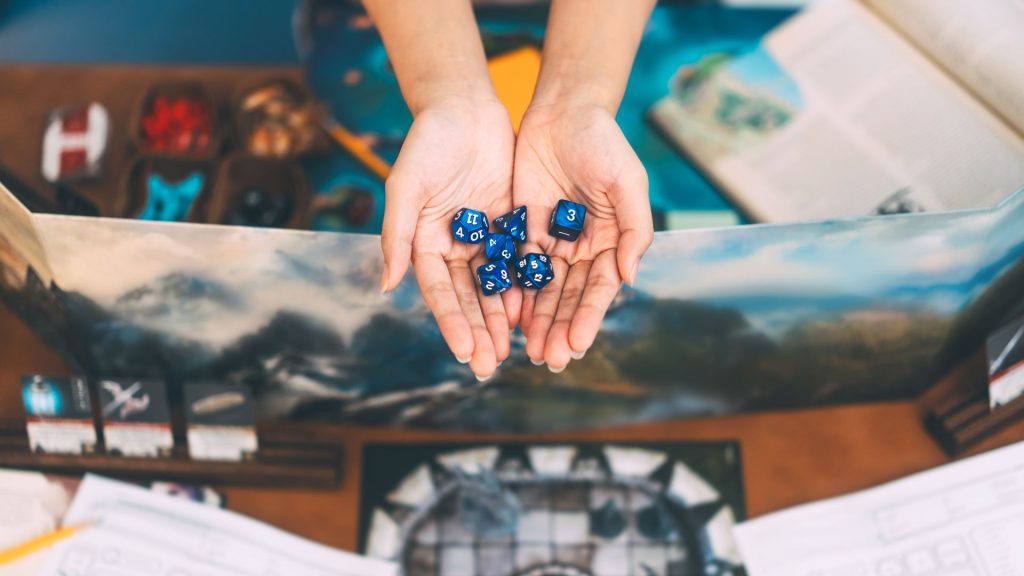
Each game tends to balance action and narrative in its own way. In Blades, the bulk of the action comes from “scores”, which are any sort of planned criminal shenanigans the group carries out. After every score, the players enter “downtime,” a period where they deal with the fallout from the score. During downtime, players can train, heal injuries, work on personal projects, or acquire assets to benefit the group. Each player character also has a vice — pleasure, gambling, faith, you name it — that they can indulge to reduce their stress. Too much stress will pile up and traumatize your character, but overindulging your vice comes with consequences of its own. It’s a delicate balancing act, one subject to the whims of the die.
As I write this, my character, Corille — a circus-performer-turned-professional-sneak, a la Inej Ghafa — is three stress marks away from a mental breakdown. (Getting shot at on a rooftop and sprinting across a laundry line to subdue your assailant will do that to you. Talk about a balancing act.) Hopefully by the time you read this, I’ll have rolled well enough to give her a clear head. Wish us luck, dear reader.
Stories in Motion
Though TTRPGs have been around for several decades, online media and streaming platforms have opened up the experience to broader audiences. Shows like Dimension 20 and podcasts like The Adventure Zone draw in thousands of fans, eager to experience these stories alongside the players. Perhaps the most famous D&D show, Critical Role, has expanded beyond its original format, encompassing several graphic and print novels and an animated adaptation of the first campaign, The Legend of Vox Machina. Media like these provide a great entry point into the TTRPG world and the wealth of narrative potential within.

But really, few things beat the chaotic fun — and unexpected emotional turmoil — of taking the story into your own hands. My love of storytelling began with playtime: at recess, I’d bring a notebook to the playground to record our adventures, certain they’d become my magnum opus. As an adult, my ambitions are less lofty, but the thrill of creation no less powerful. We spent a whole night building the lore of our cult, talking relics and body horror and goddess worship. We send each other Picrews of our characters — I even made a Spotify playlist. We grow invested in the paths we choose and the relationships we forge — and yet we still have so much about each other left to learn.
We often think of storytelling as a solitary act. While that can be rewarding in its own right, it can also feel daunting. I love making characters, but I lose interest in worldbuilding due to how overwhelming the process can be. Thankfully, I have several very good GM friends willing to put a lot of time and hard work into building a sandbox for us to play in.
Of course, team play comes with its own challenges. Scheduling, for one thing, is much harder when you’re all adults with jobs and no recess, period. Sometimes you disagree on how to approach a situation — and sometimes your party just gets collectively stumped.
Sometimes your friends push you into realizations and breakthroughs you would never have come to on your own. Sometimes they surprise you — and sometimes you surprise them. Corille wouldn’t have ended up on the roof if my friend Mikaela hadn’t put her there as a contingency during a tense standoff that could’ve escalated into an all-out turf war. Our Avatar Legends campaign’s longest-running NPC, Feng, emerged from an interaction Joshua and I improvised with no planning whatsoever.
I’m eager to see what the future holds for our fledgling little cult. Will we be able to lead the ghosts back to the spirit realm? Or will we meet bitter ends, like so many Doskvol criminals before us? Most importantly, will our schedules ever align so Corille can finally eat her way out of psychic damage?
I only know one thing for sure: whatever happens, it’s going to be one heck of a story.
Got a Dungeons & Dragons lover in your life? Check out our D&D-inspired gift recs here.
Compliment your epic quests with recs from our Fantasy Lovers Paradise bookshelf on Bookshop.