


















Trigger Warning: this article discusses obsessive-compulsive disorder, eating disorders, body image, body dysmorphia, and addiction. Please exercise personal care when reading.
Hollay Ghadery boasts an impressive set of credentials: author, book publicist, literary journal editor, poet laureate of the township of Scucog, Ontario, and a mother of four to boot. She’s also spoken candidly about her struggles with mental health, and while her writing takes on a diverse array of forms, her works tend to reflect her experience as a mixed-race woman and mother living with invisible illnesses.
Anyone who’s struggled with a mental health condition knows how isolating it can be. Mental health disorders are often misrepresented, misunderstood, and stigmatized by the general public, and it’s not easy to find community with those who share your experiences. Even less discussed is how people’s cultural backgrounds and upbringing affect their mental health, making it even more difficult — particularly for those on the margins — to feel seen.
After a long healing process, Hollay Ghadery has emerged as a powerful, much-needed literary voice whose story has resonated with many readers. Whether she’s writing poetry, essays, fiction, or simply sharing her thoughts on her blog or social media, Ghadery amplifies the conversation around mental health, shedding light on the invisible, lesser-known struggles that she and many others experience.
“Writing is my way of making sense of myself and my world.”
— Hollay Ghadery
Windows to an Inner World
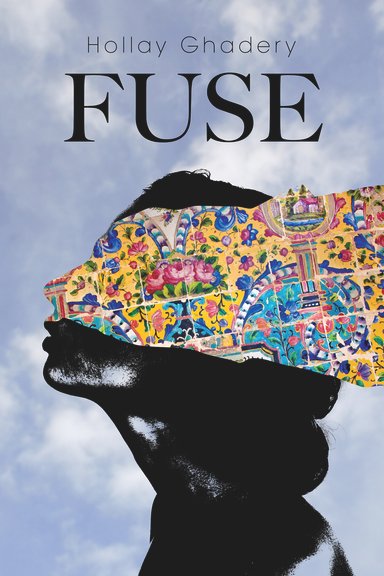
Published in 2021, Ghadery’s memoir, Fuse, documents her Iranian-Canadian upbringing and its impact on her mental health. She wrote it in large part to address the lack of discussion around mental health issues specific to mixed-race women, including higher incidences of body dysmorphia and eating disorders, which Ghadery has battled throughout her life:
“Despite body-positive movements, mental health awareness campaigns, an increase in racial and cultural sensitivity, and the proliferation of disturbing studies that show substance abuse among women is on the rise, many people still aren’t giving these problems and intersections the attention they deserve, and many of the women are themselves among those not engaging. This, I think, is the biggest problem of all, especially since there are more biracial and multicultural people than ever.”
— Hollay Ghadery, Fuse
Ghadery also lives with existential OCD, a theme of obsessive-compulsive disorder that “involves intrusive, repetitive thinking about questions which cannot possibly be answered, and which may be philosophical or frightening in nature, or both,” according to the International OCD Foundation. Existential OCD is one of the lesser-known OCD themes and is often misdiagnosed as Generalized Anxiety Disorder. A recovering addict, Ghadery now uses writing to cope with and even confront her thoughts and her anxiety around the unknown.
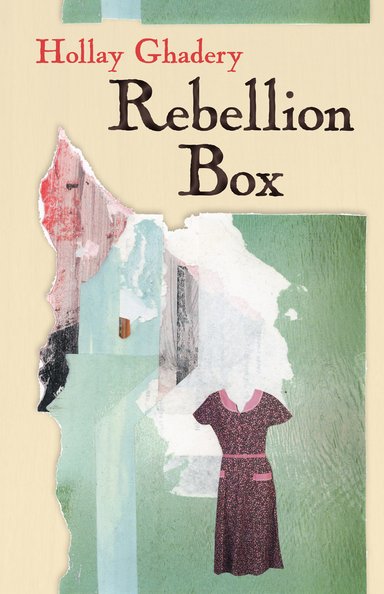
One of the poems in Ghadery’s 2023 poetry collection, Rebellion Box, is a verse adaptation of a chapter from Fuse, entitled Cosmic Script. It depicts Ghadery attempting to guide her daughter through existential questions that Ghadery herself struggles to answer:
But she doesn’t know what happens when she dies,
and it keeps her up at night, her stomach pinned
in a rollercoaster drop.
Her thoughts,a hundred rubber balls
bouncing
around a rubber room.A natural extension of your body, she
finds you
in darkness and climbs into your bed.— Hollay Ghadery, Cosmic Script, Rebellion Box
New Ways of Seeing
Ghadery’s OCD often informs the structure of her work as much as the thematic content. Narrated by a sock puppet, Ghadery’s upcoming debut novel, The Unraveling of Ou, mirrors how OCD structures her thought processes and way of viewing the world differently from neurotypical expectations:
“I began to think about how so many individuals like myself—and women in particular—who are neurodivergent, historically and even now, are seen as unreliable narrators of our own lives. We aren’t trusted to tell our stories: to reliably assess our own lives. We are patted on the head. Appeased. Drugged. Institutionalized. But not believed. At least not fully.
…I have arrived at a place in my creative life where I refuse to use neurotypical scaffolding [to] make my neurodivergent mind more palatable.”— Hollay Ghadery, Only the Sock Speaks: On Writing While Neurodiverging
Through her writing, Ghadery illustrates how her cultural background and upbringing have shaped her self-perception, the manifestation of her disorders, and her often self-destructive coping mechanisms. She also makes it clear that none of her disorders exist independently of each other, but tend to overlap, often engaging similar anxieties. Her essay Keep it Coming: Aging with Existential OCD discusses the fraught experience of aging as a woman and how the uncertain nature of existential OCD, as well as her complicated relationship with her body image, amplifies those fears:
“This is another characteristic of OCD: you stumble on an answer and it will do for just a little while before the disease dismantles that, too. There are no permanent comforts.
While Botox might make me feel better about my face short-term, it’s not a permanent answer. It won’t actually make me younger. It won’t stop me from…
Well, you know.
And this is what my disease demands: the white-noise hum of assured permanence, not just the Bold Glamour appearance of it.”
— Hollay Ghadery, Keep it Coming: Aging with Existential OCD
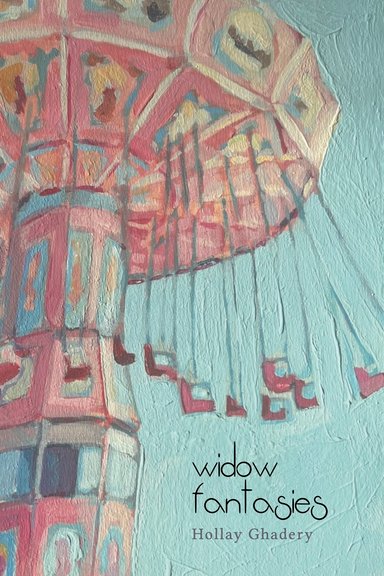
Ghadery’s writing also explores mental health from other angles. Her short story collection, Widow Fantasies, was inspired by recurring fantasies about planning her husband’s funeral, which are common among married women and often reflect unaddressed needs within a relationship. She also has a forthcoming children’s book, Being for the Birds, inspired by her eldest son’s experience with an anxiety disorder.
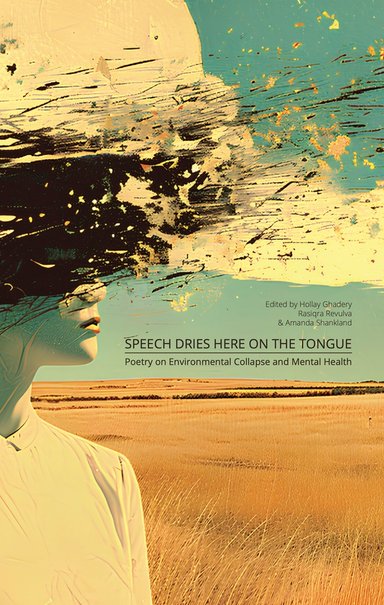
In addition, she co-edited Speech Dries Here on the Tongue, a Canadian poetry anthology exploring the relationship between mental health and the degradation of our environment.
Hollay Ghadery provides a unique, important perspective to discussions around mental health, one rich in insight, vulnerability, and resilience. To keep up with her work, you can visit her website here and follow her on Instagram here.
To feel safe at all times is a basic human right; let’s work to make this world physically and mentally safe for everyone.
If you or a loved one is seeking support for OCD and/or an eating disorder, information and resources are available via the International OCD Foundation and the National Eating Disorders Association.
For more recommendations for books about OCD, click here.
Find additional reading about mental health at our BIPOC Mental Health bookshelf on Bookshop.
