









Trigger Warning: The mention of certain mental health and suicide in this article may be triggering to some readers. Please take care when reading.
I was 15 when I first learned that Sylvia Plath had killed herself by sticking her head in an oven. A classmate broke the news to me when I had a copy of The Bell Jar open halfway to the end, almost towards the part where Esther Greenwood goes through her first session of electroshock therapy to fry the depressive thoughts in her brain into dry, crispy bits. “Could you do that?” My classmate asked me. “I bet it would hurt a lot.”
I was a freshman in high school, about 50 pounds overweight, with pimples scattered across my cheeks. I was failing algebra and would probably have to take summer classes for credit if I failed the final test, which was happening in the next 45 minutes. “Yeah,” I answered her. “I could stick my head in an oven.” She smiled. “Same.”
It wasn’t until I was in college and read Jillian Becker’s memoir Giving Up: The Last Days of Sylvia Plath that I learned the full scope of the tragedy. How in February of 1963, Sylvia Plath tucked her two children, Frieda and Nicholas, into bed before doing it. She left them bread and butter so that when they woke up, they would have breakfast waiting for them. She taped the edges of their door and sealed the kitchen with wet towels. And finally, Sylvia Plath lay by the unlit oven, turned on the gas, and let the carbon monoxide poison her to death.
It was an ugly story. It was meant to be.
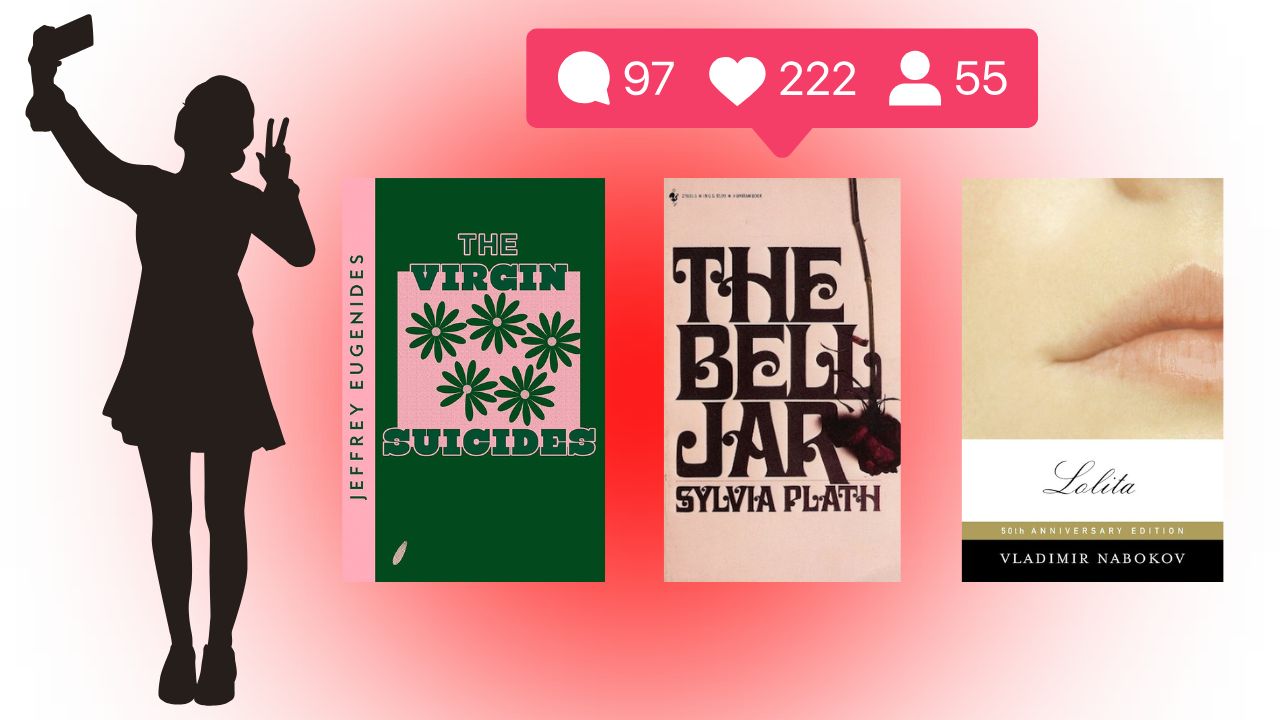
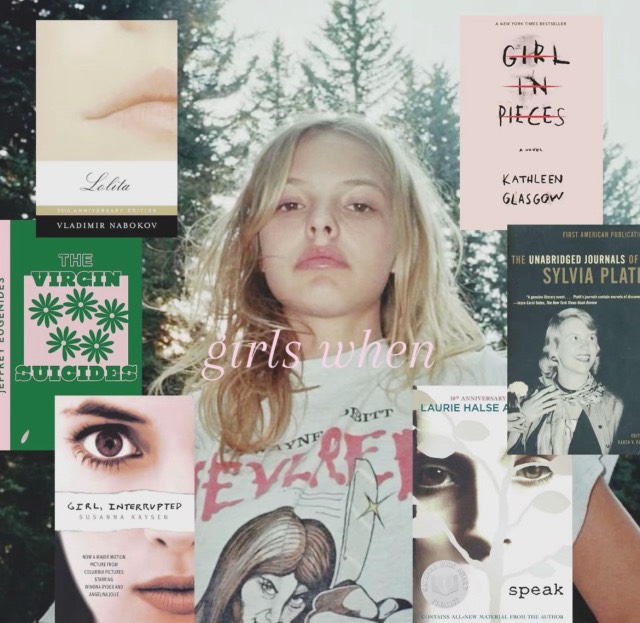
Yet online, especially on platforms like Pinterest, Tumblr, Instagram, and X, Plath’s work and legacy have been transformed into a strange visual meme within female-dominated literary spaces. Collages featuring images of Plath beside ovens are shared with captions like “mood” or “she’s just like me,” while pastel-covered editions of The Unabridged Journals of Sylvia Plath or The Collected Poems are staged alongside lit cigarettes, Diet Coke cans, or skinny, pale wrists.
Plath is frequently name-dropped in BookTok “sad girl canon” videos with Lana Del Rey songs playing in the background or her name is used in the tags of images of beautiful models, often grouped with other popular “sad girl” literature such as My Year of Rest and Relaxation, Girl, Interrupted, The Virgin Suicides, and Lolita.
It has become overtly clear that in these online spaces, “sad girl” books written by women and exclusively featuring female protagonists are often not just read, but styled.
Here, books and their female authors are turned into aesthetic props for social media performances that embrace female beauty and vibes over substance and the unattractive, complex side of womanhood.

Beautifying Trauma
There’s a certain image that circulates through BookTok and Bookstagram: two thin thighs with a gap in the center cradling a book where the plot is centered around a woman navigating addiction, sexuality, or mental health struggles. Pictures of baby deer, spilled pill bottles, cute shoes, and salads are littered across these posts, claiming that this is what it’s like to be “written by a woman.”
Here, depression is gorgeous. Suffering is on trend.
But these books weren’t meant to be lifestyle content. They are intricate pieces that interrogate how society actively participates in exploiting and silencing women’s pain. So it’s bitterly ironic that this exact kind of commodification — the packaging of suffering as something desirable and something to strive to imitate — is what’s happening to them now.

Lolita, for example, is infamously misread as a tragic pedophilic romance rather than a horror story of abuse. But its most famous image on the internet isn’t Humbert’s confession of murder and assault or Dolores’s psychological meltdown — it’s a girl in heart-shaped sunglasses, licking lollipops and red cherries in pastel clothes.
The same is true of The Virgin Suicides, a novel about the perverse and destructive nature of the male gaze that’s been diluted into dreamy gifs of the Lisbon sisters dancing in slow motion, their blonde hair glistening and schoolgirl skirts flowing, forever performing.
When these books are filtered through the social media lens, their message becomes dull. Their political bite, their feminist anger, and their critique of institutions that subjugate women like medicine, religion, and masculinity get softened into baby pink and Spotify-curated playlists.
They stop being warnings and start being aspirations.
Why does this keep happening?
Social media is built on images. The algorithm is attempting to appeal to what’s marketable, pretty, and digestible for girls in these spaces. It’s easier to interact with a meme with a model’s face in the background and a bunch of titles pasted next to her than a scene from a novel that strips people away from their aesthetically pleasing fantasies.
But there’s something gendered happening here, too. These are women’s stories, and we live in a culture that constantly tries to negate women’s issues into the butts of jokes.
The lack of sincerity and overwhelming desire to make women’s literature ironic through Pinterest boards and hashtags only strays us further from having real conversations and making real change.
It isn’t a crime to make a joke or like to look at pretty things — especially if that’s how you celebrate literature comfortably with people who are into the same genres, plots, or authors.
But when the aesthetic becomes the whole story, we risk turning literature into nothing but a photo dump accessory.
We owe these books and their female authors who write them introspection. We owe them discomfort. We owe them the respect to be understood. If we want stories like The Bell Jar to survive in our digital culture, we need to stop decorating trauma and start learning how to sit with it.
Interested in more opinion pieces on book trends and culture? Click here.
Check out our Bookshop shelf to see our Author’s Corner Spotlight on Female Authors.