

















As fall settles in as our honored guest and amber-tinted leaves curl up and drift into an earthy carpet, it becomes the perfect time to sink our teeth — pun quite intended — into the heart of haunting and paranormal literature. In this installment of our 5×5 series, we are thrilled to feature five authors who have redefined and diversified the classic mythology of the vampire, expanding upon the humanity of the beast and vice versa. From phantom-esque serial killers to obsessive queer love, each of these authors has brought their personal spin to the concept of vampires, so join us in learning from their perspectives on the trope and its history.
The Authors
Hayley Dennings
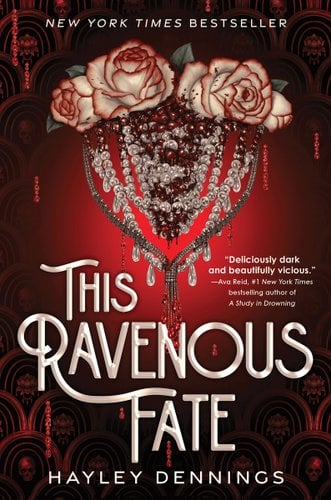
Hayley Dennings grew up in the Bay Area. She holds a BA in English and French with a concentration in diversity and inclusion from Loyola Marymount University. Her first novel, This Ravenous Fate, became an instant New York Times and Indie bestseller. She currently works as an editorial and marketing associate for Fable. When Hayley is not working, she is spending time with her dogs, reading, painting, and baking.
K.M. Enright
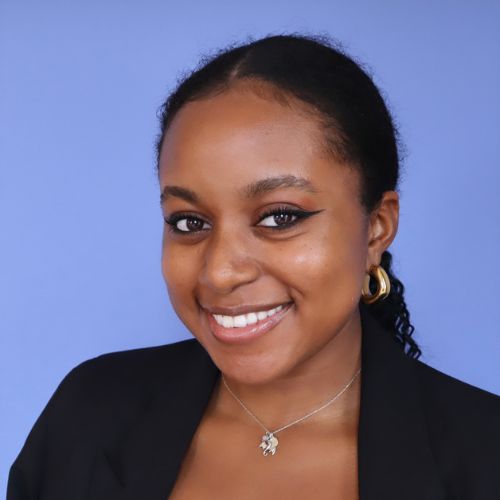
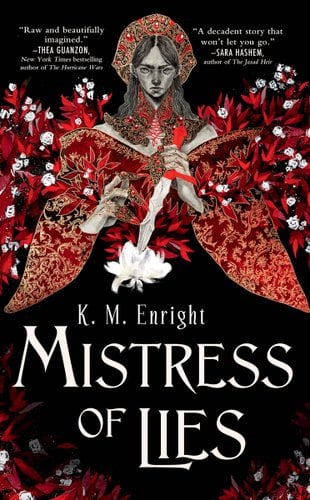
K.M. Enright is the Sunday Times bestselling author of Mistress of Lies. Find out more about his writing at kmenright.com or follow him on social media at @km_enright.
S.T. Gibson
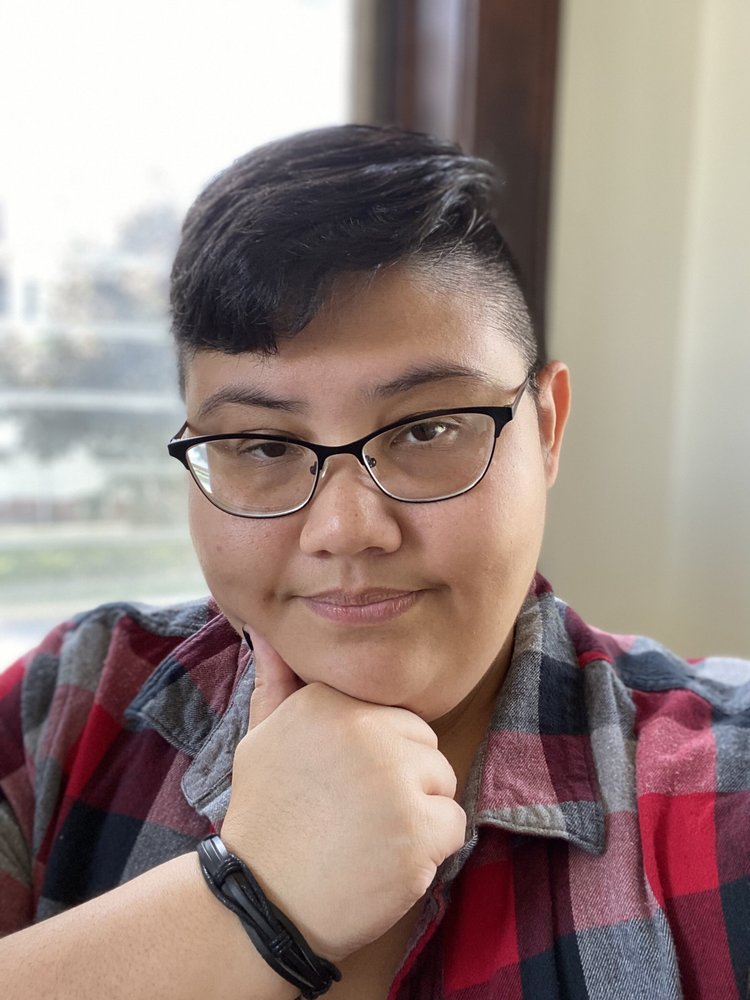
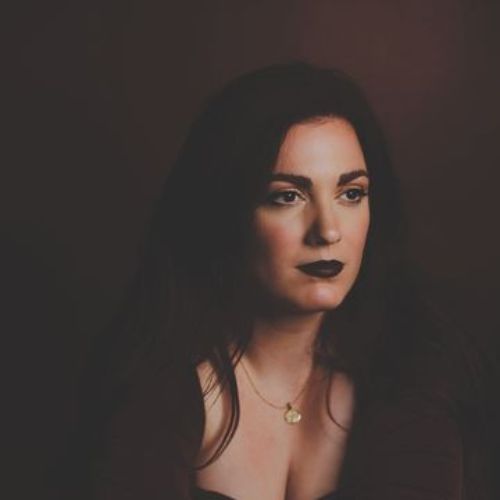
Saint is an author and village wise woman in training. A graduate of the creative writing program at the University of North Carolina at Asheville and the theological studies program at Princeton Seminary, she currently lives in New England with her partner, spoiled cat, and perfume collection. She is represented by Tara Gilbert of KT Literary.
Tigest Girma
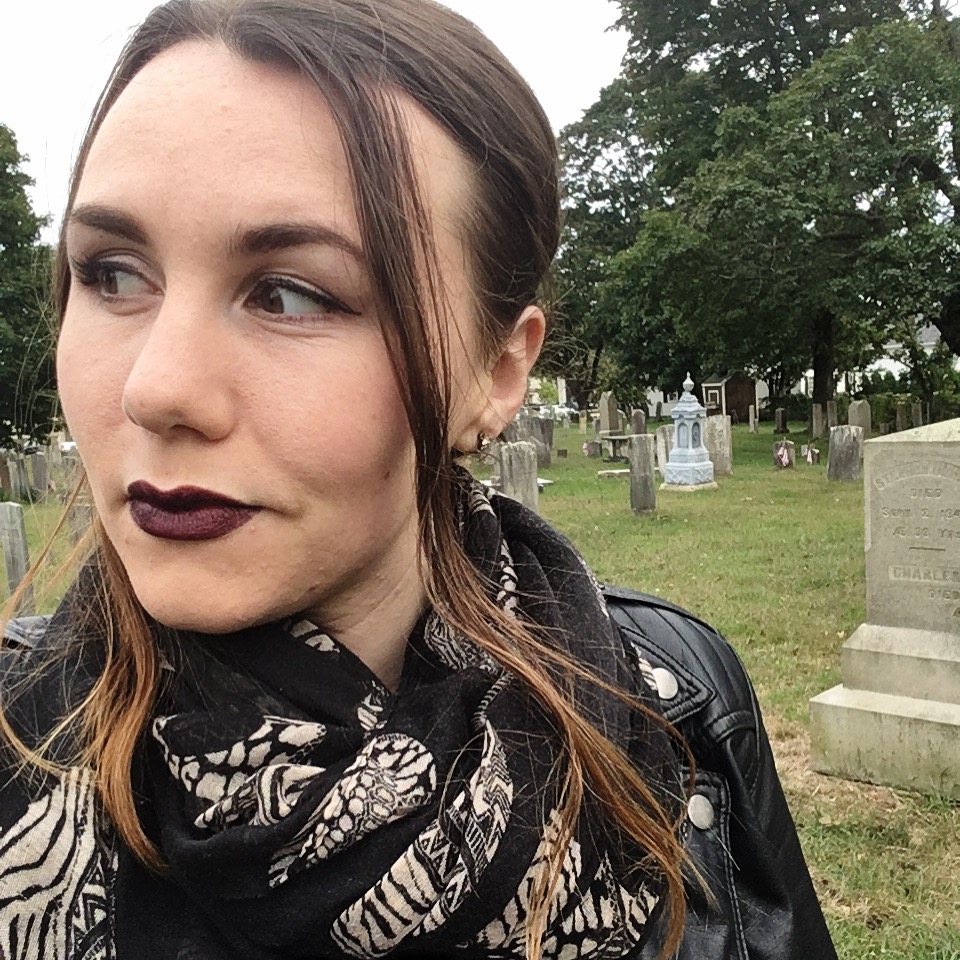
Tigest Girma is an Ethiopian writer based in Melbourne, Australia. Her debut, Immortal Dark, is a #1 New York Times bestselling title and will be available in more than ten languages. After graduating with a Bachelor of Education, she splits her time between writing and teaching. Passionate about exploring East African characters and myths, her work weaves Black stories with the dark and fantastical. In her free time, she can be found rewatching her comfort shows where the villain gets the girl.
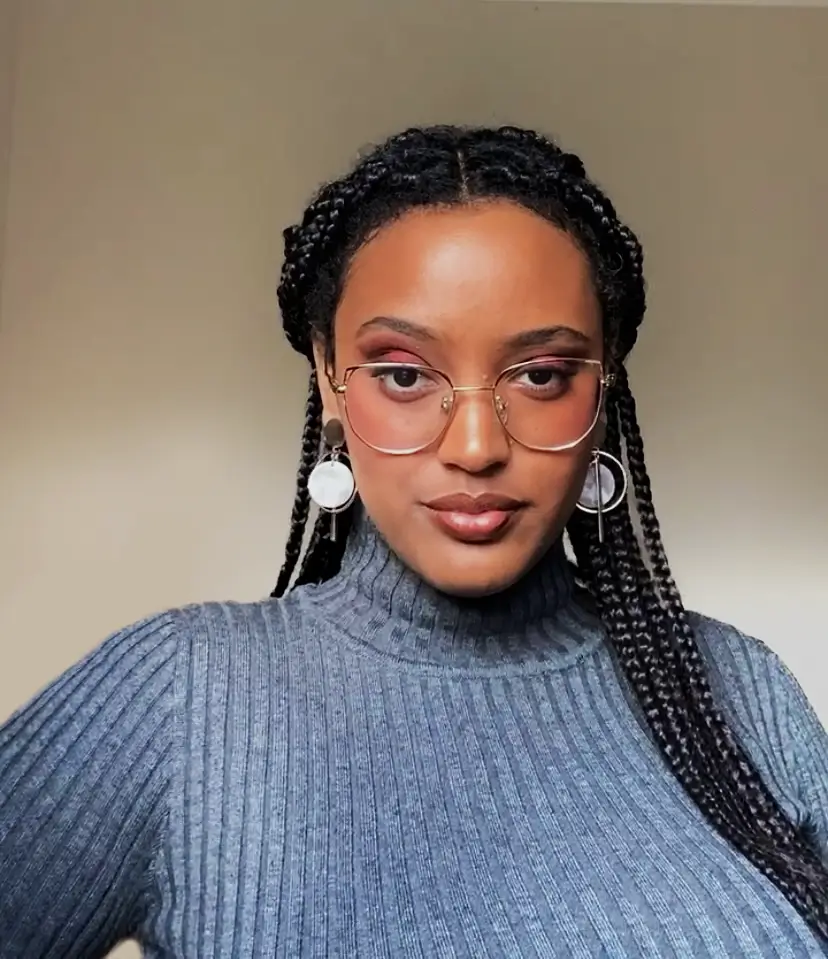
Shelby Mahurin
Shelby Mahurin is the New York Times bestselling author of the Serpent & Dove trilogy. She grew up on a small farm in rural Indiana, where sticks became wands and cows became dragons. Her rampant imagination didn’t fade with age, so she continues to play make-believe every day — with words now instead of cows. When not writing, Shelby watches The Office and reads voraciously. She still lives near that childhood farm with her very tall husband and semiferal children. Visit her online at www.shelbymahurin.com.
The Questions
1. For any readers out there who are new to your work, can you please give an elevator pitch for your vampy book(s)?
Hayley Dennings: This Ravenous Fate is a sapphic vampire book that follows a vampire and a vampire hunter, who are also childhood friends turned enemies, who must work together to solve a string of murders in 1920s Harlem that might just be connected to a cure for vampirism.
K.M. Enright: Mistress of Lies is a queer, dark fantasy romance that follows a blood mage spymaster as she recruits a noble bastard with a terrible gift to hunt down a magical serial killer for the vampiric Eternal King — all while planning to overthrow him.
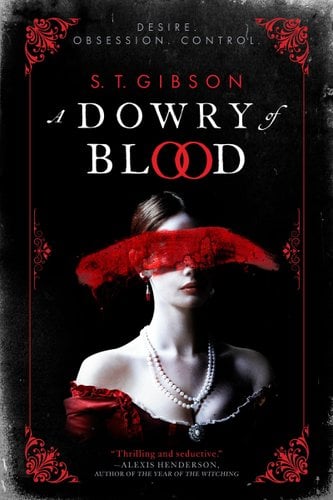
S.T. Gibson: A Dowry of Blood is a queer, polyamorous Dracula’s Brides’ retelling told in a series of love letters written from Dracula’s first bride to the lover she murdered. An Education in Malice is a dark academia sapphic reimagining of Carmilla set in a women’s university in 1960s Massachusetts. They’re linked by a shared universe (and a shared character!), but they stand alone and can be read in any order.
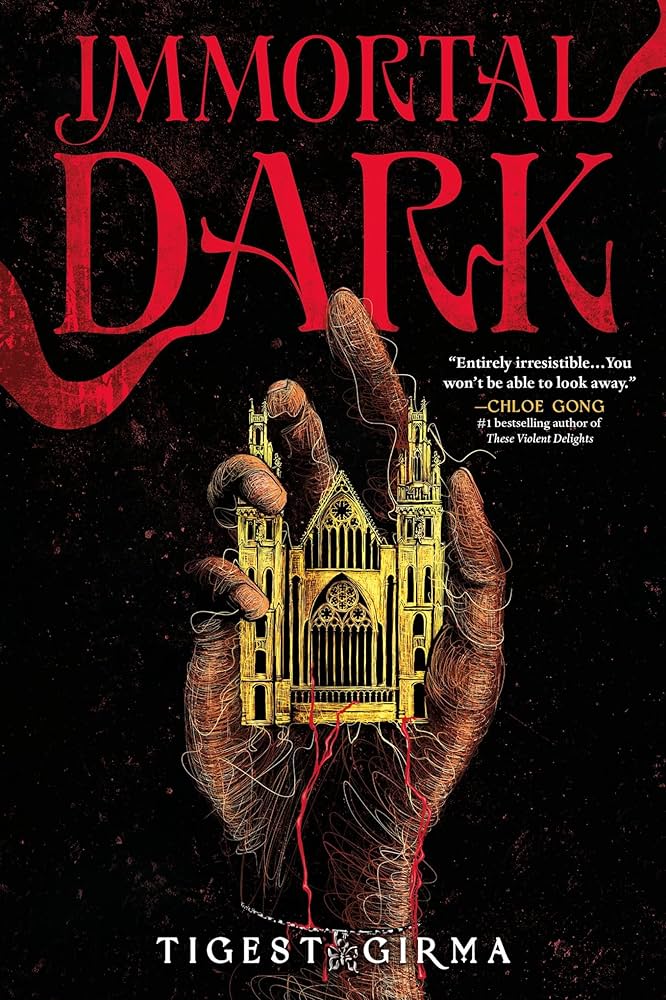
Tigest Girma: Sure. Immortal Dark is Black vampires meets dark academia where students have to study an arcane philosophy to inherit vampires. Kidan, our main character, is determined to find her kidnapped sister at all costs and find the accused vampire.
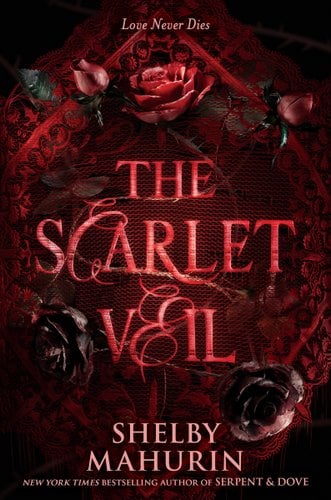
Shelby Mahurin: The Scarlet Veil is the first in a new duology set in the same universe as Serpent & Dove. It follows Célie Tremblay, the first woman initiated into the brotherhood of Chasseurs, as she investigates a string of murders in Cesarine — all the victims of magical origin, all their bodies drained of blood. Her investigation leads her straight to the heart of a vampire lair, where she captures the attention of its cruel yet beautiful king. He has plans of his own for Célie, who refuses to acknowledge the whispers from her past that still haunt her.
2. Out of all the mythical beasts and undead creatures writers have used as muses, what inspired you to write about vampires?
Hayley Dennings: The first part of This Ravenous Fate that came to me was the immortality aspect. I really wanted to dive into the psyche and representation of an immortal beast that is not romanticized and hates being immortal because of the consequences that come with it, whether it be rotting with each day they live longer or watching all their mortal loved ones die. Exploring humanity through a non-human lens was also my goal, and I thought vampires would be perfect because I could put my own spin on them while still remaining true to some beloved aspects of their lore. Vampires in This Ravenous Fate are called reapers because they are physical manifestations of death, and they’re supposed to be these damned monsters, but oftentimes they are a mirror held up to humanity, revealing all the worst parts of the people that claim they are so much better.
Vampires have tons of fascinating lore, and I wanted a creature that was still somewhat human looking to really dive into the divide between them and humanity. They also have a very distinct sensualized presence, especially in Western media, that I wanted to subvert. I’m a lot more interested in the brutality of vampires and the monstrous reputation that precedes them. The human exterior with the dark interior of vampires paired perfectly with the glamorous outside and corrupt underbelly of the 1920s in the U.S. In the end, it just made sense to include vampires — these cunning, bloodthirsty beasts that lurk in the shadows of dance halls — in one of the most morally disruptive periods of U.S. history.
K.M. Enright: First of all, just because I’m starting with vampires, doesn’t mean I’m stopping there! I love monsters and mythical beasts of all sorts, and I have so many ideas to play with down the line. For now, though — I am a very thematic writer, and the vampire lent itself well to what themes I wanted to explore around exploitation and seduction. Of being attracted to the very thing that will destroy you, leaving you either drained to the point of death or changed into something utterly unrecognizable and inhuman.
S.T. Gibson: My draw to vampires is so wrapped up in my draw to the gothic! It’s a genre that makes space for melodrama, for religious wrestling and fervor, for heights of light and depths of darkness, for eroticism and devotion. These are all themes that have resonated with me deeply for most of my life. Also, the gothic has always been a space for exploring sexuality that society deems transgressive or unconventional family and relationship structures, so as a queer author deeply invested in human relationships, it’s a natural fit. Add in the bittersweet twist of mortality and monstrosity that vampires bring to the mix, and I can’t resist.
Tigest Girma: I always loved vampires as a teen. I think they’re beautiful and deadly, and the concept of eternal life and how it affects their psyche is super intriguing to me.
Shelby Mahurin: Interestingly enough, I didn’t plan to write about Célie or vampires. In the thick of deadline with Gods & Monsters, I even swore I’d never return to the world of Serpent & Dove again. With a little time and distance, however, I realized I wasn’t quite ready to let these characters go. When I called my critique partner on the way home from my local indie the day before Gods & Monsters was published, crying, she told me it didn’t necessarily need to be over — and then she asked about Célie. We both agreed her story hadn’t reached its conclusion, and I’d always wanted to write a vampire book. Their inclusion felt like a natural extension of this world, as well as an interesting foil to the innocence of Célie’s character. Within ten minutes, we’d plotted out a rough outline of The Scarlet Veil, and the rest is history.
3. From Twilight to Interview with the Vampire, we all love content featuring our beloved bloodsuckers. What is your favorite example of vampires in literature?
Hayley Dennings: S.T. Gibson’s A Dowry of Blood is one of my all-time favorite vampire books. From the stunning writing to the bloody, vengeful tale of liberation, it is full of so many things I love. I especially enjoy the casual queerness and positive emphasis on sexuality it contains.
K.M. Enright: I have always loved vampires — I cut my teeth on them at a young age, finding Anne Rice’s Vampire Chronicles and falling absolutely in love with these terrifying monsters who we can’t help by love. And despite the horrible things that they did, there was still a core of aching humanity to them, even with their unnaturally long lives and their need to subsist on human blood. That, to me, is the most compelling part — monster and man in equal measure, with the juiciest bits in the grey area between.
S.T. Gibson: Obviously, I’m forever fascinated by Dracula and Carmilla and all their adaptations. I also Thirst by Marina Yuszczuk is gorgeous, and Small Changes Over Long Periods of Time by K.M. Sparza is so visceral and unforgettable. But primarily, the works of Anne Rice (particularly her Vampire Chronicles but also her memoirs, erotic fiction, and spiritual writing) are foundational to me as a person and me as an artist. She’s the shoulders I stand on, always.
Tigest Girma: Klaus Mikaelson from The Vampire Diaries is my favorite vampire. He pushes the term “morally grey” to the extreme and I just love that.
Shelby Mahurin: I’ve always loved vampires. The Vampire Diaries, Underworld, and True Blood were pillars of my adolescence — as was Twilight — but as an adult, I love anything written by Jeaniene Frost and also the Black Dagger Brotherhood series by J.R. Ward. I drew inspiration from all these beloved vampires for Michal, the enigmatic vampire king in The Scarlet Veil.
4. Vampires have a long and bloody history, from literature to local legends and beyond. When researching for your book, did you discover any fun factoids about vampires or dive down any weird rabbit hole?
Hayley Dennings: While doing research for This Ravenous Fate, I became super interested in the vampires we’ve seen in classic literature like Dracula and Carmilla. I learned a lot about the ways in which vampires were used, especially in gothic literature, to act as cautionary tales for the readers. Monsters were usually meant to scare people away from marginalized identities — in Carmilla, we see the vampire as a monster meant to tempt and corrupt, clearly portraying lesbianism and queerness as a negative, corrupting force. With this in mind, it was even more fun to write about Black lesbian vampires in This Ravenous Fate, knowing that the very act of including queerness and Blackness in a positive light subverts these harmful tropes.
K.M. Enright: One of my favorite research rabbit holes is actually something we don’t see until the sequel, Lord of Ruin, and that is the manananggal. It’s a Filipino mythological creature that is quite vampire-like, a feeder on blood and viscera that is ferociously monstrous, and I’m very excited for you to see what I do with it.
S.T. Gibson: I wish I could find a source for this, or even the region the folk tale comes from, but one of the vampire stories I encountered as a child that I was reminded of while writing A Dowry of Blood is as follows: in certain parts of the world, you might find free-standing stakes jutting out of the ground in open fields. It’s said that if you draw very close and put your ear to the earth, you might hear a voice, hoarse from lack of use, rasp “You pull, and I’ll push.”
Tigest Girma: It was interesting to discover there were stories about black vampires in the 19th century. The Black Vampyre: A Legend of St. Domingo by Uriah Derick D’Arcy preceded Dracula. I had no idea.
Shelby Mahurin: Writing The Scarlet Veil was such an excellent excuse to enjoy all of my favorite stories again, which meant re-watching The Vampire Diaries for the… eighth time? The Damon obsession became borderline unhealthy.
5. Vampires are making a comeback on screen and on the page. Why do you think they are so adored by readers and viewers around the world? Why do you love vampires?
Hayley Dennings: I think vampires are timeless, and they are constantly being reinvented with fresh lore and influences from various cultures that help more people connect with them. The horror genre has always been very reflective of our current times, and vampires are further proof of that as we see them reemerge. I love vampires because they serve as a fascinating way to explore humanity from a non-human lens. They can be excellent vehicles to share important messages as immortal creatures that have lived for centuries and seen atrocities and consequences that have shaped humanity.
In This Ravenous Fate, I specifically use vampires as a metaphor for anti-Black racism in the U.S., with the question in mind, “What if you could see anti-Blackness spreading like a physical disease?” after getting fed up with people denying the presence of racism in America. There are so many different ways to portray vampires, and for that reason, I think there can always be something for everyone to enjoy in a vampire story.
K.M. Enright: I don’t think vampires truly ever die. All things in art are cyclical. What is popular now will fade and then rise again. But there is something seductive about vampires — the thin line between civility and monstrosity. The hunger that drives them and the excitement we, as readers, feel when we watch them give in to their worst impulses. We get so caught up in the correct forms of etiquette and the rules of polite society that we deliberately look away from the uncomfortable truths that lurk beneath. Vampires, as creatures that tread the line between elegance and brutality in equal measure, offer a particularly cathartic reading experience.
S.T. Gibson: They’re eternally adaptable and malleable to modern anxieties and fascinations, but they speak to ancient core human fixations on the fear of mortality, what it means to be loved unconditionally and eternally, what makes someone a monster, and how human predators drain the life of their prey.
Tigest Girma: Vampires represent eternal life and beauty. They’re free from the day-to-day constraints of an ordinary life, and it’s fun to imagine what that would be like. I personally love them because they allow humans to explore the dark side of their desires.
Shelby Mahurin: There’s something inherently seductive about a vampire, especially after Bram Stoker brought a refined façade to their savagery with Dracula. Maybe it’s because vampires are so powerful with their predatory speed and strength, or maybe it’s because they’re immortal. They never grow old. They live forever young, forever attractive, yet they’ve seen things we haven’t. They know things we don’t. It’s the ultimate fantasy, isn’t it? For such an all-powerful creature to fall in love with a human? And then there’s the whole business of their drinking our blood — it makes everything all the more dangerous, and don’t we all crave a little danger? I know Célie does.
Bonus Questions
Though not exclusively, vampires have long been a prominently white trope in popular media. Can you tell us a little bit about how you put a spin on this creature and their legends, and how you’ve used them to tell stories beyond hetero and white normativity?
Hayley Dennings: In This Ravenous Fate, I specifically used vampires to show the reality of life for young Black women in the United States. They are called reapers in my book because I wanted people to come into the story with a fresh idea of the creature and not have preconceived notions in their heads that usually come along with the word ‘vampire.’ The lore of reapers is steeped in Black history, as they are a result of atrocities such as unethical experimentation on enslaved Black people. In my book, brutal things inspired by real history created these monstrous creatures to highlight the consequences of oppression and racism and the way those consequences continue to spread through subsequent generations. Vampires are immortal, and so is the lasting effect of racial trauma in Black communities. In This Ravenous Fate, being turned into a reaper is traumatic and painful, and we see that through one of my main characters, who has had her childhood ripped away from her because of it. Both main characters are Black lesbians who deal with very different problems, with one being a reaper and the other being human, but never is their sexuality vilified.
I’ve never been a fan of the immortal 500-year-old man and teenage girl romance in vampire books, but I knew it would be especially harmful to try a version of that trope in a Black lesbian vampire book. Lesbians and black women are already incredibly vulnerable. My goal was to tell a story of complicated feelings and, ultimately, love, which is something we barely ever get to see between two Black girls in media. Much less vampire media, which loves to vilify those two identities. Centering Black lesbians in a vampire book is my act of defiance in the face of hetero and white normativity that seeks to silence their voices and deny their existence.
K.M. Enright: Vampire stories — and monster stories in general — have an inherent queerness to them. There is a long history of studying the horror genre with monsters as metaphors for outsiders, whether that is in sexual orientation, gender outside of the binary, or even race. So, it was very easy to slip into the structures of a monster story and carve out a narrative that really delved into the otherness through my characters.
Though it is set in a queernorm world, Mistress of Lies is not a setting that is indifferent to race. Writing what is essentially a court intrigue with vampires, I got to play with the concept of civility and how that is often used to mask the cruelty and horror of humanity. There is a certain kind of anxiety in the way my characters recognize how the game is rigged but still need to play it anyway. They recognize that the glittering beauty of the Blood Workers, my vampiric nobility, and their world is just a lie, but that doesn’t mean they’re ready to fully confront what exists behind the polite smiles. And in that way, I am taking a lot of that quiet discomfort that many marginalized individuals feel in regard to the world we live in and making it textual.
S.T. Gibson: As a white author, I’m afraid I don’t very deeply interrogate the historical whiteness of vampire literature in my work, although I must direct you to Certain Dark Things by Silvia Moreno-Garcia or Immortal Pleasures by V. Castro in the way of excellent vampire books rooted in cultures outside of white Victoriana! Also, check out Mistress of Lies by K.M. Enright for a less direct, more diverse spin on vampire fantasy. As far as queerness goes, I firmly believe that vampires, with all their seductiveness and monstrosity in the eyes of society, their desires that hurt and heal, and their implicit sexual and gender flexibility are so clearly queer. When I was in my teens, struggling as a closeted bisexual girl in the American South, I latched onto vampires as beautiful, powerful depictions of embodied bisexuality. Whether it was Lestat himself or the gleefully frightening brides from the Van Helsing movie with their sensual ties to women and men alike, they gave me solace, and I stick to that reading.
Tigest Girma: I wanted vampires to originate from Africa, which meant changing their appearance, culture, and language. I drew a lot from my own Ethiopian heritage to build the lore. The main setting in Immortal Dark is a university, which also gave me the opportunity to have classes like “East Africa and the Undead” to ground the myth even further.
Shelby Mahurin: Diverse storytelling is so important because it allows readers of all backgrounds to see themselves on the page — and that is exactly what I tried to do with The Scarlet Veil. My vampires are not predominantly Eurocentric, and they reflect a wide array of sexualities, just as they would in our own world. I can only hope I’ve done them justice!
7. Your vampires seem to defy many of the traditional tropes. How do you balance the desire to innovate with the need to respect established mythology?
Hayley Dennings: When navigating the changes I made to vampires in This Ravenous Fate, I tried to stick to what I recognized in vampires the most. For me, that is blood drinking and just general bloodiness, along with immortality. From the start, I already knew I would do away with the traditional vampire’s inability to go in the sun because it was inconvenient from a plotting perspective. Giving myself just a couple of tropes to stick to make everything else much more flexible, which was a lot of fun.
Knowing my vampires — or reapers — come from the deepest, darkest parts of Black history, I had to make them a little bit different from the traditional vampire lore that usually excludes Blackness. I figured as long as the reapers in This Ravenous Fate are still drinking blood and seen as dangerous, but still utterly human at first glance, that would be vampire enough and respectful to the established mythology. Knowing I wanted to tell a more specific story helped me keep the reapers in This Ravenous Fate creative and rather new. I didn’t put too much pressure on myself because vampires have so much different lore across different mythologies, so it’s easy for most to come to a vampire book and expect something new and fresh. That’s what makes vampires so fun.
K.M. Enright: I wouldn’t say I’m defying tropes so much as building on them, taking them to the next logical extreme. For the world-building for Mistress of Lies, I took the myths of the vampires and expanded them out to a societal level. So often, vampires are on the outskirts, so what happens if we flip that? How does it become an institution, and what polite veneers would be used to cover up the horrors that naturally would exist at the core of such a society?
I’ve also always been fascinated by the duality of vampiric existence — we have the noble aristocrat and the ravenous monster, and in Mistress of Lies, we primarily see vampires of the first type. But as the series goes on, we see more of the monsters as well, as the civilized lie that is Aeravin is slowly peeled back. And I know I’m not the first person to have done this — the worlds of vampires are rich and varied — but I am enjoying playing in the tension found between extremes.
S.T. Gibson: No book exists in a vacuum. We’re all in constant conversations with our contemporaries and the writers and folklorists who came before us, so I strongly believe in telling exactly the story you want to tell, in precisely your unreplicable way. I felt very comfortable cherry-picking from vampire lore and tropes when building the world and characters in A Dowry of Blood and An Education in Malice, taking what served me and leaving the rest. I think we should all feel so emboldened; that’s where creativity takes root.
Tigest Girma: It’s a tricky balance for sure. I didn’t want to lose the essence of the vampires I grew up loving but I did want to reimagine their origin story. It was less about completely changing vampires and more about tweaking certain things. A stake usually kills a vampire, but in rural Ethiopian myth, perhaps an impala horn is what could kill them.
Shelby Mahurin: I adore a classic vampire. (Though to be fair, I adore any kind of vampire, even the sparkly ones.) For The Scarlet Veil, however, it made sense to lean into my Dracula obsession and also exaggerate it — the sun kills Michal and other vampires instead of weakening them, as does a silver or wooden stake to the heart. They possess preternatural speed and strength. Preternatural beauty. That one segues nicely into the attraction and hunger often associated with vampires, which I definitely wanted to include with my vampires, too. I’ve also always been intrigued by the religious undertone of traditional vampire lore — i.e., they can’t walk on hallowed ground or speak the name of God — and I thought that particular aspect would be interesting to write opposite Célie, a devout character, so that aspect stayed. I think the only classic vampire quality that didn’t stay was an aversion to garlic.
A deep thank you to Hayley, Koren, Saint, Tigest, and Shelby for allowing us to pick their brains about the incredible novels that they’ve written. To keep an eye on their upcoming and future works, be sure to follow the authors on social media!
Find Hayley Dennings on her website.
Find K.M. Enright on his website.
Find S.T. Gibson on her website.
Find Tigest Girma on her website.
Find Shelby Mahurin on her website.
Want to hear from more authors? Check out our 5X5 article on Indie-Turned-Trade Authors!
Browse our Bookshop for your next read!
