


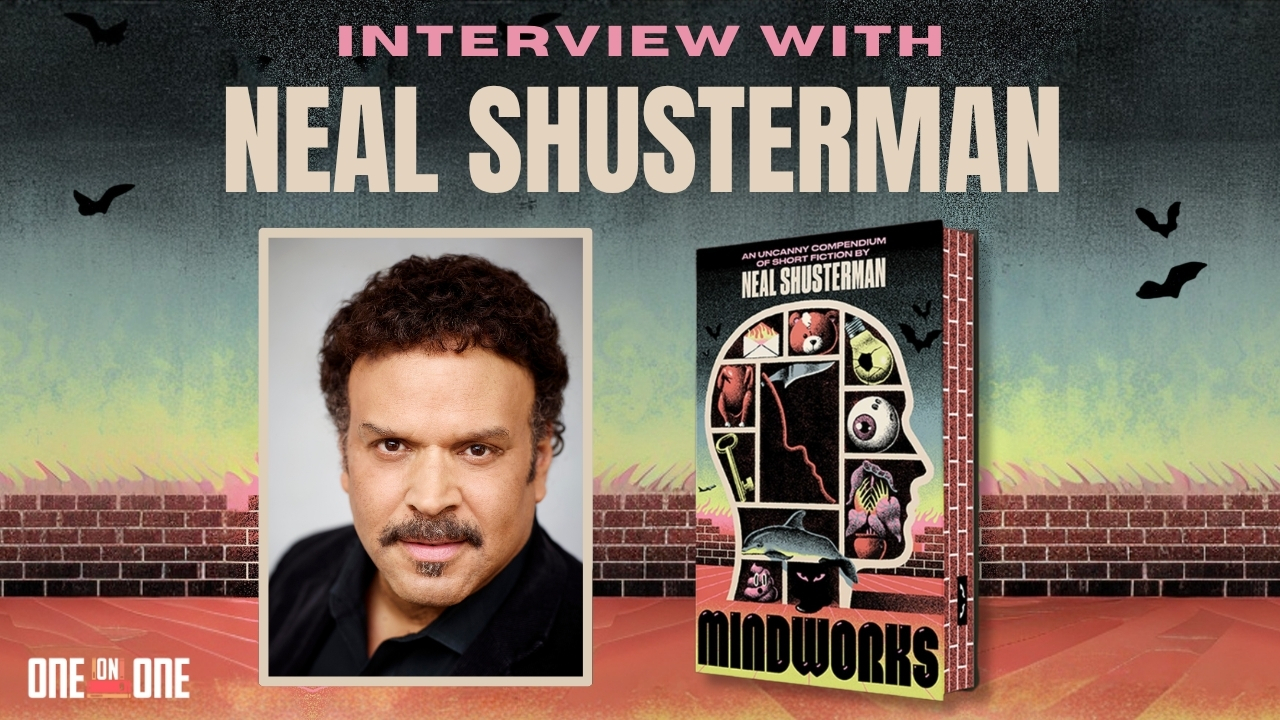
The true origins of the dystopian genre have long been debated. One of the earliest examples of it emerging can be seen in 1895 with H. G. Wells’ The Time Machine, but the genre didn’t truly hit its stride until the 1920s. Exploring themes such as totalitarianism and a lack of individuality, the genre helped people at a time when the rise of technology was at the center of many people’s fears. And today, the dystopian genre continues to reflect contemporary fears as a powerful commentary on political critiques. Neal Shusterman has quickly become one of the leading authors in the YA dystopian field. Read on as we prepare for his next release, MindWorks.
Trigger Warning: This article contains a brief reference to abortion. Please exercise personal care while reading.
About Neal Shusterman
Neal Shusterman is the New York Times bestselling author of more than 30 award-winning books for children, teens, and adults, including the Unwind dystology, the Skinjacker trilogy, Downsiders, All Better Now, and Challenger Deep, which won the National Book Award. Scythe, the first book in his The Arc of a Scythe series, is a Michael L. Printz Honor Book Award winner. He also writes screenplays for motion pictures and television shows. Neal is the father of four, all of whom are talented writers and artists themselves. You can visit Neal at StoryMan.com and Facebook.com/NealShusterman.
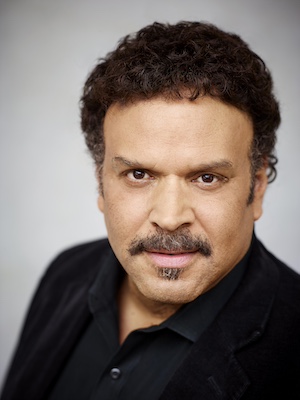
Thank you for joining us, Neal. Let’s begin!
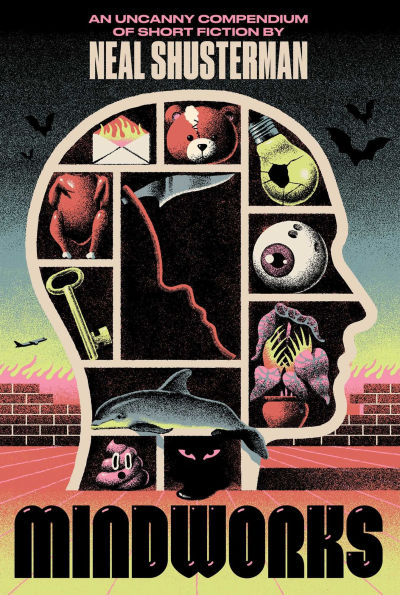
Your next book, MindWorks, comes out in November. For readers who may be unaware, could you tell us a bit about it?
MindWorks is a collection of short stories that explore some of my strangest stories, from deep, speculative tales to action-packed adventures. I tried to strike a balance between fear and fun. Many of the tales have macabre twists that I hope leave you unsettled but intrigued, while others are more reflective dives into current themes. Incarnations of many of these stories have been published in previous anthologies, but I revamped and updated all of them. Plus, there are wholly new ones, two of which are based in the Scythe universe!
There has lately been a large resurgence of interest in dystopian novels, particularly young adult novels like The Hunger Games, years after their original release. What are your thoughts on this renewed fascination with the dystopian genre, and why do you think so many people have gravitated towards it in recent years?
Dystopian fiction has always served as a funhouse mirror — we look into it, and what we see is distorted, but recognizable. However, these stories are also a magnifying glass, allowing us to focus on aspects of our society in ways that realistic fiction can’t, so I’m not surprised that readers are finding their way back to dystopian literature right now. Because it feels more and more like we’re living in a dystopian novel. During these times, dystopian stories give readers, especially teens, a framework to process chaos and power structures. A playground to explore resistance and resilience.
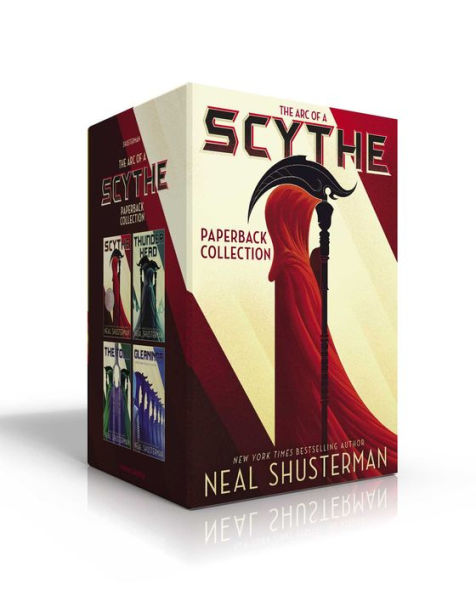
I should add, though, that I’ve always rebelled against the label of “dystopian.” I’ve always seen myself as somewhat of a disruptor; I like to challenge myself to push back against tropes and the literary status quo. The Arc of a Scythe series, for instance, was written as a response to the oversaturation of the genre. Its basic premise is not about a world gone wrong, but the consequences of the world gone right: a world where we’ve achieved all the things we’ve hoped to achieve.
This is something I’m revisiting in Rising Thunder, a Scythe prequel which I’m currently working on. I not only wanted to stir up the space, but also give readers something to aspire to rather than to be afraid of. While there is a lot that is valid to fear right now, rallying to disrupt that fear and build something better is the most powerful thing we can do.
Recently, there has been a large debate on BookTok about whether or not books are “political.” Some people view books as an escape from the real world and only that, while others see it as a direct reflection of the things authors experience in the real world. Do you have any insight into this debate?
Books are an escape, but you can’t divorce that escape from reality. Whether the story is set in a dystopian future or a suburban backyard, the characters, settings, conflicts, etc., carry the DNA of the time in which the book was written. Whether intentional or not, writing is a reaction to the world — I’d argue that all art is. I don’t think it’s possible to separate the world from the life you live, and our lives are affected by policies, politicians, our neighbors, media, culture, and so much more. Those experiences inspire and inform us as writers, artists, and readers — which is especially important for young people who are trying to understand the world and their place in it.
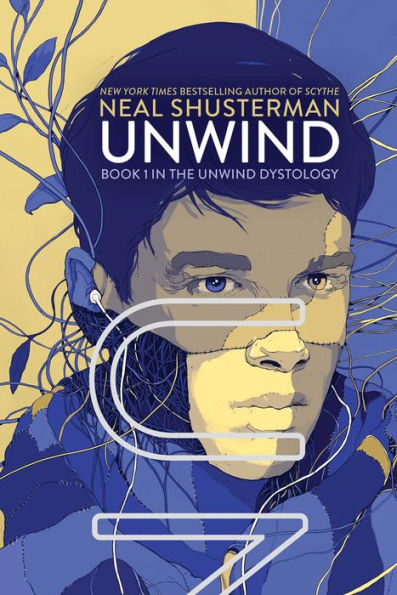
That said, I do not consider my books political. They are intentionally apolitical and try to look at social issues in an objective way that challenges people from all political positions to do a reality check on themselves. Unwind, for instance: While it deals with issues of reproductive rights, it’s neither pro-life nor pro-choice but instead points out the absurdity of taking such a complicated issue and looking at it in a simplistic, black-and-white way.
Several of your books have been banned. Do you think that comes with the territory of writing a dystopian novel for younger audiences, or is there something else you include in your works that could be the culprit behind your banned status?
The very act of writing for young people — honestly and responsibly, without talking down — is enough to get you banned in some communities. But, the way I see it, if you’re not making someone uncomfortable, maybe you’re not digging deep enough. The simple truth is, people can find a problem with anything — even too much happiness, as explored in my most recent novel, All Better Now.
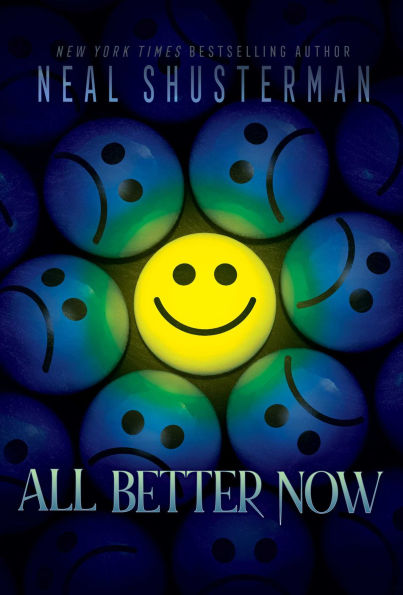
Unwind and Challenger Deep tackled issues that were complex and tough for young readers, and that alone made them controversial. The thing is that young readers are living those realities, so they should at least be able to read about them in a safe way — and a book is a safe place to deal with difficult subject matter. Banning books gets rid of those safe spaces, making it harder for kids to navigate the real world. We all lose when we deprive the next generation of the tools to grow up into better, more compassionate adults.
You have co-authored several novels and stories with your children. How did you find the experience of working so closely with family?
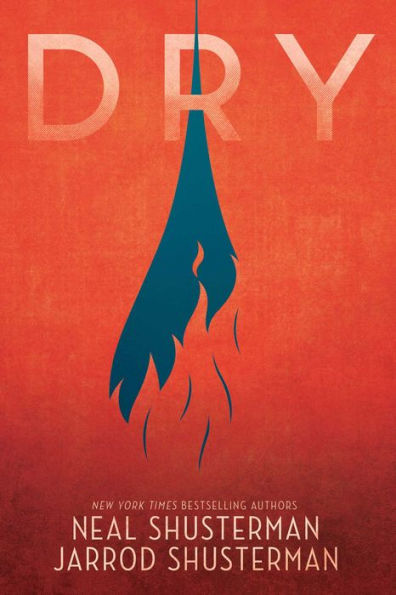
Each time, it’s been a wonderful bonding experience. I co-wrote Dry and Roxy with my son, Jarrod, and several short stories with my son, Brendan — and his artwork inspired Challenger Deep.
Most recently, I collaborated with my daughter, Joelle, who wrote a short story for Gleanings, and my daughter, Erin, who is an artist and drafts cover concepts as well as creating custom bookplates for each book. When you collaborate, writing must become a dialogue instead of a monologue — and working with my adult children has been one of the most rewarding experiences of my career. All four of them inspire me and challenge me. I think the work is stronger for it, and our relationships are, too.
As a young adult author, you have a certain responsibility to ensure that you are writing in a way that both tests the boundaries of and caters to younger audiences. Has this marriage of the two ever been difficult for you to manage?
It is an enormous responsibility that I take very seriously. First and foremost, I respect the intelligence and emotional depth of my young readers, but I also strive to make the story accessible and interesting to them — as well as to adults. It’s a complicated web.
When I’m writing a book, I’m balancing the need to capture readers’ attention (which means challenging them), but not overwhelming them with too much at once. I’II never write down to my audience, but I also must be mindful of their experiences. Young readers feel deeply — for most of them, every experience they have is one of their first forays into the world: their first failure, their first kiss, their first heartbreak, their first victory. It’s all sparkly and new — but can be devastating, too. I want to help them explore it all within the safety of a book.
I think of writing like lighting a candle in a dark room — a reader can decide where to take that candle, and how much to explore, rather than throwing all the lights on at once and overwhelming them. I actually find that if a young reader isn’t ready to face something, the mind has a way of softening their understanding of what they’re reading, if written with care. In the end, we can’t protect young readers from all the difficult things in the world forever, but if we give them a vast toolbox and enough candles, they can navigate those things with more care and resilience.
In the past, you had some experience screenwriting for shows like Goosebumps and The Haunting Hour. Now that several of your books are being adapted for television, what kind of role do you have in the process? Does it feel natural returning to television writing after a lengthy career in publishing?
Well, I’ve been doing both all along: writing scripts, writing books, and occasionally getting to adapt my own material. With adaptations for film and TV, I’m always involved either as a creative producer or a writer. Sometimes, I’m more hands-on; other times, I take a step back. For Dawn, a movie in development with Netflix, based on my story, Dawn Terminator, in MindWorks, I’m keeping my distance and letting the writers write. For the Scythe TV series — also currently in development, with Amblin, Universal, and Peacock — I’m hoping to be more involved as a writer once the pilot goes to series. There’s a great director and showrunner, so I’m happy to let them take charge as long as I get to be in the room where it happens!
A lot of us at Bookstr are very into dystopian books as a way to reflect on the state of the world. What are some authors or books that you always recommend within that genre to read?
I’ll always recommend The Giver by Lois Lowry; it was foundational for me personally and for the genre of young adult dystopian as a whole. Lord of the Flies, 1984, and Fahrenheit 451 are also essential trailblazers — especially now. I also recommend Marie Lu’s Legend series and M. T. Anderson’s Feed. And I just blurbed a new edition of Patrick Ness’s Chaos Walking trilogy, which was groundbreaking. With this resurgence in speculative and dystopian, I’m excited to see what new voices are on the horizon, but I like to mention those titles, as I think they’ve greatly shaped the space and the path we’re walking now.

A big thank you to Neal Shusterman for this insightful and thought-provoking interview! Be sure to snag your copy of MindWorks here, and keep up with Neal on Instagram, TikTok, Facebook, and LinkedIn.
Looking for more insightful author interviews? Check out our interview with dystopian author Gabe Cole Novoa right here.
Discover Neal Shusterman’s works and more on our Dystopian Worlds, Technology, and the Universe in Science Fiction bookshelf on Bookshop.org.