


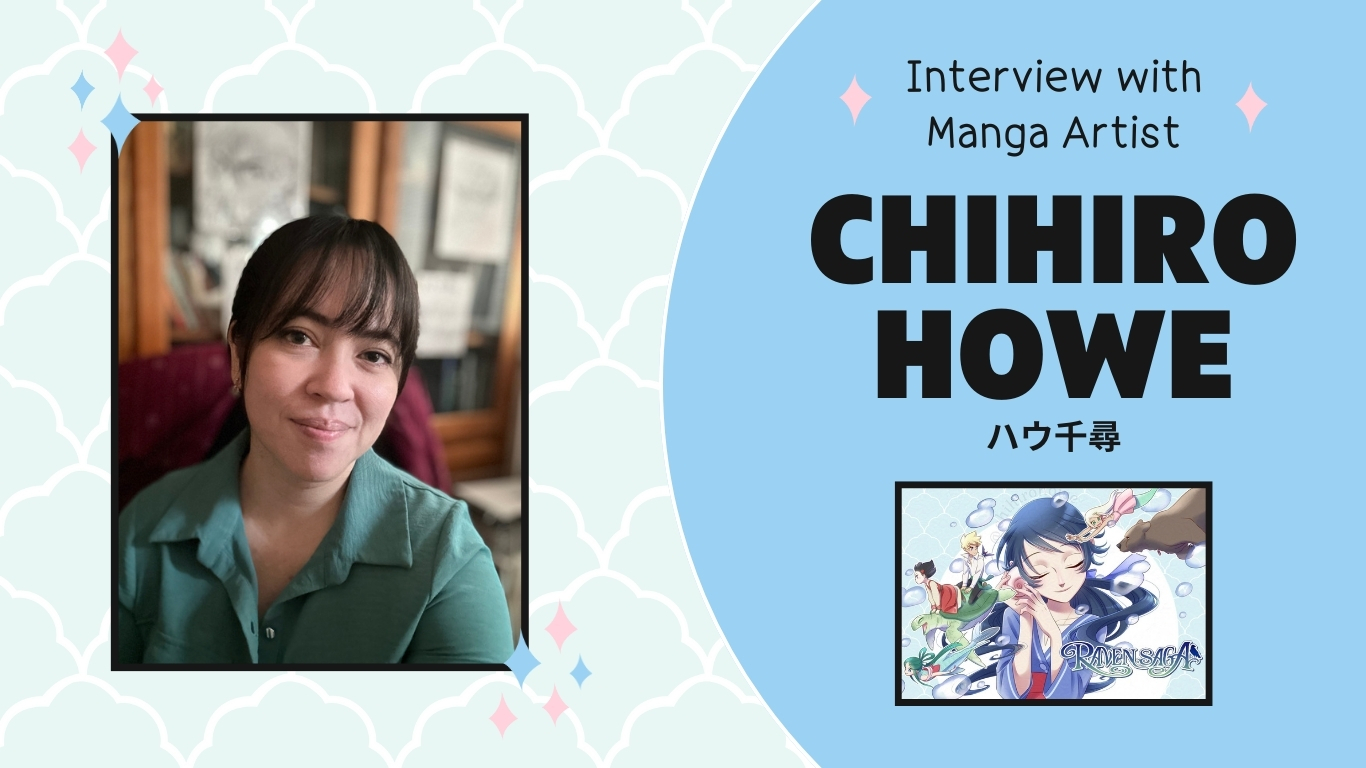
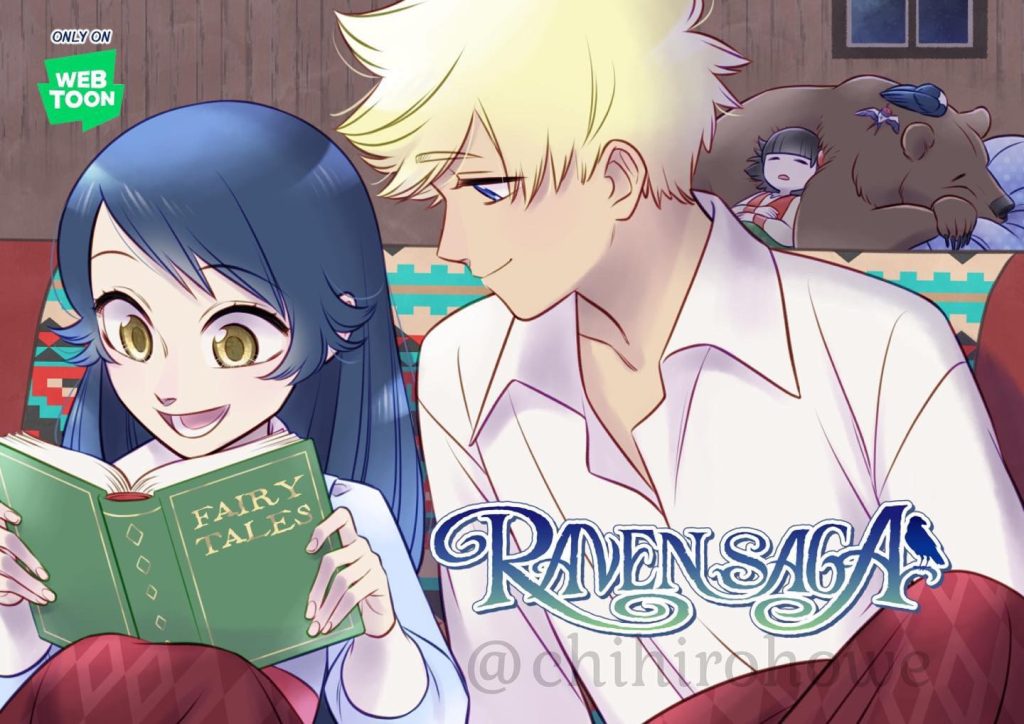
A dream is a wish your heart makes, and manga artist Chihiro Howe knows that all too well. Growing up with Disney magic and the works of mangaka giants like Eiichiro Oda, Chihiro always knew she wanted to create. Now, her talents can be enjoyed worldwide in her latest web comic, Raven Saga, a series about a girl who ventures into a world infused with Western and Asian fairy tale characters. We had the immense pleasure of talking with Chihiro about everything from her creative process to her thoughts on “diverse entertainment.” Her passionate responses prove that she’s an artist through and through. Read on to learn about her journey, her craft, and her take on why manga is a standout medium in storytelling.
About Chihiro Howe
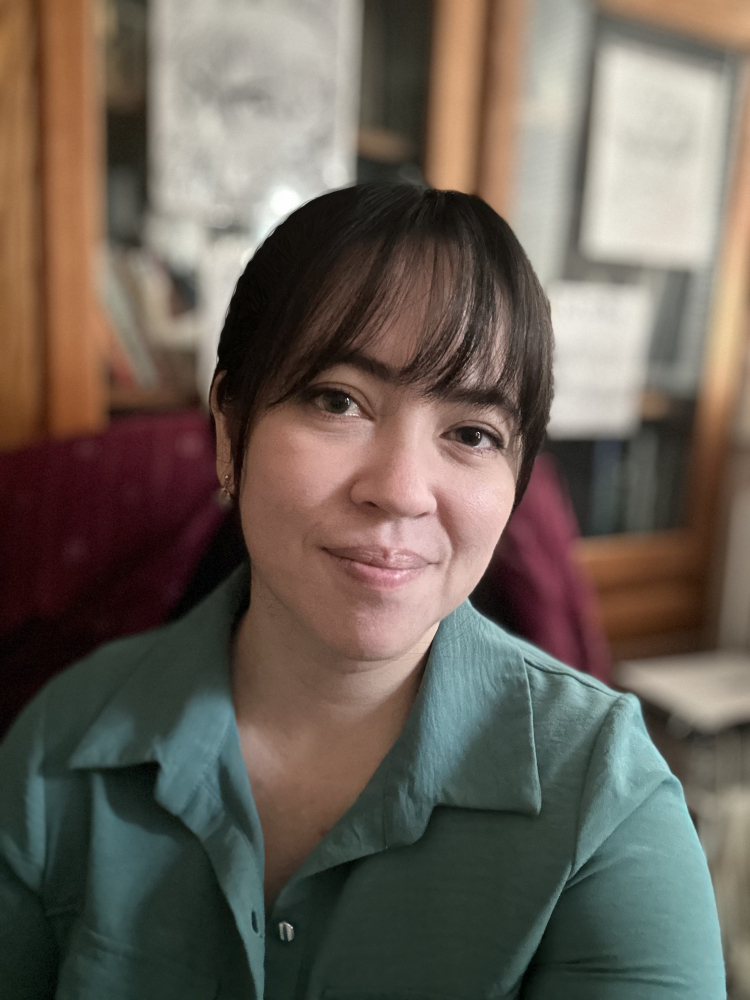
Chihiro Howe is a Japanese manga artist, illustrator, and character designer based in the US. Her works include Webtoon’s Raven Saga, its predecessor The Other Day I Met A Bear, and an instructional book titled Manga Academy. Aside from Disney and Oda, Chihiro’s influences include Studio Ghibli, as well as shonen and shoujo manga artists like Masashi Kishimoto, Kei Enue, and Arina Tanemura.
How did your cultural background or experiences influence your work?
I grew up in Japan, so I’ve been reading manga since I was young. Manga is everywhere over there: in the newspapers, ads, textbooks, school and public libraries, and on the bookshelves of many households. Because the style was what I was used to seeing, I started drawing like it and making my own manga. I also loved watching Disney movies, so that also became an element that shows through in my work.
How did your diverse interests and aspirations shape your journey before settling into your field?
I always knew I would go into something art-related because that’s all I’ve been interested in since I was very young. I also love making up stories, so I pursued being a manga artist to do both in one job. The illustration jobs were temporary ones until I was able to sign on with a publisher to be able to create my own series.
I did put aside the manga profession for a bit when I had kids and became a full-time mom, but after they started school, I was able to get back into it again.
As both a fan and a creator, what do you think makes Japanese manga uniquely appealing and important amongst other storytelling mediums?
For me, it’s the thought and the skill that go into it. Every little thing you see on the page is thought out to maximize the reader’s experience of the story, and to make it easier for them to follow along. [This can be] the shape, size, or placement of the panels and the speech bubbles; the placement and design of the sound effect words; the characters, backgrounds, effects, visual angles, etc. And they do it all in black and white.
Another thing that makes manga so appealing, is that it’s so diverse. And by diverse, I mean you can find any type of story you could think of — sports, occupation, romance, fantasy, mystery, action, horror… and even some minor, super niche topics, so you can always find something that fits your needs.
Manga also focuses on the characters rather than the story, so their thoughts and emotions are written out carefully. I find it’s easier to relate to them and to want to root for them as I read the story.
From conception to completion, how do you manage and structure the various stages of your work to bring a project to fruition?
With manga, I either start with a drawing of a character or a story plot (whichever comes to mind first). The story unfolds as I try to figure out who the character is, or if I’m doing the plot first, then I try to figure out what kind of character would be involved in the story. At this point, I’m all analog, using a notebook and a pencil.
- Once the plot is written down (usually in bullet points), I start working on my computer. I write out the dialogue on Clip Studio Paint, using the manga manuscript format.
- With the dialogue set, I can now visualize what the characters are doing, so I sketch out the panels with them. This would be the storyboard stage.
This stage is where I spend a lot of time, because I read over the manuscript and fix it until it feels right.
- Then I input instructions, reference images and upload the file onto Clip Studio cloud so my helpers can access the file at the same time.
I hire helpers because my series updates weekly; therefore, I have a weekly deadline, and I can’t finish a chapter a week by myself…
- I have a helper who draws the backgrounds of the manga, so I can focus on the story and the characters. While she draws the backgrounds, I move onto drawing the panel lines and speech bubbles and typing up the dialogue.
- I then start refining the sketch of the storyboard, then onto the inking.
My current series is a webtoon, so it’s in full color, which is why I also have a helper who works on the coloring. As I finish inking the pages, they go into the file to start coloring.
- Once I finish the inking process, I go back to what my helper colored and add in the touch-ups and effects before turning in the manuscript.
As entertainment media undergoes a noticeable shift towards diversity, what do you see as the next crucial steps in fostering authentic and inclusive representation in storytelling? How can the industry deepen its commitment to diversity beyond surface-level changes?
I think instead of the same people writing stories with “inclusive” representation and stories, they should just let everyone create their own story. I believe true diversity comes from the creators themselves, not the narratives and characters made by the industry to check off the “diverse and inclusive” list.
Creating comes from the heart, fused with the creator’s background: culture, experience, beliefs, etc. Those are things that only they themselves can show authentically, not someone who just does the research. Letting the creators make what they want would allow for so many diverse works to go out into the world.
If the industry wants to commit to diversity beyond the surface instead of having the same group of people produce “diversity,” have different groups of people write their own story and give them more opportunities. Focus more on the indie creators. They will bring their own unique and diverse voices to entertainment.
In the Japanese manga industry, if you look at each series individually there isn’t much diversity like what you see in Western media. But if you look at manga at large, there are so many different stories created by so many different creators, with so many different themes and topics that you can always find something that reflects you. The whole industry is a rainbow of colors, even if not every single individual [falls into the “diverse” category]. The LGBTQ+ community, different cultures, different races — they all are part of this diversity.
In the western industry (I live in the US, so I’m talking mainly about the US industry here), they try to include every “diverse” and “inclusive” category to each individual piece of media they create. That’s not bad, but you can only do so much trying to include everything at once.
I am a mixed Japanese, and while I may have some stereotypical experiences and stories, I don’t write them like that.
I love fantasy. I love adventure. I put parts of myself into every story I write, every drawing I draw, I spin them in my own way to create something new, and nobody else can create what I create like I can because they don’t have my experiences. It’s the same with every creator out there, no matter their skin [color], religion, sexuality, or what country they are from.
If you were to create a mural representing your artistic journey, what elements and themes would you include?
Mine would have lots of books, animals, manga, and some Japanese and Polynesian elements. Plus, a bunch of fantasy elements like magic, mythical creatures, etc. And maybe some authors and artists who had a big impact on me as a creator.
The characters in your webtoon, Raven Saga, all come from popular fairy tales. What fairy tale or myth from your childhood is your favorite? If you could live in any, which would you choose and why?
I always liked the tale of Cinderella. Considering what she went through, I felt she deserved a happy ending the most, so it was so satisfying to have her live the good life she so deserved.
[If we’re talking] a Japanese fairy tale, I quite liked Tsuru no Ongaeshi (The Grateful Crane). This is the story of a poor man who saves the life of a crane, and as a thank you, she comes back as a human to take care of him by weaving beautiful clothes [he can sell in exchange for] food. He breaks the one request she has to not look into the room while she weaves — because she is in her true form when she does, using her own feathers to sew — and the crane leaves him forever. It wasn’t really the story I liked so much, but more the pictures in the book. I couldn’t think of a way to include the crane character in Raven Saga. Perhaps later on.
As for living in one, I don’t know if I would like to live in one with curses, but The Elves and the Shoemaker sounds nice. Little beings helping around the house during the night? That would be so great!
Finally, let’s talk romance for a second because the relationship between your characters Wen and Corliss is so sweet. As a writer, what do you think is key to crafting a compelling love story?
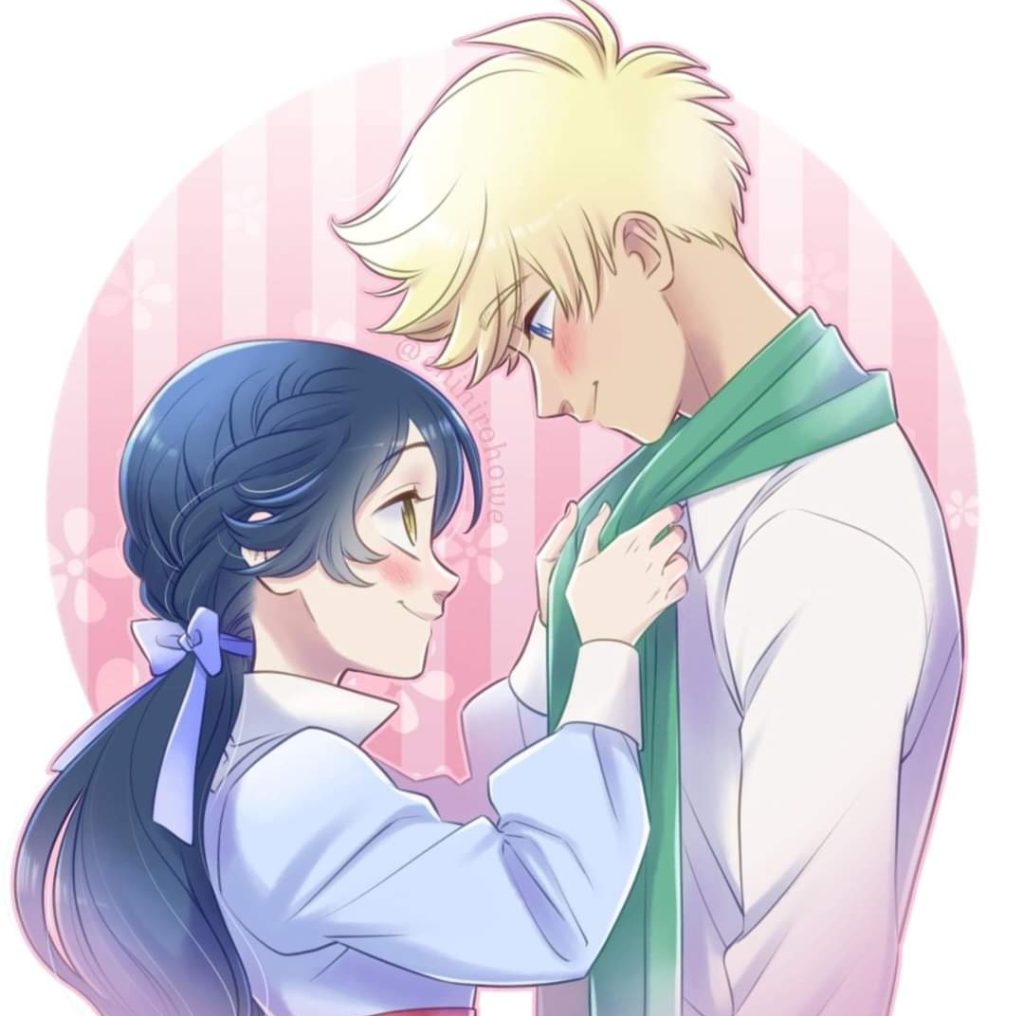
I feel the key is to write about the characters’ feelings and emotions carefully. What made them notice the other? What caused the feelings to change? What made the feeling develop? What was the moment they realized they were in love? What makes them feel the love?
Sometimes, it’s love at first sight, but with love that develops, like in Wen and Corliss’ case, there is always something that a character says or does that makes them fall in love.
I like to develop the characters’ relationships and feelings, so it’s not just one thing [that shapes the romance]; it’s the little things they do, the experiences they share. The accumulation of all the feelings, and emotions, and thoughts, and the bonding that leads them to love.
I feel the careful development of the characters will make the most satisfying romance once they get there.
Thank you to Chihiro Howe for sitting down with us! Your passion for art and storytelling is palpable. Don’t miss out on new episodes of Raven Saga, releasing every week on Webtoon! You can also stay up to date with all of Chihiro’s work by following her on IG, FB, and X.
For more manga and graphic novels, check out our selection on Bookshop.org.
Want more Author Interviews? Click here to read our sit-down with fantasy author and archeologist Genoveva Dimova.