
















For centuries, Magna Carta (Latin for “Great Charter” and a key element in the evolution of human rights) has formed the basis of many constitutions around the world. This includes the influential founding of the United States, from the Declaration of Independence to the framing of the U.S. Constitution and the subsequent adoption of the Bill of Rights. In 1946, shortly after WWII ended, Harvard Law thought it had bought a respectable reprint for a mere $27.50. What it actually had was one of only seven surviving original issues of King Edward I’s confirmation of Magna Carta — yes, that Magna Carta, the granddaddy of modern law, liberty, and footnotes galore.
Once acquired for a price that now feels nearly unconstitutional, this parchment spent decades shelved like it was some average artifact in the legal archives. When recent scholarly authentication revealed the truth, it was surely worthy of the most dramatic of TV courtroom sound effects. Ready to hear how one of the oldest rulebooks ended up hiding in the Ivy League’s version of a junk drawer? Then keep scrolling because this dusty document just declared independence from obscurity — and has more drama than a season of Suits.
The Origins of Magna Carta
Before Hamilton dropped bars about democracy, there were a bunch of medieval barons dropping clauses on King John in 1215. After a royal streak of bad decisions, heavy taxes, and general tyranny, England’s nobility sat the king down and said, “Sign here or else.” Thus, the king signed off on Magna Carta. It was a decree that laid down surprisingly spicy fine print for the time — most notably that no one (not even the king!) was above the law — and it’s been copied, quoted, misquoted, and mythologized for over 800 years, earning modern cameo roles in everything from Supreme Court decisions to Schoolhouse Rock.
At that time, Magna Carta was still more about baronial rights than human rights (less “liberty for all,” and more “hands off our castles and cattle”), and it didn’t fix everything. But it did start the world’s longest game of legal Jenga, later inspiring everything from constitutions to your favorite courtroom dramas.

Throughout the thirteenth and fourteenth centuries, subsequent kings reissued Magna Carta several times in events known as “confirmations.” Each subsequent version was slightly revised from the original 1215 charter, trimming and tweaking clauses to reflect changing royal priorities (and grievances). When King Edward I reissued it in 1300, over thirty copies were produced to distribute around the country, typically to authorities and cathedrals across the kingdom, like royal receipts reminding everyone to mind their clauses. Up until now, scholars thought only six of those originals survived, all of them in England.
From the Bargain Bin to Harvard Law School
Fast forward to the wake of WWII’s ending, when a Royal Air Force war hero sold some documents from his private collection through Sotheby, where it made their way to London book dealers Sweet & Maxwell. A month or so later, Harvard Law School would make one of the greatest impulse buys in academic history at an auction, purchasing one of those documents — this one labeled “HLS MS 172” — for under thirty dollars. Everyone involved thought it was a charming historical reprint of Magna Carta from the 1300s, not a crown jewel of originality. While the world rolled on and into the 21st century with the internet, this medieval document sat quietly in the stacks, its true identity waiting to be rediscovered and reverified.
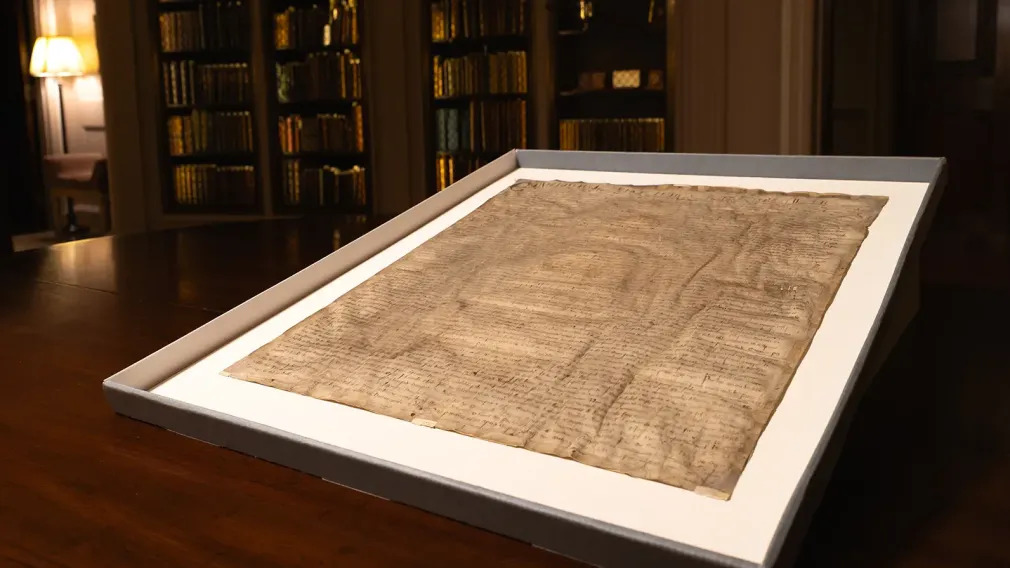
If law students ever needed proof that the best legal outcomes start with a little research and paperwork, this is it. British researcher David Carpenter, an expert professor of Medieval History at King’s College London, stumbled upon it while conducting research for his new book on unofficial copies of Magna Carta. He was looking online at digitized images of statute books, the unofficial collections of law and legislation made for lawyers and litigants, when he came across a sheet of this famous legal launchpad in Harvard Law School’s library archives and noticed contradictions around its date and questioned the suggestion that it was just a fancy old reprint. Then it took an all-star team of scholars, historians, and some forensic-level parchment peeping to confirm the truth: this wasn’t a lovely lookalike — it was a 1300 King Edward I original.
So, what started as a hunt for scholarly sources for the annotated bibliography turned into history-making headlines — and thus, that’s how a digital deep dive ended with Harvard holding a priceless piece of constitutional prequel.
Magna Carta (The Penguin Classics), Translated by Professor David Carpenter
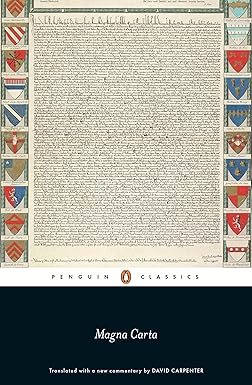
Before he discovered the real thing, Professor David Carpenter, a leading authority on the history of Britain in the central Middle Ages, wrote the Penguin Classics Magna Carta in 2015, in which he provided a lucid, authoritative translation of this iconic legal document. In this book, he unpacks the original Latin text clause by clause and then explores its political origins, medieval drama, and long-term legacy, tracing how a baronial power grab evolved into a global example of liberty and the common rule of law. A must-read for history buffs, legal minds, and anyone curious about how a centuries-old list of grievances became the backbone of modern democracy.
Harvard Law’s Archives Were Hiding a Bestseller All Along!
What Harvard thought was just an old legal wallflower turned out to be one of Magna Carta’s rarest encore editions, simply waiting for its citation moment. Now restored to its rightful place in the legal canon, this Magna Carta is no longer just misfiled historical footnote material — it’s front-page parchment that’s finally back in the legal limelight.
Keep up the history binge and get a taste of 16th-century dairy wisdom! Check out my article: The Oldest Known English Book About Cheese Now Available Online.
Browse our nonfiction bookshelf for more recommendations to expand your curious, bookish mind.