


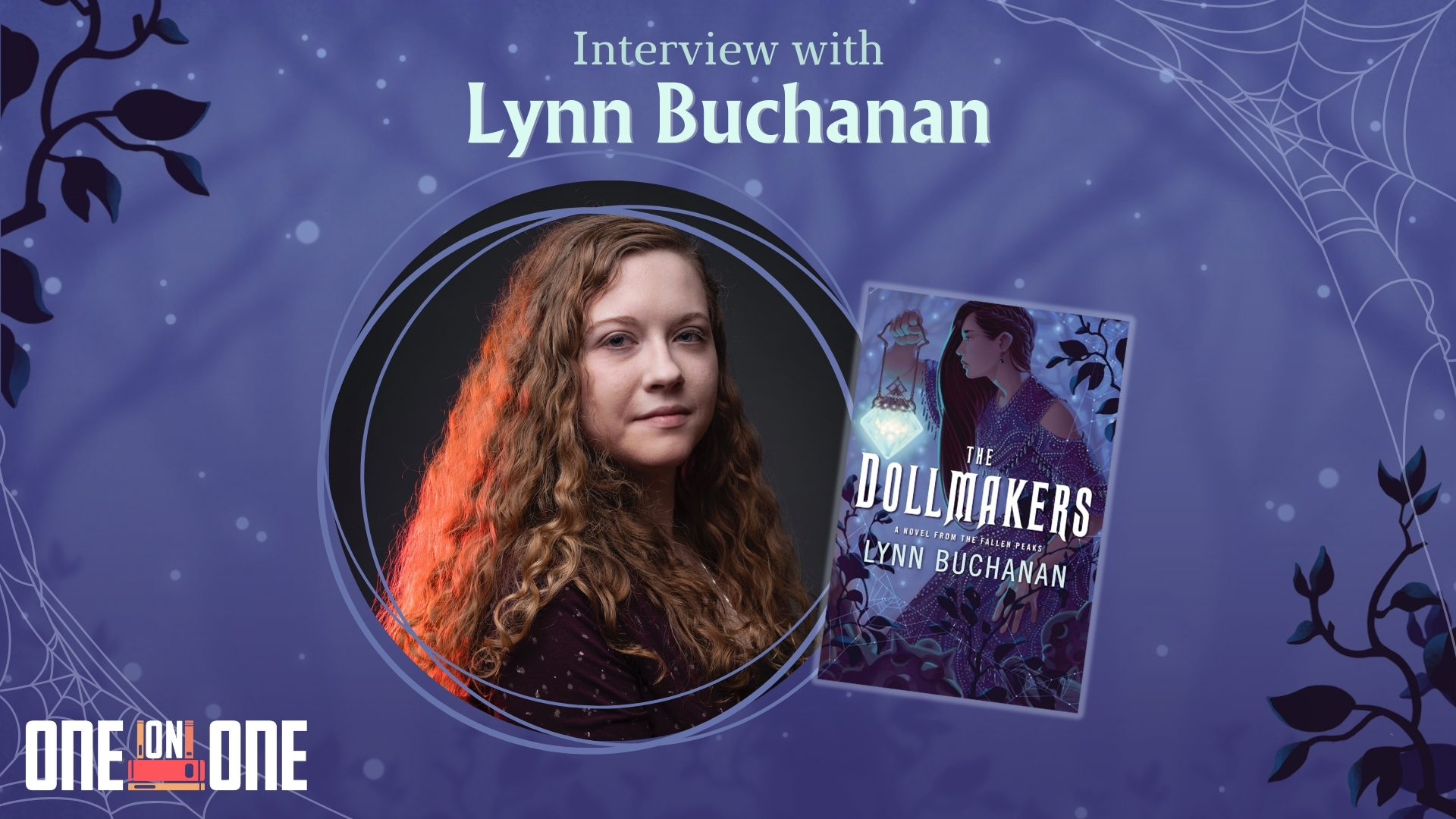
“If I could just do ____, I could finish writing a novel.” How many excuses like this have we writers told ourselves? At what point do we finally face the beast and make time to sit with our laptops or notebooks and just write? Debut author Lynn Buchanan knows a lot about the perils of book writing — and monster slaying! Read on to hear all about Lynn’s publishing journey, her excellent workshop advice, and, of course, her brilliant debut novel, The Dollmakers.
About Lynn Buchanan
Lynn Buchanan is a fantasy writer based in the foothills of some impressive, chilly mountains in Utah. She’s a 2019 graduate of the Odyssey Writing Workshop and holds an MFA in fiction from Brigham Young University, where she taught creative writing. When she isn’t writing about monster-fighting dolls, moody painters, and mummified arms used as dancing props, she enjoys playing the oboe, buying houseplants, and watching Ghibli films.
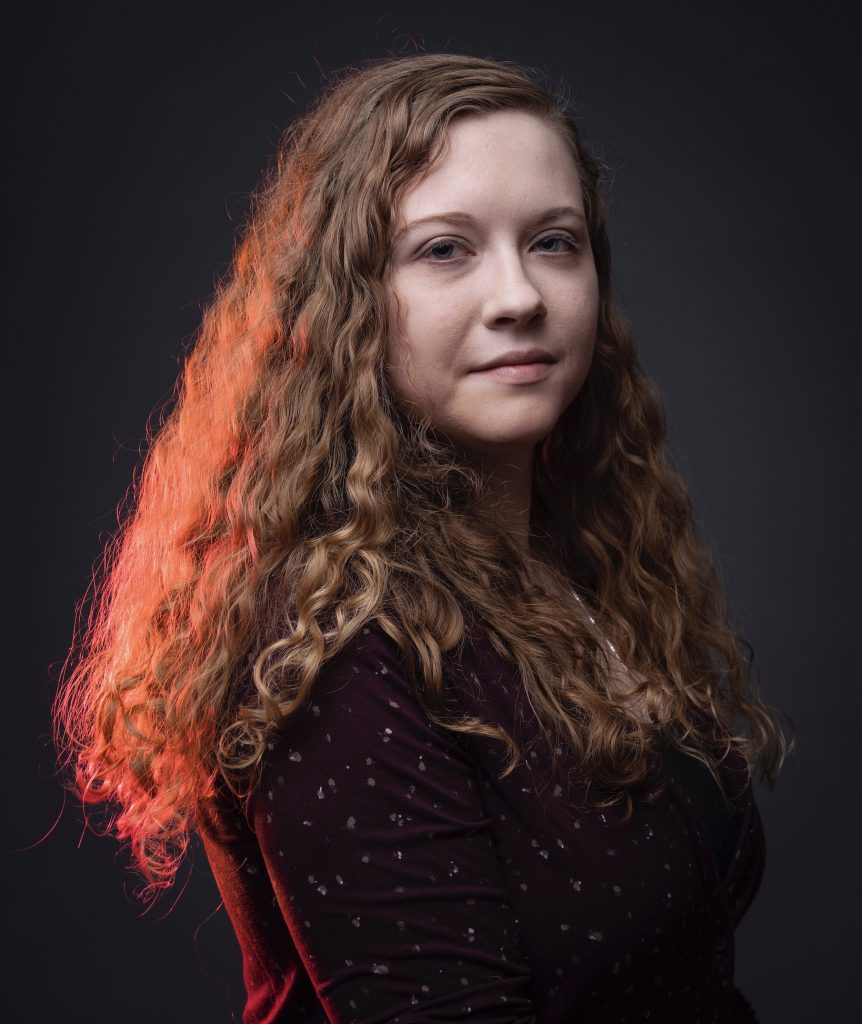
Thank you, Lynn. Let’s get started!
For those who might be unfamiliar, can you give us an elevator pitch for your debut novel The Dollmakers?
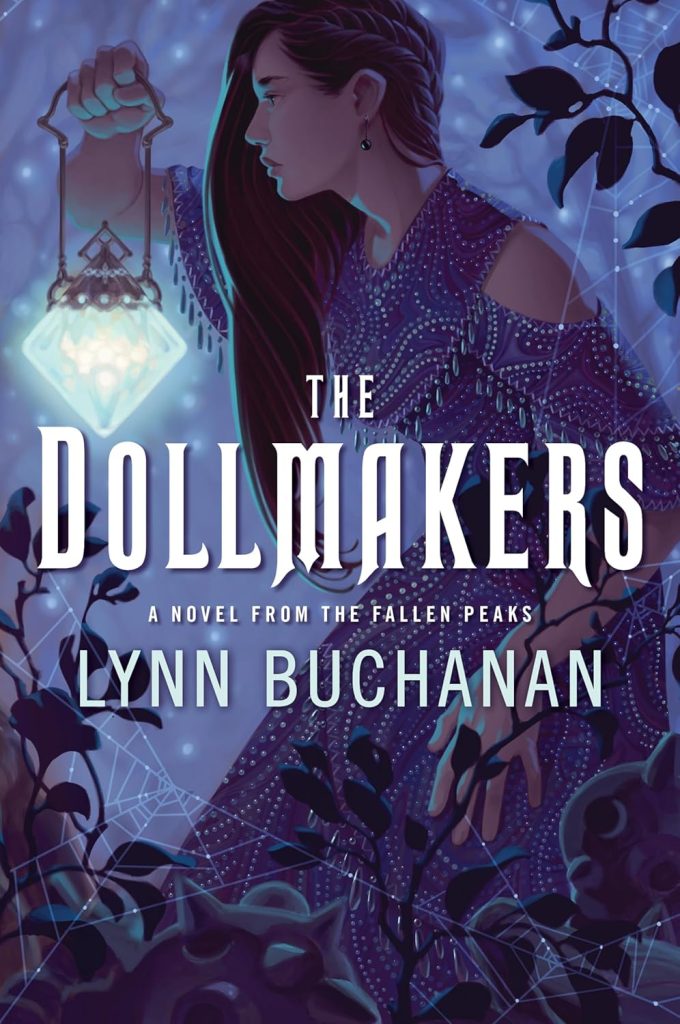
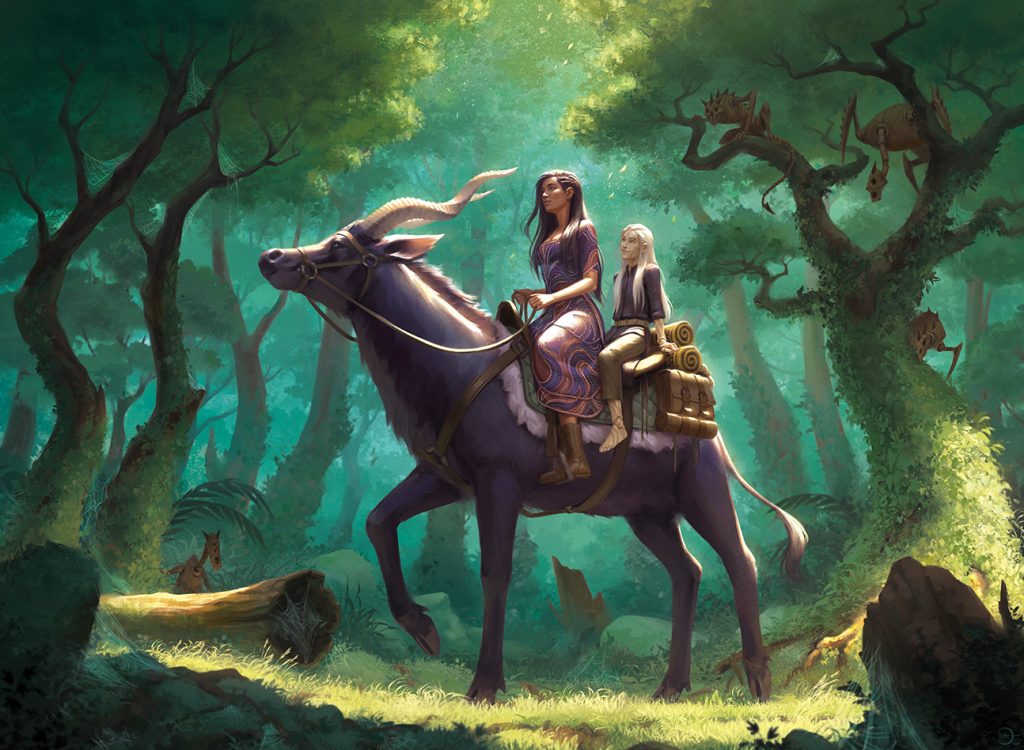
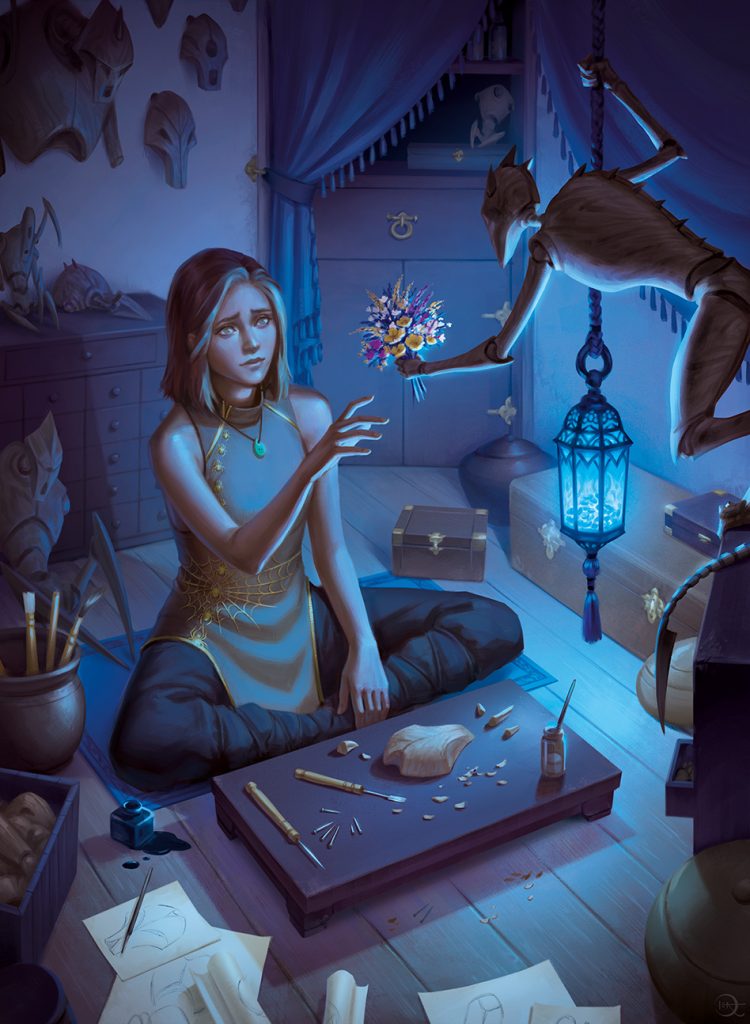
The Dollmakers is about Shean, a woman who has spent her whole life learning to make magical dolls to fight the monsters that terrorize her country — but when the time comes for her dolls to be assessed, she’s told they’re too delicate and beautiful to fight. Infuriated, Shean sets out to test her dolls against the monsters herself, determined to do whatever it takes to prove that her work is meant to fight, not serve as toys or decorative bobbles; a conviction that spreads confusion and chaos in her wake. At its core, The Dollmakers is a coming-of-age story, focused on a woman as ambitious as she is self-delusional, and featuring creepy-cute dolls, monsters that weep as they kill you, and a surprising number of spiders.
What were some of the biggest challenges you faced on your path to publication, and what kept you going when things got tough?
I’d say a lot of the challenges I faced were similar to what a lot of aspiring authors face — learning to write well, learning to write books well, and then learning how to query literary agents and network until you find the right agent to represent you and your work, who will then (hopefully) find the right editor for your work. The most frustrating part of the process for me was probably the element of luck and timing that goes into everything — I can control how much I write, work on improving my prose and practice applying feedback, but when it comes to finding an agent and/or getting a book deal, almost everything is down to forces out of any one individual’s control.
You have to find the right editor at the right time with the right book, and that’s a target that isn’t just moving; it’s dancing around in front of you while you’re blindfolded with one arm tied behind your back. To get through the anxiety and stress of waiting to see if/when one of my books would end up on the right desk at the right time, I focused on the things I mentioned earlier — namely, writing. A lot. And getting lots of feedback from a lot of people that I could apply to my writing to make it better. I also focused on getting a routine down for myself, solidifying a certain time of each of my days as “writing time” to the point that, when the stress grew acute, I was so entrenched in the habit of writing, that I never stopped writing, which in turn helped me maintain a sense of forward movement and momentum.
Many authors explore both traditional and self-publishing routes. What were the key factors you considered when making your decision, and what ultimately led you down the path of traditional publishing?
I’ve always wanted to be a traditionally published author — so much so that my research into self-publishing has been, admittedly, limited and surface-level. One of the reasons I focused on traditional publishing is because of the authors whose books led me to want to be a writer in the first place, authors who were all traditionally published; with those examples in front of me, it always felt like a given that I’d aim for traditional publishing. Another reason I’ve chosen to focus on traditional publishing is that I’m not particularly cut out for marketing and promotion, both of which you have to be very good at to succeed in self-publishing. Overall, looking at both routes and weighing the pros and cons of each, for me, traditional publishing feels like the correct path to focus on at the moment.
The Odyssey Writing Workshop is highly regarded. What was the most valuable lesson you learned there, and how did it impact your writing? What kind of writer would you recommend apply?
One of the biggest things I learned at the Odyssey Writing Workshop was how to properly revise. Before taking the workshop, I was in the habit of writing books and never touching them again — I didn’t know how to revise, and the feeble attempts I’d made in the past had felt fruitless to the point of being futile. At Odyssey, though, I was taught several methods of revision, particularly in regard to plotting and pacing (both of which I was abysmal at when I started the workshop).
The first thing I did when I got back from the workshop was take the story I’d used to apply to get into Odyssey and revise it, a process that gave it key things like an actual plot, forward momentum, and decent pacing. What I hadn’t been able to see about that piece of writing before the workshop was that it didn’t actually have a plot — it was just a character study — and that revelation led to me seeing everything I wrote thereafter far more clearly. In that sense, Odyssey really was a turning point for me; that book I revised right after the workshop was the book that ended up getting me a literary agent, and it also paved the way for me to write The Dollmakers.
I’d recommend anyone who writes science fiction, fantasy, or horror to consider applying to the Odyssey Writing Workshop. It was an invaluable experience for me, and I firmly believe anyone who goes through the workshop will come out of it a far better, more competent writer.
You pursued an MFA in Fiction at Brigham Young University. What drew you to that specific program, and how did your time there shape your development as a writer?
One reason I applied to the MFA program at Brigham Young University was because it’s one of the few science fiction and fantasy-friendly MFA programs in the country; hard not to be when its most famous alumni is Brandon Sanderson! I wanted to go through a program that wouldn’t try to force me to write in genres I have no interest in, and, thankfully, none of my professors ever even suggested I drop SFF while I was in the program. I’d say the biggest thing I gained from the experience was two, relatively uninterrupted, years to focus on practically nothing but writing — The Dollmakers was written during that time and was actually my thesis project for the program.
You’ve also taught Creative Writing. How has the experience of teaching influenced your own writing process and craft?
Teaching has a way of forcing you to be introspective — when I’m in front of a class, I can’t just wave my hands around and give some vague answer about how to plot based on a “feeling” or “instinct.” Or, at least, I can’t do that often; a lot of writing is instinct and feeling for me at this point, but what use can students get from a teacher falling back on nebulous emotional statements over and over again? The process of teaching has taught me how to explain my writing process in a coherent way, and that, in turn, has allowed me to better understand the mechanics of my own methods, to the point that I can tweak and adjust those mechanics as needed between projects without feeling like I’m going completely off the rails. Teaching has also helped me put words to writing habits that I developed naturally over time, which in turn gives me a way to view my work in a conscious, rather than a completely subconscious, way.
For example, I was recently having a Q&A with a handful of students, and one of them asked me what I need to know about a character before I can start writing said character’s story. I hemmed and hawed a bit and gave my instinct-based response, “Well, everything.” Which, of course, wasn’t a good answer; with the unwavering gazes of students pinning me down, I was forced to really think about an answer to their question, which made me think of the main character from The Dollmakers, Shean. What did I need to know about her before I started writing about her?
Well, I needed to know what she wanted (to prove herself and her work to her people and country). I needed to know what she actually needed (to be humbled/have some introspection). And I needed to know what was at stake if she did or did not get what she wanted and/or needed (her whole country could be destroyed if she didn’t get it together). Those three things are, consistently, what I know about every main character before I start writing, but until that moment when I was a teacher being asked to articulate my process, I’d never put that reality into words. And it’s so helpful to have it in words — in the short time since I shared that with my students, I’ve already found it easier and faster to pin down the characters of my current WIPs.
Fantasy is clearly a passion of yours. Do you see yourself exploring other genres in the future, or are there other types of stories you’re eager to tell? What can you tell us about what you’re working on now?
By and large, most of my future projects are fantasy books set in secondary worlds, like The Dollmakers. I’ve already written several novels set in the same world as The Dollmakers (with more to come), and I have several other fantasy worlds in development.
That said, I’d like to write some science fiction in the future — I have a couple of space operas knocking around in my head that will eventually make their way onto paper. And I have one story set in the contemporary world sprinkled with magic that I’d like to write someday. I also have a soft spot for writing faerie tales set in a fantasy-oriented historical Scotland, often inspired by Scottish folk songs. I recently finished writing a novel based on a favorite Scottish ballad of mine, and I have nearly as many ideas for stories set in the alternate-history/magical Scotland I’ve been writing about as I have for secondary fantasy pieces.
Right now, I’m working on a book set in the same world as The Dollmakers, and I have plans to write more Scottish faerie tales this year, along with at least one more book set in the same world as The Dollmakers.
You’ve said, “I tend to need to stew on ideas for quite a while before getting to a point where I can effectively write them.” Can you give us a glimpse into your brainstorming and writing process?
My brainstorming process is quite chaotic and messy — in short, when I have an idea for a book (which can be anything from a plot concept to a character idea to a tiny sliver of worldbuilding that snags on my imagination) I create a notes document for it on my phone, and scribble out whatever ideas I have for said book whenever said ideas come to me. For years. The science fiction books I mentioned above, for example, were conceived a good seven or eight years ago and are now long, ponderous note files in my phone that stretch on for a good mile apiece.
When I feel particularly interested in any given story idea, I usually sit down and pull up the note file for said idea and copy it over into a Word document, spending however much time I need to spend to organize the file into chronological order in relation to the plot, and, once that’s done, I usually start writing. I know pretty quickly if the time is right for me to start any given project; within the opening scene, I can usually sense if I’ve thought about the story enough to actually start writing it. If I have, I keep going. If I haven’t, I set the story aside to percolate and stew for however many more months or years it needs to percolate and stew before I can actually write it.
In terms of how my writing process goes once I start into a book, I tend to do that thing you’re not supposed to do — rewrite every scene as I go, over and over until said scene feels “right” enough for me to move forward. I’ve yet to find a way to properly articulate how I know a scene is “right” enough to move on from it, but I can usually tell if something isn’t working, and until it is, I can’t progress further into the narrative. A reality that leads to me spending entire months on a single scene, if necessary (which it was for one of the scenes in The Dollmakers — that was a rough month). Once I finish the first draft of a book, I try to set it aside for as long as possible (a few months, ideally) before coming back to revise it, writing another book in the meantime that can then be put aside while I go back to the previous book and so on, making it so I usually have several books in a revision-and-drafting rotation at any given time.
Who are the fantasy authors who shaped you, whose work you return to again and again, and what is it about their writing that resonates so profoundly with you?
I was influenced by quite a few writers as I was coming into my own as a writer: Diana Wynne Jones, Brian Jacques, Suzanne Collins, Orson Scott Card, Brandon Sanderson, Patrick Rothfuss, Pierce Brown, Terry Pratchett, Hiromu Arakawa, Ken Liu, Marissa Meyer, Nahoko Uehashi, and more. I could honestly go on, but I’ll stop there. There are different reasons I was influenced by each of them, from how well they write characters to their world-building prowess to the beauty of the language they use; in general, though, all of these authors simply wrote stories that made me want to be a writer myself. They all write very differently from each other, and it is within those differences that I learned there isn’t one “right” way to write a book — a freeing revelation, in that it helped me realize that the best thing I could do to write my own books was figure out how I wanted to write stories, and get as good as I could at doing so in my own voice and way.
What’s the one piece of advice you wish you’d received when you were starting out, something that you think would be invaluable for aspiring fantasy authors today?
I’m going to cheat a bit here because this is a piece of advice I was given — I just didn’t listen to it. And that advice is: learn how to revise. Learn to draft a story, set it down for a spell, then go back to it with fresh eyes, focusing on plot and pacing and structure (three things I just opted to ignore for the first five books I wrote). Take the time to learn how to apply the feedback you get from your beta readers, and do what’s necessary to teach yourself how to take a rough first draft and polish it up.
I wish I’d learned how to revise much earlier, as that really was the key to my books leveling up from “well-enough written but unable to sustain a good story” to “complete stories that accomplish something narrative.” I don’t particularly regret those first five books I wrote and failed to revise (even with revision, I doubt any of them would have gone very far — I was simply learning how to write while I was working on them), but I do wish I’d learned the art of revision sooner, as that led into my writing getting so much better so much faster.
So, learn to revise. Give your stories the time they deserve. And, just to add a nice little caveat here, learn to recognize when you’ve done all you can on a story, to the point that it’s time to move on to the next one. As much as revision changed my life, I learned the most about writing by simply writing.
A special thanks to Lynn for sharing all of her phenomenal writing wisdom! If you’re an aspiring fantasy author, consider applying to next year’s Odyssey Writing Workshop. And don’t forget to order The Dollmakers on Bookshop and Amazon!
Be sure to follow Lynn on her socials!
INSTAGRAM | TIKTOK | TWITTER (X) | BLUESKY | WEBSITE
To hear from another debut fantasy author, click here.
Find Lynn’s novel and more on our Fantasy Lovers bookshelf on Bookshop.org.