





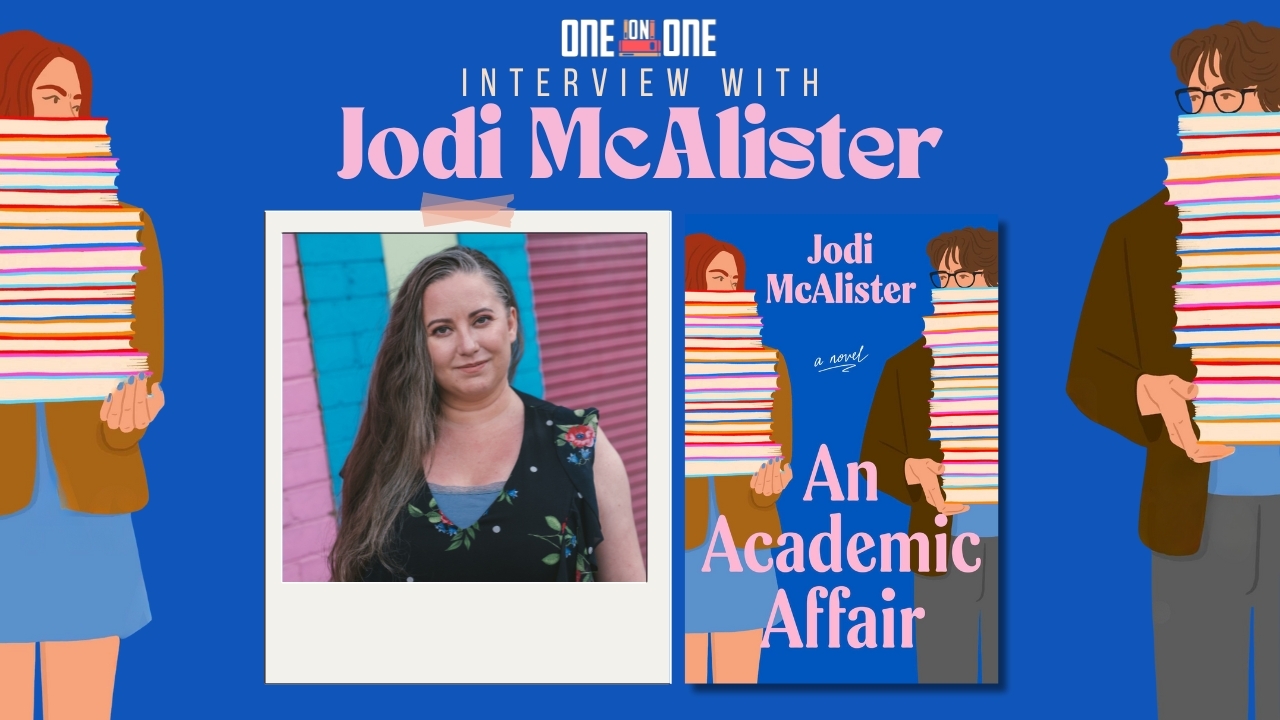
We are thrilled to be joined by a truly unique figure in the literary world — an acclaimed novelist who is also one of the world’s foremost scholars of the romance genre. Dr. Jodi McAlister’s work bridges the divide between academic rigor and narrative delight, offering readers — and critics — a deeper understanding of why love stories hold such cultural power. With her latest novel, An Academic Affair, hitting shelves, Dr. McAlister gives us a delicious new enemies-to-lovers story set against the cutthroat world of higher education. Welcome, Dr. McAlister!
About Dr. Jodi McAlister

Jodi McAlister, PhD, is an author and academic from Kiama, Australia. Her academic work focuses on the history of love, sex, women and girls, popular culture, and fiction. It means that reading romance novels and watching The Bachelor is technically work for her. She is currently a senior lecturer in writing, literature, and culture at Deakin University in Melbourne. For more, visit JodiMcAlister.com.au.
Thank you for speaking with us, Dr. McAlister. Let’s begin!
An Academic Affair uses an academic setting to explore the intense rivalry between two literature PhD students. From a reader’s perspective, what is it about the “academic rivals-to-lovers” trope that you think creates such irresistible romantic tension?
There are a couple of things going on here! If we focus on the “rivals” element first, there’s a distinction to be made between enemies-to-lovers and rivals-to-lovers. In enemies-to-lovers, what you have is mutual loathing. That’s often there in rivals-to-lovers as well. However, it’s rooted in — begrudging, but massively vital — respect.
You’re not going to be a rival with someone you don’t respect. There’s this genuine egalitarianism that’s so, so fascinating and lends itself to so much tension.

The academic setting is a natural fit for this kind of dynamic because it lends itself to rivalry so neatly. Academia has these core (contradictory) values of competition and collegiality at its heart. It’s such a competitive job market that you’re often desperate to excel, succeed, and win, but at the same time, there’s no academia without that exchange of ideas. In some sense, it’s very useful to have a rivalry because they spur you on to become better.
I thought about this a lot when I was writing Sadie and Jonah, because I really wanted to draw out how their rivalry actively made them better scholars, and to romanticize that begrudging respect between them. There’s a tiny little turning point in the prologue for Sadie, which is a crystallization of this: she demands to know why Jonah never speaks up for her when his terrible professor father starts eviscerating her work, and he replies that he wouldn’t undermine her like that, because she’s perfectly capable of speaking up for herself. That foundational respect between them is also the source of a lot of their tension: things would be so much easier if the other one of them weren’t so frustratingly good at what they do.
Your novel is infused with footnotes and literary references that will delight readers. How did you balance that playful, meta-fictional style with ensuring the core emotional journey of Sadie and Jonah remained grounded and relatable?
I’m not going to lie — it was hard! Surprisingly, it was much harder to do from Sadie’s perspective than it was from Jonah’s, which I initially thought was going to be the other way around. Jonah is quite a different style of scholar to me, both in terms of his academic writing style (I am aggressively not a footnotes girlie) and what he writes about.
I started my academic career as an early modernist — that is, studying Shakespeare and friends, like he does — but moved away from it pretty swiftly. That means I’ve got a decent understanding of the kinds of references Jonah makes. See, for instance, his meditation on the Thomas Heywood play, A Woman Killed With Kindness, but I don’t know enough myself to truly confuse anyone and really let my scholarly meanderings get in the way of the story. Fun fact: it is much easier to write a lecture on something you know a bit about than something you know a lot about, because you have a much better sense of what the basics actually are.
Sadie, on the other hand, writes academically much more like me and studies in the same field as I do: she’s a popular fiction specialist. There are a lot of killed darlings in my files of her breaking down theoretical concepts and relating them to her own personal life. It was important to me to include a bit of this in there (eg, when she explains eucatastrophe) because this is how academics genuinely think. Personally, I can never stop relating my life to the things I research. However, I had to be really conscious of the fact that a) maybe not everyone is quite as interested in this as me, and b) that the story needed to keep moving.
There are only so many long theoretical digressions you can take, even if they are good character beats. First and foremost, readers need to believe in them as people, even if they are people who are also scholars. An example of this is in early drafts of this book, when Jonah finally admitted to the reader that he loved Sadie, in a 1,500-word essay, in a footnote. I fought hard for it — it is exactly how Jonah would admit his love — but eventually I had to compromise, because asking readers to follow me on that journey really would have been a bit of an ask.
As a scholar, you’ve written on subjects like New Adult fiction and the history of the virgin heroine. How does your academic lens — your deep understanding of romance tropes and history — both inform and challenge the way you approach writing your own contemporary romance novels?
I’m a much better author for being an academic, and a much better academic for being an author. I really couldn’t imagine not occupying this dual identity — I like to think about it like the double helix of DNA, the two alleles essentially inextricable from each other in the same whole.
Broadly, I think it’s more the thematic elements of what I study, rather than some of the more concrete histories, that influence my creative writing. I can tell you a great deal about the history of representations of virgin heroines, for instance, or romance publishing in the Philippines, but exactly none of that is in An Academic Affair. Far more influential, however, are some of the ideas about love I’ve gleaned from my research across various forms of romantic media. I often describe the core questions of my research career as “what are the stories we tell about love, and what do they do to the ways that we think?” The answer to those questions permeates a lot (like, a lot) of my creative work.
For example, there’s a chapter I wrote a few years ago for The Routledge Companion to Romantic Love, which is about how fundamental listening is to modern love. It draws on scholar Carla Kaplan’s idea of the “erotics of talk” in women’s writing: that women are not only seeking a voice, but the best placed person to hear it. Kaplan doesn’t solely — or, even mostly — think about this in a romantic context. But, to me and my argument in that particular chapter, this idea of being someone’s ideal listener is deeply, profoundly romantic.
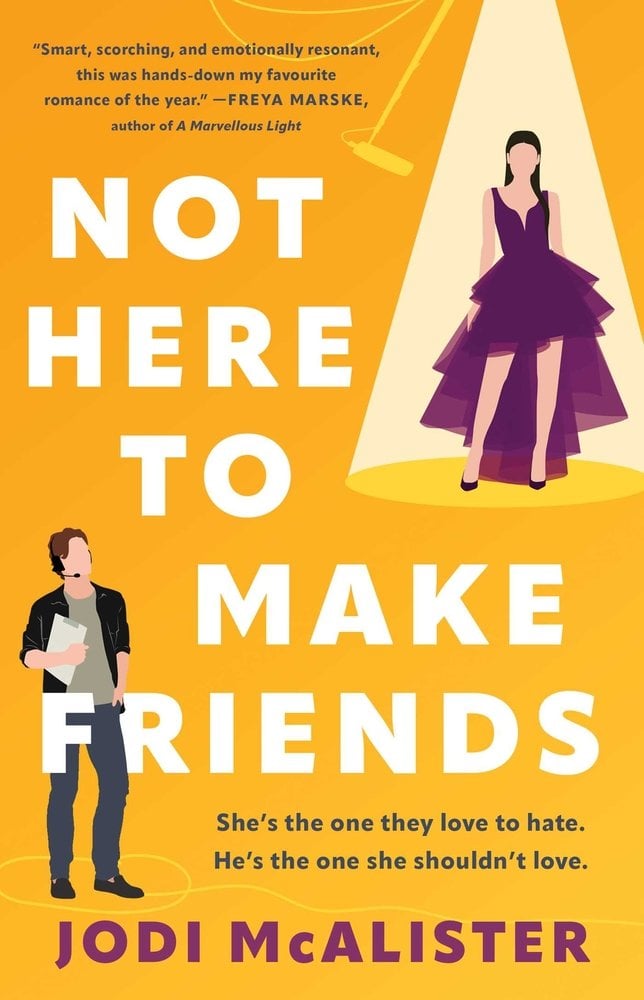
We talk a lot about wanting to feel seen, but I think wanting to feel truly heard is maybe even more important. This is what Sadie and Jonah are for each other in An Academic Affair — and it’s true across many, many of my books. Lily and Murray in Not Here To Make Friends, and Libby and Will in Libby Lawrence is Good at Pretending are very obvious examples, but that idea has been so influential for me that it’s threaded through pretty much every book I’ve ever written. Basically, I will never be able to escape from my own research!
You’ve previously written the reality TV-themed Marry Me, Juliet trilogy and the YA paranormal Valentine series. Do you find your reading audience for a campus rom-com like An Academic Affair differs, and what common thread or theme do you hope all your readers take away from your body of work?
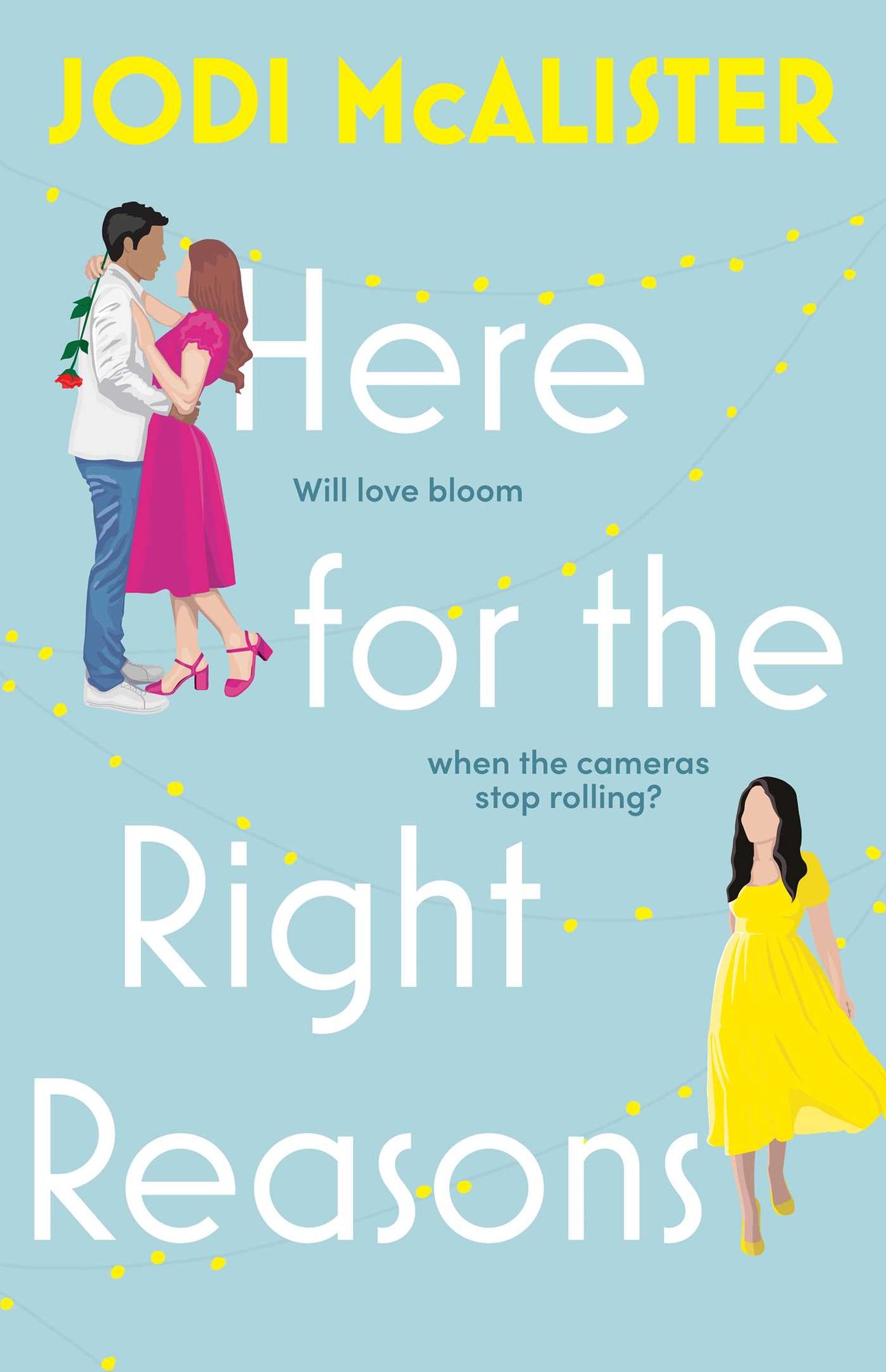
My career definitely has two distinct halves and two distinct readerships. There’s Jodi-who-wrote-YA, and Jodi-who-writes-for-adults. There’s some crossover between the two — some people definitely followed me from my Valentine series through to my work for adults — but in many ways, when I published Here For The Right Reasons in 2022, which was my first book for adults, it was almost a second debut.
Caught right in the middle here in my book Libby Lawrence is Good at Pretending, which also came out in 2022 and was marketed here in Australia as Young Adult, although it’s about undergrads doing campus theatre. I love this book very, very dearly, but because it sits awkwardly between the two halves of my career, it’s also, alas, by far the least read of all my books.
In terms of my career writing for adults, I’ve definitely found a lot of new readers with An Academic Affair — people who didn’t really want to come on a reality TV adventure with me in the Marry Me, Juliet series, but who’d be willing to give something else a try. There’s also just some very practical publishing realities involved. This is my eighth novel, but the first one that’s had a big international release outside of Australia/New Zealand. Not Here To Make Friends was published in the US after it got a lovely review in the New York Times, but there was more of a scramble after the fact compared to what’s happening with An Academic Affair. The sheer scale means I’ve found a lot of new readers, which has been extremely exciting for me!
One of the common threads through my work is the idea of listening as profoundly romantic, which I’ve described above, but there are a few other things which I think are Jodi hallmarks. One is that I like to be structurally and stylistically ambitious. For instance, the three Marry Me, Juliet books are set concurrently, which took a lot of meticulous spreadsheeting and tracking to pull off. The other is my fascination with love stories versus the realities of love. I’m fascinated by the difference between what we think love looks like versus what love actually is, and that bubbles to the surface in a lot of my work.
This can be expressed in a few different ways, but the most common is in the contrast between the high-concept and the emotionally grounded — and, often, quiet. Marriage of convenience is a very high concept trope, for example, and it’s a very handy way of forcing characters into proximity, but the actual romance between them needs to be generated by who they are as people, not by the affordances of the trope itself.
What is the biggest misconception about the romance genre that you hear in your academic life, and conversely, what is the most profound truth about love and relationships you’ve observed in a romance novel that you believe should be taken seriously?
For a long time, I would have said that the biggest misconception I heard all the time was that all romance novels were the same. I used to encounter that one a lot in the early days of my career. I always used to reply, “Okay, if you’re so confident asserting they’re all the same, you must have evidence, so name one romance novel,” which was a very handy gotcha question, because people never could.
Now, though, the misconception I hear the most is that romance suddenly became extremely popular with the explosion of BookTok. It’s not that BookTok hasn’t played a huge role — it has — but what it’s done has predominantly made romance much more visible to the broader culture, and, as a result, my gotcha question above no longer works so reliably!
Romance has always been popular. It’s not a genre that suddenly came out of nowhere in 2020. It’s been read in vast quantities for a long time. The more significant change now is that it’s come from the shadows into the light.
There are a lot of profound truths to be found in romance novels, but for me, the most profound one is quite a basic one: women — and people more broadly, but this is often something that’s quite gendered — deserve love, care, and respect in their relationships. Another thing I’ve heard a lot about romance is that it gives women unrealistic expectations, to which my response is, why shouldn’t women expect more?
The idea of the “happily-ever-after” (HEA) is fundamental to romance. Both as a writer and a scholar, how do you define the HEA for a modern reader, and why do you feel this promise of emotional satisfaction is so vital in contemporary storytelling?
The definition of the romance novel I tend to use the most in my scholarly life — which encompasses a definition of the HEA — is by Jayashree Kamblé, Eric Murphy Selinger, and Hsu-Ming Teo in the introduction to the Routledge Research Companion to Popular Romance Fiction, where they write that a romance novel “center[s] around a love plot that holds the promise of a future with a unified emotional life for two or more protagonists.” Basically, your protagonists are getting to end the book together for at least the foreseeable future; emotionally, they’re going to be on the same page (probably after a lot of turmoil throughout the book itself); and importantly, they are going to be happy. They will have struggled to get to this point, but emotional justice has been served.
The great promise of romance fiction is that everything will turn out all right in the end. This is a promise of joy — which is very important — but sometimes, I wonder whether the promise of certainty is even more important. Romance novels often bubble to the cultural surface during times of great turmoil, upheaval, and uncertainty. For example, the romance publisher Mills & Boon maintained its paper ration during WWII — a difficult thing to do — on the grounds that it raised morale for women in the factories. On top of that, it’s hard to ignore the way in which romance readership on BookTok exploded alongside the pandemic.
That promise of a sure, certain, happy ending is so important for us when, in the real world, we’re not so sure that things will be all right. There’s a deep, profound psychological appeal there.
For a reader new to your work, which of your previous books — either academic or fiction — would you recommend they pair with An Academic Affair to get the fullest sense of your voice and perspective on popular culture?
What a great question! The chapter I mentioned before — Love and Listening: The Erotics of Talk in the Popular Romance Novel in the Routledge Research Companion to Romantic Love — would probably be a good place to start. If you wanted to go deeper, I’ve got two forthcoming co-authored academic books in 2026: The Bonkbuster: Women’s Popular Reading in the Long 1980s (with Amy Burge, Bloomsbury) and Audio Erotica (with Athena Bellas, Routledge), which give a pretty good sense of how I typically approach thinking about love and sex in popular culture. [They] are also indicative of the kind of work Sadie might do!
I also write quite a lot for generalist audiences, especially for The Conversation, which is a good way to get a sense of my voice and perspective without the time investment that diving into all my research would take. This is perhaps more of a rec to pair with my Marry Me, Juliet trilogy than An Academic Affair, but a couple of pieces I’ve written about The Bachelor give a good sense of how I think about these questions of love and story I think about all the time: like this one in People and this one in Refinery29. Both of these pieces actually give versions of an argument Sadie makes to Jonah in An Academic Affair when she bullies him into watching reality TV with her!
In terms of my fiction: An Academic Affair is its own creature, but it’s not my first campus novel. That was Libby Lawrence is Good at Pretending, which is about undergraduates in a campus theatre group putting on a production of Much Ado About Nothing. The two books are very different. There’s a big difference between 19-year-old undergrads and 32-year-old academics! But Much Ado, with its two protagonists who are famously “too wise to woo peaceably,” is a really important intertext for them both, so I think they would be a very interesting pairing.
In a world that often dismisses popular fiction, how do you hope your unique dual career — as a best-selling novelist and a respected academic — helps change the conversation around the value and intellectual merit of the romance genre?
All of the things that have been said to Sadie in An Academic Affair about her area of study have been said to me (usually directly to my face). One word that initially got struck in copy-edits, but which I dug my heels in and insisted had to stay, was “frivolous,” which has been said to me many, many times about romance fiction. It happened more when I was a precariously employed scholar. I’m more established now, and more people are suitably scared to get into an argument with me — but it still happens. As recently as two weeks ago, in fact!
It’s a fight I’ve had so many times [and] honestly, I’m pretty tired of it. You don’t want to believe that romance fiction — one of the world’s bestselling genres, that is demonstrably beloved by millions upon millions of readers — has clear and obvious value? That’s a you-problem, not a romance problem. We’ll be over here having a great time, and you can think what you think about it. It doesn’t change the way romance readers value, treasure, and find deep and profound emotional and intellectual merit in the books — something which has been well-established in scholarship since at least 1984. I’m uninterested in chasing the approval of people determined to turn their noses up at romance: we’re doing fine, so why should we care what they think?
That said, I’m in a very privileged position now, as both a romance author and someone with international scholarly standing in the field. I’m currently the Vice-President of the International Association for the Study of Popular Romance, and I’ll become the President next year. I’m hoping that just by being visible simultaneously as a romance author and a Professionally Clever Person™ — and talking about the genre in a Professionally Clever™ way — will be enough to show people that the romance genre is far more than “frivolous.”
A huge thank you to Dr. Jodi McAlister for taking the time to sit down with us and discuss everything from her latest romantic release to sharing her insightful perspective on the romance genre — and shutting down naysayers of the genre in her effortlessly smooth, academic-backed fashion. Be sure to pick up your copy of An Academic Affair at your favorite bookstore, and keep up with Jodi on her Instagram, TikTok, Facebook, Bluesky, and her website!
Love hearing from fresh and enticing voices in the romance genre? Click here to read our interview with Kat T. Masen, and fall in love with her latest release, How to Break My Heart.
Discover the latest swoonworthy love stories on our Love is in the Air: Contemporary Romance bookshelf on our Bookshop!