




While devices can have their place in children’s lives for educational and entertainment value, there’s nothing as stimulating to children’s sense of creativity and imagination as free, unstructured play. The simple concept of letting children entertain themselves by allowing them to make up their own games is not only beneficial to their creative development but can also aid social, emotional, physical, and cognitive development as well.
In Lindsey Yankey’s new picture book, The Dinosaur Seed, the reader follows a group of young friends modeling one such session of unstructured play. We had the chance to speak with Lindsey about her new book, the joy of creativity, and how we never really outgrow our imagination.
About Lindsey Yankey
Lindsey Yankey creates picture books as a way of combining her artistic passions and inspirations. She studied illustration at the University of Kansas and is the author and illustrator of Bluebird, Sun and Moon, and The Dinosaur Seed, and the illustrator of My Grandma and Me and My Father’s House, both written by Mina Javaherbin. Her books have been recognized as Kansas Notable Books, received multiple starred reviews, have been translated into multiple languages, and are taught in classrooms across the US.
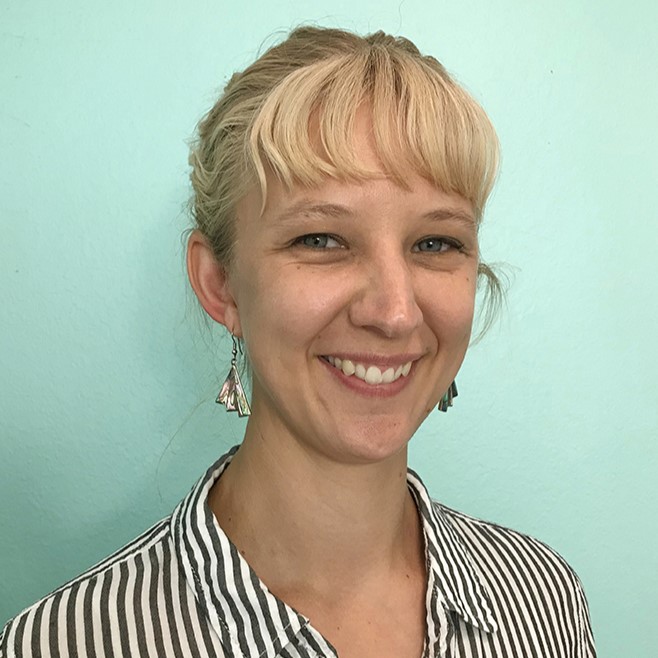
Thank you so much for joining us, Lindsey! Let’s get started.
Can you briefly introduce the group of friends from The Dinosaur Seed to our audience and what kicks off their adventure of dinosaurs, diggers, and deep space?
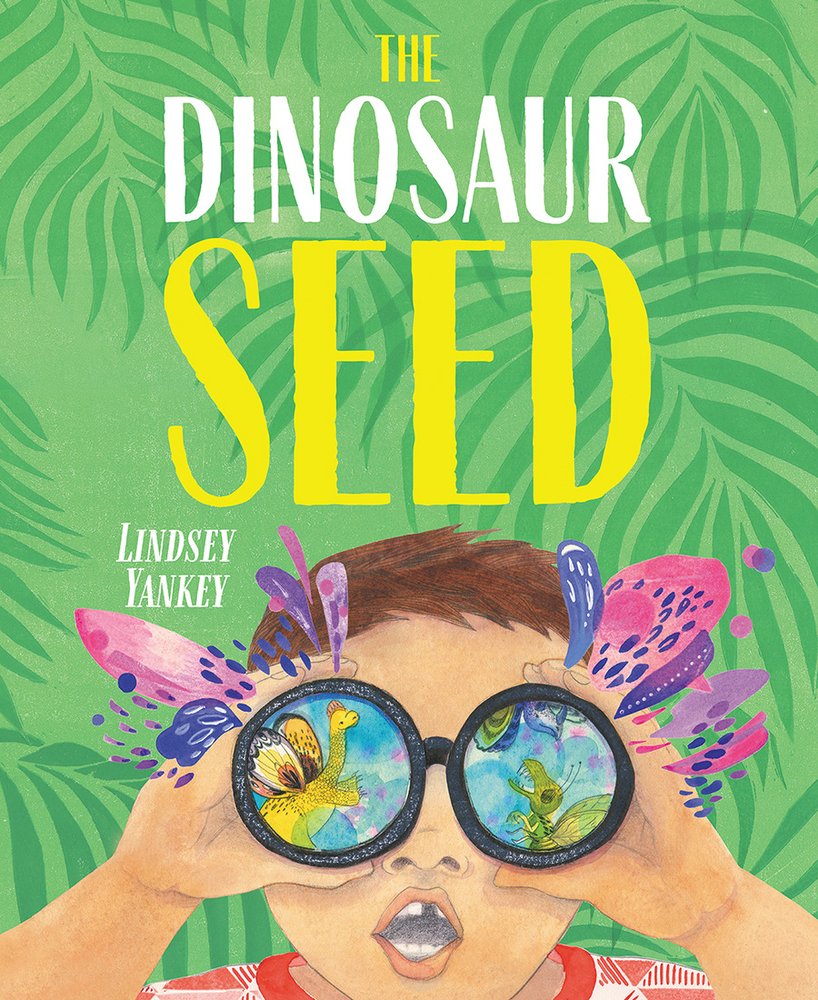
Cece introduces the reader to the park, skipping away from her G-pa as he says, “10 more minutes. Then we need to go home.” Meanwhile, Wyatt is digging in the dirt, and Flora is chasing Victor. The story begins with the discovery of what appears to be an ordinary rock, and the simple idea that maybe it’s not really a rock, but a seed. The story grows from there as the kids build on each other’s ideas, letting their imaginations run wild.
The book’s description says that it was partly inspired by the improvisational comedy concept of “yes, and…” Can you explain this concept and how it can encourage the imaginative play of children?
The “yes, and” concept is the idea that whatever someone says is accepted and built upon. This concept is one of the building blocks of the story. It allows room for all the kids’ ideas, no matter how wacky and separate they are from their friends’ ideas, to become incorporated into a shared experience that is creative and unpredictable.
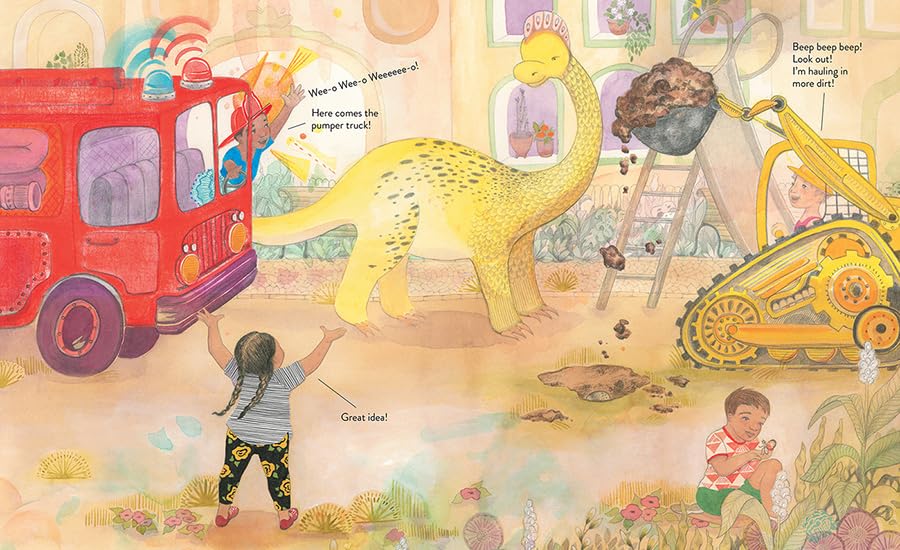
I was inspired by a theater class for very young children that my son was part of that incorporated the “yes, and” concept. In the theater class, there were no props, scripts, toys, or screens, just kids and their imaginations. “Yes, and” can be a fun way for kids (and their grown-ups) to shake off reality and get silly and creative together. It gives everyone the freedom to play and explore while collaborating with their friends and their unique interests.
You mention on your website that you grew up in rural Kansas, spending a lot of time outside. Would you say that your own childhood experiences shaped some of the visuals or story of The Dinosaur Seed?
Thanks for this question. I love nature, trees, flowers, plants, leaves, and gardens. I think spending a lot of time outside in the country and in my family’s gardens as a kid certainly fostered that interest. The illustrations in The Dinosaur Seed include a mash-up of different types of plants and trees I find interesting.
For example, the tree at the start and end of the book has a trunk of a redbud tree, very similar to the tree outside my studio window where I work. However, the leaves of that tree are influenced by the beautiful chestnut trees I’ve seen in Paris. I love the structure and grouping of the chestnut leaves and thought they’d make a nice pairing with the rough texture of a redbud tree. The tree the kids imagine is influenced by the ficus trees in L.A. and is paired with the long leaves of palm plants.
In an increasingly digital world, many experts and even children’s media — Bluey, for example — are promoting the developmental benefits of free play. Do you think a healthy balance can exist between unstructured, unplugged play and digital media for young audiences?
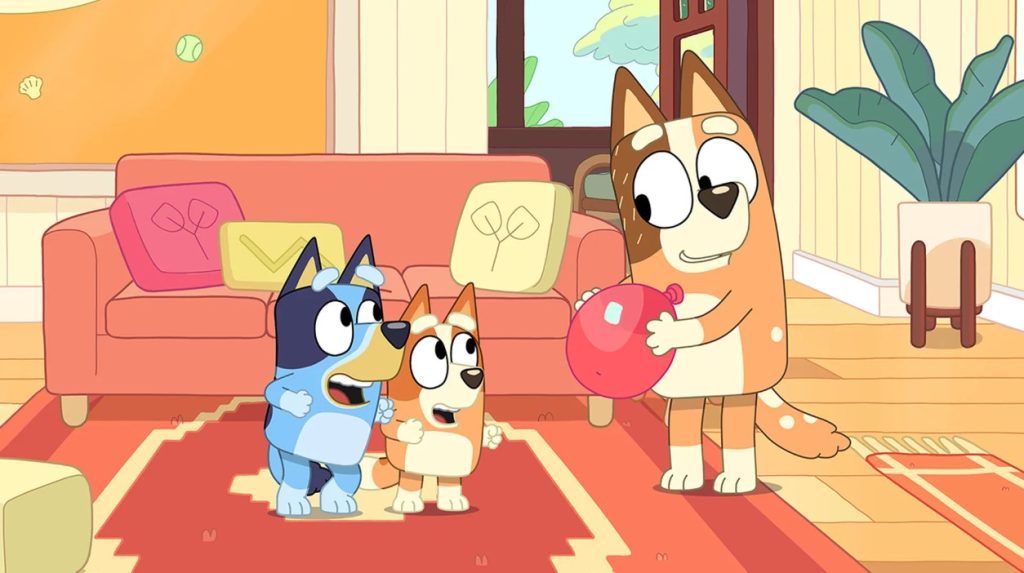
Absolutely. There’s a time and place for digital media with kids, but the evidence is becoming more and more clear that there are real dangers of too much screen time. Shows like Bluey and Sesame Street exist in a space of both digital media and introducing kids to ways to play and grow. Take the balloon game Keepy Uppy from Bluey, for example: kids of all ages are enchanted with this simple game, running, laughing, playing, and having fun. They saw Bluey play it in the show and want to try it out for themselves. Bluey and Sesame Street set a very high bar, but I hope my book inspires kids to get outside and play, too.
You’ve acted as both author and illustrator for a few of your titles. When performing both roles for a project, what comes first: the art or the story?
The story idea usually comes first, then rough sketching comes shortly after. The way I write and illustrate really go hand in hand as I sort out how I want to tell the story. Writing and sketching simultaneously helps me determine what is communicated through the text and what is communicated through the illustrations, and how they interact with each other.
One of our favorite things to ask children’s creators about is what stories they enjoyed as children. Are there any books or series from your childhood that have earned a special place in your heart?

Certainly, when I was a kid, I loved Chris Van Allsburg books like Jumanji, The Polar Express, and Just a Dream. We had a big red velvet-covered collection of Disney stories that I drew characters from. I also really loved Harvey Potter’s Balloon Farm by Jerdine Nolen; the bright and stylized illustrations by Mark Buehner really captured me. I still have a Little Golden Book of Winnie the Pooh with a note from my grandma saying it was my favorite when I was 7 years old. As an older reader, I loved the My Father’s Dragon series by Ruth Stiles Gannett.
Lastly, in honor of The Dinosaur Seed, what is your favorite way to play make-believe as a grown-up?
We play a game in our house called “Animal Shelter,” where we pretend to visit the shelter and adopt our dogs, and bring them home. Really, what it is is a lot of cuddling with our dogs on the couch and talking about how great they are. It never gets old! I also still enjoy making mud pies. As a grown-up, I think art has become my play, it’s my space to explore, run free, and get messy.
An enormous thank you to Lindsey for taking the time to share her work and thoughts with us! Be sure to find her online at LindseyYankey.com and follow her on Instagram and Facebook. And, of course, don’t forget to add The Dinosaur Seed to your family’s reading list!
Looking for more picture books that will inspire kids to use their imaginations? Check out our article on 7 Books That Will Make Your Little One Want to Unplug.
To see all of our recommendations for mini-bookworms, check out our Bookshop bookshelf.