












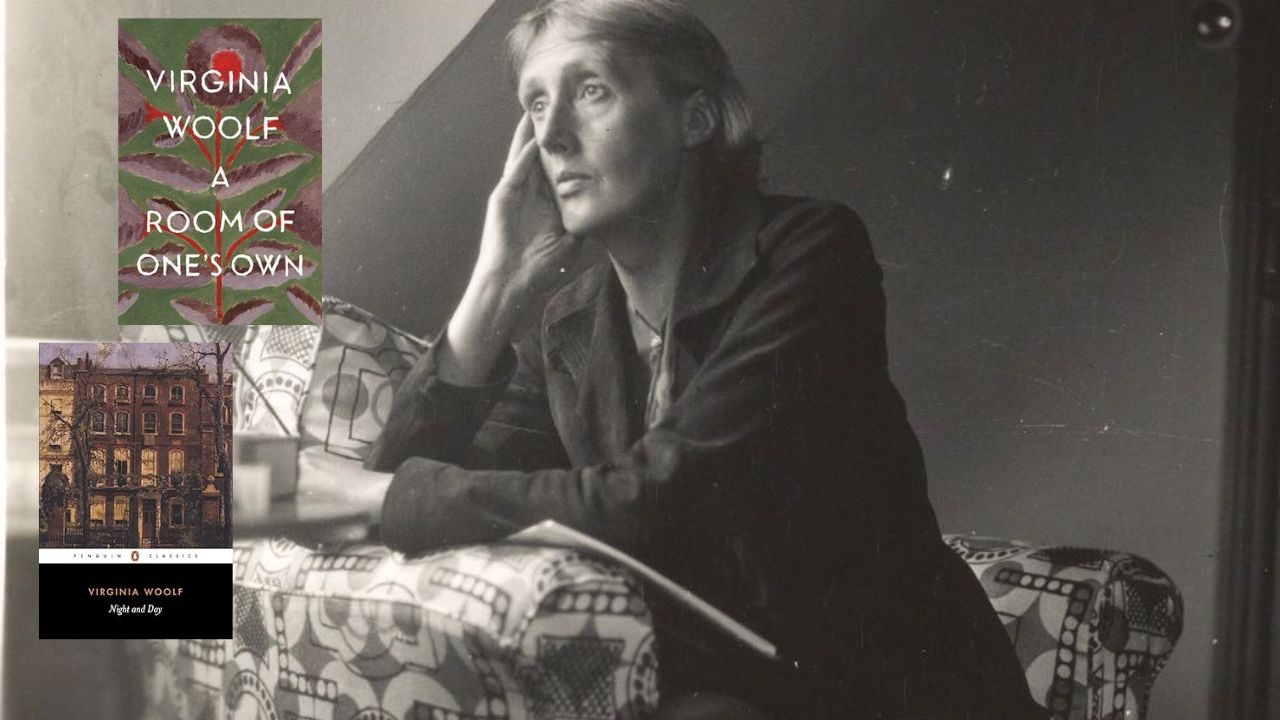
Virginia Woolf is one of the most famous female writers in history, and her work had a huge impact on the early-to-mid-20th-century literary world and feminism. She’s written novels and many volumes of letters, diaries, and essays, leaving so much of herself and her perspective for us to analyze, look through, and be inspired by. Below is a small sample of her work, focusing mostly on the feminist part of her writing.
Night and Day
The gorgeous and privileged Katharine Hilbery is unsure about her future: she must either get engaged to the unimaginative poet William Rodney or choose her attraction to Ralph Denham, who is passionate but also dangerous. While she frets over her options, the lives of her mother, Margaret, who is trying to piece together Katharine’s grandfather’s life and works into a biography, and a woman’s rights activist named Mary Datchet begin to affect Hilbery in unusual ways. This is both a love story and a social commentary, questioning what a woman’s role is and what experience truly means.
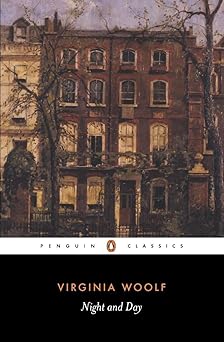
The book focuses heavily on women’s suffrage and marriage, especially in relation to happiness. Can happiness exist in marriage for women, and is marriage a requirement for happiness? This is likely partly based on Woolf’s own experience in the Suffragette movement, where she had a significant presence, though the movement is viewed by other characters, mainly male, as a hobby or even a joke.
Mrs. Dalloway
As a result of both World War I and the 1918 flu pandemic, the graceful and lively Clarissa Dalloway is preparing for a party while recalling people she once loved. Somewhere else in London, Septimus Smith is suffering from PTSD and is on the brink of going mad. Their lives get entangled, and they intersect as the party reaches its peak. This novel, with its perfect interior monologue and its meticulous way of tracing a day — from the first light to night’s darkness — weaves past, present, and future to give us the full feel of a day in these characters’ lives.
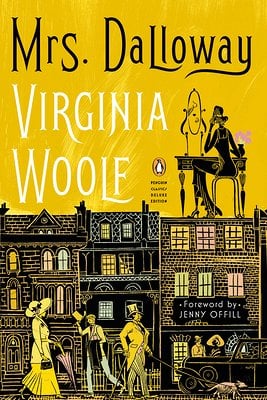
Much of the novel, the characters, and even Woolf herself were influenced by World War I. The war brought about some change, including women getting involved in the war itself. As a result, many female characters have desires to change their realities and even enter politics and other parts of the male-dominated public sphere. Much of Woolf’s anger about how women were treated, both before and after the war, is portrayed.
To the Lighthouse
Mrs. Ramsay, a maternal and composed woman, and her husband, the ridiculous but tragic Mr. Ramsay, along with their children and other guests, are on holiday on the Isle of Skye. Their visit is disrupted by what seems like an inconsequential delay in visiting a nearby lighthouse, but Woolf uses this as an opportunity to closely examine the complex tensions and allegiances in family life, as well as the never-ending conflict between men and women. As time goes on, the Ramsay family is forced to face, both alone and together, the most difficult human challenge, but also the greatest triumph — change.
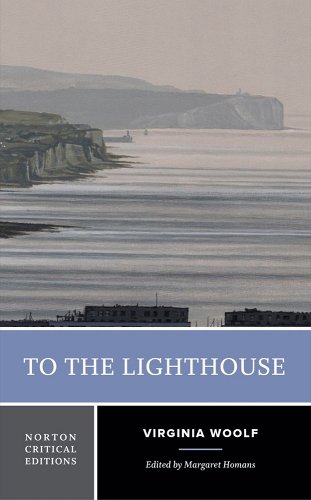
Woolf uses Mrs. Ramsay and Lily Briscoe, who are opposites, to express her feminist ideas. Mrs. Ramsay is kind, nurturing, loving, submissive, domestic, and, in essence, the perfect Victorian wife and mother. She also pushes girls to get married quickly, believing that women have no happiness without men. Woolf pushes Mrs. Ramsay’s beliefs to the absurd point to mock the notion that women should only be wives and mothers. Lily, on the other hand, desires change and freedom, unconvinced of all that Mrs. Ramsay spouts about women’s roles in society.
A Room of One’s Own
This extended essay, based on lectures Woolf gave at women’s colleges, explores women’s influence in literature, both real and speculative, using a fictional narrator and narrative. For example, she imagines that Shakespeare had a sister who was equal in talent and genius, but whose legacy was vastly different. This woman never wrote anything, and her potential was wasted because of the limitations on women at the time, so she never had the chance to make her mark. If she and other women, Woolf says, had a space to write, a room of their own, they might reach similar heights as influential male writers.
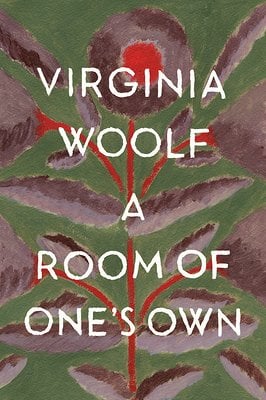
In A Room of Our Own, Woolf addresses women’s status in society, especially women writers, who are not as well treated as men, making for fewer great female authors. She mentions some renowned names, like Jane Austen and Charlotte Brontë, and wonders how much greater their writing would’ve been had they been allowed money and space of their own. How many other great women writers would have existed if they’d been allowed creative freedom?
Virginia Woolf wrote so many other wonderful pieces, and her influence is still felt to this day. Compared to her time, it’s great to see how far we’ve come, but there’s still much to do. In honor of Woolf’s legacy and others like her, let’s keep striving for more!
Click here for an article on ten powerful Virginia Woolf quotes.
Check out our Female Authors shelf on Bookstr’s Bookshop page.