
















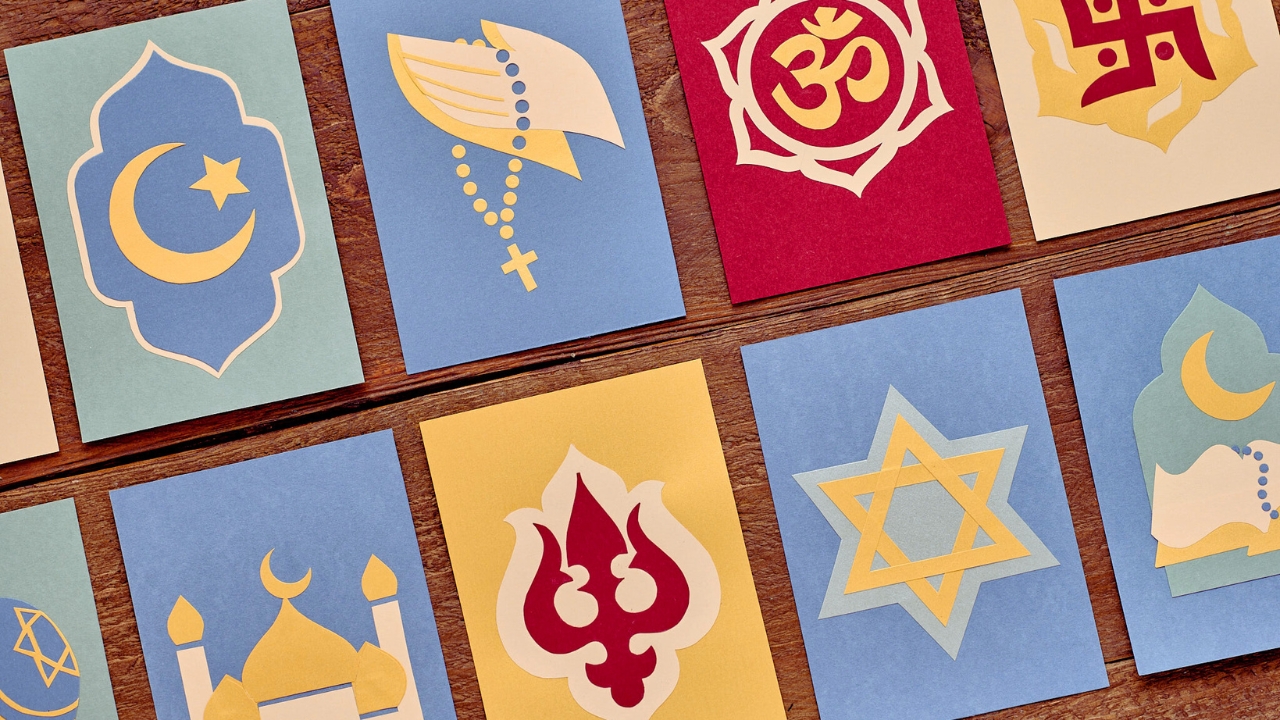
Whether you follow a faith or are still searching for what you believe in, there is something to be learned from each of the sacred scriptures of religions around the world. There are even some connections between religions that you may not have known existed! Read on to find out more about the sacred texts of a few of the world’s major religions.
The Bible
The Bible is the sacred text of Christianity, which consists of the Old Testament and the New Testament, which is considerably shorter than the preceding section. The Old Testament is viewed by Christians to be the prophecy of the Messiah Jesus Christ, while the New Testament acts as the fulfilment of God’s promise to man by delivering the Messiah to humanity.
It is estimated that the Bible’s earliest writings were carved into stone tablets around 1400 BC. From Moses and his descendent Joshua up until the final prophet from the Old Testament, Malachai, almost 1000 years pass! For roughly 500 years following, no new writings were contributed to the Bible. During this period, Alexander the Great conquered vast swaths of the world and introduced the Greek language to many, including the later narrators of the New Testament.

The Old Testament varies between different Christian denominations as some groups view certain sections as noncanonnical and have thus excluded them. The books of the New Testament are not arranged in chronological order in regards to writing; rather, they are arranged in a more narrative style which tells the story of Jesus and his experiences and impact on the world. As a result, it is difficult to deduct a concrete historical timeline from the New Testament, as it was not written to be a historical account, but it was written to inspire faith and share the message of the Messiah.
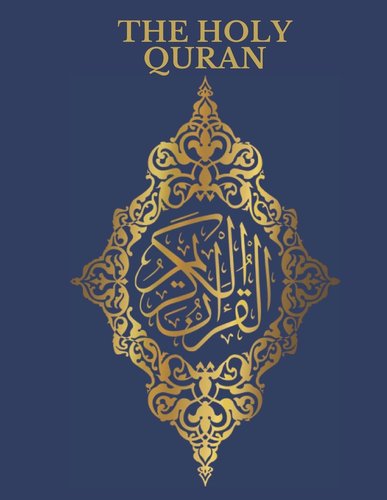
The Quran
The Quran is the sacred scripture of Islam, which, according to Islamic belief, is the word of God as revealed to the Prophet Muhammed by the angel Gabriel. Muhammed is believed to be the last of God’s prophets. This account begins in 610 CE and ends with Muhammed’s death in 632 CE. A written collection of the sūrahs — chapterlike sections — of the Quran was not created until after the Prophet’s death, during the caliphate of Abū Bakr, when a large number of those who knew the Quran were killed in the Battle of Yamama and fear began to spread that knowledge of the Quran would be lost.
The Quran is shorter than even the New Testament and is divided into 114 sūrahs, which are roughly arranged in order of decreasing length. Each sūrah is known colloquially by a name that’s drawn from a notable word in the section, though each name does not necessarily indicate the main theme. These names, interestingly, only seem to have been assigned after the death of the Prophet.
The Quran often positions itself as speaking through the divine with the use of “I” pronouns, though sometimes Muhammed will narrate. When Muhammed is voicing the ideas, they are introduced by the command “Say…” to indicate that he is speaking through the directive of God.
The Tanakh
The Tanakh, or the Hebrew Bible, is the sacred text of Judaism, and consists of three main parts: the Torah — Teachings, also known as the Pentateuch or the Five Books of Moses — the Nevi’im — Prophets — and the Ketivum — Writings. Written roughly between 1200 and 100 BCE, the original text was written in Hebrew, save for a few passages written in Aramaic. By combining the first letter of each name, the text as a whole is often referred to as the Tanakh.
The three groupings of the text are further subdivided. The Torah consists of narratives, guidelines, and instructions in the first five books. The Nevi’im books correlate either to the Former Prophets — Joshua, Judges, Samuel, and Kings — and the Latter Prophets — Isaiah, Jeremiah, Ezekiel, and the Twelve, or Minor, Prophets — which encourage people to return to God. The final division, the Ketuvim, consists of poetry and drama.

After the fall of Israel and Judah — 722/587 BCE respectively — the Hebrew people suffered much hardship and many challenges. After losing their national independence and dispersing to many parts of the world, their religion still maintained its roots largely due to the fact that the Tanakh had already been transcribed into many physical copies.
Bhagavad Gita
There is not one, but rather, a small family of texts that make up the sacred texts of Hinduism. These include the Vedas, which are a collection of hymns/poems which praise a wide number of gods including those who embody phenomena like fire — Agni — and intangible concepts like friendship, Mitra. The Upanishads, which build on the Vedic philosophy and explore how one’s soul — Atman — can combine with that of Brahman, the force behind all existence. The Mahabharata and the Ramayana are perhaps the longest poems ever written, and were written over the course of about 240 years. They are India’s national epics and tell legends and serve as the transcription of many oral traditions. The Ramayana is a tale of love that explores moral and spiritual themes and is still popular in India today.

Within the Mahabharata is a central text of Hinduism, the Bhagavad Gita, written roughly in the first or second century CE. In addition to being one of the most accessible of the scriptures, it is also one of the most popular worldwide. The Gita is told as a conversation between Prince Arjuna and Krishna, an incarnation of the god Vishnu.
Facing the reality of an upcoming battle between feuding branches of the same family, Arjuna is overcome with distress and confliction about his role and his duty. He expresses his misgivings to Krishna, and Krishna’s reply makes up the Bhagavad Gita’s central themes. He encourages Arjuna to complete his task as a warrior — the class he was born into. He later describes the difference between the soul and the body, and how one can be released from the karmic cycle of reincarnation and reach Nirvana. Krishna emphasizes that one need not dismay over the actions they must perform, as long as they detach from the desire to perform them and act without it.
Though these texts hail from different centuries, cultures, and parts of the world, the effect that they’ve had on their followers is undeniable. One may be surprised to discover that while each describes the experiences of varied people and places, many of the lessons have the same roots.
Looking for fiction recs featuring religious themes? Click here!
Click here to check out the Bookstr team’s favorite reads!