


One function of reading fiction is to transport us into a universe where we feel more accepted. The real world can be a scary place sometimes, but a good fantasy novel offers an escape into a realm where we can put all the tensions aside for a bit. Alicia Jasinska’s queer romantasy strives to build a world where everyone feels welcomed. Integrating Slavic folklore, she transforms ancient tales into a modern-day epic.
About Alicia Jasinska
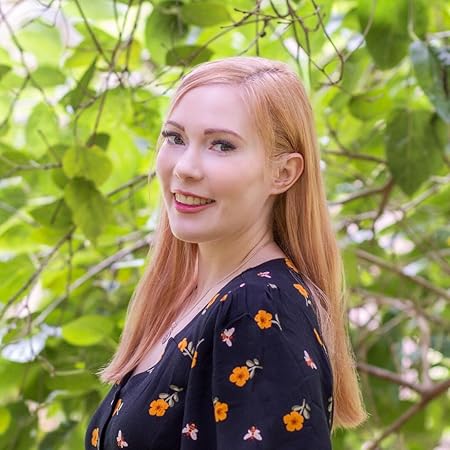
Alicia Jasinska calls Sydney, Australia, home. In addition to This Fatal Kiss, her bibliography includes The Dark Tide and The Midnight Girls. So far, her work has embraced the genre of YA fantasy romance through a queer lens. First published in 2020, her writing is already showing massive potential. By day, Alicia works as a library technician. But her other passion is aerial hoop practice.
Instagram | Website
Let’s begin!
For readers who might be unaware, can you provide us with a brief pitch of your latest book, This Fatal Kiss?
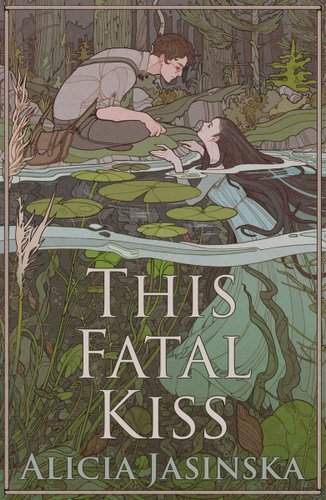
This Fatal Kiss is a darkly whimsical romantic fantasy about a rusałka (a water nymph) who desperately wants to regain her humanity. To do so, she must receive a kiss from a mortal, so she blackmails the local exorcist into playing matchmaker for her – only he also starts to fall for the mysterious young man he agrees to set her up with. The story takes place in a spa town, full of magical bathhouses, that is inhabited by all sorts of strange and mischievous spirits and demons from Slavic folklore.
While writing your novels, where do you find the inspiration to create such unique characters and landscapes? And what is your process for outlining these details?
My inspiration comes from everywhere – folktales, books, movies, comics, and real places I’ve visited. The setting in This Fatal Kiss is inspired by the beautiful little spa towns you find in Central and Eastern Europe.
When it comes to outlining these details, I’m pretty methodical. I like to create a reference sheet for each character (and often one for the setting, too) where I’ll list out things like their appearance, their fears and flaws, strengths and weaknesses, and what their goal is throughout the story. This helps me form a clear image in my mind of where the story is set and what each character’s arc will be even before I start drafting.
This Fatal Kiss follows the recent trend of fantasy books using modern colloquial language, giving the characters a Gen Z-like feel. How did you decide what elements from mainstream culture to include and what elements to draw from Slavic folklore?
Personally, I really like the trend of fantasy books using more colloquial language. It makes the stories accessible to a wider audience and I feel it also makes it easier in ways to relate to the characters. I don’t think I consciously chose any particular elements from mainstream culture to mix in with the more folkloric parts of the story. I just wrote what felt right and then revised sections if I felt the language was too modern. The story takes place in a fictional world, but the time would be equivalent to the 1920s or 1930s in our world.
The cover of This Fatal Kiss is stunning. To what extent were you involved in the process of selecting a cover designer for your work? And how does the illustration pair with the element of folkloric themes in the novel?
My lovely editor, Jonah Heller at Peachtree Teen, was kind enough to involve me in the design process right from the beginning. We both had a similar vision for the cover we wanted – something illustrated and dreamy that would really represent the folkloric themes in the novel. He suggested we work with Andie Lugtu, an amazing artist who had done the cover illustrations for another Peachtree title. It was so fun sending in descriptions and reference pictures for all the characters and spirits in the story and then seeing them brought to life. Andie is incredibly talented, and of course, credit goes to Lily Steele for putting the whole design together.
My favorite part is the special secret cover hidden beneath the dust jacket! 😊 It fits with the vibes of the story perfectly – romantic and folklorish on the surface with a hint of darkness lurking beneath.
The names of all the characters are so unique and indicative of Slavic folklore. How did you go about choosing the names for everyone? Was there a character who was initially called something else?
I don’t think I changed anyone’s name while I was writing. I usually give my characters names that I really like. Kazik, which is a Polish diminutive of Kazimierz, has always been one of my favorite names. And Gisela, of course, is another form of Giselle – I named her that because the ballet Giselle was one of many works that inspired the story.
Feminist authors and literary critics Sandra Gilbert and Susan Gubar have previously argued that female characters are written either as “monsters” or “angels.” Still, Gisela is arguably both, depending on the situation. While writing her, did you feel pressured to portray her as one or the other? If so, how did you combat this pressure to make her more morally complex?
I think there is always a little bit of pressure when it comes to writing female characters, simply because I know how harshly some readers judge these women. Complicated and morally grey female characters are often labeled unlikeable in a lot of book reviews.
But with Gisela, I really wanted to explore that whole idea of her being both “monster” and “angel” because that is exactly how rusałki (water nymphs) are portrayed in Slavic folklore. Tales about these spirits vary greatly, and they’ve changed throughout history, especially due to Christianisation. People theorize that water nymphs were originally benevolent nature spirits that were demonized as beliefs changed. In most stories, they are described as being the spirits of young girls who died tragic deaths in or by a body of water, and as such, are depicted as vengeful and wicked creatures who drown or tickle men to death. But there are other stories that suggest water nymphs are not intentionally malicious – they are simply young girls being flirtatious and playful, and perhaps they do not understand that their human lovers cannot live underwater as they do.
I really wanted to play with all these ideas and beliefs in This Fatal Kiss.
Gisela, Kazik, and Aleksey’s relationship has all the makings for a love triangle, which you subvert by exploring the possibility of them all being together. When you first set out to write the story, did you know it was going to include a polyamorous romance, or was that something that came together the more you wrote?
I always knew this story was going to have a polyamorous romance. I have a love/hate relationship with love triangles because I always end up feeling sorry for the character who ends up alone or is doomed by the narrative to become evil or who is just not chosen by the protagonist, etc. I’m a romantic at heart so I’m always wishing for all the characters to end up together and be happy. That doesn’t often happen, however, so I really wanted to write a story where it did.
We loved the story in This Fatal Kiss and were sad to see it end. Do you have any plans to continue Gisela, Kazik, and Aleksey’s stories in another book?
Aw, thank you so much! I can’t promise anything right now, but I would absolutely love to write a sequel.
It was a pleasure diving deeper into the world of This Fatal Kiss. Thank you again, Alicia, for participating in this interview!
For another dose of Author Interviews, check out From Ghost Stories to YA Fantasy: Meet Your New Favorite Author!
For more fantasy suggestions, check out our bookshelf Fantasy Lovers Paradise: Epics, Romances, and More!