

















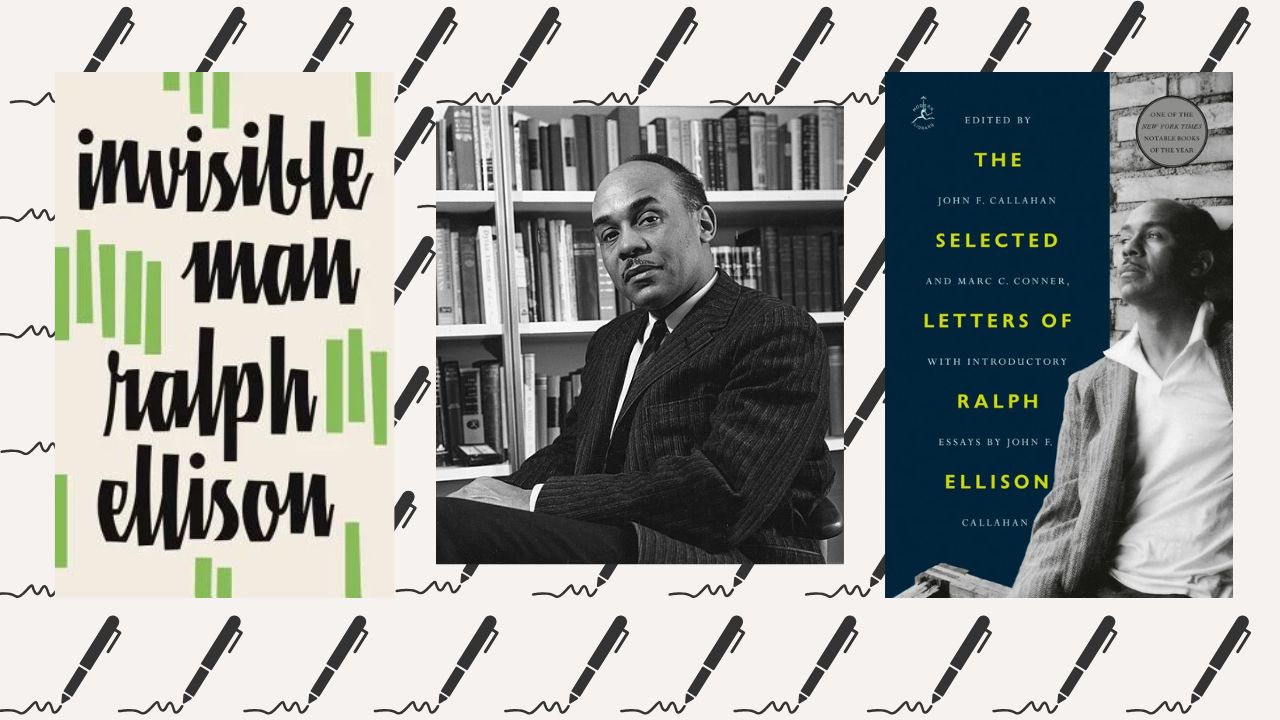
In every sense of the term, Ralph Ellison was a revolutionary Black writer. After moving to New York City in 1936 — then the Black culture capital of America — to study sculpture, Ellison fell in with several Black artists and shapers of the Harlem Renaissance. He eventually became a writer in his own right, in part inspired by luminaries like Langston Hughes and Richard Wright.
Through their influence, he also became deeply involved in Black politics, though he often resisted resistance labels and categorizations. While only one novel of his was published during his life — Invisible Man — it received critical acclaim and recognition, and Ralph Ellison became the first Black writer to win the National Book Award. Despite these landmark achievements, there is so much more to his story.
A Biography in Brief
![The cover of Ralph Ellison: A Biography. Featuring: A blue tinged image of Ralph Ellison sitting on a bench, wearing a coat, scarf, and fedora. The words Ralph Ellison are in bold, white, capital letters with A Biography in the same style but a yellow hue and smaller size. The author's name (Arnold Rampersad) is in all capital silver letters. A quote from the New Yorker features: "Startling, illuminating.... [Rampersad] treats Ellison as a man, not a deity.Additionally, featuring a sticker that says National Book Award Finalist.](https://images-us.bookshop.org/ingram/9780375707988.jpg?width=640&v=v2)
In his biography of Ralph Ellison, Arnold Rampersad chronicles the life of a deeply enigmatic writer with a complicated childhood and an even more complicated journey as an artist and writer. Named after Ralph Waldo Emerson, Ralph Waldo Ellison was born to Lewis Alfred Ellison and Ida Millsap on March 1, 1913, in Oklahoma City, Oklahoma. Though Lewis died in 1916 due to the complications of a work injury, he loved literature and doted on his two remaining sons (the first, Alfred, died in infancy). From the beginning, Ellison’s life was shaped by both loss and literature.

As his family life became more complicated and he juggled multiple jobs, Ralph Ellison found solace in music. In particular, he was drawn to improvisation in jazz, a technique he later found mirrored in one of his literary inspirations, T.S. Eliot. He applied twice to the Tuskegee Institute, a prestigious all-Black university founded by Booker T. Washington, eventually being accepted in 1933. Once there, Ellison found himself no less an outsider than he was in Oklahoma due to the class differences between him and his generally much wealthier peers. This status sharpened both Ellison’s voice and ears, and under the influences of a trusted librarian and English teacher, he found more power in literature as a living art.
Ellison later moved to NYC to study sculpture, but instead found himself shaped by several Black artists of other disciplines, notably Langston Hughes and Richard Wright. Wright would go on to encourage Ellison to write fiction. While both became associated with the Communist Party, both felt betrayed by its shifts during World War II. This betrayal is in part what sparked Ralph Ellison’s writing of Invisible Man. Despite the critical acclaim and recognition, Ellison was dissatisfied with his efforts in his first novel, going on to write more than 2,000 pages of a second work that was never finished.
Ellison’s life and legacy are largely centered in the significance of this novel, as well as his radical approach to revolution and writing, and defiance to any attempts at categorization as an artist and person. He was a teacher, a writer, a sculptor, a musician, and above all someone who insisted on being seen despite the odds.
To celebrate that, here are the words of his writings that continue to resonate with readers today:
Writings and Words (from Invisible Man, The Selected Letters, and Other Writings)
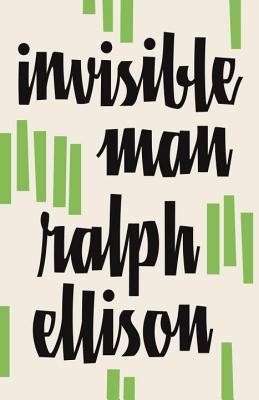
“I am an invisible man…I am a man of substance, of flesh and bone, fiber and liquids — and I might even be said to possess a mind. I am invisible, understand, simply because people refuse to see me.”
— Invisible Man
“What and how much had I lost by trying to do only what was expected of me instead of what I myself had wished to do?
— Invisible Man
“And my problem was that I always tried to go in everyone’s way but my own. I have also been called one thing and then another while no one really wished to hear what I called myself. So after years of trying to adopt the opinions of others I finally rebelled. I am an invisible man.”
— Invisible Man
“Who knows but that, on the lower frequencies, I speak for you?
— Invisible Man
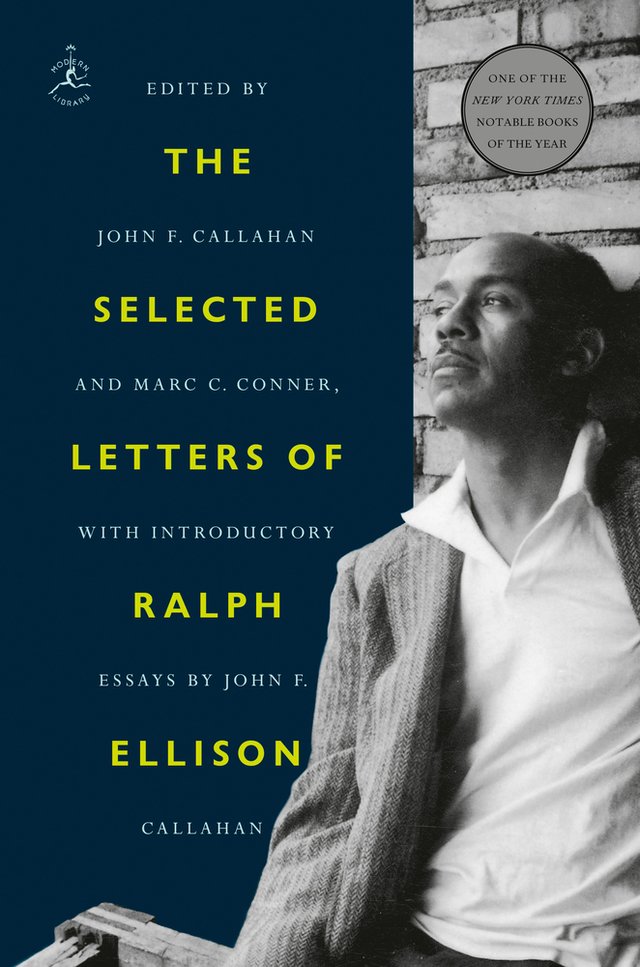
“How will a [Black] writer who writes out of his full awareness of the complexity of western personality, and who presents the violence of American culture in psychological terms rather than physical ones — how will such a writer be able to break though the stereotype-armored minds of white Americans so that they can receive his message?”
— Letter to Kenneth Burke, The Selected Letters of Ralph Ellison
“My best way of expressing my Identity as a [Black man] is by being a good novelist”
— Letter to Robert Penn Warren, The Selected Letters of Ralph Ellison
“The act of writing requires a constant plunging back into the shadow of the past where time hovers ghostlike.”
— “On Becoming A Writer” by Ralph Ellison
“It isn’t the prose, per se, that worries me; it’s the form, the learning how to organize my material in order to take the maximum advantage of those psychological and emotional currents within myself and in the reader which endow prose with meaning.”
— Letter to Richard Wright, The Selected Letters of Ralph Ellison
Ralph Ellison was a writer who defied title, categorization, and genre. His legacy is defined in his determination to not be defined, and to be as limitless as he could imagine. It is the conclusion of Invisible Man, his ideological explorations, and indeed his life: to be limitless in all things is the ultimate act of resistance, and one well worth celebrating.
To read more about Ralph Ellison, click here.
To continue Ralph Ellison’s work in rendering Black stories and experiences more visible, diversify your TBR by accessing our Bookshop shelf about Beautiful Black Voices in Literature here.
