











Beyond his magical world of children’s books, did you know that Dr. Seuss produced a large collection of political cartoons? These works of art were powerful messages during the unsteady time of World War II. In this Bookstr article, we will discover a bit more about the beloved children’s author, while taking a closer look at some of his political cartoon pieces.

Trigger Warning: This article may be triggering to some readers due to the mention of certain topics such as racism and anti-Semitism.
Who Was Dr. Seuss?
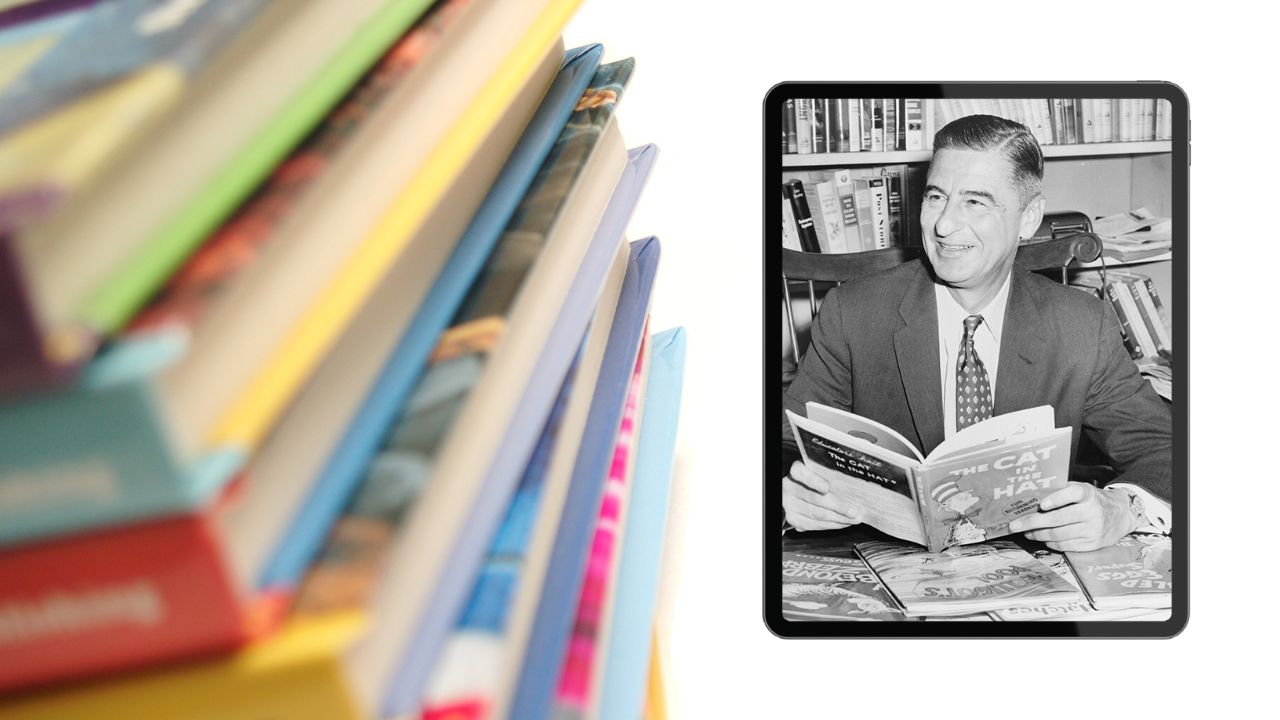
If we mentioned the name Theodor Seuss Geisel, would you know to whom we are referring? That’s right! The beloved Dr. Seuss, who wrote such childhood classics as The Cat in the Hat and The Lorax. This was the name he worked under before he decided to be everyone’s favorite children’s author. Initially, Dr. Seuss wanted to be an English professor, but after some detours, he followed the path of becoming a freelance cartoonist — which eventually led him to take up political cartoons.

Dr. Seuss became widely popular worldwide, especially after the release of the treasured The Cat in the Hat. The publisher Random House credits Seuss as having sold more books for them than any other author, and his popularity is so massive that it earned him his face on a stamp for the United States Postal Service.
Political Cartoons: Dr. Seuss’ Earlier Work
During the turbulent years of World War II, political cartoons were a popular way to express what was going on in the world. Between the years of 1941 and 1943, Geisel composed over 400 cartoons conveying the horrors of political and societal unrest across the globe. When hired by PM, a liberal publication, he was commissioned to create five cartoons a week. His mission was to transform complicated topics into more simple visual messages for the American public.
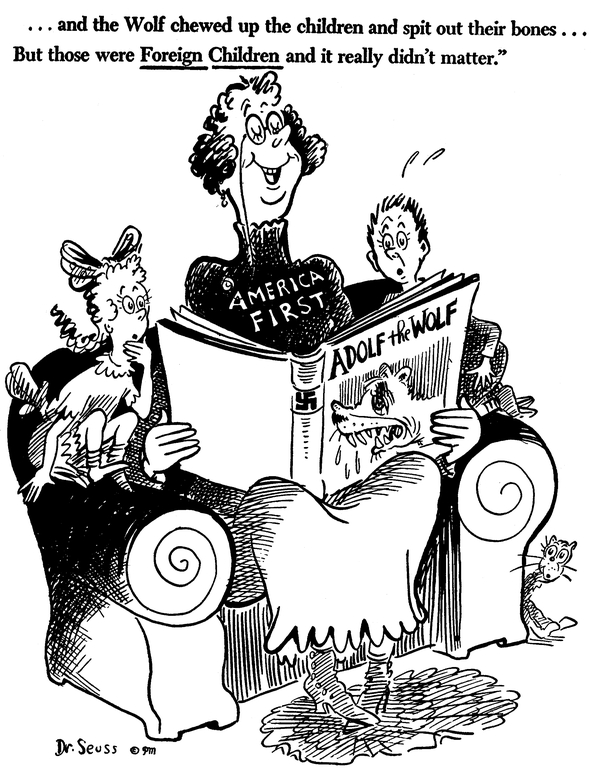
His employer PM was a frequent advocate to fight against the “America First” agenda that stemmed from the mentality of isolation rather than involvement during WWII, and the messages in many of Geisel’s cartoons can be seen as relevant in today’s political atmosphere. For example: in this cartoon depicting “America First”, the “foreign children” reference the isolationism, anti-Semitism, and racism spurred by Hitler and Mussolini. In current times, as the “America First” agenda has resurfaced, the reference continues to apply to the reluctance of the United States to step in during foreign conflicts or its attitudes toward refugees.
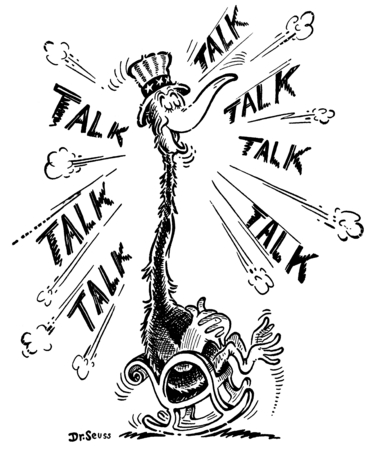
The “Talk Talk Talk” cartoon, released in PM’s May 8, 1941 edition, presents a creature that is very similar to those of Seuss’ children’s stories, with the important addition of an “Uncle Sam” hat. The figure in the cartoon is seen carelessly rocking in a chair while babbling his mouth aimlessly. The imagery signals the nationalistic patriotism that was popular in WWII and still is today. It can also be interpreted to criticize the lack of action from political figures, with a focus more on talk than operation.
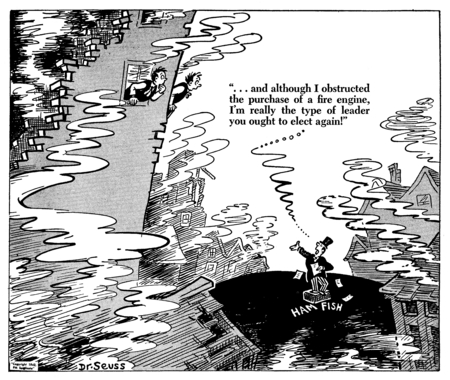
In another, we see the image of a politician making promises of progress, even though he “obstructed the purchase of a fire engine”. The situation being parodied could also be considered evident throughout American political history, such as in recent times, when promises were made by the Trump administration to lower the cost of groceries, yet in the time since the President’s inauguration, have instead focused on tasks like changing the name of an international body of water.
“The best slogan I can think of to leave with the U.S.A. would be: ‘We can … and we’ve got to … do better than this.’”
— Dr. Seuss, in a final written message to his biographers
The Political Interpretation in Suess’ Timeless Classics
Seuss’ political advocacy did not stop with newspaper publications. It is debated that some of the most treasured book characters from his children’s works also represent sociopolitical issues. An obvious example would be The Sneetches, which calls out discrimination through a story of prejudice based on who has a star on their belly or not. The Lorax also exhibits a prominent message of nature conservation, as the book shows the destruction of the trees and its terrible aftermath. Even Yertle the Turtle has some ties to denouncing fascism.

“He taught generations of children that it was fine to be different, and it was even better to do good, but that it all should have some fun about it.”
— Neil Morgan, co-author of Dr. Seuss & Mr. Geisel
While he was a treasured children’s author, Dr. Seuss was also a major contributor to the world of political cartoons, and it is critical to analyze how his messages still translate into today’s world.
For more Dr. Seuss suggestions, read our article: 10 Dr. Seuss Books that Made Our Childhood Special.
If you need some children’s recommendations for year-long holidays, check out our bookshelf Young Reader’s and Children’s Holiday Recs.