

















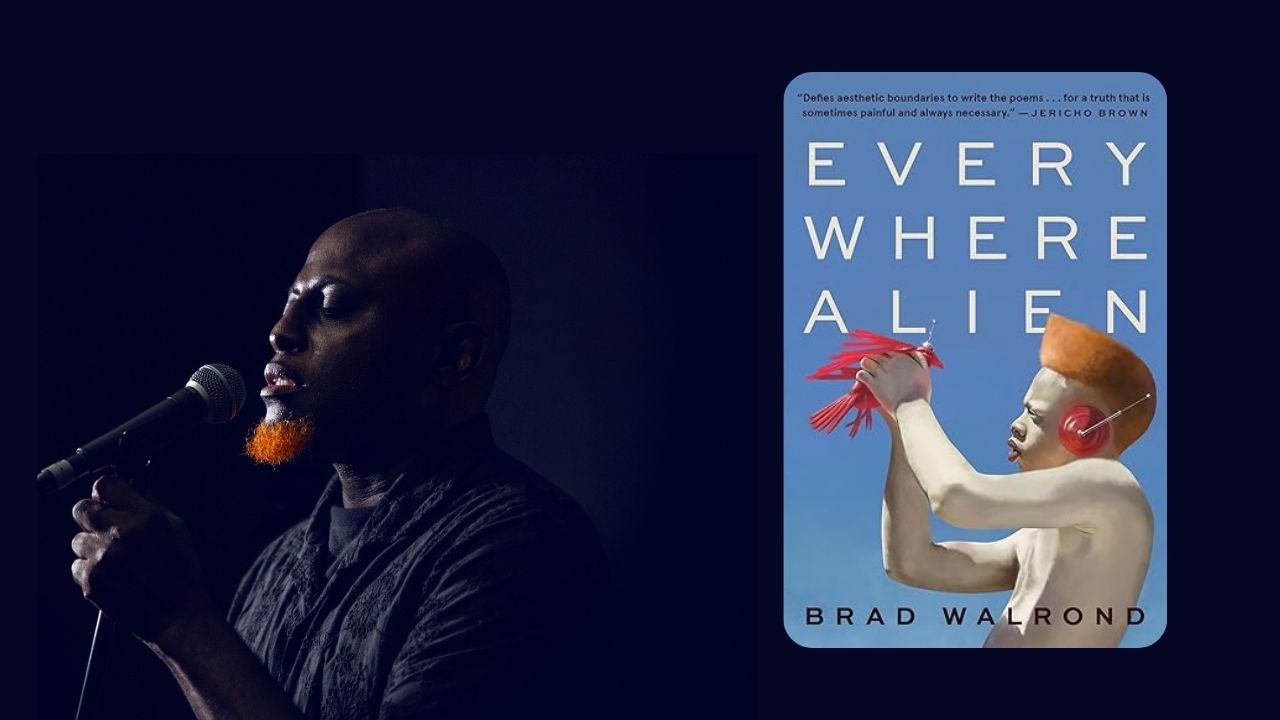
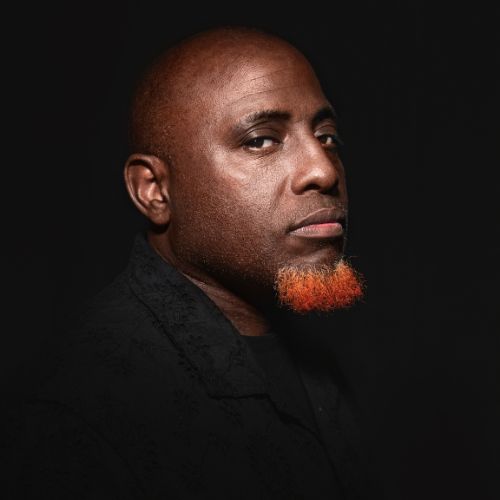
Brad Walrond is a poet on a mission. His work delves deep into the complexities of identity, time, and the human experience. With a focus on the intersection of race, gender, sex, and desire, Walrond’s poetry is a powerful tool for both self-exploration and societal critique. His debut collection, Every Where Alien, is a raw and unflinching account of his own journey as a Black queer man while also serving as a broader reflection on the marginalized communities that have shaped him. In this exclusive interview, Walrond discusses the driving forces behind his art, the challenges he has faced, and the hopes he holds for the future.
Let’s get started.
What is the unique power you find in poetry that compels you to use it as your artistic outlet?
Poetry’s unique power is its efficiency; there is no visceral space it can not reach and grab in a breath! Poetry knows how to hold onto what it grabs and shake as wildly and as gently as it needs when you least expect it. Poetry knows how to lend us the grace to pick up the pieces when we need it the most.
What are the questions you seek to answer or the conversations you hope to spark with your poetry?
How can we compose our lived lives inside the futures we imagine? How do we urgently call on the histories that are always alive inside us and all around to inspire us to be galactic, radical, and brave in our choices? How do we commit and recommit to ourselves and to those we love the kindness of pursuing the truth?
Who are the poets, writers, or artists who have left an indelible mark on your imagination?
Samuel R. Delany, Octavia Butler, Nina Simone, Zora Neale Hurston, William Faulkner, James Baldwin, Essex Hemphill, jessica Care moore, Saul Williams, Mike Ladd, Ntozake Shange, Amiri Baraka, Rickey Laurentiis, and W.H.Auden.
You took a big break from poetry (2009-2015); what inspired your return to poetry after your hiatus?
A very close friend from our scene, Craig Davis, aka Zook, died suddenly. He was a consummate emcee, poet, singer, actor, and musician. Back in the ’90s, he and Saul Williams were my first leading examples of how completely a room can be consumed by word and voice and sound. I was at an existential crossroads when Zook passed. I had to take a medical leave from my PhD program due to my mental health. The cooking career I launched into, in spite of my best efforts, in some of New York City’s premier kitchens, never quite fully got off the ground. When Zook passed, I called that season the portal. Although it would be damn near a year before I wrote one single word, my spirit knew somehow I would be creating again. My spirit knew any hope I had left to thrive categorically depended on it.
Who provided invaluable support and guidance throughout the book’s development?
jessica Care moore kept my heart and ambition close to the viability of this work. #houselivesmatter, Icon Michael Roberson, Dr. Jennifer E. Lee, Icon Pony Zion and the House Ballroom Scene in New York City and São Paulo, Brazil, and HIV/AIDS activists in Taipei, Taiwan, made me know my voice right now, for sure, had a global audience. My friendship with genius creative Tish Benson kept me close enough to the spirit world to transcribe whatever I learned there. Shelley Nicole’s top-shelf copy edit and holographic recall made sure we captured as many people and places from the underground scenes as we could. Regina Brooks was my night guide to freedom.
How did you balance your personal favorites with the overall vision of the book?
My first editor, by way of jess, was Toni Asante Lightfoot. Thank you, jess. Working with Toni helped me know for sure the ground this work had to travel to fully become itself. The kind of standard bearing we achieved made it easy to know which poems still had to grow into their majesty in order to remain part of this work and which ones had to wait their turn for something else.
When I was agenting up, some high-level editorial feedback helped me point toward the gap between what I proposed the book to be doing and what poems I needed to catch it up. My friend and fellow poet, Joel Francois, helped me, and these poems lean into the tape. We knew we couldn’t leave anything on the track. Maybe there are those who do this work by themselves, but I could not. I did not. I needed and required the work to show me who I could also entrust with its blooming.
How does identity contribute to the overall message you want to convey?
This work, in general, and alienation in particular, ultimately presents itself as a challenge for radical knowledge of self. It is true, I think, that there is an anchored and expansive certainty that can accrue as one navigates through and beyond the agony of the world’s refusal to witness the entirety of who you are. It is this journey toward an actualization of self that Every Where Alien is concerned with. This journey inward ultimately belongs to all human beings. Especially when one glimpses the absolute value of one’s own well-being in pushing through the privilege and the trauma a world imposes on us. The epic dimensionality of a self is the prize for being human. We have to be willing to interact, engage, distill, and discern the weight and scale and forms of these selves in order to touch the true nature of our own divinity. Our identities, the experiences, and the histories these hold. The hurt, the hope, and the healing they obtain comprise the futures that belong to us all.
Your book is the inaugural title for Moore Black Press, an imprint of HarperCollins/Amistad. What does it mean to be at the forefront of this exciting new venture?
What was the experience of working with Moore Black Press and HarperCollins/Amistad to bring your book to life? Moore Black Press can’t help but feel like home to me. My relationship with these powerhouse women, Regina Brooks and jessica Care moore, extends from the friendships and spaces we shared in the ‘90s. The way I trust these women is perhaps the core ingredient that made this 8-year journey plausible, much less possible. I can’t imagine how much more outlandishly tortured this path would have been without this reservoir of deep respect and trust.
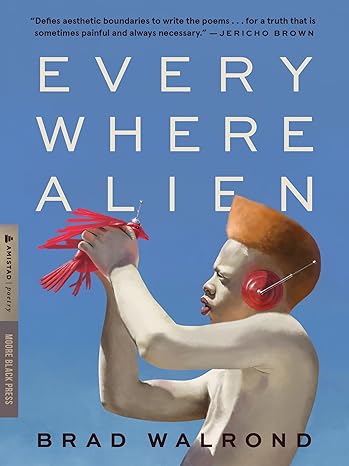
HarperCollins/Amistad know how to make a book. When we were able to license renowned Uganda-born and Kenya-based photographer Sarah Waiswa’s original work for the cover, I knew we were all heading in the right direction. And, when I finally saw the first pass copy for Every Where Alien, I knew for sure the process, as fragile as it can feel at times, was sturdy enough to hold me, to hold this project and make it beautiful. I cannot thank my editor, Francesca Walker, enough for her brave labor.
What excites you most about sharing your story with the world?
This work is a moment to reflect and refract all the light, beings, and culture that suffuse New York City’s underground arts movements. I am sure I have always been an artist. I am also sure every ounce of an artist I will ever become is tied to the New York City underground intergalactic river of creative genius that surrounded me, held me, and invested in me as I was learning the contours and prospects of my voice in the world.
Brad Walrond’s poetry and platform are a clarion call for a more just and equitable future for learning oneself. Through his raw and unflinching exploration of identity, he invites readers to question their own assumptions and embrace the complexity of the human experience. To test the limits of their spirituality and consciousness throughout their lives, not only for themselves but humankind. His work is a testament to the power of poetry to inspire, challenge, and provoke, and with Every Where Alien, he has crafted a powerful and enduring contribution to contemporary literature. As Walrond continues to push the boundaries of his art, it is clear that his voice will be essential in shaping the cultural conversations of tomorrow.
A heartfelt thank you to Brad Walrond for taking the time to speak with us and sharing his penetrating insights and worldview. We can only hope that more artists continue to propel and bolster the messages Brad has above and in his poetry.
Follow Brad on Instagram, and be sure to browse his website here.
Be sure to check out Brad and four other LGBTQ publishing creatives’ roundtable interview in Open Pages, Open Identities: 5 Creatives Discuss LGBTQ+ Inclusion in Publishing.
Purchase Every Where Alien and browse more Poetry on our Bookshop shelf, For the Love of Poetry, here.
