

















Today, we want to take a look back at an important historical era known as the Harlem Renaissance. Spanning from the 1910s through the mid-1930s, the Harlem Renaissance was a movement in the New York City borough it was named after. During this time, there was an explosive creative output through mediums of art, music, theater, and literature, which boosted the culture of the Black community. We’ll take a look back on what sparked this generation, how it influenced future ideas, and who made up the key players in the Harlem Renaissance.
Trigger Warning: The mention of certain content and topics in this article may be triggering to some readers. Such topics include mention of racist hate groups and policies.
What Sparked the Birth of the Harlem Renaissance?
Still rebuilding after the Civil War, waves of Black immigrants were migrating to the Northern United States to cities such as New York City and Chicago. Known as The Great Migration, it was recorded that an estimated 300,000 Black citizens ventured to the North to seek better lives. Besides the growing industrial business opportunities, African Americans were escaping a hostile South due to racist Jim Crow laws and dangerous hate groups, such as the Ku Klux Klan. Stemming from the creation of overdevelopment and surplus housing, Harlem transformed into a Black neighborhood that served as a safe haven for those escaping the South.

The Influences of the Harlem Renaissance
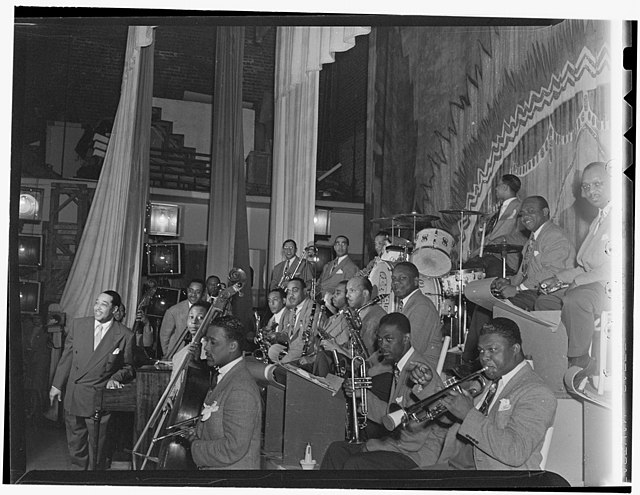
Many of the biggest names that are credited with the birth of Black culture are represented in the Harlem Renaissance. Many famous authors such as Langston Hughes, W.E.B. Du Bois, and Zora Neale Hurston used their voices to write about their experiences. These written works were later used as inspiration for the Civil Rights Movement decades later. The music industry was also heavily influenced by the Harlem Renaissance, as jazz was very popular, especially in the speakeasies of the 1920s. Timeless classics such as Billie Holiday and Louis Armstrong made their names during this time.

The Death of the Harlem Renaissance
Sadly all good things must come to an end — and three events marked the end of this era. First, the Stock Market Crash of 1929 affected millions across the country, not excluding those residents of Harlem. The end of Prohibition in 1933 had a major impact on the speakeasies that housed famous jazz musicians. However, the final nail in the coffin was The Harlem Race Riot of 1935. As tensions were already high due to the Great Depression, community residents revolted after rumors of a Puerto Rican Black teen being beaten, possibly killed, by a white business owner. These events marred the golden age of the Renaissance, leading into later tumultuous times of the Civil Rights Movement.

Now, let’s take a look at the characters who made up The Harlem Renaissance…
Langston Hughes
Focusing on poetry, Langston Hughes was an author who also wrote novels and screenplays. His focus was highlighting the life of the working-class Black man, embracing both the joys and sorrows. Although he did have many critics, both Black and white, he was the first Black American who was able to make a living by becoming a full-time writer. His form of jazz-inspired spoken word poetry earned him the label of “Poet Laureate of Harlem.” Exploring his theater works, he teamed up with his Harlem Renaissance co-part, Zora Neale Hurston, to write “Mule Bone.” In 1926, he wrote his most famous poem, “The Negro Artist and the Racial Mountain”, which was foundational in establishing Black culture.

W.E.B. Du Bois
As the first Black American to obtain a PhD from Harvard University, Du Bois’s intellectual ideas helped fuel the creative drive of the Harlem Renaissance. He believed that art and literature were forms of political propaganda and could be used to help broadcast improvements and ideas for the Black community. As identity was a major theme in the Harlem Renaissance, Du Bois’s “double consciousness” was compelling, as it expressed the diaspora of the African Americans living as both Black and American. Although written in 1903, Du Bois’ The Souls of Black Folk was instrumental in societal changes from The Harlem Renaissance, all the way through the Civil Rights Movement.

Alain Locke
Both revealing his importance to the movement, Alain Locke can be known for two titles: “Father of the Harlem Renaissance” and “Dean of the Harlem Renaissance.” Working with some of the most influential voices in the Harlem Renaissance, Locke produced the anthology The New Negro in 1925. Including essays from Zora Neale Hurston, Countee Cullen, and W.E.B. DuBois, the ideas expressed in this collection promote the evolving identity of the Black American during the early 20th century. Locke disagreed with Du Bois’ idea concerning art as propaganda and instead believed that the creation of art should be a universal experience by an individual.

Josephine Baker
Before the times of Beyonce and Rhianna, Josephine Baker danced through the Harlem Renaissance to be known as the world’s first black female superstar. Her art not only enriched the black community, but she also shared her acknowledgments with the queer community. Her style of dance has been adopted years later by those possessing a fluid sexuality. Her political activism was recognized by NAACP, which resulted in a spot to speak at the March on Washington for Jobs and Freedom in 1963, one of the only women allowed to do so at the time.

As the Harlem Renaissance has been a period known for its rich collection of artistic expression for the Black community, it is important to take time to reflect on it.
To learn more about the life of Zora Neale Hurston, check out our article Beyond the World of Fiction: Hurston & the Study of Voodoo.
To discover more Black authors, check out our bookshelf Diversifying Your TBR: Beautiful Black Voices in Literature.
