













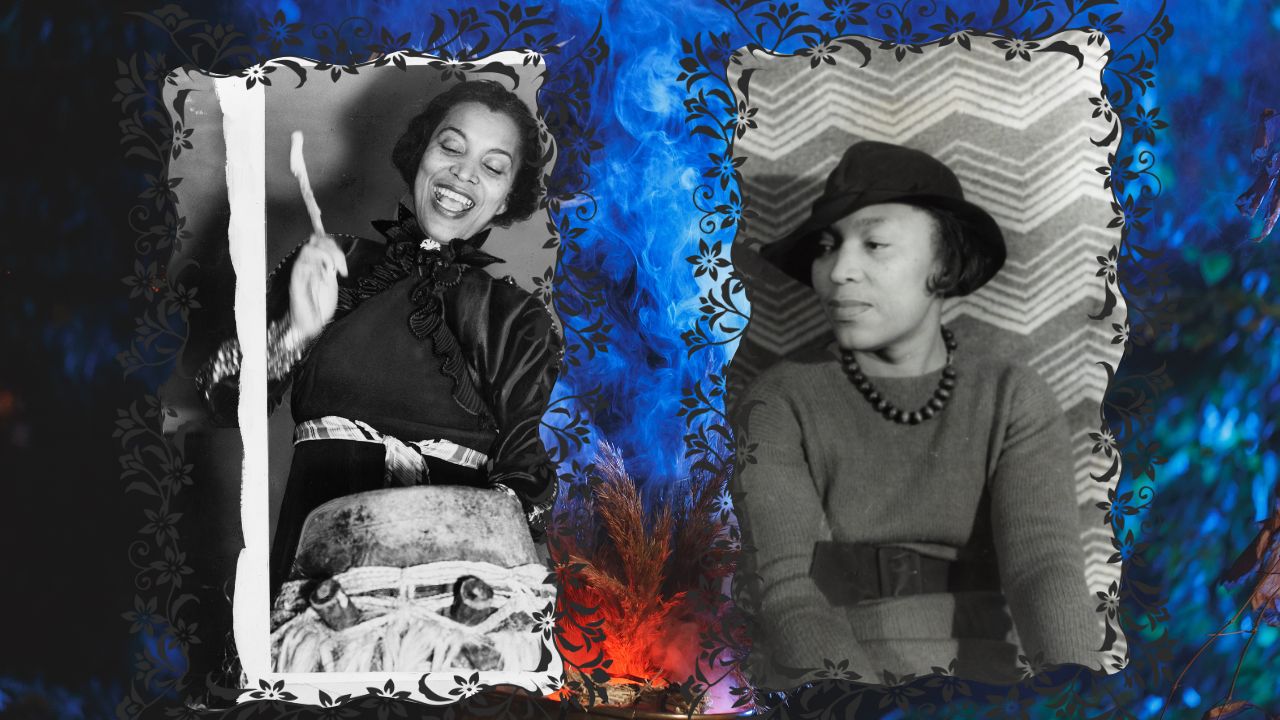
If you have never read Zora Neale Hurston, or only have read her most famous novel, Their Eyes Were Watching God, do yourself a favor and hop into the narrative of her life. She is one of the most fascinating authors in literary history, not only for her written works but for who she is. Born in Notasulga, Alabama, and raised in Eatonville, Florida, she incorporated the people in her life and community into her stories — as can be seen with the characters from Their Eyes Were Watching God and their resemblance to the community of Eatonville. But she was more than just a storyteller — she was also an anthropologist.


Zora’s Education
Her fascination with storytelling and the narratives of different people steered her to anthropology. Initially, she attended the historically Black college of Morgan State University in Baltimore and continued her education at Barnard College, an affiliate of Columbia University in New York City. It was at Barnard where Zora’s paths crossed with famous anthropologists, such as Franz Boas, Ruth Benedict, and Margaret Mead. Zora obtained her Bachelor’s in Anthropology in 1928.

Uncovering the Truth of Voodoo, Hoodoo, and Black Cultures
Beyond Zora’s fictional works, her anthropological studies have not been talked about enough. In times when stereotypes of Black culture were grossly skewed, Zora’s post-education led her on a journey throughout the southeastern United States and even as far as Haiti to unveil a more accurate image of Black culture. The product of all of her cultural research gave birth to her book, Tell My Horse: Voodoo and Life in Haiti and Jamaica — a highly detailed account of her experiences while visiting Haiti, where she engrossed herself as not just an observer, but an initiate of the voodoo practices in the country.
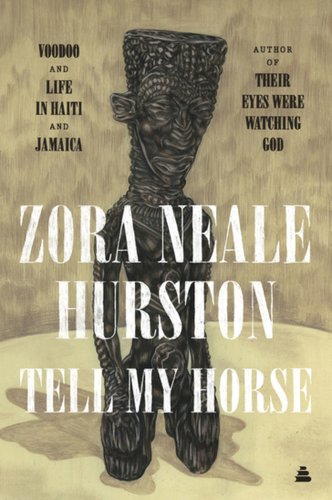
With this exposition added to her expanding bibliography, combined with her anthropological education at Barnard, Zora proved herself a valid voice to speak on the anthropological perspectives of voodoo culture. But even after her work was published, Black culture and voodoo were still being written from a stereotypical and inaccurate perspective — with an example of Robert Tallant’s Voodoo in New Orleans. Tallant’s work. Tallant’s book, while interesting and sensationalized, lacks any scholarly sources. For a 247-page book that presents itself as a non-fictional work on Voodoo in New Orleans, the works cited section is barely a page long. Zora even published a review of Tallant’s work in 1947, where she argued,
“The Author offers not one valid source of information for a serious work on folklore…It would have been infinitely more valuable to the work had the author spent less time trying to establish the well-known Marie Leveau as a procurer and a gambler, and more upon the aspect of her work as a Hoodooist.”
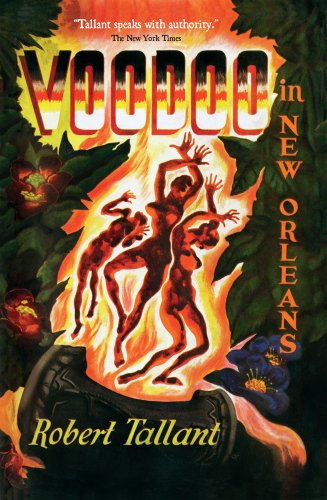
Why is comparing Robert Tallant and Zora Neale Hurston’s works important? It is crucial to break away from harmful stereotypes established during less progressive times. Zora was a Black woman who had so much to say and to teach others. Her words, actions, and path in life were extremely progressive for her time. This is why it is important to study all of her works.
What does the future hold for Zora?
Even though Zora left this world over six decades ago, her legacy lives on. As she never stopped writing throughout her life, unpublished works are occasionally discovered. Most recently discovered is the The Life of Herod the Great, which is a sequel to her work, Moses, Man of the Mountain. Previously only accessible to University of Florida scholars, it is an unfinished manuscript that gives a fictional account of the life of the Judean King from the first century BC. The novel will be released to the public on January 7th, 2025 — Zora’s 134th birthday.

The book release is not the only monumental event honoring Zora in January. January 31st marks the date of the inaugural Zora Neale Hurston Summit taking place at her Alma Mater, Barnard College. The Zora Neale Hurston Trust is hosting the two-day conference and will highlight speakers and performances revolving around her lifetime works. It’s an event that should not be missed!
“There is no agony like bearing an untold story inside you.” – Zora Neale Hurston, Dust Tracks on a Road
To learn more about Zora Neale Hurston, check out our article Zora Neale Hurston: Forever A ‘Genius Of The South’.
To discover more black authors, dive into our bookshelf Diversifying Your TBR: Beautiful Black Voices in Literature.