

















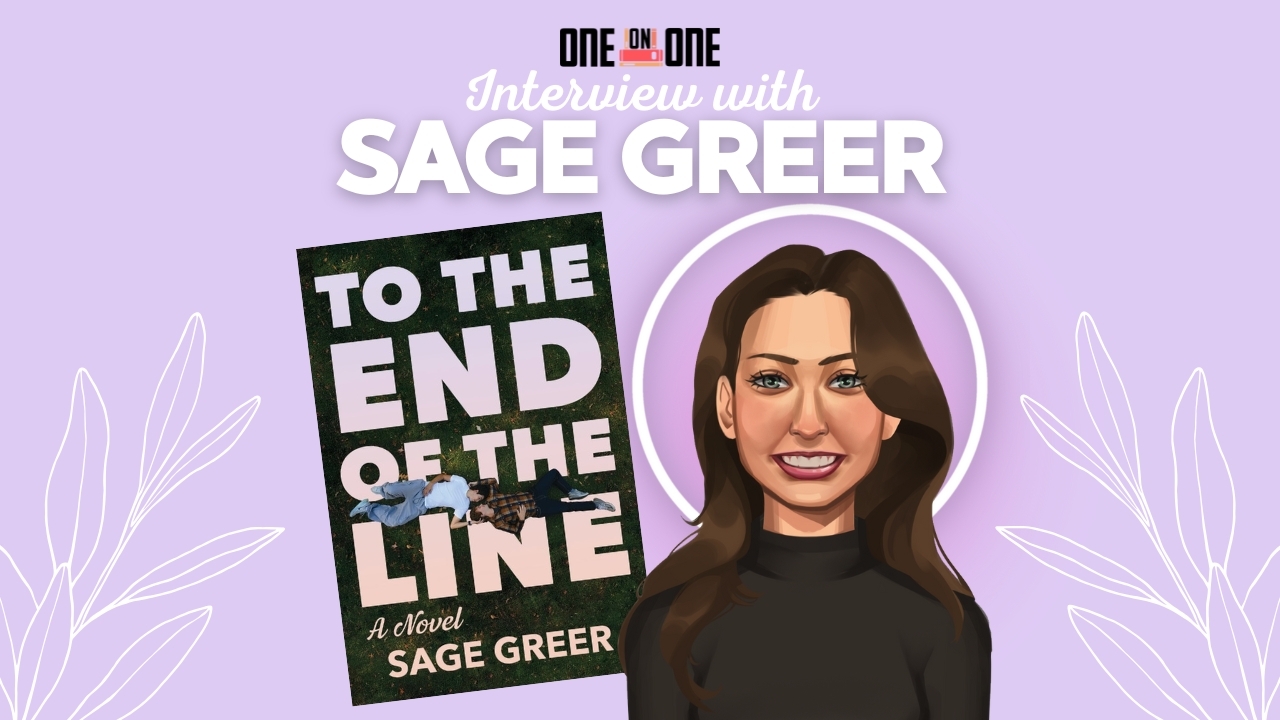
Is there any better feeling than picking up a new author and discovering their writing is not only amazing, but the story they told leaves you yearning for more? No, I don’t think so either. That feeling is one every book reader can attest is like lightning in a bottle; it strikes only so often, but when it does, you become a fan for life. Ready to meet your newest obsession? We’re sitting down in an exclusive interview with debut author Sage Greer to discuss her first release, her writing process, and what we can expect as she continues to wow us with her word-smithing.
About Sage Greer

Sage Greer has always been passionate about languages and the power of stories to bridge cultures. Born and raised in France, she holds a BA in Political Science and an MA in Sociology. She became a translator in the hopes of sharing diverse voices with French readers.
When she isn’t traveling the world for inspiration, Sage writes stories that explore queerness, mental health, and the search for self in adulthood.
You can keep up-to-date with Sage’s latest news on her website and socials: Instagram and Twitter (X).
Thanks for talking with us, Sage. Let’s get started.
Can you give an elevator pitch for To the End of the Line for any readers unfamiliar with it?
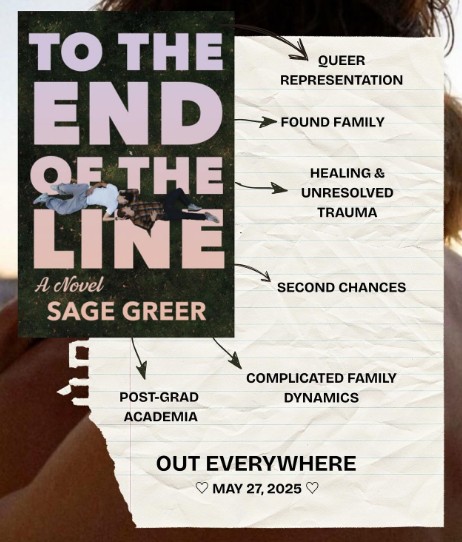
To the End of the Line is a queer, slow-burn romance about second chances, family, and healing: When brooding PhD student Nicholas Fisher ends up sharing an apartment with his insufferable brother — and his brother’s infuriatingly charming best friend, Matías Romero — old wounds resurface fast. Matías was once everything Nicholas wanted before he betrayed that trust. Now, stuck under the same roof and caught in the pull of past and present, Nicholas must decide whether he’s ready to forgive the world and stop running from others and himself.

To the End of the Line explores the rekindling of a complicated relationship between Nicholas and Matías. What was the initial spark for this particular story and these two characters?
I’ve always been drawn to emotionally tangled dynamics, especially where history seeps into the present. Nicholas came to me first: brooding, guarded, with a keep-to-myself nature that felt deeply familiar. Matías was born from the experience of growing up and realizing just how much people can change. I wanted to explore what happens when we revisit people from our past and how to navigate the space between memory and reality. Cue chaos and yearning!
A budding romance with a TA also enters Nicholas’s life. How does this new relationship challenge or complement his feelings for Matías?
More than anything, this relationship offers a contrast to the feelings he harbors for Matías. On paper, the TA is everything Nicholas thinks he wants. As someone attached to how things are supposed to go, who people are meant to be, Nicholas knows how to intellectualize a relationship but rarely gets to feel his way through them. The TA and Matías mirror these two perspectives, and he has to make a choice.
The book delves into themes of queerness, mental health, and the search for self in adulthood. Why were these specific themes essential to explore in your debut novel?
They’re essential to who I am, not only as a writer but as a person, and as a first-time novelist, it felt almost inevitable that this is where I would land. I love writing contemporary stories that find poetry in the familiar, and I believe exploring these themes is essential to detangle the messy, aching, and constant search for self that characterizes being in your mid-twenties. I also wanted to write a story where queerness wasn’t a side note or a source of trauma, but a vibrant and nuanced part of identity.
Without giving away too much, is there a particular scene or moment in the book that you feel particularly proud of or that was especially challenging to write?
There is one moment I’m especially proud of; it actually takes place between Nicholas and his brother, which is a relationship at the heart of the novel. It’s the emotional climax, and writing it felt surprisingly easy because I knew exactly what needed to be said. It’s a moment that untangles so many threads in the book, and it holds a lot of what the story is really about.
You have a background in languages and translation. How has your work with diverse voices and cultures influenced your own storytelling?
My background widely influences both the kinds of characters I write and the worlds I build. I’ve always lived and worked in international, multilingual settings, and that shaped how I see identity. I know firsthand that coming from somewhere else isn’t just a surface difference; it touches language, food, humor, habits, the drink you reach for without thinking. All of that matters. I’ll always believe that stories — and the world — are richer when we make space for more voices.
When you aren’t traveling for inspiration, what does your typical writing process look like? Do you have any specific rituals or routines?
Not really! I can write almost anywhere, as long as I can get into that hyper-focused state. I don’t listen to music when I write; I need quiet to drop into the zone. Ideally, I have a warm beverage nearby, and I’m not overthinking the word count.
What are some of your favorite places you’ve traveled to for inspiration, and how have those experiences found their way into your writing (even if subtly)?
El Salvador had a huge impact on me. I was there while writing part of this book, and Matías carries some of that spirit, along with little nods to Salvadoran food and culture throughout the novel. I also spent a lot of time in Mexico while writing, and the joy, heat, and color of that experience found their way into some of the characters. Brazil also holds a special place in my heart: I was there alone, in a city so vibrant it made me feel both invisible and awake. That sense of disconnection — of watching the world from the outside — informed how I wrote Nicholas.
What’s one thing you wish readers knew about you or your book before they picked it up?
I would warn that To the End of the Line is a lot more than a romance! Some might say it’s barely a romance at all. There is yearning, yes, but there’s also family, academia, grief, mental health… It is a love story that touches on much more than the romantic kind of love.
Do you see yourself continuing to explore similar themes in your future work, or are there other areas you’re eager to delve into?
I’d love to try other genres one day, but queer stories, and stories about healing, mental health, and finding your place, will always be central to my work. I’m not done writing about family, either, especially the beautiful mess of siblinghood. And I’m curious about intergenerational stories, too; about how our pasts shape our present and what keeps popping up across time.
Thanks to Sage for taking the time to discuss her first book and exploring its intriguing details. Pick up your copy of this charming read today!
For more author interviews, click here.
Looking to pick up To the End of the Line and others like it? Click here to visit our Bookshop.org shelves.
