

















femme fa·tale
[ˌfem fəˈtal, ˌfem fəˈtäl]
an attractive and seductive woman, especially one who is likely to cause distress or disaster to a man who becomes involved with her — Oxford English Dictionary
Every era has its dangerous muses, the women who electrify the room when they walk into it. She’s poetry and peril, lipstick and a loaded gun. Whether she’s armed with charm or actual weaponry, the femme fatale is a timeless archetype who knows that control is the ultimate seduction.
Not limited to the screen, there is a library of equally dangerous pages — mysteries, thrillers, and psychological deep dives where a plot twist is only a mischievous glance away and every kiss might be a setup. They seduce. They scheme. They slay. And the only thing deadlier than these women is how much sleep you’ll lose reading every last page. So holster the remote, set down the controller, and check out your next classified file: a reading list so good, it’s criminal.
[You Love Watching] Killing Eve
[Recommended Read] The Chemist by Stephenie Meyer
If Killing Eve taught us anything, it’s that obsession is a contact sport and nobody leaves emotionally unscathed. Eve and Villanelle’s dance of danger is foreplay and forewarning stitched together, with dark humor, mutual fascination, and gallons of blood to stain the narrative. Villanelle, unsatisfied with simple killings, curates her murders. She’s an artist with an unlimited budget, a love for disguises, and a twisted sense of whimsy, dispatching targets with lethal perfumes, hairpins, haute couture, and whatever else can be repurposed into murder. She puts a lot of thought into her methods – elegant as they are excruciating – and her victims never see the beauty of them coming until it’s far too late.
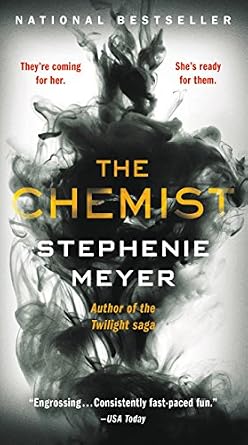
Enter The Chemist, where Meyer swaps vampires for volatile chemical compounds and gives us a heroine who is part scientist, part not-so-helpless fugitive, and entirely done being hunted. Think of it as a high-IQ echo of Villanelle’s world, only with syringes and gas masks instead of stilettos. Both stories thrive on the delicious friction between precision and unpredictability, where every formula — chemical or emotional — can combust without warning.
[You Love Watching] Naked Weapon
[Recommended Read] Red Sparrow Trilogy by Jason Matthews
If Naked Weapon were a cocktail, it’d be one parts martial arts, one parts makeover montage, and a generous splash of government-sanctioned trauma. The film’s “kill school” abducts children and trains them to be assassins, weaponizing beauty and bending femininity into an arsenal. The most lethal thing in the room wears heels. Every kick, kiss, and kill comes wrapped in high-gloss danger. These women are engineered to seduce, trained to terminate, and taught that affection is a liability (theoretically).

Jason Matthews’ Red Sparrow trilogy takes that same intoxicating blend of allure and annihilation and pours it over the cold stones of espionage. Its heroine, Dominika Egorova, is a prima ballerina turned “Sparrow,” trained in the art of sexual manipulation and spy craft, assigned to CIA officer Nathaniel Nash. But beneath the satin and secrets lies a mind as calculating as any handler’s, a survivor who turns her own conditioning against the system that built her. Both Naked Weapon and Red Sparrow explore what happens when the human body becomes someone else’s property, and the female psyche learns to fight back. If you like your thrillers shaken, stirred, and served with moral ambiguity and high-adrenalin martial arts, these reads are a deadly triple shot.
[You Love Watching] Bedazzled
[Recommended Reading] The Forbidden Wish by Jessica Khoury
If the Devil offered you seven wishes, you’d probably think twice before asking for fame, fortune, or a six-pack — unless you’re Brendan Fraser in Bedazzled, in which case you just sign on the dotted line and hope for the best. This campy, clever rom-com reimagines temptation as a customer-service nightmare, with Elizabeth Hurley’s devil strutting through every scene in couture and chaos. Her greatest power isn’t fire or brimstone — it’s fine print. Each wish twists itself into poetic punishment, proving that hell hath no fury like a woman with a loophole and a killer wardrobe.

Instead of the devil, Koury’s book gives deal-with-the-divine vibes. The wish-giver Zahra is a centuries-old jinni bound by magic, memory, and a love she was never meant to have. Similar to how Bedazzled plays its bargains for laughs, The Forbidden Wish turns them into heartache and high fantasy, exploring what it means to love when you’re literally someone else’s wish fulfillment. Both stories shimmer with charm, danger, and the eternal reminder that you should always read the terms and conditions before making a deal with a beautiful being who can rewrite reality.
[You Love Watching] Jennifer’s Body
[Recommended Reading] Hell Hath No Fury by RC Boldt
If Jennifer’s Body were a love language, it would be “bisexually devour and destroy.” This cult-classic turns the best-friend horror trope into a sexually charged bloodbath, with Jennifer (starring Megan Fox) strutting through life like the hell-coming queen of vengeance. She’s gorgeous, gluttonous, and gloriously unrepentant — a supernatural reminder that sometimes “man-eater” isn’t a metaphor. Beneath the gore and glam, though, lies a story about girlhood, betrayal, and the rage and sexual tension that bubble under every perfectly glossed smile.

Hell Hath No Fury channels that same energy — minus the demonic digestion, but with just as much bite. Its heroine doesn’t need a ritual sacrifice to become terrifying; the survivors’ guilt this mother is suffering from will do the trick. What follows is a sleek, simmering revenge thriller that asks what happens when a woman decides her pain deserves retribution. Both stories are powered by unleashed rage, dark humor, and the thrill of watching the underestimated rise to power — and make everyone wish they hadn’t crossed her. If you loved Jennifer’s appetite, you’ll savor every scorched page of this book.
[You Love Playing] Max Payne
[Recommended Reading] The Housekeepers: A Novel by Alex Hay
In the Max Payne games, noir drips from every bullet casing and rain-soaked rooftop. The ex-cop turned painkiller philosopher is fighting mobsters and trauma — he’s wading through grief, guilt, and gunfire in a world that never sobers (or softens) up. And then there’s the best supporting character in the series, Mona Sax: the contract killer with a soft spot, a femme fatale in leather and smoke who keeps saving Max just in time to ruin him again. Their chemistry is all trigger tension and tragic timing — two broken souls circling each other in a city that eats second chances for breakfast. She’s the kind of woman who could shoot you or save you, and Max never knows which side he lands on with her.

The Housekeepers trades bullet time for ballroom intrigue but keeps that same deliciously dangerous dance of revenge and deception. A crew of cunning maids, recruited by recently unemployed Mrs. King, plots to rob the elite who’ve stepped on them. These women weaponize invisibility, turning social expectations into smokescreens for rebellion. This book, like the Max Payne games, reminds us that revenge is personal, stylish, and perfectly planned to the last detail. And whether it’s pulled off with a pistol or an apron, payback is always well choreographed.
[You Love Watching] The Postman Always Rings Twice
[Recommended Reading] The Kind Worth Killing by Peter Swanson
The Postman Always Rings Twice is the original sin of noir. When a drifter and a bored housewife start an affair escalate their foreplay to murder, you know someone’s bound to end up in more than one kind of hot water. It’s all cigarette smoke and bad decisions, the kind of story that shows just how easily love can curdle into conspiracy. Cora, District Attorney Kyle Sackett’s much younger wife, is the femme fatale here who turns sex into a weapon and partnership into a death sentence.

The Kind Worth Killing updates that lethal liaison for the modern age, swapping dusty diners for airports and hand-written schemes for digital deceit. When two strangers meet on a flight and decide to commit the perfect murder, the conversation becomes an ice-cold echo of noir’s golden age. What could possibly go wrong? Spoiler: everythaaang. Both stories peel back the veneer of civility to reveal how irresistible it is to cross the line when passion and opportunity align.
[You Love Watching] Who Framed Roger Rabbit?
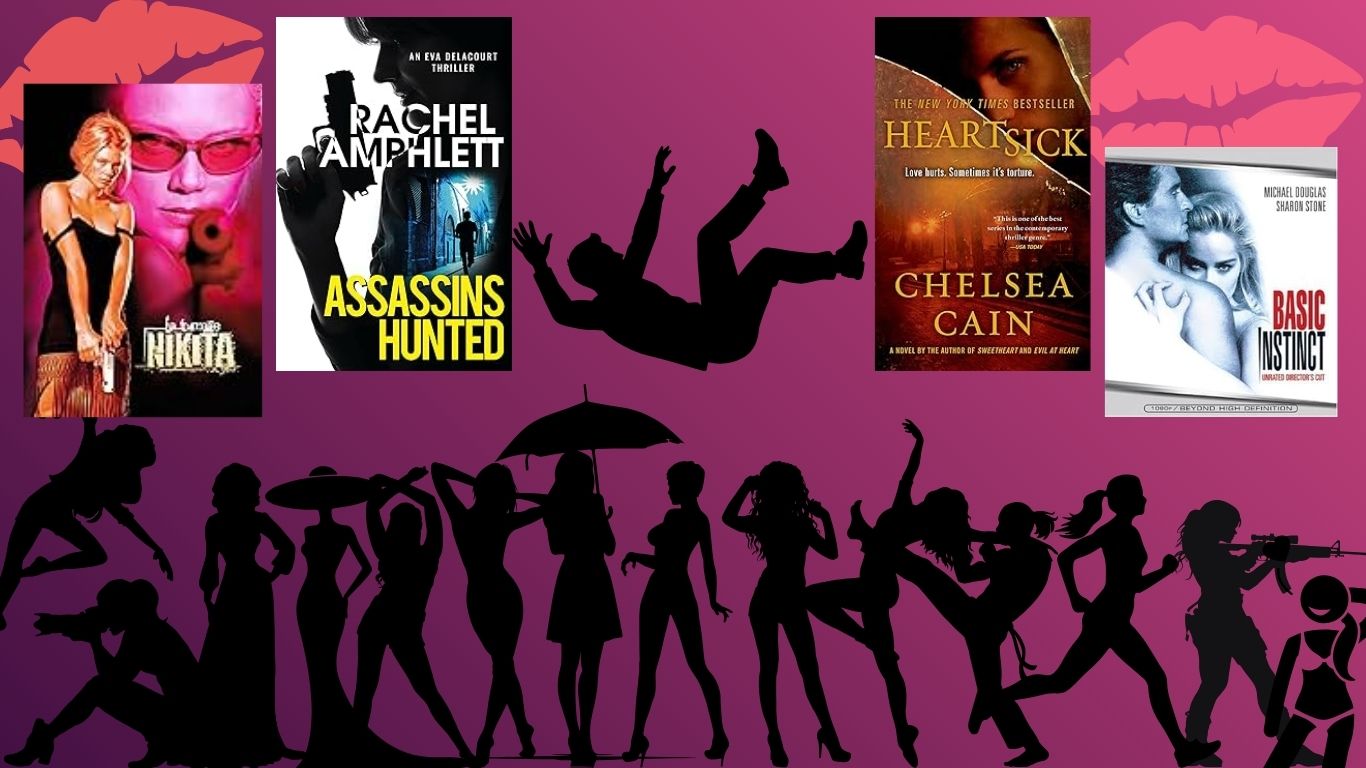
[Recommended Reading] Heartsick: A Thriller by Chelsea Cain
Who Framed Roger Rabbit? may be animated chaos on the surface, but Jessica Rabbit is pure noir royalty — smoky-voiced, sharp-witted, and draped in danger. She’s the kind of femme fatale who can make even a cartoon detective forget his moral compass. With that iconic line — “I’m not bad, I’m just drawn that way” — she embodies many of the classics in the rulebook, turning seduction into self-empowerment and revealing that the most dangerous woman in the room might also be the most misunderstood. The power of her looks is in how she weaponizes perception in a world that’s limited to two or three dimensions.

In Heartsick, detective Archie Sheridan spent ten obsessive years hunting Gretchen Lowell — a beautiful serial killer so skillful that finding her nearly cost him his sanity and his life — until in a twist of fate, she’s the one to catch him. After ten days of torture, Gretchen inexplicably releases him. Now she’s in prison, but Archie still visits her every week, unable to sever the psychological leash she wrapped around his mind. Twisting emotions like wire, she continues to manipulate things from behind bars and lets Archie believe he’s hunting down a new killer when, in fact, he’s still entangled in her gaze.
Who Framed Roger Rabbit? and Heartsick blur the lines drawn around attraction, duty, and annihilation — because sometimes the most dangerous bonds aren’t romantic at all; they’re the ones you can’t bring yourself to break. Both Jessica Rabbit and Gretchen Lowell remind us that the most dangerous femme fatales, whatever their reasons, are always playing for keeps.
[You Love Watching] La Femme Nikita
[Recommended Reading] The Eva Delacourt Thrillers by Rachel Amphlett
Starting with the 1991 movie and followed by the Canadian television series (1997–2001) and the American version (2010–2013), La Femme Nikita redefined what a weaponized femme fatale even looked like. The story begins with a woman framed, broken, and forcibly remade into a government assassin. Beneath its trench-coat aesthetic and techno-noir pulse is the age-old question: can someone built to kill ever reclaim their humanity? Nikita’s redemption arc turns the system’s own training against itself — while she looks impossibly good in the process. With every gunshot, covert op, and identity swap, she walks the razor’s edge between killer and crusader.

With pacing that is pure adrenaline, The Eva Delacourt Thrillers by Rachel Amphlett begin with a former operative in hiding after her fiancé’s murder. Her anonymity implodes when the organization that trained her turns its crosshairs on her. Someone in the mysterious Section has betrayed her, and now she has three problems. One: She’s running for her life. Two: She must protect a six-year-old boy while dodging assassins, conspiracies, and the ghosts of her own past. Three: As her enemies close in, the odds are not in her favor.
Just like Nikita, Eva is more than just some sexy spy or assassin. These femme fatales fight to reclaim their identity and flip the script on the ones who made them. They’re done taking orders, but rewriting their narrative requires taking things one perfectly executed escape at a time.
[You Love Watching] Basic Instinct
[Recommended Reading] Deadly Seduction by Wensley Clarkson
Basic Instinct is an iconic masterclass in manipulation. Catherine Tramell is the classic femme fatale: brilliant, beautiful, seductive, and entirely unbothered by morality or Miranda rights. Every line she delivers drips with control, every gesture a calculated test of one’s resolve. The ice pick is her way of punctuating statements. What keeps audiences hooked more than the crimes is the quiet, knowing smirk that says she might actually be innocent… or worse, she might have just been bored.

Wensley Clarkson’s Deadly Seduction translated that on-screen thrill into chilling reality with a story about a real-life femme fatale, who spun webs of deceit and murder that shocked an entire town. In rural Indiana, attorney Jimmy Grund thought he found his dream woman in Susan, but calculated ambition and heinous plans lurked behind her blond facade. She married for money, hid previous marriages and crimes, and planned her husband’s death with lethal precision.
This nonfiction book tracks her betrayals (like the gun stolen from a shocking source), retraces her past, and covers the town’s collective jaw-drop as the true depths of her deception come to light. Basic Instinct and Deadly Seduction are examples of how temptation is a strategy for femme fatales, not a game.
[You Loved Playing] Twintelle on Nintendo Switch
[Recommended Reading] Marvel’s Femme Fatales in The Amazing Spider-Man, Captain America, and More
In 2017, Nintendo released a fighting game called ARMS for the Switch. Unlike other playable characters, the curvalicious Twintelle uses her curly pigtails to win her fights. Depicted as a femme fatale type celebrity (even her victory quote says so!), she’s a fan favorite for millions of ARMS players and one of the world’s most popular Black femme fatales.

In another universe exists Marvel’s Femme Fatales, a team of female super-villains who specialize in manipulation, power plays, and the downfall of jockey-faced heroes. This sisterhood — originally led by Knockout, a striking Black mutant with superhuman strength and endurance augmented with cybernetic parts that use her already advanced abilities to provide body armor — devastates “the good guys” through force, trickery, seduction, entrapment, and strategy. The incredibly sexy Elizabeth Rawson (AKA Knockout) first appears in the October 1990 issue of The Amazing Spider-Man #340 and reappears several times that decade and beyond in The Amazing Spider-Man, Captain America, Hunt for Wolverine: Mystery in Madripoor, and M.O.D.O.K.
Fatal by Design
The femme fatale has always been a literary Venus flytrap — beautiful, intoxicating, and absolutely fatal to the men who can’t resist a lean in. Using everything from long legs to tactical gear, she lures fools to their narrative doom. Whether she’s meeting detectives or swiping right on her next mark, the femme fatale remains literature’s most dangerous lure. And we keep reading because we love the fall.
Deep dive into another rare lady trope, the Lumber Jills!
Browse our bookshelf on bookshop.org for more heart-racingly good thrillers and mysteries.
