

















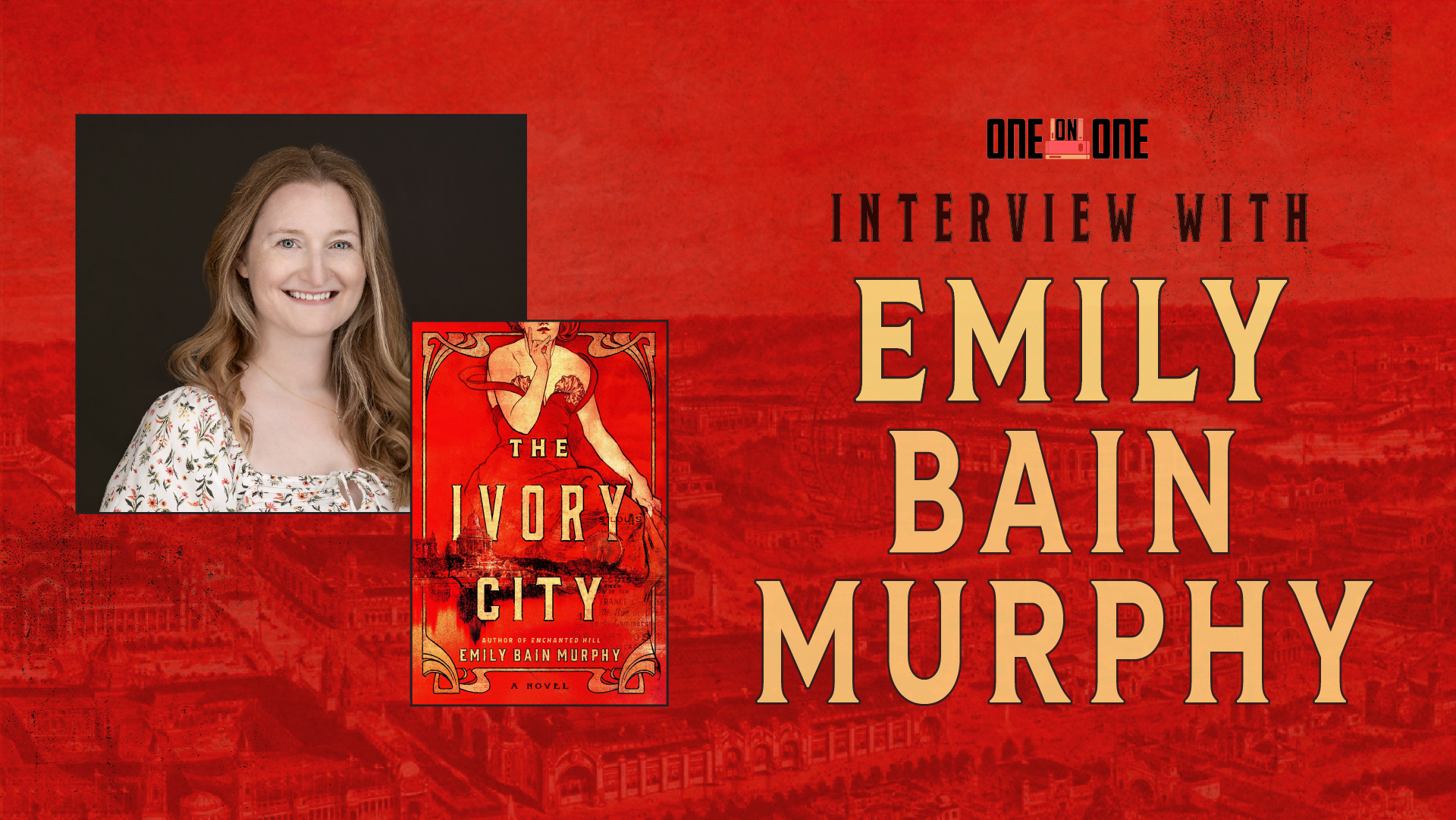
Historical fiction books are a wonderful way to transport oneself back in time. The best part? These books blend many other genres like mystery, fantasy, and even romance together. Emily Bain Murphy, known for her historical fantasy debut, The Disappearances, has caught the attention of readers by blending the fantastical with deeply personal experiences. From her genre-blurring debut to her rich historical mystery Enchanted Hill, Emily can captivate readers with her lyrical storytelling, world-building, and, most importantly, emotional depth.
As Emily returns with her upcoming release, The Ivory City, a sweeping murder mystery, she talks with us about her creative process and the inspirations behind her stories.
About the Emily Bain Murphy
Emily Bain Murphy is the author of two young adult fantasies: The Disappearances, which was a Bank Street Best Children’s Book of the Year, an ALAN Pick, and was shortlisted for the Waterstones’ Children’s Book Prize; and Splinters of Scarlet, which was nominated for the Mark Twain Readers Award. She is also the author of the popular adult historical mystery Enchanted Hill. Her latest adult historical mystery, The Ivory City, will be published in November 2025, and her debut middle-grade fantasy, A Kingdom of Shadows, is coming in March 2026. For more information, find Emily at www.emilybainmurphy.com.
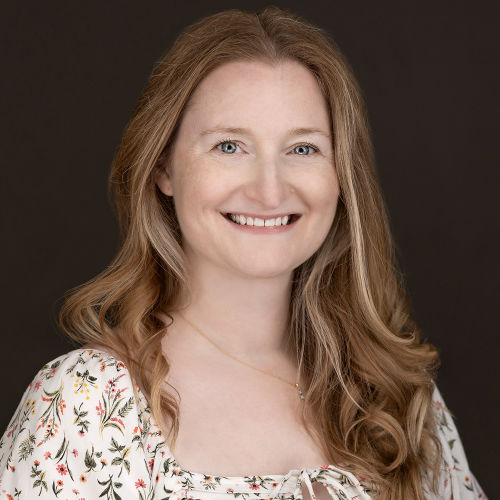
Thanks for joining us, Emily. Let’s get started!
Let’s start with your upcoming novel: for readers who may not be familiar with you and your work, could you share a quick introduction to your upcoming release, The Ivory City?
The Ivory City is a historical mystery set at the 1904 St. Louis World’s Fair. I think of it as a cross between the slow-burn romance of Pride and Prejudice and the atmospheric mystery of Devil in the White City.

Grace and Lillie have been best friends since birth, even though Grace’s social status has drastically fallen. When Lillie invites Grace to the legendary St. Louis World’s Fair, also known as “The Ivory City,” Grace hopes her fortunes might be about to change. But when a member of their party is brutally killed at the fair, and suspicion falls on Lillie’s brother Oliver, Grace must prove Oliver’s innocence before her beloved cousins’ family is ruined forever. Along the way, she’ll discover that the city’s wealthy elite — including Oliver’s handsome but irritable friend Theodore — aren’t quite who they appear to be. And amidst the glitz, glamor, and magic of the Ivory City lurks a danger that just may claim her life.
Your books all share the common genres of historical fiction and mystery. What draws you to these genres as a writer?
For starters, I absolutely love the mental puzzle of a mystery. I enjoy reading and trying to solve them (and I like being tricked by a clever one even more!) Trying to plot one myself always feels like exploring the next, intricate level of a game.
As for historical fiction, I’m often inspired by historical elements — old houses, lush dresses, the things that were going on in the world at those times — and that’s often why my books are set in the past. For instance, I loved the historical house where I got married (The Bradley Estate in Canton, Massachusetts), and I used it as an imaginative setting for my first book, The Disappearances. I am drawn to the dresses, food, and complicated social dynamics in period pieces like The Gilded Age and Jane Austen books, so my novel Splinters of Scarlet started off as an idea of combining the ice magic of Frozen and the upstairs/downstairs dynamic of Downton Abbey.
When I write, I see cinematic scenes in my mind that I then try to capture on paper. And then, for an additional challenge, I usually like to layer mystery and romance into those scenes and stories as well.
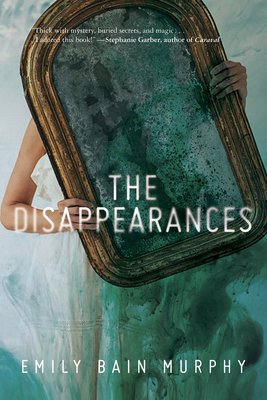
You’ve also included fantastical elements in your books, like The Disappearances. What made you want to include those fantasy elements, and how do you think they contribute to the ways in which readers resonate with the story?
I find myself drawn to a twinkle of magic, and I think that sometimes things that are true and real in this world can be understood better, or more clearly, through the lens of fantasy. The Disappearances is my love letter to all of the everyday beauty that we can sometimes take for granted. I began to wonder, what if some of these little things that make my life beautiful began to disappear from the world one by one? Some of my most cherished reader letters that I’ve ever received have been from people who were going through a difficult time and said that looking through the world through this lens helped them. What a gift! So I love fantasy, because I think it can be a way of reintroducing the wonder back into our actual world.
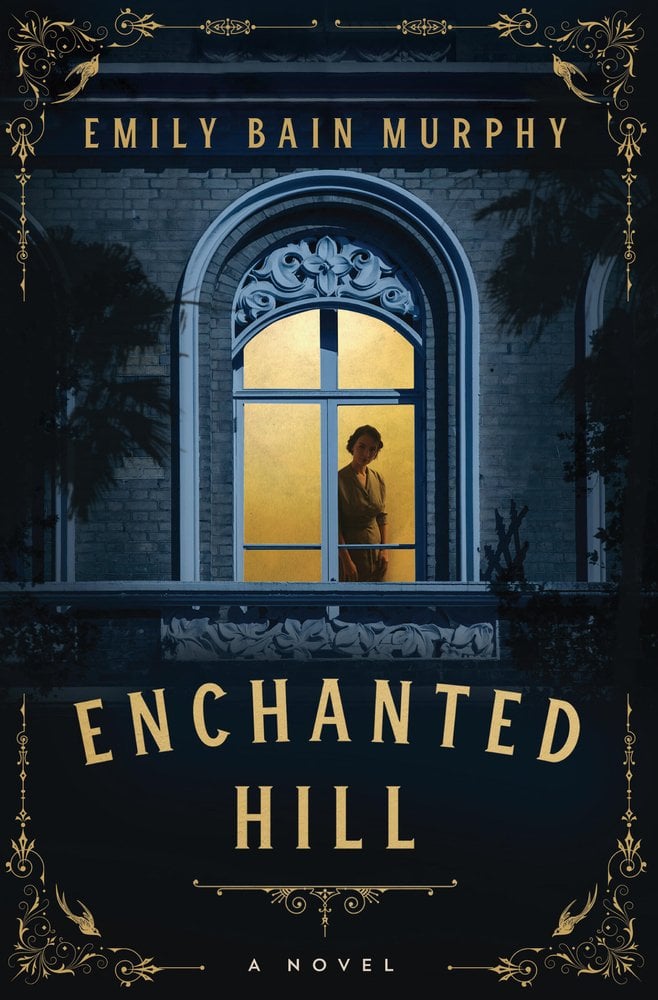
Many of your characters deal with the themes of loss, identity, and belonging, like Cora in Enchanted Hill. Why are these themes you find yourself returning to when you write?
I think, like many authors, I’m always trying to work out my own questions about life and being in the world through my stories. They aren’t merely diversions, for me, but explorations about larger ideas I’m wondering about. For instance, The Disappearances explored the beauty and meaning in the external world around us. Splinters of Scarlet was about exploring the beauty and meaning that forms within us. Enchanted Hill deals with questions of regret, forgiveness, and redemption, and all of the different ways we can respond when people wrong us. The Ivory City looks at questions of how to love imperfect people and institutions. And a common theme throughout my stories is outsiders learning where they belong in new places. “Finding home” is the throughline, and I think people resonate with that, whether they’ve moved many times over (like I have) or lived in the same place their entire lives.
Are there any real-life lessons that you hope your readers take away from your characters’ journeys?
My hope is to leave readers just a little better than I found them. I take it as a great privilege that someone would let me into their mind. My intention is to leave readers feeling a little more hopeful about the possibility of love, redemption, and beauty in their own lives based on what my characters experience in their fictional worlds.
Growing up between Indiana, Japan, and Hong Kong must have given you a unique perspective. How have these experiences influenced your storytelling and the worlds you create?
I met so many different people from different backgrounds at a young age, and I think it gave me an intense curiosity and love for people. It made me want to understand others, how they come to believe what they do, and that influences the way I write my characters, including the villains. I think every time you make a change in your life — such as moving or starting something like a new school or a new job — you have to learn a new world. You are actually living the experience of worldbuilding. I so enjoyed learning all of the little quirks and culture about the various places I have called home, from the delightfully heated toilet seats in Tokyo, to Karl the Fog in San Francisco (he has his own social media accounts), to gooey butter cake in St. Louis. And in a way, each time I explore a new historical period in my books, I get to learn a whole new culture of the time, which I also find fascinating.
What does the typical day of writing look like for you? Do you have any special rituals or settings to write in?
My two favorite places to write are at a coffee shop — preferably with a decaf lavender latte in hand — or in my office nestled next to our rescue bunny. I have three kids, and two of them are in school full-time, but my schedule largely depends on whether my four-year-old is home with me that day. Over the years, I have gotten used to writing in little spurts during nap times and preschool days.
When I’m feeling dry, I try to make time to go to the botanical gardens or an art museum, or any place that will help fill me up creatively so I have something to pour back out onto the page.
Do you have any authors or books that have inspired your writing journey, or any reads you would like to recommend to us?
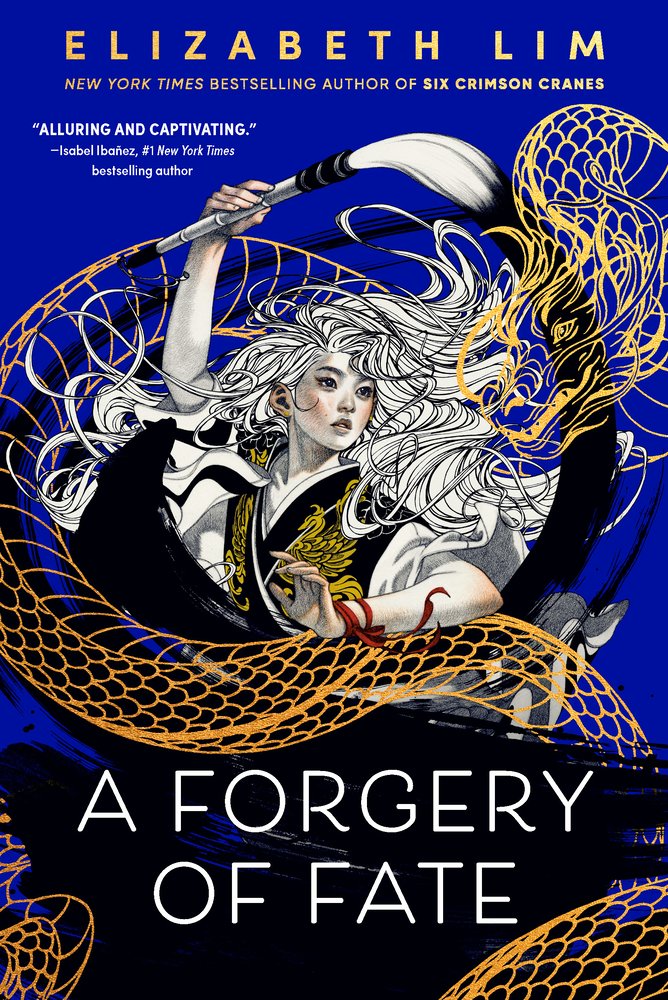
I love classic authors like Jane Austen and L.M. Montgomery, and more modern authors like Louise Penny, Kate Morton, Liz Moore, and Gillian McCallister. For fantasy, I recently loved Elizabeth Lim’s A Forgery of Fate. These books run the gamut from romantic classics to historical fiction to modern mystery and fantasy, but the common thread that unites them is a humanity that leaves me feeling very hopeful. In each of these authors’ works, their characters deeply love someone flawed — either family or found family — and that is the true, beating heart behind the story.
Sometimes (particularly with mysteries), I can really appreciate the mechanics and plotting of twists and turns, but if it leaves me feeling disturbed about humanity or unmoved by the relationships, then it doesn’t capture my heart in quite the same way. I think Louise Penny accomplishes this in a beautiful way — her books are about murder, but even more than that, they are about people in all of their faults and loveliness, and where the light manages to crack in through the darkness.
To close out, do you have any advice for aspiring authors looking to write their own mystery?
Yes! I would say, read widely in all genres — as I mentioned! — but also painstakingly read and watch other mysteries. You can study and start to pick up on the ways other authors distract, mislead, and plant clues along the way. I find it so much fun to engage with art like this, on so many different levels. Some of my all-time favorite mysteries are Faithful Place by Tana French (for the dialogue), Wrong Place, Wrong Time by Gillian McCallister (for the commentary on motherhood as well as the mystery itself), and The Secret Keeper by Kate Morton (for the great twists). I also recently enjoyed Head Cases by John McMahon and Long Bright River by Liz Moore.
And my second piece of advice is to take time to really get to know your villain. The most powerful antagonists aren’t purely evil, which is boring. They are people whom we can understand and might even empathize with, while knowing that they are still making very wrong choices. Figure out exactly what moment made their thinking begin to crack and go askew, and why. By sparing a little love for even your villains, you can spin your story to compelling new depths, and hopefully make the interplay with your protagonist even more satisfying.
Thank you again to Emily for speaking with us! Don’t forget to follow her on Instagram, Facebook, and keep up with her work on her website.
Click here to read our interview with another historical fiction author, Barbara Sontheimer.
Looking for some heart-pounding thrillers and mysteries to add to your TBR? Check out our Heart Racingly Good Thrillers and Mysteries Bookshelf on Bookshop.org.
