
While literature has long treated romantic love as the ultimate narrative destination, a vital shift is happening on the page. From subverting classic tropes to dismantling the rigid assumption that “aro” automatically equals “ace,” contemporary authors are expanding what stories about connection can look like.
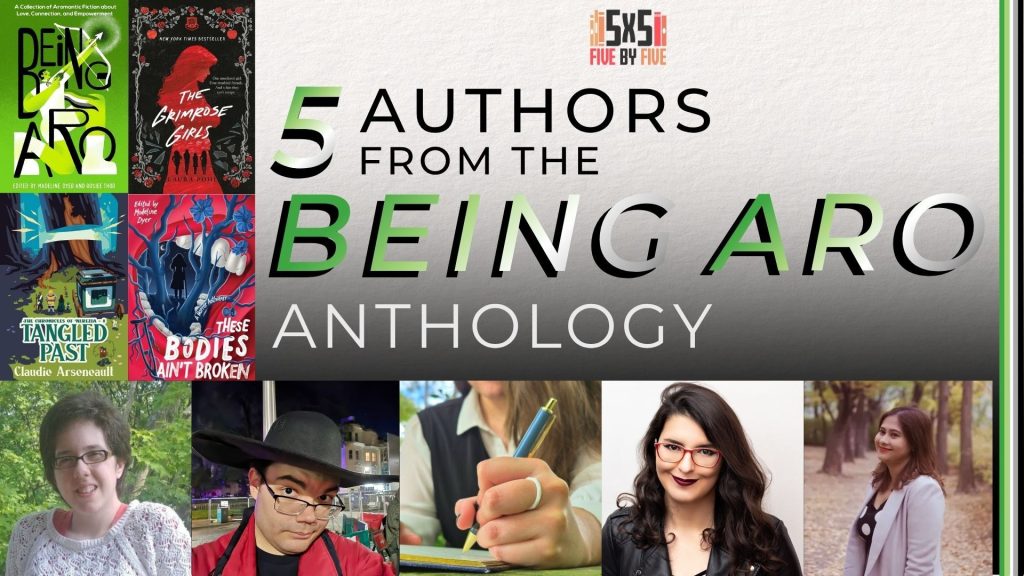
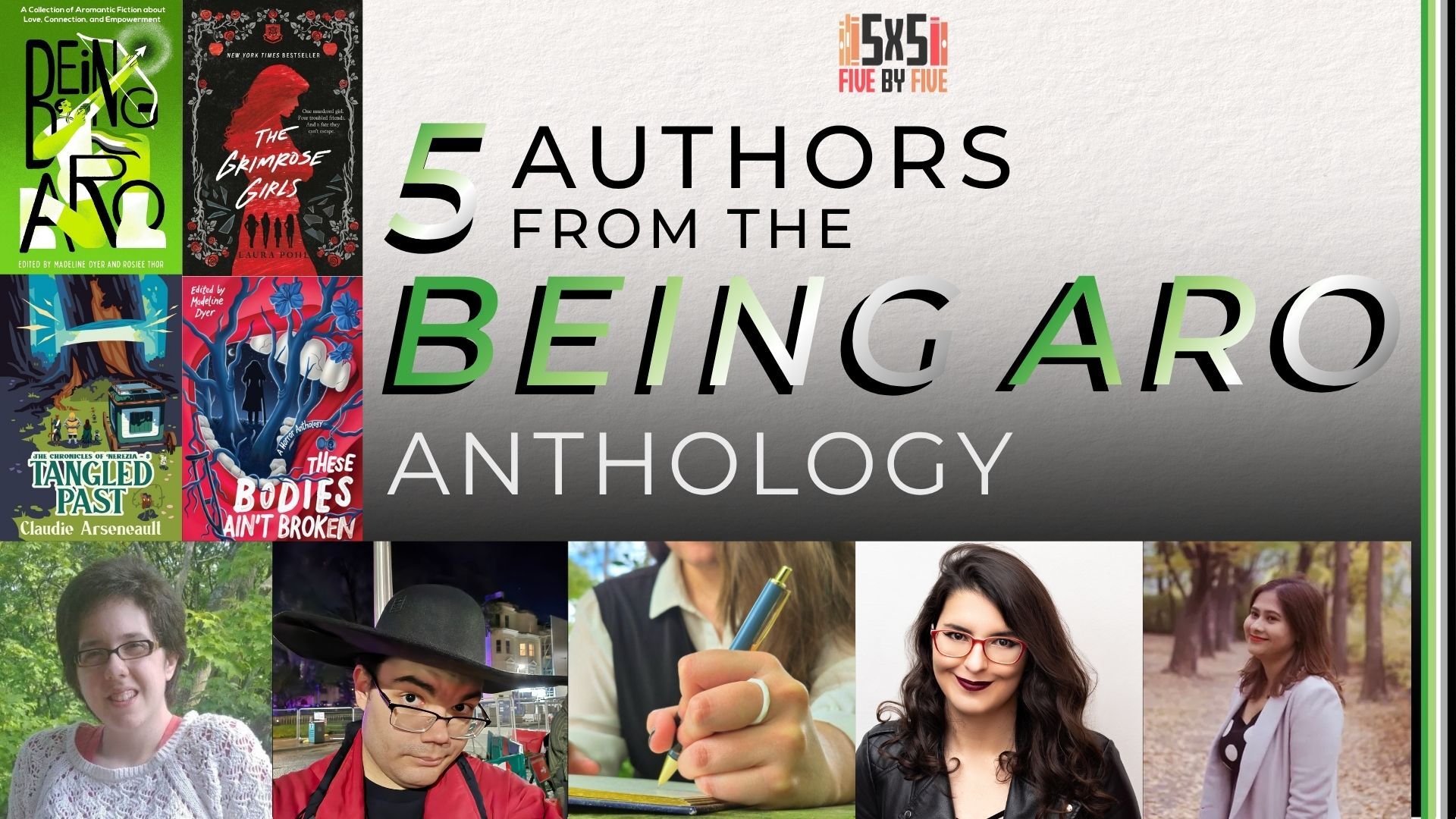
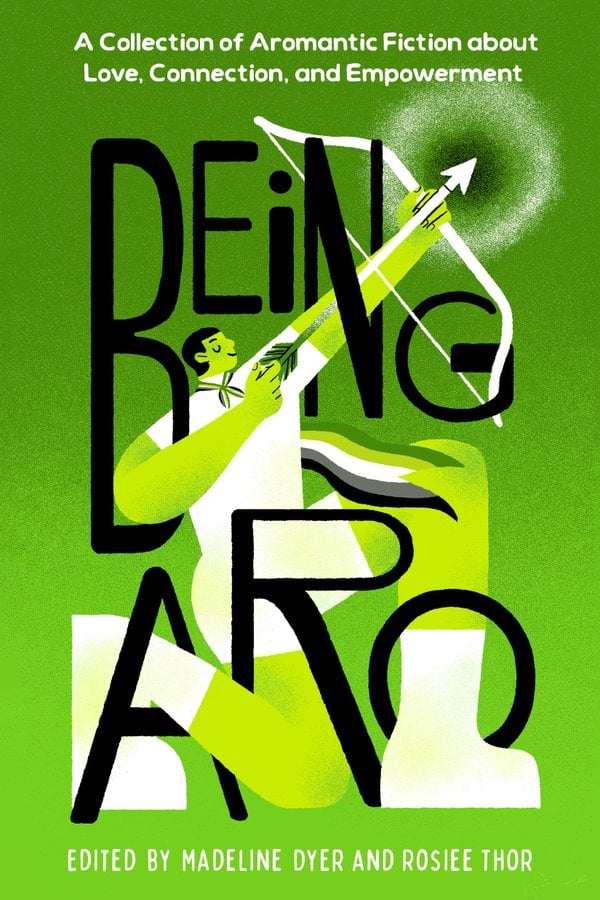
In this roundtable, we sit down with five incredible voices—Claudie Arsenault, Ian M. Carlisle, Isa Fiel, Laura Pohl, and Soumi Roy—to discuss their contributions to Being Aro and their broader works. Together, they explore how writing aromantic characters helped them navigate their own identities, tackle the publishing industry’s visibility hurdles, and prove that a happily-ever-after doesn’t always need romance at its core.
Thank you for joining us, Claudie, Ian, Isa, Laura, and Soumi. Let’s get started.
The Questions
1. Authors often note that writing about queer characters helped them better understand their own queer identity. In what ways has creating an aromantic character, either in BEING ARO or in your previous works, helped you better explore and understand your own queer journey?
Claudie Arsenault: For me, this happened while writing Baker Thief, somewhere in 2017. I started the draft of this book intending to write an allosexual aromantic character (even rarer at the time than today), and while I had questioned whether or not I was aromantic in addition to asexual, I’d mostly landed on “probably not”.
Baker Thief isn’t a questioning narrative. The main character is very firm in his identity. I would be writing strong affirmations and illustrations of aromanticism, trying to make it exceedingly clear and to really dig into the experience … experiences and thoughts I had definitely had, in many, many instances. It was a reckoning of sorts; if these were good enough for my main character, then they had to be good enough for me. By the end of the first draft, I knew with absolute certainty and felt like I understood myself a thousand times better.
Ian M. Carlisle: For my part, it’s mostly just helped me define my own sense of being aromantic, and how that would or could impact my life and especially my relationships with other people. To be honest, I’ve always kind of struggled with whether or not I could/should consider myself queer since, even though I’m aro, I’m otherwise heterosexual, not ace. I’ve never really felt entirely comfortable calling myself queer because by being straight, even without the romantic part, I’m not exactly going to be the first target of hate groups that so often attack my gay, lesbian, or trans fellow authors. Their plights deserve more attention than mine. My sibling tells me that being aromantic does make me queer, but even today I’m still not sure how much I believe them. Being Aro is counted as an LGBTQIA+ work, so I suppose I could use that as evidence of my being queer, but at the end of the day I’m still a man who likes women, just without the butterflies in the stomach or whatever it is you’re supposed to feel when in love; that much I do know. Maybe after a few more publications or life experiences I’ll come to a more complete conclusion, but for now the way I put it is, “You can say I’m queer if you think so, and I won’t correct you. But I might not entirely believe you.”
Isa Fiel: I’ve always considered creating characters representative of yourself as a worthwhile self-indulgence. After all, what a power it is to create something you’ve always needed and wanted to see, to use a part of yourself to share your story and empower those around you! At least, that’s how it was writing Yoli’s character for me. Through her, I had the chance to reflect on how aromanticism has been present in my life: not as something that was boxed as simply “no romantic feelings” but rather as something that unknowingly filtered the way I viewed relationships with people, developed dreams about the future, and influenced my feelings about my place in the world. While multifaceted with the layers of family relations, mental health issues, and other environmental factors, I could see how, though I had no words to explain it then, my queer identity still played a part in shaping my life. To borrow an analogy, my queer identity became less of a separate column on a chart and more of one of the many color gradients in the spectrum of my life. And having Yoli’s aromantic identity play in the background of Do You See Me? as a steady heartbeat, influencing why Yoli and the spirit do what they do, became important for me to show.
Laura Pohl: What I’ve often realized halfway through writing pretty much all of my books was the fact that in one way or another, I was always exploring the way people see and connect to the idea of love, being it romantic or platonic. Throughout my career, I’ve written different aromantic characters at different stages of their personal journeys, and it’s often something I, myself, have spent some time considering and working through my own feelings. I think the best part about writing about the subject is to realize there’s truly no end on the exploration of our own identities and feelings.
Soumi Roy: Writing The Binding for Being Aro helped me put language to something I had been trying to understand about myself for a long time. I fall somewhere in the grayromantic and demiromantic areas of the aromantic spectrum. I don’t necessarily experience romantic attraction easily, and when I do, it tends to develop slowly from an already established emotional connection. For a long time, I struggled to reconcile that with what I was taught romance was supposed to look like.
Being South Asian complicated that journey in a very particular way. As a woman, I’ve been hounded by my parents and relatives about marriage, and there is often an expectation that you can meet someone, decide they are a suitable match, marry them, and eventually grow to love them. That idea has always been bewildering—and, if I’m being truthful, a little horrifying—to me. How am I supposed to manufacture romantic love for someone simply because they have been deemed the right match?
That fear became the seed of The Binding. Gauri lives in a society where everyone is expected to make a match, and failing to experience the prescribed kind of romantic connection makes her believe there is something wrong with her. Writing her helped me recognize how much of that same uncertainty I carried. Like Gauri, I can care deeply about people without that care automatically becoming romantic. I can’t simply choose someone and make myself fall in love with them. Exploring her journey helped me understand that more clearly about myself—and, more importantly, to stop treating it as something I needed to change.
2. There’s a tendency in society and among readers to assume that when a person or character is identified as being aro, they must be ace, too. How do you go about addressing that misconception in your writing?
Claudie Arsenault: The easiest and obvious way is to include allosexual aromantic characters regularly and give them space to discuss their experiences. Barring that, though, when your story only has aroaces as important characters, it’s possible to be clear in your language—to discuss their disinterest in both clearly, and to open up the possibility for others to be different. I find that it’s always good, even when you focus on one specific way of being aro, to write it in a way that lets other experiences space to exist.
Ian M. Carlisle: My answer to that was by making Thomas Marley as much a Casanova and vocally, physically attracted to others as I could within the page count and age rating for the anthology. Obviously there are asexual people out there who are sexually active, maybe even to the extent Thomas is, but the general conception (however incorrect) is that asexuals aren’t really interested in sex. Making it clear that Thomas is very much interested in it, and that he finds his preferred sex/gender physically attractive right out of the gate, was kind of the only option while keeping the short story appropriate for the intended demographic. This being a short story also meant I was limited in how exactly to achieve this, though. The reader only meets one girlfriend in the story, even though Thomas mentions sleeping with other people his age regularly until his parents play the “marry or else” card. I also had to have him give an internal monologue about never feeling romantic attachment or attraction to others while still finding them beautiful, while also finding their romantic proclamations for him rather discomforting. I personally think it was a bit clunky to do that, but it got the point across, which was more important for the tale.
I also did my best to make Thomas and Meg’s relationship more based on trust rather than romantic love. I’ve personally never seen a difference between being open, honest, and vulnerable with someone you’re close friends with versus someone you’re in love with. The underlying reason always seemed the same; you’re that way with them because you trust them. Had I the time and room to fit it, I’d probably give them a scene where one or both of them say “I trust you” in a similar way to “I love you” to drive that point home. I think that could be the perfect aromantic counterpart for “I love you” in not just my own work, but any work that features an aromantic character developing a closer, more personal relationship with someone. There’s always the next story, I suppose.
Isa Fiel: I see this discussed all the time in aromantic spaces, and it’s interesting because in my case, I myself am aroace, so I’ve definitely been drawn more to reading and writing aroace characters without noticing—however, realizing that, I’ve tried to become more aware with how I approach my aro characters, trying to explore aromanticism from different angles and focus on what being aro means to each one. It’s mentioned briefly, as Yoli describes her journey to understanding her relationship with relationships as a “series of firsts” with Raúl, the latter of whom decides that it is romance specifically that is not for him, and the former, who ends up in a close, physically affectionate relationship with someone who is alloromantic and allosexual. It’s not something that gets explored further in Do You See Me?, but it is important to continue writing and encouraging more stories with alloaro characters (someone who is aromantic and not asexual), to destigmatize and dismantle the knee-jerk assumption that aro=ace=aroace.
Laura Pohl: Usually, it’s more to do with an individual character and the way they present themselves and how they relate to other characters – as often as the spectrum of sexuality and attraction are depicted as automatically identical, it’s very rare to actually see this correspondence in real life. For example, there are plenty of bisexual people who prefer to get romantically involved with one gender, even if feeling attraction to all, and it’s the same thing for the asexuality and aromantic spectrum. I try to create my characters with that in mind – because that will also affect how they deal with all the relationships they have with others, and let the readers see this misconception that they might have be addressed in the narrative through these relationships.
Soumi Roy: I’m aroace myself, but I think one of the most important things to establish is that aromanticism and asexuality describe different kinds of attraction, and being on one spectrum doesn’t automatically place someone on the other. An aromantic person can experience sexual attraction, desire sex, enjoy physical intimacy, or have sexual relationships without experiencing romantic attraction. Aroace people exist too, of course, but neither experience should be treated as the default or universal version of aromanticism.
When I write an aro or aro-adjacent character, I try to give them complicated, individual relationships with attraction, intimacy, and desire rather than defining them entirely by what they supposedly don’t feel. That distinction is personally important to me because, within my aro identity, I fall somewhere in the grayromantic/demiromantic area.
Romantic attraction is rare for me and usually develops from an already established emotional connection, but that doesn’t mean every other form of attraction or intimacy works the same way. I think fiction gives us an opportunity to untangle things society often bundles together—romance, sex, intimacy, partnership, and love—and show that they don’t have to come as one package. An aro character can desire someone sexually without wanting romance, crave intimacy without wanting a traditional romantic relationship, or love people fiercely without that love being romantic. For me, writing aro characters means giving them the freedom to want—or not want—each of those things on their own terms.
3. With Aromanticism often labeled as an “invisible identity” and not a term young readers often encounter, how do you hope your writing, either in BEING ARO or in your other works, is able to help readers understand this term, and if applicable, find themselves?
Claudie Arsenault: I am such a loud aromantic, in my public life and in my publishing-related work. These days I always write aromantic MCs, often several of them. I have a series dedicated to writing platonic relationships in an almost romance-like story structure, to give them the same sweeping weight and importance. I also have edited three aromantic anthologies (Common Bonds 1 to 3; the last is out next year), and I regularly read and recommend these books.
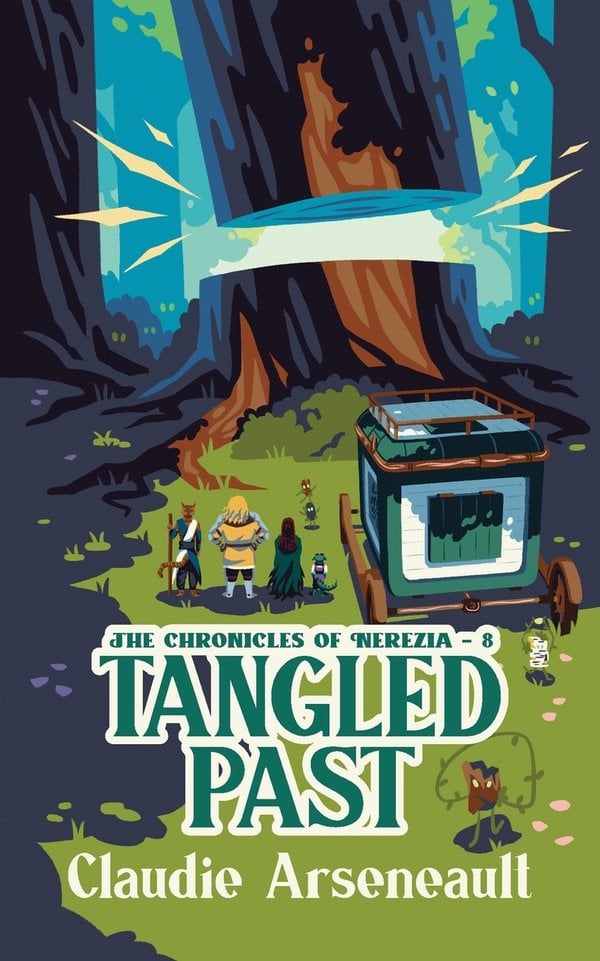
Fundamentally, I want readers to have options, both in my body of work and by helping them find others. There are so many ways to be aromantic and so many people writing it, but the lack of visibility is one of the biggest problems for these stories. It’s also why I had built the Aromantic and Asexual Character Database (which will come back, I promise!). The more aromantic stories out there and the more ways to find them, the better for everyone.
Ian M. Carlisle: I hope Being Aro gives them a good sense of where to start understanding aromanticism, rather than just reading it and assuming they have all the answers, and that my story in specific helps people understand that being aromantic doesn’t always equal asexual. Some of us find our fellow humans attractive in that way, even if we don’t say it out loud because that would be incredibly rude, crude, and just plain old inappropriate. I would hope they would dig further into more real-life adjacent stuff about aromanticism, maybe reaching out to people who are such because, at the end of the day, these are all fictional stories inhabited by characters; and one of the most important things to remember is that characters are not people, literally or metaphorically; they’re just very good at pretending otherwise. Real people, real aromantics, don’t live their lives according to story structure, or reach a certain threshold of narrative fulfillment before the next big change or event in their lives; and they certainly don’t fight evil wizards and their army of porcelain doll maids (at least I hope they don’t). Real people, real aromantic people, all live very different lives that are infinitely more complicated and often boring than what’s written in the pages of Being Aro; I should know, I’m loving one right now. Yes, there’s some commonalities, but that’s usually coincidence rather than anything else. So hopefully after seeing fictional aromantics on the page, younger readers will be open to meeting and getting to know real ones.
Isa Fiel: It’s funny because in Do You See Me? I did make the deliberate decision to not include the word “aromantic” in the story. While the entirety of Yoli’s character is her own, so much of her struggles about feeling pressured and grappling with the idea of her future whilst being aro is something I drew from my own life. I did not have the term “aromantic” growing up, nor did I encounter it until a few years ago. And even now, knowing the term, I personally feel more seen as an aromantic person through stories that likewise describe the experience of being aromantic, either without knowing the term or showing the way characters live their life accepted by others and being sure of themselves and letting that speak for itself.
I absolutely appreciate that we have words that can encapsulate a lifetime of experiences in a few short syllables. More than ever now, I think it helps to easily show that people are not alone. That there are others like them. And hopefully build those communities and encourage the support that we need in this time with compassion. With my writing, I would like to expand the focus on the experience of being aro, of exploring living a life as someone who is aromantic—on how it is one of the many things that shapes our lives but does not become the thing that defines our value or worth as a person.
Laura Pohl: I think simply being exposed to the idea of characters being able to find relationships, be it friendship or romantic, is enough to let each individual explore their own identity for themselves. Sometimes, just seeing a depiction, even without the labels present, is enough.
Soumi Roy: I think that invisibility is exactly why stories about aromanticism matter so much, especially for young readers. Growing up, I didn’t have the language to describe the way I experienced—or didn’t experience—romantic attraction. When every story around you treats falling in love as inevitable, it’s easy to assume that if it isn’t happening to you in the same way, you’re simply late, confused, or there is something you haven’t figured out yet. Sometimes discovering a word for your experience can be incredibly freeing because suddenly you realize you aren’t the only person who feels this way.
That’s something I wanted to explore through Gauri in The Binding. She lives in a society where romantic love is treated as universal and compulsory, so when she cannot form the connection expected of her, everyone assumes that she is the problem. I hope young readers who recognize some part of themselves in Gauri can come away understanding that aromanticism is not an absence of love or an inability to form meaningful relationships. Romantic love is simply one kind of connection among many. And even for readers who don’t identify as aro, I hope the story encourages them to question why we place romance at the center of a fulfilling life. Most of all, I hope an aro-spectrum reader encounters Gauri and perhaps finds a word for something they’ve felt but never quite known how to name.
4. Today’s romance stories are famous for classic tropes like enemies-to-lovers and grumpy x sunshine. In your work, how do you go about reshaping these popular tropes to be inclusive of aromantic or platonic/queerplatonic relationships?
Claudie Arsenault: This is one of my favourite things to do and the core of Baker Thief (specifically enemies-to-QPR in this case). It’s such an interesting process to stop and see how these tropes are built, what makes them work, which of these elements don’t remotely need to be romantic, and how you can transfer them over. Not everything maps out! One of the unique challenges of Baker Thief is that I wanted my characters to have something else than “I love you” as their core shared words.
Sometimes it’s also fun to lampshade these tropes completely. For example, when you have a pair of aroace characters in a world/culture where bedsharing is common and often done with family, Only One Bed falls apart quickly. When I used it with Awakenings, I lampshaded it and moved on, and it gave me space to use the physical proximity in different, more relevant ways to my characters’ relationship.
Ian M. Carlisle: Well, firstly, I don’t know how “classic” enemies-to-lovers is. But even if it’s older than I think, I really don’t utilize it or “grumpy x sunshine.” Thomas and Meg’s relationship isn’t really defined by any trope of romance or character pairing dynamic; or at least I never wrote it with specific ones in mind. They’re already friends-with-benefits (or FwB) when Meg’s introduced to the reader. Honestly, that is the relationship, or romance trope (if you can even call it that since there’s no romance whatsoever despite Thomas’ penchant for sounding romantic), I was more concerned with. I wanted to portray an FwB relationship as perfectly normal, desirable, and a feasible long-term relationship plan, all without it turning awkward for some reason, or suddenly becoming a belated romance as it does with other stories that feature an FwB relationship; be it the film No Strings Attached (2011) or, wouldn’t you know it, the film Friends with Benefits (also 2011… coincidence?). I’m sure there’s more; I just can’t think of any at the moment.
With all this in mind, trying to reshape or even utilize a specific romance trope wasn’t really on my mind. I wasn’t asking myself, “How do I make this trope or dynamic work for an aromantic protagonist?” I was asking myself, “Why are these two in the relationship they’re in, whatever that is?” Simple answer: they trust each other. I feel like trying to work in a specific romance dynamic or trope or whatever kind of pigeonholes the writing process, where the author is forcing the characters into a narrative or plot that they aren’t really made for. In general, my writing approach has always been to write without thinking about tropes; instead, just think about the story itself. I know that probably sounds pretentious; in fact, I’m certain it sounds pretentious, but it’s how I roll; and the result is, I think, a more natural, compelling, and (critically) believable relationship between Thomas and Meg than I would have gotten if I were consciously trying to reshape something like “enemies to lovers.” More power to the authors who want to do that, but that’s just not how I write.
Isa Fiel: While Do You See Me? is not a romance story, it does feature an aro x allo partnership, though whether it’s queerplatonic or something other is something that even Yoli and Kiana haven’t quite discussed yet, as part of Yoli’s struggles is that she does not wish to further burden Kiana beyond the comfort they have now. Of course, there are many on the aromantic spectrum that are non-partnering and aplatonic, so not every aro character needs to end up with someone, inclusive relationship or not, either, just as Raúl, while forming friendships, does not find satisfaction in pursuing any romantic relationship. In writing aromantic relationships, it’s important for me to blur the lines of what makes something “romantic” or not, because in the end, it really is up to those in those relationships to decide what to label themselves.
I’m a huge fan of utilizing classic tropes to describe character dynamics—how differentiating characters interact and cooperate with each other—rather than restricting them to archetypal romantic relationships. Opposites attract? Forced proximity? Forbidden love? Half the fun is exploring the characters themselves and their arcs in these dynamics while subverting the expectations of romance for them.
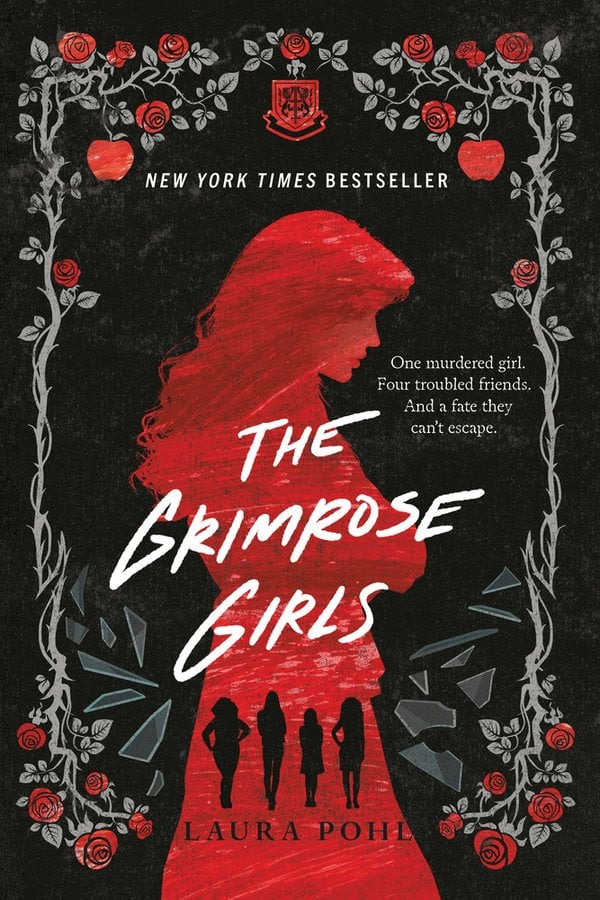
Laura Pohl: I don’t believe they need any reshaping at all – as with all tropes, they can be applicable to any dynamic, the issue being that they’re usually just used for romance even though that’s not mandatory. For my book, The Grimrose Girls, I wanted to write about an epic love story like we often see a male and female character sharing – dying for each other, killing for each other – but applicable to two best friends, Ella and Yuki. If we ourselves cannot imagine being able to take part in these kinds of stories, without having to excuse ourselves for how we feel and how we relate to people, then it’s a battle we already lost.
Soumi Roy: I personally love classic romance tropes like enemies-to-lovers and grumpy x sunshine, and I don’t think those dynamics have to belong exclusively to romantic relationships. At their core, so many of these tropes are really about connection: two people learning to understand each other, becoming vulnerable with each other, and choosing to remain in each other’s lives. None of those things inherently require romantic love.
I would love to explore something like enemies-to-lovers through an aromantic or queerplatonic lens—two people who begin as enemies, slowly develop trust and a profound emotional bond, and eventually realize that they want to build a life together, simply because they value each other’s companionship. They might choose each other again and again without ever falling in love in the conventional romantic sense. The same can be true of grumpy x sunshine, fake dating, forced proximity, or even only-one-bed. For me, reshaping these tropes isn’t necessarily about removing the intimacy, yearning, or emotional payoff that makes them so satisfying. It’s about questioning the assumption that the deepest possible conclusion to that connection must always be romance. Sometimes, I choose you, and I want you in my life can be its own happily-ever-after.
5. It’s common in the online bookish community to hear that aromantic rep is lacking, and sales data often backs it up, but book listicles and helpful book databases can call that statement into question. Based on your own insights, why do you think readers often struggle to find aromantic books, and what steps can be taken by the publishing industry to help their visibility?
Claudie Arsenault: As the owner of a database like this, the number of books isn’t lacking, especially from the indie space. The enthusiasm for them and the space afforded to them, however? That’s very different. On the traditional industry side, I feel as though aromantic characters have gotten far less marketing and visibility in recent years (every queer identity has gotten less; I think it’s more striking with us because there was already so little). But I’m an indie author at my core, and that’s what I’m interested in fixing and helping.
For us, the challenges come from an emphasis on queer indie lit as a romance space, and several big sales and events being formatted around romance conventions (pairings and romance tropes as primary ways to categorize, for example). This makes it difficult for a large portion of aromantic books to get visibility and find their readers. The second issue is, quite frankly, that the limited visibility aromantic books get is often dedicated to books from traditional publishing. I don’t think there’s a miracle solution besides encouraging everyone, from readers to authors to other professionals, to be more intentional about reading and talking aromantic books (get as excited for friends as for romantic pairs!! Make art!! Make memes!!)
Ian M. Carlisle: I’d say the difficulty in finding a book with aro rep is rooted in the same problem I personally have; there’s a lot of books out there, and more are published every month, so the task of searching for books with bona fide, unambiguously aromantic characters can seem rather daunting. I know it is for me. As for what publishers can do, well, I’d hate to say “advertise the presence of an aromantic character” like it’s a bonus feature instead of just something that’s there, but honestly that might have to be it for now. It really is a numbers game. There aren’t nearly as many aromantic people on the planet as there are romantics, so naturally the amount of romantic authors and books with romance-inclined characters outnumbers the aromantic ones pretty heavily. It probably doesn’t help that the romance genre is, to this day, the best-selling literary genre and the one that gets the most attention from publishers and readers because of that; so any books with aromantic characters, who by definition aren’t interested in romance, are going to be overshadowed by the publishing industry’s main source of income. The runners-up for best-selling genres, crime and fantasy (which may or may not include science fiction), might have plots that are aromantic in nature, by which I mean they feature main characters who don’t have a romantic subplot with another, or might even turn down a romantic relationship because they’re focused on the conceit of the story. However, the lack of romance does not an aromantic protagonist make, since there’s never a clear statement of lacking romantic attraction, just a lack of interest in pursuing romance at the moment due to extenuating circumstances; just like No Strings Attached or Friends with Benefits above, now that I think about it.
Meanwhile, the lists of books with aromantic characters I’ve seen are usually ones where a character just happens to be aromantic or, as mentioned above, just never enters a romantic relationship, and the list-maker infers they’re aromantic rather than having it confirmed in the narrative. This is some nice casual representation, but ultimately these are not narratives where aromanticism is a major theme or cause of conflict as compared to several of the works in Being Aro where a character being aromantic does factor into the story directly. Again, I dislike the idea of advertising the presence of an aro character; it makes it sound like an exception instead of the status quo. But publishing more books with aromanticism as a core element probably isn’t a very profitable option the publishers will want to go for, which means books featuring aromantic protagonists are going to be the exception, for a while at least, so advertising will probably have to do for now. Maybe. I’m horrifically out of touch with how publishers market and promote books these days, outside of hoping they get big on BookTok so BookTokers will do the advertising for them.
Isa Fiel: I’m actually one of those who struggled to find aromantic books for so long. I think all the ones I’ve read came through this lovely aro and ace book database and other passing article posts. So there are quite a lot of aromantic and aspec books that have been published, but I think there are several contributing factors as to why the struggle to find them in the first place persists. I’m not a prominent social media user. I’ve had to rely on actively searching for book lists that others have meticulously put together or publishing announcements that explicitly promote their books as aromantic stories. I would venture that aromantic books being published via self-pub or smaller presses might not have the same reach as those published under larger publishing houses in terms of marketing. Improper use of terminology can mislead or bury readers and stories, and quite frankly, I can see the argument being made that aromantic books could be considered a niche and therefore not a great focus of interest.
I’m still learning more about the bureaucratic details that go behind the scenes in the publishing industry, but I firmly believe that encouraging people to write—those from all sides of the aromantic spectrum and those who are not—to share the stories that they want to share would only help more. Encouraging people to be more vocal to publishers about the fact that aromantic books do indeed have an audience, and that we want more books with representation to be sought out and published. Continue to educate on what aromantic orientations are alongside other common LGBTQ+ infographics, discussions, and fandom headcanons to increase visibility and presence.
Laura Pohl: I think this can be said of many other representations as well – and it’s mostly due to the new changes we’ve seen on the internet, and how difficult it can be to be able to search for accurate information in these times fueled by AI. It can take dedication to find things we want, and with so much information ready at hand, it can feel disheartening to not be able to immediately find what we’re looking for and having to dig further and dedicate more time to the task. Of course, publishing and dedicating further resources to marketing these books as such definitely helps!
Soumi Roy: I think part of the problem is that aromantic books can exist and still be incredibly difficult to discover. Aromanticism is often treated as a very specific or niche identity rather than something publishers know how to position and market. A book might have an aro or aro-spectrum protagonist, but that representation may not appear prominently in the jacket copy, marketing materials, metadata, or even the way booksellers categorize it. Readers then have to rely on recommendation lists, databases, social media, and word of mouth to find those stories. So when someone says, “There are no aromantic books,” what they may really be experiencing is a visibility and discoverability problem.
I would love to see the publishing industry become more intentional about changing that. That means acquiring more stories where aromantic characters are protagonists across genres—not only books specifically about being aromantic—but also making the representation easier to find once those books exist. Publishers can clearly identify aro representation in metadata and marketing, include aro books in broader queer promotions, send ARCs to aro reviewers and creators, and continue supporting these titles beyond their release month. Booksellers, librarians, educators, and media outlets can help by including aromantic books in displays and recommendation lists alongside other queer identities. Ultimately, readers shouldn’t need to already know exactly what they’re searching for—or dig through a specialized database—to stumble across an aromantic character and think, Oh. There’s a word for someone like me.
Bonus Questions
As often reminded by the bookish community, a reader doesn’t need to identify with the main characters in order to enjoy it. So what do you hope that non-aro individuals can take from your story in BEING ARO?
Claudie Arsenault: I hope it helps anyone who has been invalidated repeatedly know that there are people out there who will believe they are who they say they are, that they can have friends who are fully behind them, and that they deserve to, even if they’ve been assholes in protecting themselves in the past. So many marginalized people grow spikes to protect themselves, and it can be isolating. We all deserve people who’ll see past that.
Ian M. Carlisle: That not all aromantics are asexual; for one thing, that’s really the big one. I’m one of those people, and how to bring this up to others is one of the great dreads of my life. There really doesn’t seem to be a way to tell someone that I want to be intimate with others, that I find them attractive, but that I’m not in love with them. Or, at least, there doesn’t seem to be a way to do so without coming across like a sleaze sometimes. Or maybe I’m just in the wrong spaces? Who knows. Either way, hopefully “Thomas Marley’s Fake Bride” can help change that by showing that just because a non-asexual aromantic wants to be intimate without the romance, that doesn’t make them sleazy or cruel. It just means their criteria for intimacy is different. Like I said, it’s more about trust, which I honestly think applies to everyone, even romantic people. I mean, would you want to be naked and vulnerable with someone you didn’t trust? I know the logic for hookups and one-night stands is that spontaneity and not knowing much about your partner is kind of the point (and that you don’t necessarily ever have to speak with your one-night partner after the night is through), but even in those scenarios, you’re trusting them to deliver (ahem) pleasure at least. Intimacy is an act of trust as much as romance, and I hope with that framing, it helps non-aro people understand where an aromantic person is coming from when they make a pass at them, or what difficulties their aro friends might be going through.
Isa Fiel: Whether everyone identifies with Yoli and the others or not, I think most people have and will experience some fearful anticipation about the future—whether of its uncertainty, its pressures, or the change that inevitably comes—and sometimes that fear becomes intertwined with how we view ourselves. What we lack and what we’ve yet to accomplish and how that sometimes can push us down a path that can hurt ourselves and others if we let that fear take over. It’s in those moments that community and loved ones become important, reaching out to someone trustworthy instead of pushing everyone away.
I hesitate to walk down the same talk of universal experiences (how many times have we heard that about love?), but there is value in learning from characters and stories that we don’t immediately identify with. There is no one way of being human, but the journey of life is something with which I hope we can all resonate.
Laura Pohl: I just hope that they can see the beauty in all kinds of love stories and non-love stories being told in this anthology.
Soumi Roy: I hope non-aro readers come away from The Binding questioning some of the assumptions we make about romantic love—particularly the idea that it is universal, inevitable, or necessary for a fulfilling life. Gauri lives in a society where everyone is expected to form a romantic bond, and anyone who cannot is treated as though something is fundamentally wrong with them. Her world takes that expectation to a horrifying extreme, but the pressure itself is very real. We often ask people when they are going to date, marry, or find “the one” without considering that they may not want those things at all.
More than anything, though, I hope non-aro readers recognize how expansive love and connection can be. Gauri’s inability to experience romance in the way her society demands doesn’t mean she is incapable of loving deeply. Friendship, family, companionship, queerplatonic relationships, and the communities we choose can be every bit as meaningful as romantic partnership. You don’t have to share Gauri’s identity to understand the desire to be accepted without having to become someone else first. If non-aro readers finish the story thinking a little more carefully about the expectations they place on others—and recognizing that a life without conventional romantic love can still be joyful, intimate, and complete—then I think the story has done what I hoped it would.
Are there any forthcoming aromantic or asexual-centric books that you’re looking forward to reading in 2026?
Claudie Arsenault: I rarely read books as they come out, so I’m going to take some liberties with this and give you two books that are on my 2026 TBR and two series that deserve so much more love, one ongoing and one not.
So, for books I want to read this year, I’d say the top of my list are The Map and the Territory by A.M. Tuomala (rocky friendship between a cartographer and a wizard) and The Wolf Among the Wild Hunt by Merc Fenn Wolfmoor (collection of stories by a great aroace author).
The two series that came to mind are The Eternal Library by Cedar McCloud (a gorgeous, character-focused series about apprentices and mentors of illuminated books in a magical library) and The Saoni Cycle by Avi Silver (a YA trilogy in a jungle with giant lizards that’s all about building bridges—a literal one between villages, but also across cultures, languages, traumas… and it has a lovely eventual aspec polyamory at its heart, too).
Ian M. Carlisle: Well, right now I’ve already got a massive book reading and film watching backlog to get through, so I’m not really up to date on new releases of any sort. I did take a look out of curiosity, and most of the lists I found were repeating the same seven books; only three of which had entirely aro protagonists, and only one (Being Aro itself) wasn’t aro-ace, if only because of Thomas Marley’s Fake Bride. I do intend to properly read the entirety of Being Aro, though; I haven’t had the chance to because I was in England working on my MA in Creative Writing when it was released, and when I came back to the U.S. I had to focus on my dissertation. But now everything is done, so I can pick up one of the twenty copies I got sent for free and read every story that isn’t mine. I did that enough during the revision process.
Isa Fiel: I’m quite behind on my ever-growing TBR list, but I am looking forward to reading Scorpion Deep by CG Drews and Girls Walking with Wolves by Jenna Baner (eldritch horror and fairytale retellings focused on friendships? sign me up!), both of which come out in October and November, respectively. And of course, after rereading Being Aro, I hope to get my hands on both Common Bonds anthologies and Lord of the Empty Isles by Jules Arbeaux.
Laura Pohl: I’m a sucker for anything horror- and monster-adjacent, so I’m really excited for Scorpion Deep by CG Drews!
Soumi Roy: There are quite a few! I’m especially excited about Shapes of Love by L. V. Peñalba, which is already out, but I haven’t gotten a chance to read it yet. As someone who is aroace but also genuinely loves reading and writing romance, I’m really drawn to its premise of an aroace musician who writes love songs inspired by fictional romances and then finds herself having to fake a romantic relationship. I love stories that explore our complicated relationships with romance rather than assuming that being aro or ace means we must dislike romance altogether.
I’m also really looking forward to The Hanging Bones by Elle Tesch, again which is out, but I haven’t gotten the chance to read it yet. It has an aroace protagonist and leans into dark fantasy and horror. As a speculative fiction and horror writer myself, I’m always excited to see aromantic and asexual characters getting to exist in stories where their queerness is only one part of a much bigger, stranger, darker adventure. And, of course, I’m incredibly excited for readers to discover all the different aro experiences represented alongside mine in Being Aro. One of the things I love about this anthology—and about seeing more a-spec books coming out—is that no single character has to carry the responsibility of representing an entire spectrum.
Thank you, Claudie, Ian, Isa, Laura, and Soumi for the wonderful interview! Be sure to follow these authors on their socials and, if you haven’t done so yet, pick up Being Aro from your favorite local indie bookshop or use any of the links above.
About Claudie Arsenault
Claudie Arsenault is an aroace writer hailing from Quebec City with a passion for all things platonic love.
Learn more about Claudie on their website, and follow them on Instagram, BlueSky, and Threads.
About Ian M. Carlisle
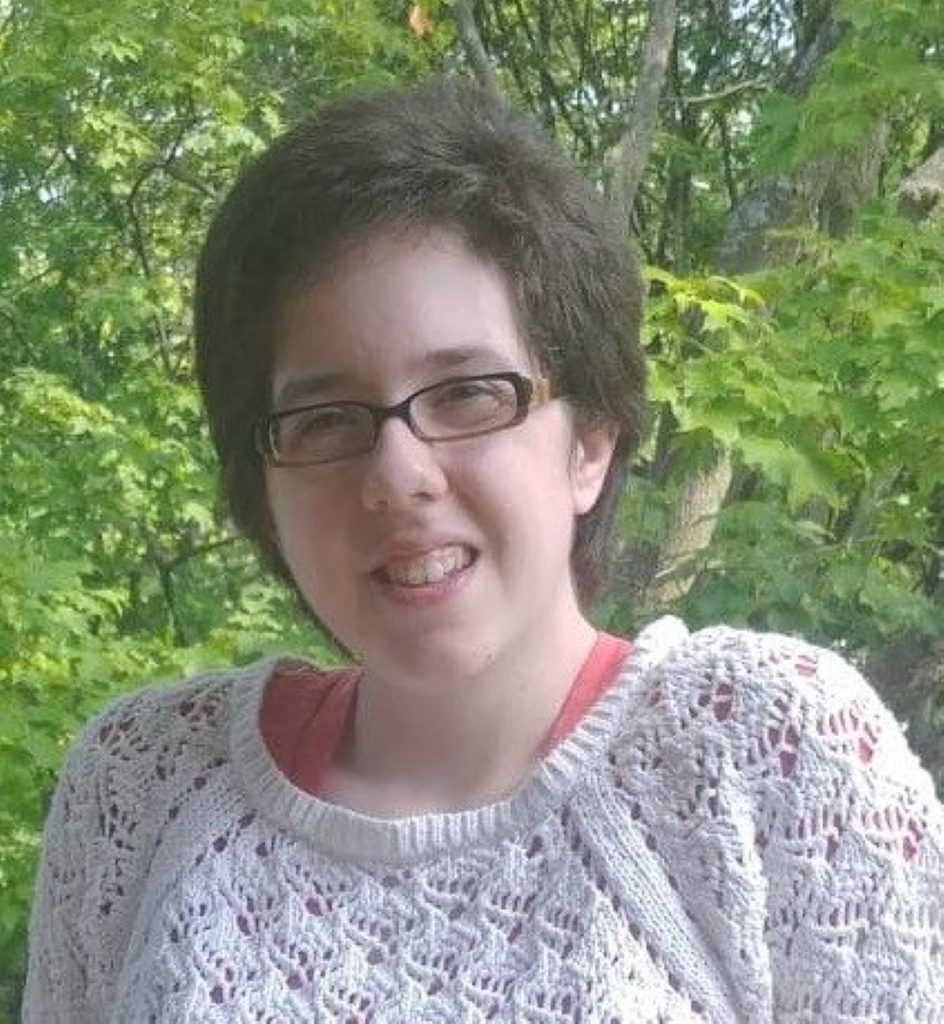
Ian Carlisle has been writing various flavours of fantasy, science fiction, and more since he was in middle school. He graduated Magna cum Laude with his Bachelor’s Degree in Creative Writing in 2024. In his downtime, Ian either plays a favorite video game or watches a movie. But writing is never far from his mind; even while relaxing, he’s probably thinking of a new story to write or an old one to continue.
About Isa Fiel
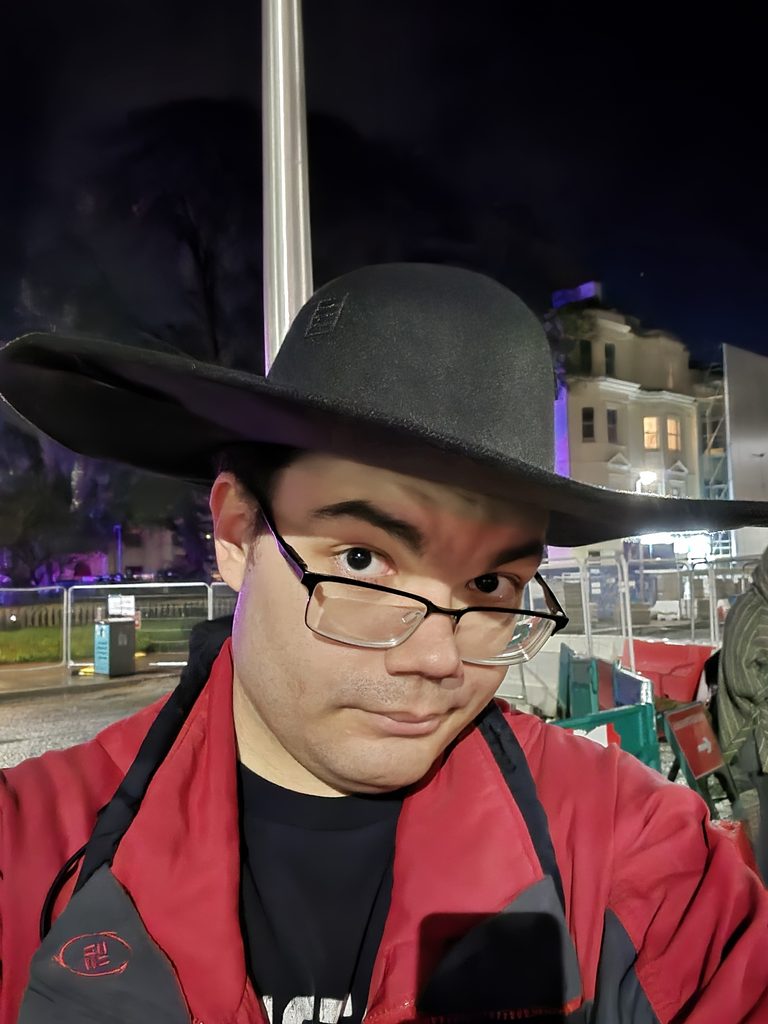
Isa Fiel (she/they) is an emerging writer with a passion for complicated stories about being human and an interest in experimenting with the range of emotions. She’s recently been taken by friendship bracelet weaving, a suspect behind her mysterious hand cramps. Do You See Me? is their first published work.
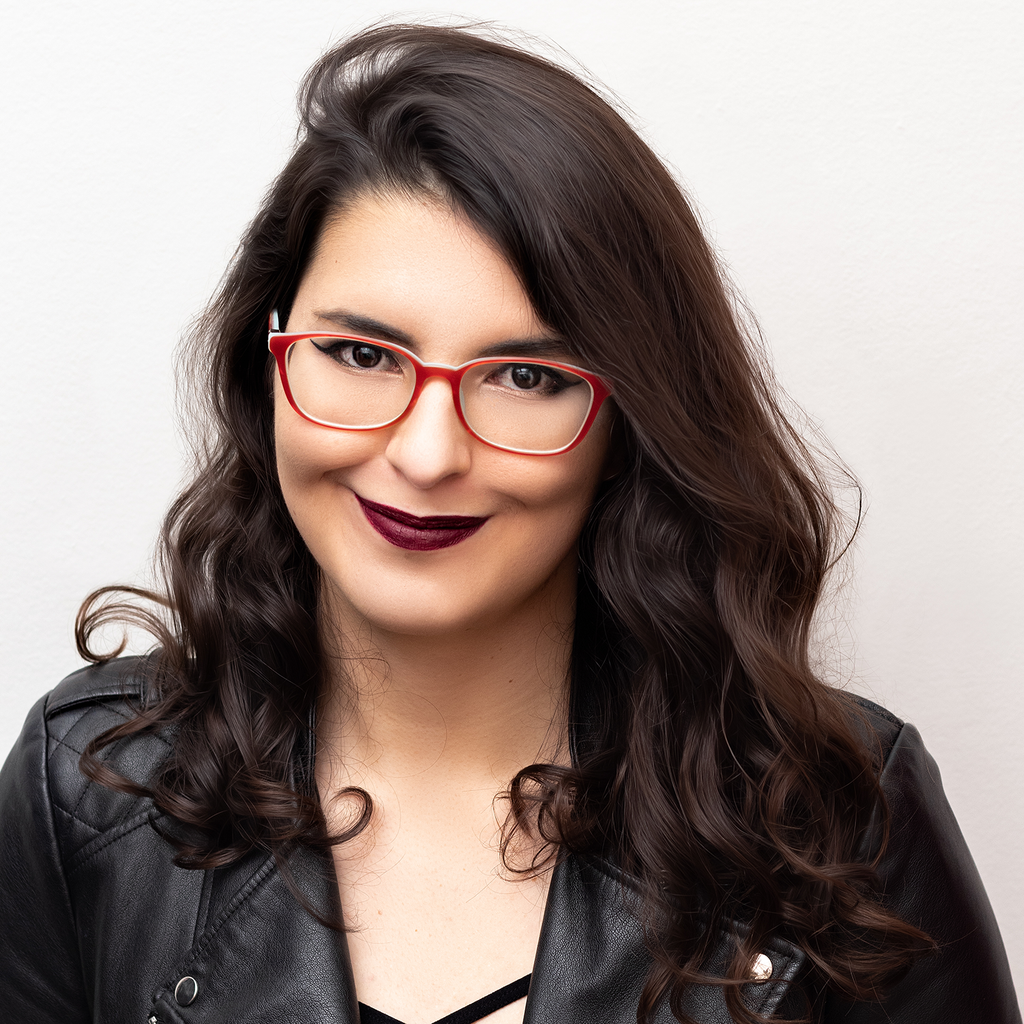
About Laura Pohl
Laura Pohl is the New York Times best-selling author of The Grimrose Girls. Her debut novel, The Last 8, won the International Latino Book Awards. A Brazilian at heart and soul, she makes her home in São Paulo.
Learn more about Laura on her website, and follow her on Instagram, Facebook, TikTok, Pinterest, and Twitter (X).
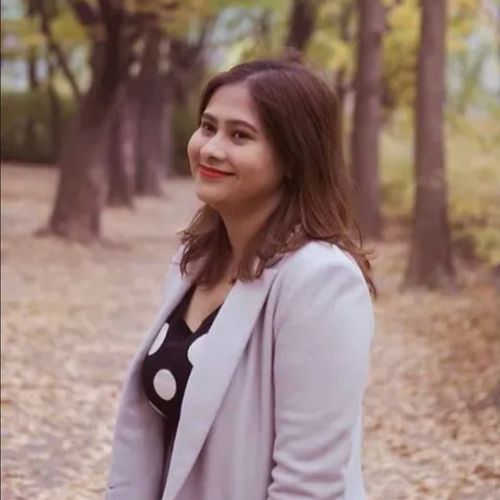
About Soumi Roy
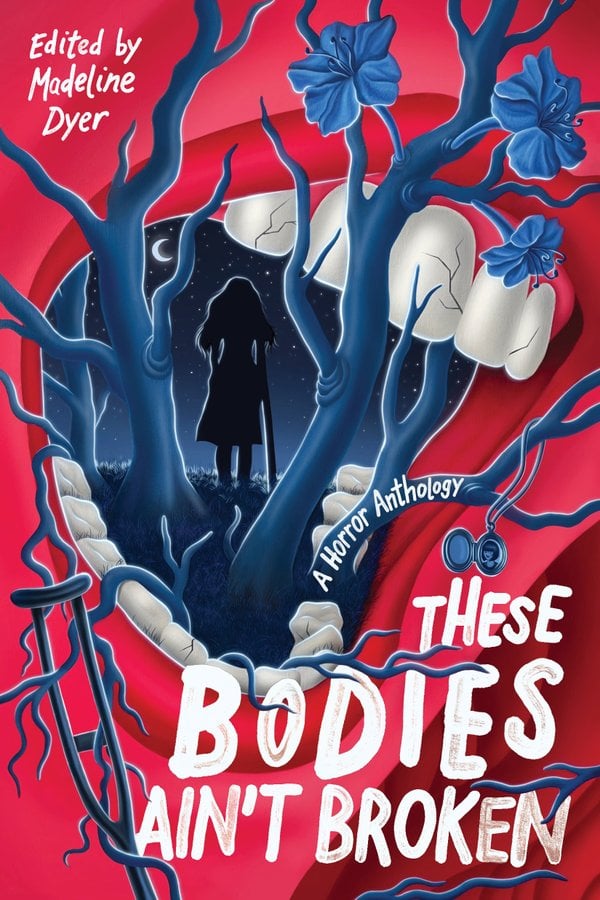
Soumi Roy is a writer born and raised in a small city called Midnapore in West Bengal, India, but chased her dreams to Seoul, where she earned her PhD in Biomedical Engineering with a focus on early Alzheimer’s detection. She writes stories that often center themes of identity, autonomy, and love in its many forms. Her romance novella was featured in the anthology Love All Year (2021), and her short story appears in the disability horror anthology These Bodies Ain’t Broken (Page Street Kids, 2025). When not lost in her own imaginary worlds, you can find her creating digital art of her favorite characters. She is represented by Natalie Lakosil and Antoinette Van Sluytman at Looking Glass Literary & Media Management.
Learn more about Soumi on her website, and follow her on Instagram, Twitter (X), Threads, and BlueSky.
Want to hear from more authors? Check out our Author’s Corner!
You can find all of these authors’ books and more on our Bookshop shelves!