

















Ray Bradbury is widely celebrated as one of the most imaginative and influential writers of the 20th century. While his literary works, such as the prominent Fahrenheit 451 and The Martian Chronicles, have left an indelible mark on science fiction, Bradbury’s influence extends far beyond the written word. His visionary ideas have profoundly impacted film, television, and broader pop culture, making him a cornerstone of modern storytelling across multiple mediums.
Love. Fall in love and stay in love. Write only what you love, and love what you write. The word is love. You have to get up in the morning and write something you love, something to live for.
Ray Bradbury
Early Forays into Screenwriting
Bradbury’s fascination with film began early in his life. Growing up in the golden age of Hollywood, he was deeply inspired by the movies he watched as a child. This passion for cinema naturally led him to explore screenwriting as an extension of his storytelling abilities. One of his earliest ventures into film was writing the screenplay for It Came from Outer Space (1953), directed by Jack Arnold. The success of this film opened doors for Bradbury, leading to his work on The Beast from 20,000 Fathoms (1953) and the screenplay for Herman Melville’s Moby Dick (1956), directed by John Huston.

His adaptation of Moby Dick became a pivotal moment in his career, earning him widespread acclaim in Hollywood. The collaboration with Huston was particularly significant, as the two were mutual admirers of each other’s work. When Huston approached Bradbury to write the screenplay, Bradbury was thrilled, though he candidly admitted to Huston that he had never actually read Melville’s novel. Trusting his intuition and after numerous meetings with Huston, Bradbury crafted an adaptation that was so successful it earned him an Oscar for Best Adapted Screenplay in 1956.
Bringing Dystopia to the Big Screen
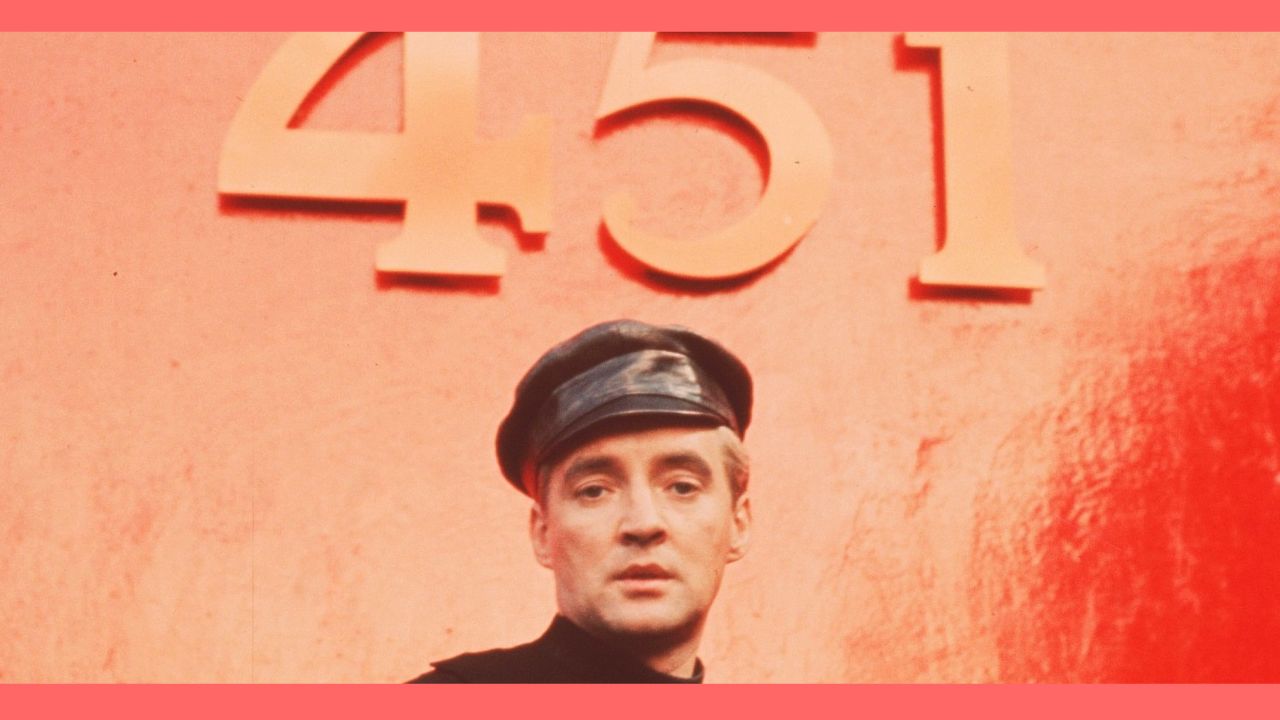
One of Bradbury’s most notable contributions to film is the adaptation of his seminal work Fahrenheit 451 (1966), directed by François Truffaut and starring Julie Christie and Oskar Werner. As Truffaut’s first color film, it garnered three nominations at the BAFTA Awards, Hugo Awards, and Venice Film Festival.

While Fahrenheit 451 is often viewed alongside Orwell’s 1984 and Huxley’s Brave New World as a powerful critique of censorship and tyranny, Bradbury later clarified the story’s true focus. In a 2007 interview with the Los Angeles Times, Bradbury revealed that his primary intention was to critique the impact of television on reading habits. Despite this nuanced interpretation, both the book and the film achieved significant and well-deserved success.
The television is ‘real’. It is immediate, it has dimension. It tells you what to think and blasts it in. It must be right. It seems so right. It rushes you on so quickly to its own conclusions your mind hasn’t time to protest, ‘What nonsense!’.
Ray Bradbury, Fahrenheit 451
The Ray Bradbury Theater and Television Legacy
You might think it’s contradictory that Ray Bradbury, known for his criticism of television in one of his most famous books, would write scripts for major TV networks. But Bradbury’s critique was specifically about watching television passively, without critical engagement. He believed that reading had the power to actively involve readers, allowing them to participate in the story — something he felt television didn’t typically offer. Despite this, his impact on television is undeniable, particularly with The Ray Bradbury Theater, an anthology series that aired from 1985 to 1992. The show featured adaptations of his short stories, including Banshee, A Sound of Thunder, and The Long Rain. Bradbury’s direct involvement in the series ensured that the episodes preserved the distinctive tone and atmosphere of his writing, effectively bringing his imaginative worlds to the small screen.

The success of The Ray Bradbury Theater showcased the adaptability of Bradbury’s stories, proving they could captivate audiences in any medium. His work also significantly contributed to other iconic television series like The Twilight Zone (1959-1964), created and presented by Rod Serling, and Alfred Hitchcock Presents (1955-1965), created, hosted, and produced by Alfred Hitchcock. Bradbury’s stories often introduced an eerie, thought-provoking dimension to these shows, further establishing his reputation as a master of speculative fiction in the television landscape.
Collaborating with Disney: The Magic of Imagination
Ray Bradbury’s creative influence extended beyond traditional film and television, significantly impacting the world of theme parks as well. His friendship with Walt Disney led to a collaboration that left a lasting legacy at EPCOT (Experimental Prototype Community of Tomorrow), one of Disney’s most ambitious projects. Originally, Walt Disney envisioned EPCOT as a futuristic city, a living showcase of innovation and technology. However, after Disney’s death, the original concept was set aside, and the project evolved into a theme park that still embraced innovation, imagination, and inspiration but in a different format.

Bradbury played a key role in shaping Disney’s vision, particularly in crafting the narrative for Spaceship Earth, the iconic geodesic sphere that serves as EPCOT’s centerpiece. Spaceship Earth takes visitors on a journey through the history of human communication, from ancient cave paintings to the digital age. The collaboration between Bradbury and Disney was a natural fit, as both shared a deep respect for imagination and the future.
Cultural Impact and Enduring Legacy
Beyond his direct contributions to film, television, and theme parks, Ray Bradbury’s impact on popular culture is profound and far-reaching. His exploration of themes such as the implications of technology and the complexities of human nature have resonated with generations of creators. Filmmakers, writers, and artists continue to find inspiration in Bradbury’s work, drawn to the enduring relevance of his cautionary tales and imaginative worlds.

Bradbury’s work has earned admiration from some of the most prominent figures in film storytelling. Writer and director of Close Encounters of the Third Kind, Steven Spielberg, once remarked that Bradbury was his “muse for the better part of [his] sci-fi career” and that “I never would have done this film if I hadn’t seen It Came From Outer Space when I was a kid.” In one of his articles, Neil Gaiman called him “Bradbury, the builder of dreams.” He “created his time and left his mark on the time that followed.” The American horror writer, Stephen King, also stated that “without Ray Bradbury, there is no Stephen King”.
Ray Bradbury was more than just a masterful writer; he was a visionary whose influence extended far beyond the printed page. His work in film, television, and even theme parks showcased his ability to craft narratives that captivated audiences in every medium. Bradbury’s stories continue to inspire and challenge us, urging us to reflect on our world and the future we are shaping.
I was not predicting the future, I was trying to prevent it.
Ray Bradbury
As we revisit his contributions to these fields, it becomes clear that Bradbury’s legacy is not just in the stories he told but in the enduring impact those stories have had on our culture. His influence will continue to be felt for generations, reminding us of the power of imagination and the importance of questioning the world around us.
Curious to dive deeper into Ray Bradbury’s legacy? Don’t miss this article!
You can explore the full range of Bradbury’s works on Bookshop.org.
