

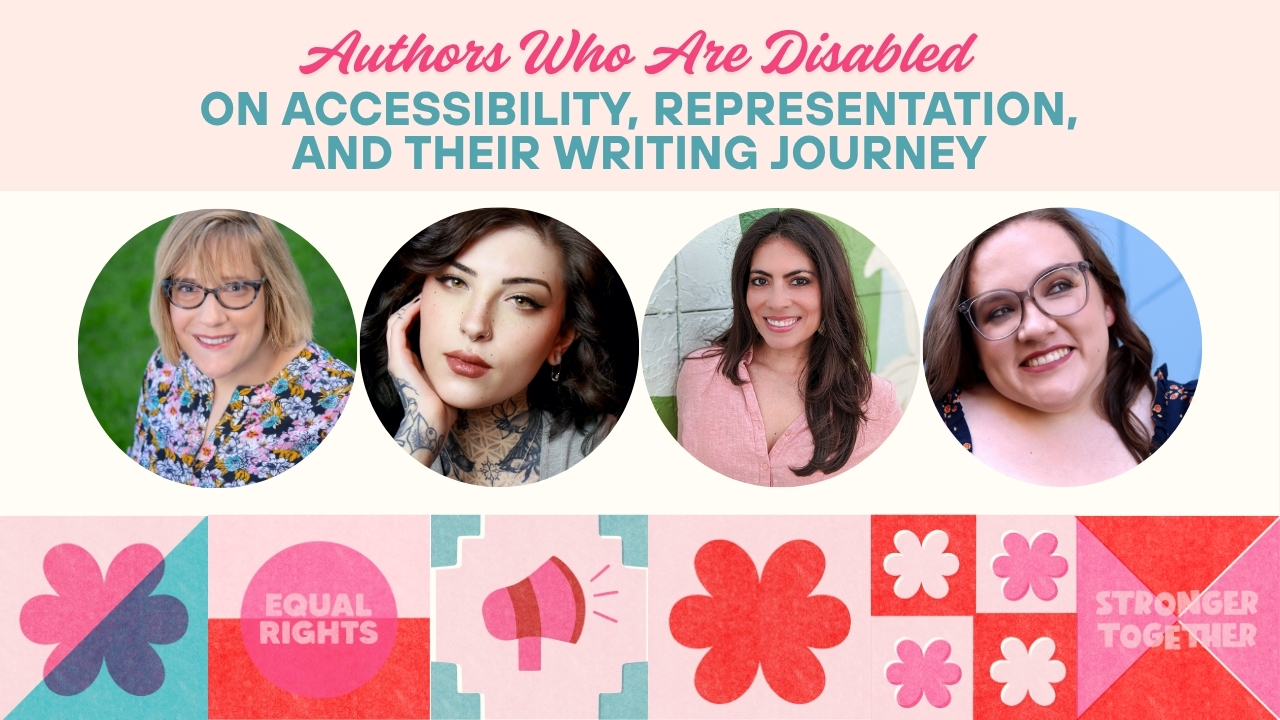
According to the WHO, 16% of the world’s population experiences some form of disability, whether physical, mental, or sensory impairment. Despite this staggering number, authentic representation of persons with disabilities is often overshadowed by miraculous “healings”, relegated to side characters, or included for the sake of inclusion rather than enhancing the plot. Today, we’re talking with four incredibly talented authors who experience their own form of disability and share their lived experiences via the narratives they write. Join us as we discuss all things accessibility, representation, writing, and characters with Claire Forrest, Gretchen Schrieber, McKenzie Catron, and Natalia Sylvester.
About The Authors
Claire Forrest
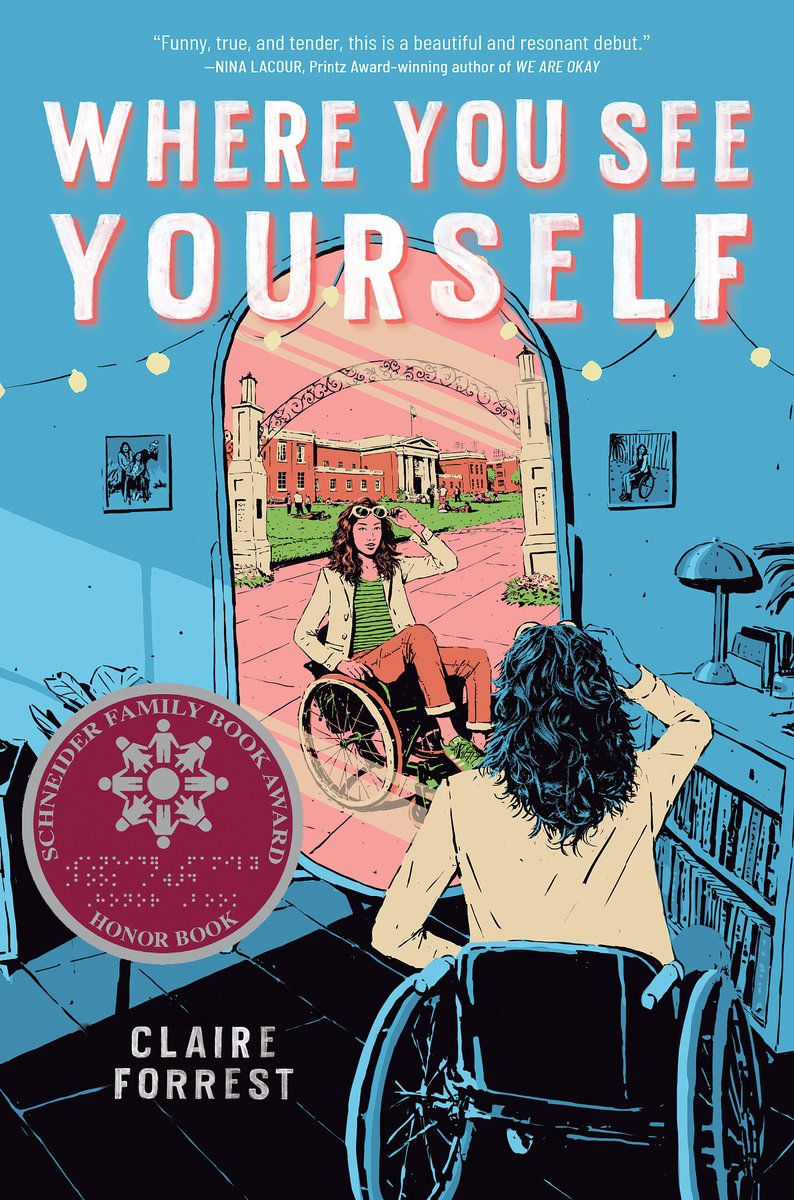
Claire Forrest is an award-winning novelist and essayist who holds an MFA in Writing for Children and Young Adults from Hamline University. Where You See Yourself is based on her lived experience as a wheelchair user who has cerebral palsy. As an undergraduate at Grinnell College, she was a consultant for the Disability Services and Admissions offices, working directly to address the concerns of incoming college students with disabilities and their families.
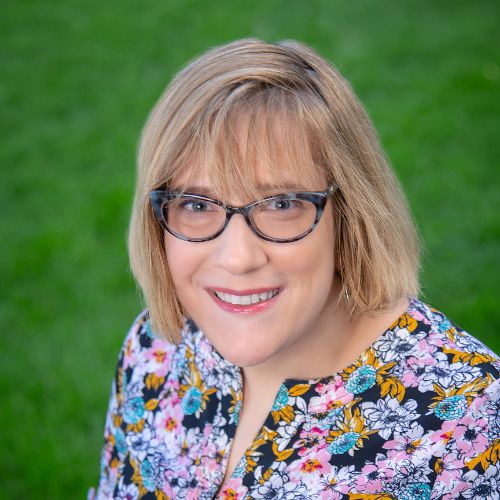
She lives in Minneapolis, where, when she’s not writing, she spends her time swimming
and planning where to travel next. Find out more about her on Instagram and TikTok, or on her website.
Gretchen Schrieber
Gretchen Schreiber grew up between the hills of Kansas and the hospitals of Minnesota, but now calls the hills of Los Angeles home. After getting her MFA from USC School of Cinematic Arts, she now works as a professional bookworm for Hello Sunshine, Reese Witherspoon’s media company. She is always down to run away to Disneyland or a bookstore.
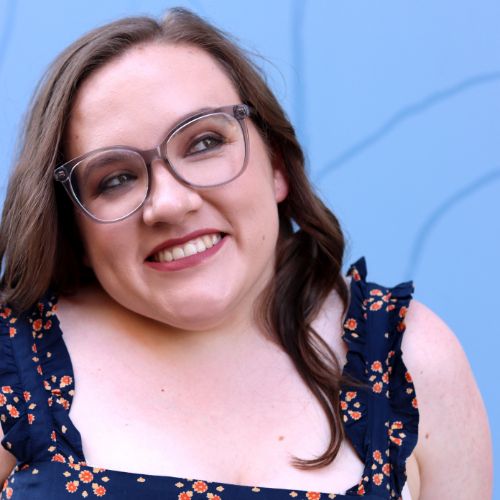
Be sure to follow Gretchen on her socials: Instagram, TikTok, and Twitter, and keep up with what’s happening on her website.
McKenzie Catron
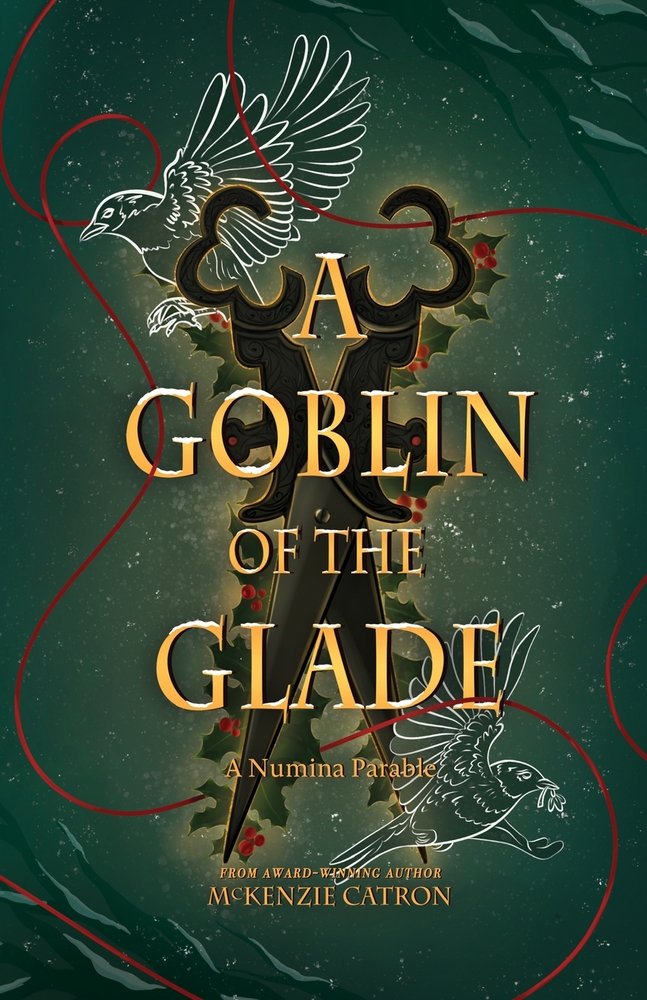
McKenzie is a wheelchair-bound, autistic, twenty-one-time award-winning YA fantasy author of the Numina Parable series, co-author of A Traveler’s Guide to The Lucky Gryphon: Recipes & Regalings, and children’s book writer specializing in Own Voices stories featuring disability, chronic illness, neurodivergence, and service dog representation.
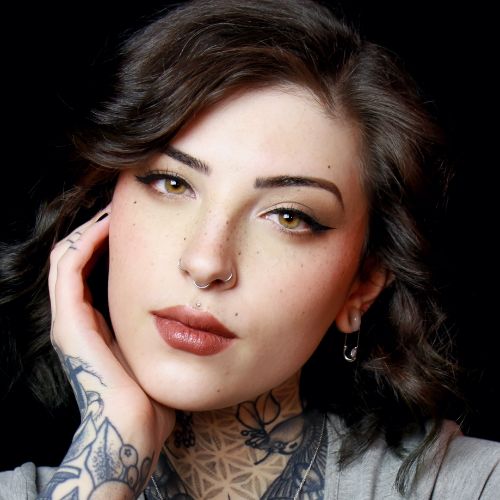
She’s a new Michigan resident who lives with her husband and her service dog, Grimm.
McKenzie is also a full-time creative makeup artist and alternative model, fighting against disability stigmas one creation at a time. When she’s not spending her anxious days writing novels or taking photos in her studio, you can find her over on Instagram sharing her art, or check out her latest news on her website.
Natalia Sylvester
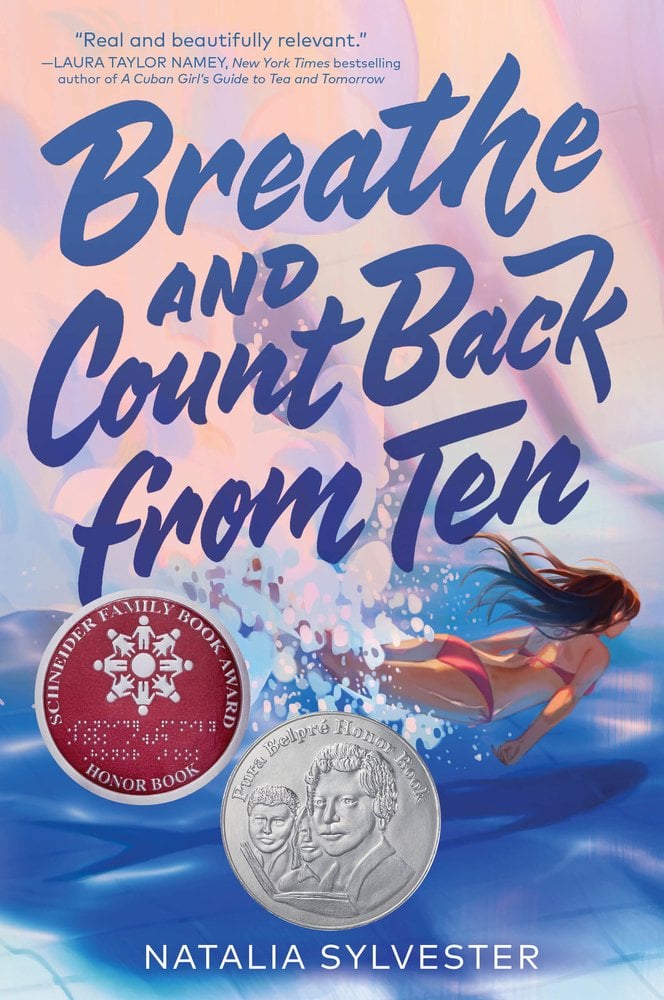
Natalia Sylvester is the Pura Belpré- and Schneider Family-honor-winning author of the young adult novel Breathe and Count Back From Ten, and the award-winning author of the young adult novel Running and the adult novels Everyone Knows You Go Home and Chasing the Sun. Her first picture book, A Maleta Full of Treasures, illustrated by Juana Medina, was published in 2024 from Penguin Random House in both an English and Spanish edition, La Maleta de Tesoros, translated by the author.
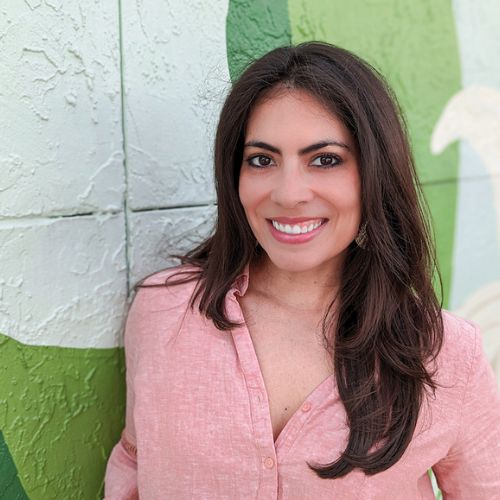
You can follow Natalia on her socials: Instagram, Facebook, TikTok, LinkedIn, and Bluesky, or on her website.
Thank you for joining us. Let’s get started.
The Questions
How has your personal experience as a disabled person impacted your approach to storytelling and your writing journey?
Claire: I’ve written stories for as long as I can remember, but I grew up with little to no accurate or positive disability representation in the books that I read. As a result, I wrote stories centering non-disabled characters until I was 28 years old. It was through following more disabled writers and content creators, and connecting with fellow disabled writers online, that I realized I could write the representation I was missing.
I am very glad that I made that choice, because from a storytelling angle, I believe incorporating disability makes a story richer and more layered. There are so many day-to-day experiences, good and bad, that disabled people think about and live through that only we know about. For example, in Where You See Yourself, my main character, Effie, comments that moving through a crowded room in her wheelchair is like dodging the lasers in a spy movie. Many readers who use mobility aids have told me they relate to that line. It’s such a small detail, but one that can reveal character, setting, and mindset uniquely through our viewpoint as disabled people.
Gretchen: There’s the obvious example of I like to say I get my best book ideas by opening up my medical file and pulling something out.
Beyond that, as a writer, the themes I routinely revolve around are questions of: who I am vs what society has made me into? For me, this has been a large experience of my own life of what I know I can do vs what society thinks I can’t.
McKenzie: The reason I became an author was because I became disabled. Having been an avid reader my entire life, it was easy to put myself inside the stories I read and tag along with the characters and their adventures. However, this was something I struggled with when I became disabled. My wheelchair couldn’t even roll over the carpet to get across the room, let alone traverse a magical land fulfilling prophecies and quests. Through this experience, I recognized the lack of representation, especially in young adult fantasy literature. So, when I sought out to become an author and wrote my Numina Parable series, I did so with the purpose of writing Own Voices stories about characters with disabilities, mobility aids, chronic illness, mental illness, etc. to not only provide people like me a character they can relate to, but also to educate others in a fun, immersive way.
Natalia: When I was writing Breathe and Count Back from Ten, I made a promise to my main character, Vero, that I wouldn’t exploit her pain for the sake of conflict, or offer up her disability and experiences as solely things to be consumed. I wanted to tell her story truthfully and in a way that’d make others who could relate to it feel seen and safe.
More than anything, in my life, I never wanted my disability to be erased. I just wanted to be seen whole, and not be fragmented or erased into something that was more digestible to others. I try to write my characters this way, too. It’s why Vero’s dream of being a mermaid, her love for Alex, her quirky best friend, and her complicated sibling dynamics are just as much a part of her story as her insecurities around her surgery scars and ableism in moments of intimacy.
How have you navigated representing disabled experiences authentically while challenging harmful stereotypes?
Claire: When I was working on the first drafts of what would become my debut novel, I felt pressure to represent disability as broadly as I could. I thought if I made choices like not revealing my main character’s exact disability, more readers could relate to the character by projecting their own disability onto her. I was fortunate to have Nina LaCour as an advisor and mentor, who told me something that shifted my entire perspective: “The specific is universal.” It made me lean into sharing the nuances, physical feelings, symptoms, emotions, and perceptions that come along with having the specific disability my characters and I share—spastic quadriplegic cerebral palsy—and being wheelchair users, and that made my work so much more personal and vulnerable.
To my surprise, readers who have completely different lived experiences with their disability from my own have reached out to tell me how they relate to Effie’s story. For example, a reader with severe food allergies related to Effie’s physical inability to go to off-campus lunch, not from an accessibility angle, but because they are so often excluded from activities centered around food. I never could have imagined that parallel while writing the book.
It’s important to remember that disability is not a monolith. Especially with a disability like cerebral palsy that varies so much from person to person, no one author could capture the entire experience.
As far as harmful stereotypes, encountering ableism is an unfortunate reality for every disabled person. I strive to show disabled characters as disabled people are: fully real and flawed human beings who are not objects of inspiration or someone to pity.
Gretchen: I think it depends on who you ask if I’ve done it well. I like to think I have. I know for teenage me, who was angry without cause—who knew things no one else around me did—Ellie and Piper were characters I would have needed.
But at its core, I endeavor not to hold back. There are no guarantees in publishing, no promise of a second book, no promise of great marketing, no surety of becoming the next booktok sensation… And one piece of advice a friend gave me when starting out is: don’t save anything for the next book—put it all in there.
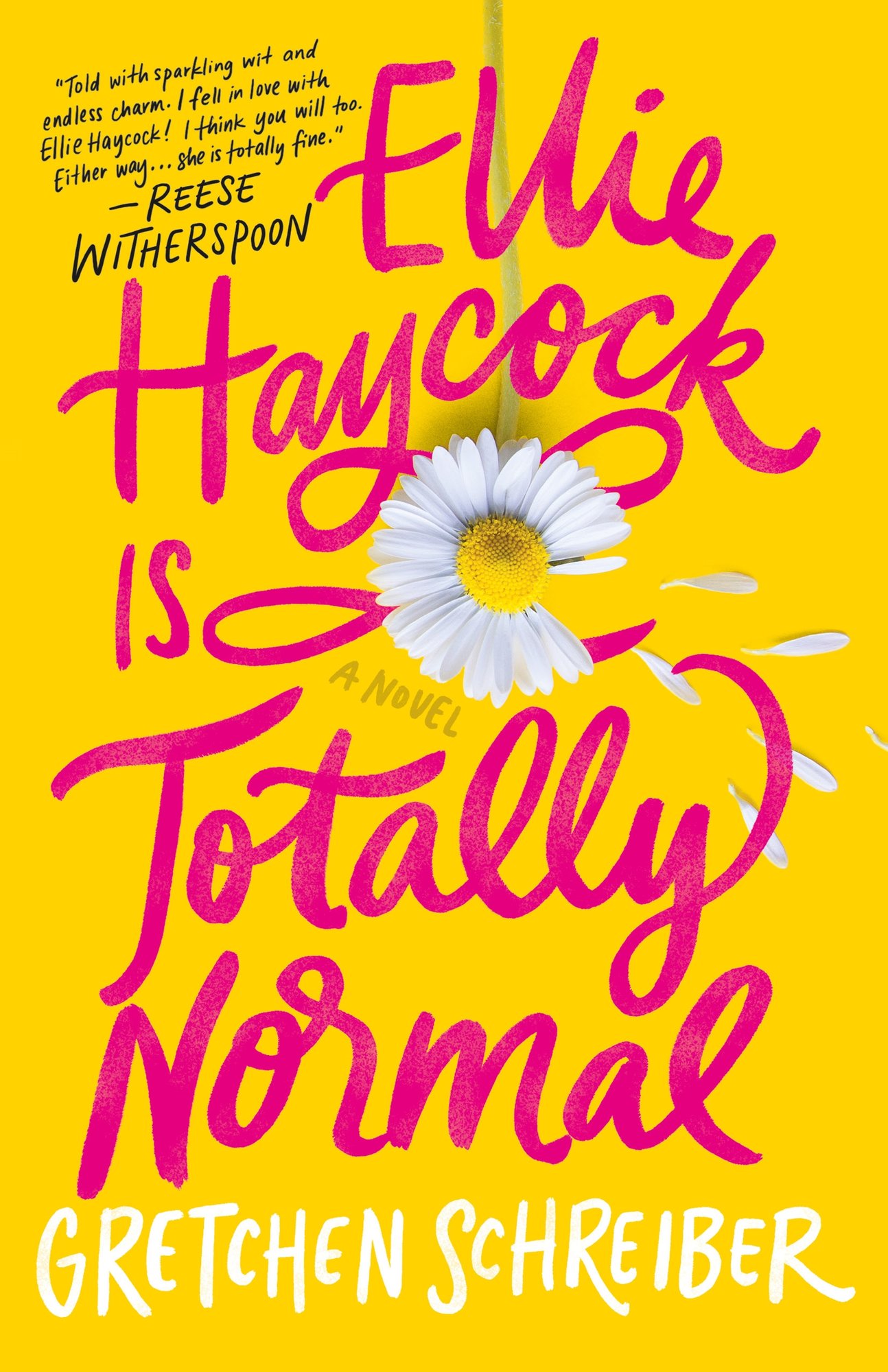
Ellie and Piper are two different ways to experience being a disabled teen. Ellie is very much enmeshed with the hospital; she’s actively going through a medical issue. Piper is dealing with the emotional side, which I don’t think is something we often see. This feeling of where do I belong when I don’t look like anyone…and the internal struggle that is mostly devoid of outward cases of ableism or medical issues we normally see. She’s asking big existential questions, which I think are great for YA.
The biggest stereotype I think I challenge is that someone has to die in the end. When my friends first started reading Ellie Haycock is Totally Normal, I got so many texts that were some variation of “who in this group is dying?” It is so ingrained in us as readers that a story set in a hospital will end with someone’s death.
Very few believed me when I said—they all live. That there is a happy ending at the end of this book, and everyone is still both alive and disabled. That shouldn’t be groundbreaking….and yet…
McKenzie: Being an Own Voices author, I always pull from my own lived experiences when it comes to my main characters. I infuse my own disabilities, mental illness, and pain into them and their world to show what it’s like to live with such diagnoses day to day. So, in my case, when it comes to social stigmas, I used myself and my main character from A Daughter of the Trolls, Sparrow, to show that not everyone who uses a wheelchair is paralyzed. I’ve created conversations within my books that either mirror conversations I’ve had about these topics in real life or create conversations that I wish more people would have. Because at the end of the day, we as a society aren’t really taught about different disabilities. We have the media, movies, and TV shows that have crafted characters in our likeness. And sometimes just for the purpose of a background character, someone to pity, or even a surprise villain/faker. Creating more authentic experiences, whether or not someone is an Own Voices author, is an important step to challenge harmful stereotypes and the way people think and approach those with disabilities.
Natalia: I know we use the word representation, and in and of itself, it’s so important. But when I write, I don’t want my characters to carry that burden. Humans are complicated. And ordinary! I’m fascinated by the contradictions we carry, and I think disabled characters (in my case, also Latine and immigrant characters) have just as much of a right to explore these complexities as anyone else.
I love letting my characters luxuriate in their ordinariness, in their quirks, in their desires, flaws, and fears unapologetically. I think of their needs and stories first, and I don’t make them explain themselves or force them to answer for stereotypes or others’ small-mindedness. I want them to exist as truthfully as I can possibly write them because I think they deserve to be seen, and I think readers who recognize themselves in my characters deserve that, too.
What do you think is the most important change that could be implemented to effectively market disabled stories, getting them in the hands of readers who need them most?
Claire: I still sense a fair amount of pressure for disabled authors to write disabled characters who are easily accessible (no pun intended) to a non-disabled audience. I want to see the full range of disabled representation, which includes allowing disabled characters to be mean, unlikeable, messy, to fall short, to screw up. We are just as human as anyone else.
This relates to marketing in that disability representation isn’t just about offering a triumphant story or offering non-disabled readers something they can learn from. I also wish to see disabled writers being treated as artists, which includes fewer promotional questions about how to make your community accessible or how to be an ally, and more questions about writing craft and questions outside of representation.
Books will find their readers, but this can be accomplished more easily by giving disabled authors more mainstream marketing support. Let disabled romances be shelved and promoted alongside other romance novels, not just highlighted in displays for disability representation during the month of July.
Gretchen: It’s understanding the synergy between the publishing house and the reader. And how we fix it is very simple and extremely hard: more books. More books by disabled people writing fiction.
One of the biggest things marketers will do is comps—this is where they use other titles to tell you what the book is about. There are almost no comps to use for disabled books that are not problematic. This is helpful, potentially, to the nondisabled reader, because they’ll pick up the book but then may hate it because it lacks the tragic storyline of most popular disabled narratives.
The only way to combat this is more. More stories in the market, more chances for one of those books to take off and help steer the canon in a new direction.
McKenzie: Being open and transparent about included disabilities is always great to somehow work into the synopsis/blurb of the book to pull people in. As well as if the story is Own Voices or not. But it would be nice to someday see a more widely known marker or indicator for representation, either on books, within the descriptions, subgenres, social media posts, hashtags, flyers, etc.
A slightly out-of-the-box, roundabout example of this is something my husband pointed out to me when it comes to other media like music and board games. Both things have a letter or a symbol that shows things like the type/rating of content or the age range. Even on social media, now there are markers on videos and photos that are paid ads or made by AI. They are all symbols that tell someone what to expect of the things they are purchasing and consuming.
Natalia: More marketing support from publishers, and more disabled people working in publishing who could understand how best to market our stories.
What challenges or obstacles have you faced in the publishing industry regarding accessibility? How have you overcome them, or what do you believe should be done to make improvements?
Claire: As with any other professional role I’ve taken on in my life, I am aware that I may be the only physically disabled person in the room, or on the video call, as is more likely these days. Publishing is no exception. I am lucky to have landed with a wonderful agent and editor who always defer to me as the expert on my lived experience in my books and my life, but that may not be the case for everyone. Disabled people are the subject matter experts on our disabilities, and while we all need the help of our brilliant editors, there are certain aspects of the story that I don’t think can be called into question or pushed back on.
I was fortunate to attend a large-scale conference for an event honoring disabled authors. The venue did not have the lift to the stage in place until the last possible moment. This put a damper on the experience as I was left wondering if I would have to be recognized from the floor and not on-stage like my co-honorees. All publishing events should be accessible, and have ramps and elevators at the ready, because any participant could need one at any time, whether or not they have a disability.
Gretchen: For me, it’s not a question of accessibility, though I think there are still barriers that need to be addressed. The hard part of talking about disability is that it’s such an umbrella term that covers so many different needs. Different parts of the disabled community need different levels of support, so to talk about it wholesale is extremely difficult.
There’s also the question of: is it always on me to “overcome” them? Because it’s never so much “overcome” as it is to adapt and just deal with…But I digress.
I think the biggest barrier is, in fact, the canon that publishing has established around disability representation. Much of the “classic” disabled books are harmful narratives that make nondisabled people feel good, but say terrible things about being disabled. Because these books are so beloved, overcoming that with authentic stories is a herculean feat. It also gets complicated because, again, we’re such a vast community, and some areas have more representation than others. This skews all the numbers when we talk about disability wholesale.
In being visibly disabled, I know that I am less likely to be represented on the shelf. Even if I don’t require the book to have my same diagnosis (because that would be unfair), there’s only a handful of novels that meet that criteria, and most of them aren’t written by people with visible disabilities. Or, most of them are about men. It’s much more common to see male characters as visibly disabled and women as invisibly disabled.
I think we also can’t talk about any sort of barrier in publishing around disability without mentioning how it’s still very white and often straight. There are so many more barriers and issues that come with being a person of color and disabled, whether that’s in getting a diagnosis or treatment for what caused the disability in the first place.
The idea of how to make this more accessible is a multi-front problem that all demand attention.
McKenzie: I think as a disabled and chronically ill author, sometimes my body can be my own worst enemy. I never know what condition my body and health are going to be in on a day-to-day basis: if I will have the energy to get out of bed, if I’ll be taking a surprise trip to the emergency room. So I think the physical and mental demands writing can have on me are some of the hardest challenges. And depending on the writer and how they are published, this can put a large stressor on things like deadlines, which more often than not, aren’t always flexible in order to meet editing goals and a publishing date. Having my own timeline and pace was a perk of self-publishing The Wickedest Town and my children’s books, though it was hard to maintain things like marketing with my illness. However, I’m blessed that I also have my publisher of my Numina Parable series, she’s chronically ill like me, and understands the daily pains that come with disabilities. And over the years of working together, the biggest and most important thing I’ve learned when it comes to overcoming obstacles and accessibility is to have grace for yourself and your limits. Disability isn’t always inability, and great things can be achieved, even if it takes a little time.
Natalia: Publishing is a slow business, and understandably so, because creating books is a collaborative effort and takes time. But so many authors end up doing such a bulk of their work unpaid, while waiting for payments. This structure makes the industry inaccessible to so many of us.
What is your opinion on non-disabled authors writing stories involving disabled characters, especially if their disability is vital to their storyline?
Claire: When asked this question, I often share that in middle school, my teacher assigned us a YA novel about a young boy with cerebral palsy. The central plot point revolves around the fact that his father believes he would be better off dead. As you can imagine, reading this as a young girl with CP sent very damaging messages to me about my self-worth, and sent very incorrect and ableist messages to my classmates about my ability and worth as a peer and friend.
My advice is to first consider whether you are the best person to tell this story. If you determine that you are, and that disability is absolutely imperative to the plot of the story you are telling, proceed with extreme caution and reverence to our community. Do your research. Talk directly to people who live with the disability you are writing about. Hire a sensitivity reader to review your manuscript at multiple stages. The disability community invented the well-known phrase “nothing about us without us,” and it applies to writing our stories and to the publishing industry as well.
Gretchen: If central to the plot: Don’t. And if you do, know that you are part of the problem. Full stop. When there is such a lack of authentic representation, anything that pulls away from those writers and creators trying to get a foothold in the industry is a barrier, is a problem.
Do I think there could be research done and sensitivity reads, etc, to help them craft strong side characters—yes. But research can’t be limited to medical research because looking at a character purely in terms of their diagnosis and making sure you hit those markers becomes a bigger issue all its own. I also think it requires a lot of unlearning the ableism that is baked into the fiber of society. It requires the writer to do the work not just on their characters but also on themselves.
McKenzie: It’s fantastic when non-disabled authors include representation through disabled characters, especially if their disability is a key point in their story! Although something that is important for these authors to keep in mind is authenticity, even in fantasy or sci-fi settings. Every disabled person’s experience is a little different, even if they have the same diagnosis, use the same mobility aids, etc. So, when including a disabled character, I believe there are some questions that an author should ask themselves: Is the disability a part of the story for the right reason? Is this character coded with harmful stereotypes that come from social stigmas? Have I used appropriate words and descriptions for this character and their disability? Have I done the research? Have I actually talked to people with this disability to understand their experiences? Have I used sensitivity readers?
Something else I would ask non-disabled authors to keep in mind is how they intend to end their disabled character’s story. Personally, it can be disheartening to finally see representation, especially in popular mainstream books, only for that character to be miraculously healed and no longer disabled at the end. That was very important for me to establish for myself and my readers when writing not only A Daughter of the Trolls, but A Goblin of the Glade as well.
Natalia: This question comes up a lot and ultimately leads to people claiming they’re being silenced. But people are free to write whatever they want. Where I’d like to see change and intentionality is in which stories and whose voices get published, uplifted, amplified; it’s rarely ours as disabled writers. I’m actually a lot more interested in that question being flipped. If you’re a non-disabled writer writing a disabled character (where the disability is vital to the storyline), how does your doing so amplify our voices without speaking over them? That’s a question every writer should ask themselves with honesty. And of course, readers are free to choose what books to read—but until books by non-disabled writers aren’t amplified above ours, is it even an equal choice? That’s the real problem.
Is there any advice you can offer to rising disabled authors wanting to share their stories?
Claire: We need your stories and your voice now more than ever! Don’t let gatekeepers in this industry tell you otherwise or that there’s already “enough of those” when it comes to books about disability. The rising tide lifts all boats, so read our books, share our books, and connect and befriend your fellow disabled authors. We are here to help you, cheer you on, and commiserate and celebrate with you! We will be more than excited to boost your WIP as you move through the journey of querying and publication.
Gretchen: Be careful. Have fun. Do not read reviews.
Be careful, in that not all pain is treated the same.
Have fun—because our lives are full of joy.
Don’t read reviews—that should be obvious.
McKenzie: Even if it takes a while, keep writing. Be kind to yourself and rest, go at your own pace, and don’t push your body. But know that what you are creating is worth it! Your story is important, your representation is important, your voice is important. Your story deserves to be told, and there will be people who finally see themselves represented in your book and find solace within it. You could change lives!
Natalia: Read a lot. Build a writing practice that empowers you (it might take some trial and error). Write the stories you want to tell and need to hear.
If you could collaborate with any of your characters to write a new story, who would it be and what would you write about?
Claire: Between their shared sense of humor and Cam’s art skills, I think Effie and her BFF Cam could create a killer zine or web comic. I don’t even think they would need my help!
Gretchen: Honestly, I feel like I would collaborate with Veronica. She’s just so well-intentioned and just keeps stepping in it, but doesn’t let that stop her. So I think it would be a fun exploration of what it is like to be new to this world (of the hospital) when it’s a place I know so well. Also, I would get to hang out with Luis more, and I just like him as a character.
McKenzie: One of my characters/my other persona, Minthie, happens to be a librarian! She even appeared in the cozy video game Tavern Talk with a new manuscript…so I know for a fact she has many of her own stories up her sleeves!
Natalia: Lila, one of the mermaid performers at Mermaid Cove, the theme park where Vero auditions to be a mermaid. I’d love to know how Lila came to be basically the top mermaid.
Thank you very much for the wonderful answers to our interview, Claire, Gretchen, McKenzie, and Natalia! Be sure to pick up their books from your favorite retailer or by using any of the provided links.
The world needs more authentic representation, not just for people with disabilities to see themselves in the stories they love, but for those who aren’t to have a better grasp of disabled experiences and abilities. To build empathy, and ultimately a world where those with disabilities are included in the every day. Simply having a disability doesn’t make you unable; it makes you resilient. One of the great character traits to have, whether in fiction or in real life.
Check out our 5X5 interview with 5 Autistic Children’s Authors on the Tremendous Power of Representation, here.
Find these books and more on our Incredible Reads for Authentic Disabled Representation shelf on Bookshop.