

















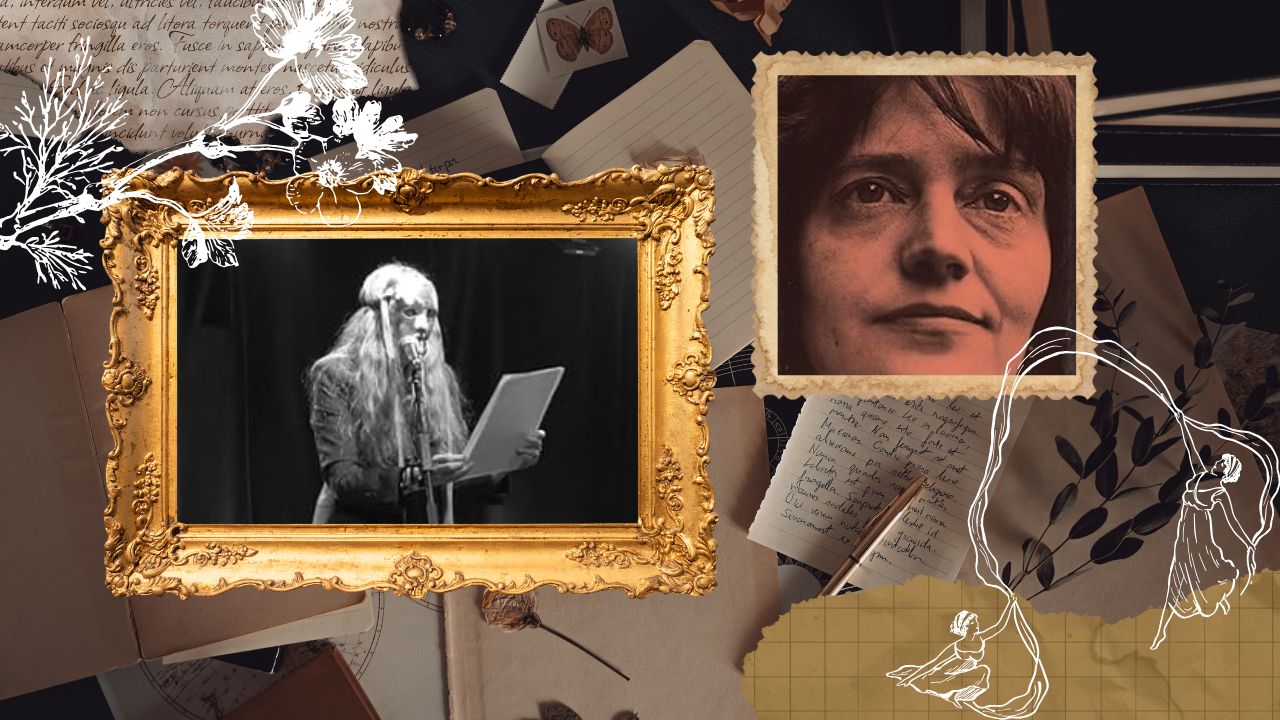
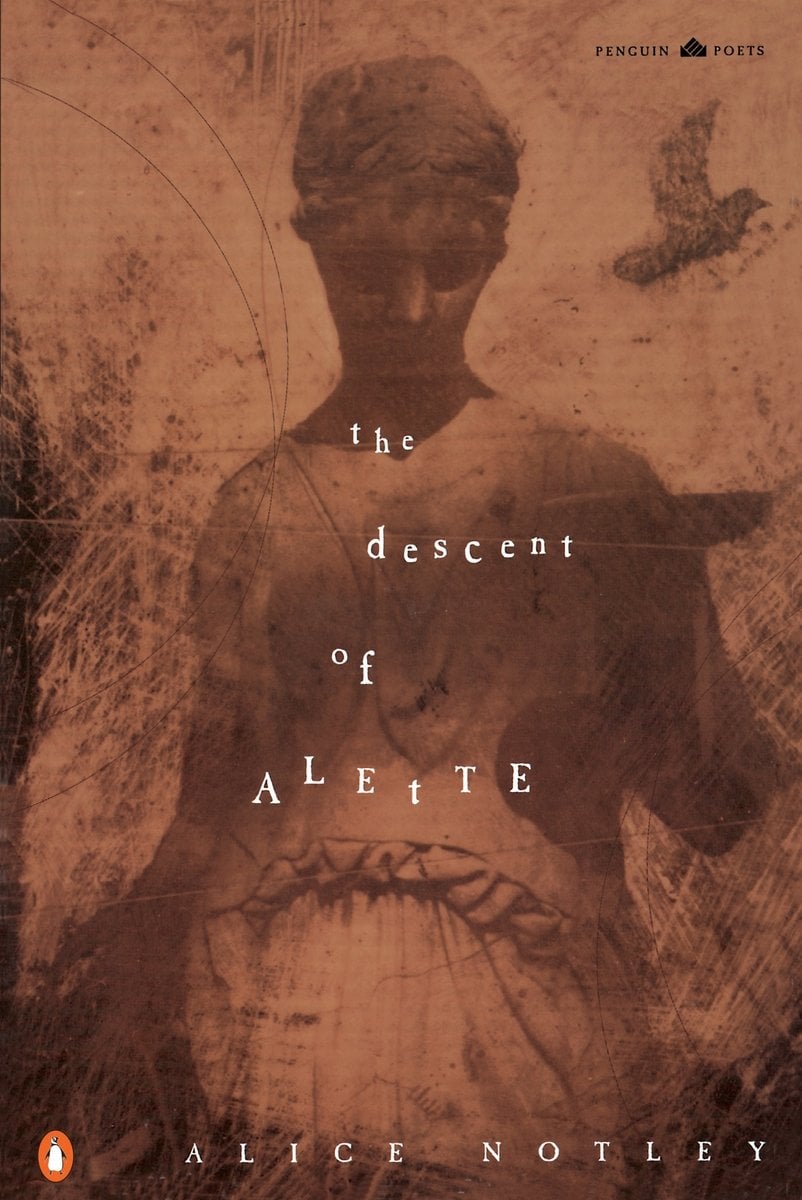
In Shakespearean times and for much of the historical canon, writing poetry was a male-dominated art form. It took great effort for women to receive a fraction of the readership for their eloquent and meaningful work. American poet Alice Notley was determined to master her craft and, therefore, break the status quo. The prolific American poet from Needles, California, rose to fame alongside the second generation of the New York School of Poets, and is best known for her works The Descent of Alette and Disobedience.
Alice Notley was born on November 8, 1945, and tragically passed on May 19, 2025. The spirit of the late poet endures the barriers of time in her feminist verse, challenging traditional gender roles and notions of womanhood, with a particular focus on motherhood as an overarching theme. In an interview, Notley once reflected on her early career and said:
“Well, those are born of trying to be a poet, being a woman in a landscape where there were none. It was a huge struggle to become a poet in the way I wanted to be, and I was having children at the same time, and I was the only person I knew who was doing that…It was very isolating…and it was extremely hard to be taken seriously.”
Read on to dive into Alice Notley’s work that confronts the scorn of women’s roles in society through notable quotes from her highly acclaimed poetry.
The Elements
“But I your leader wounded in gender and bleeding
for Eros fought it away from my true beginning as now…
They want you to confess
something like in church, that a man will
save you. But I am your leader savior and poet
I am your general out of the desert thee
most ardent void precursor of love”
The Elements explores the conflict between a girl and Eros, the male god of love, who is the son of Aphrodite and Ares in Greek mythology. The above quote spotlights the crux of the conflict: patriarchal themes within finding, experiencing, and expressing love. In romance, women are conventionally pursued rather than the pursuers, yet in this poem, the girl positions herself as a strong leader, savior, and general in the war of love.
Phrases such as “Aphrodite the Slut” in an earlier line in the poem, combined with the exploration of seeking penance, bring to the forefront of the reader’s mind the societal convention of chastity for women. The girl represents a defiant force against the stereotypical idea of men being saviors, especially in the context of battle in which this poem is set. The girl counteracts this idea of male saviorhood in love by proclaiming herself the most passionate, yet societally invalid, forerunner of love.
The Goddess Who Created This Passing World
“Clarified, composed, forever was I
Meant by her to recognize a painting
As beautiful or a movie stunning
And to adore the finitude of words
And understand as surfaces my dreams
Know the eye the organ of affection
And depths to be inflections
Of her voice & wrist & smile”
Thematically, this poem ties into The Elements — ancient philosophy views Eros as a force that existed before the Gods and aided in creating the world; however, Notley flips that patriarchal ideology on its head, positioning a Goddess as the mother of the world. Due to this all-powerful creator, the speaker in the poem feels as if they are destined to find and seek all of the beauty in the world. Motherhood is a subtle theme within these lines, as this Goddess birthed the world and acts as a guiding force to the speaker in the poem to seek the beauty in art, words, and dreams
By crafting a myth of creation, Notley simultaneously constructs an imagined culture in which women are credited as creators. The speaker recognizes the goddess who created the world in everyday life that seems mundane, but is nearly as beautiful as the goddess’s “voice, wrist, & smile.” Biblically, God is referred to as a masculine presence, and this Notley poem provides readers with a refreshing perspective on a goddess as a maternal figure who birthed the world.
30th Birthday
“May I never be afraid
especially of myself
but
Muhammed Ali are you telling
the truth?
Well you’re being true aren’t you and
you talk so wonderfully in your body
that protects you with physique of voice
raps within dance
May I never be afraid…”
This short yet meaningful poem uses the male public figures of Muhammad Ali and Marlon Brando as a mirror for the speaker to reflect against. Assuming the speaker is comparing themselves to these masculine figures from a feminine perspective, they discuss the milestone of turning thirty and what womanhood is like after society deems one’s “prime” has passed.
The speaker says, almost like an affirmation, “May I never be afraid, especially of myself,” which feels like a response to society’s collective fear of aging, where self-hatred is instilled in women to loathe their aged features and aspects of growing older. After asking a rhetorical question to Muhammad Ali, a man in his thirties, and reflecting on how he is still true, agile in his body, and protected by his voice and physique. “May I never be afraid” is repeated as a mantra to affirm to the speaker that they can still thrive and live a fulfilling life in their 30s, regardless of society’s impositions.
Woman In Front of a Poster of Herself
“Her hands are crossed over her breasts and each holds a feather; her face has no features Have I come to beg What do I wish — to be judged?
Is it an accumulation of what I’ve said, that counts, that I’m counting is it all alphabet and abacus everything rhymed? …
I haven’t any idea what my word is, I mean fault. Is it a word or an act. The whole thrill is ripping me apart Inside these words there’s nothing but a pumping bloodsoaked . . . but clearly, everything I said, did, was a long shot…
Judgment maybe it’s when being fragile I hallucinate you best”
Woman in Front of a Poster of Herself is included in Songs and Stories of the Ghouls and is a perfect exemplification of one’s self-image as a nightmare, embodying this idea by blurring the line between imagination and reality. The speaker is uncertain what their intentions are regarding her approaching the nude image of a woman with the face of a jaguar. The line where the speaker questions whether this image is an accumulation of everything they have ever said could be interpreted as negative self-talk materializing into one’s poor self-image.
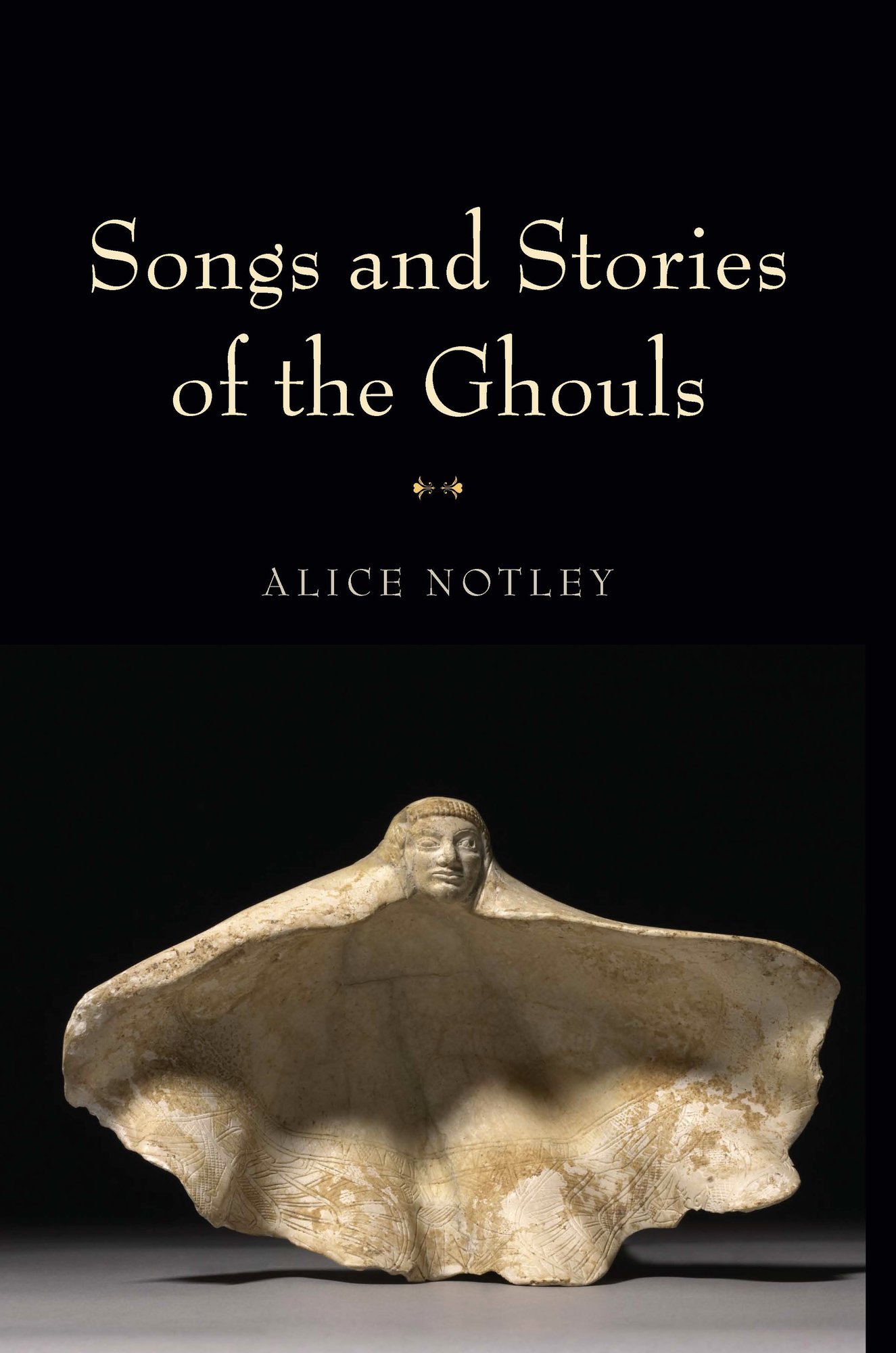
The structure of the poem’s lines occasionally borders on incoherence, immersing the reader in the chaotic perspective of someone staring at themselves and encountering horrific sights. The speaker is second-guessing everything when confronted with this cat-woman hybrid, from their faults to things they have said. One of the poem’s most powerful lines comes when the speaker reflects on judgment: in a fragile state, they hallucinate their darkest fears, embodying the idea of self-image from a feminine perspective.
World’s Bliss
“Why
should a maiden lie on a moor
for seven nights & a day? And
he is a maiden, he is & she
on the grass the flower the spray
where they lie eating primroses
grown crazy with sorrow & all
the beauties of old—oh each poet’s a
beautiful human girl who must die.”
World’s Bliss is a featured poem in Notley’s Grave of Light and ventures into the death of poets. Poets are seen as isolated and sensitive creatives whose suffering is romanticized and, in this poem, is symbolized through mythic beings. Notley draws on life’s pleasures — such as singing, drinking cups, and gems — and parallels them with the release of death.
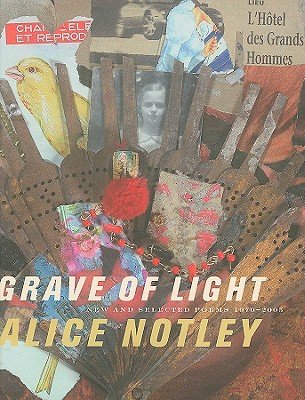
The Maiden on the Moor is a fairytale alluded to in this poem through rhetorical questions, in which the speaker ultimately answers that every poet is a beautiful human girl who must die. In the last few lines, there is fluidity in gender, as the he character is referred to as the maiden, and all poets are referred to as human girls. Figuratively, Notley could be suggesting that women poets are sacrificed by society, as their careers are not taken as seriously as those of their male counterparts. Notley leaves readers with the thought that all creativity and beauty are mortal and bound to be lost at some point.
Individual Time
“…Look at my author photo. I
don’t really want to I’m turning to defiant metal
not a dream part, can you see it where the movement of
images turns back towards me I want a
different, how I’m portrayed because you can’t
see me, visage. Look at me please. The soul is so thick
larger than the portrait what you’d call madonnaesque,
and then there was more hoax a view as I am
the rose here. And you never wanted to be that, did I?
I was waiting to see what I would be.”
This quote from Individual Time addresses the sad reality that traditionally, women are valued according to beauty standards. The speaker is begging to be seen past their material looks that are valued more than their soul. By mentioning their author photo, the author makes clear to the reader that, before experiencing the profound writing that reveals the inner workings of a poet, one draws attention to the writer’s photo.
The speaker is grappling with insecurity, as Notley uses sentence structure to innovate the meaning of her poems, and admits that they desire a different visage. The speaker admits it is a hoax that they are viewed as a rose, a dainty symbol for femininity, when it is not what they want their value and work to be boiled down to. They ask an unknown interlocutor whether they would want to be defined as such, and heartbreakingly conclude that they were waiting to see what they would be, even though it was already set for them.
[Woman with Antlers]
“Do you hear the words of the
conquerors or do you hear the voices of deer? echoes, can you find a center
in an echo? I’m finding, with the finder, the antlers paths leading from my
head. I am the center of it, the center of the lady.”
Imagery of conquerors, brazen and stubborn, and deer, who are gentle and skittish, speaks volumes in this poem. Throughout the poem, Notley solidifies the lady as the deer, encouraging readers to connect the traditional positions of men and women in society — the conquerors and the deer. A woman with deer antlers, or the Lady of the Mountains, makes an echo, which can be interpreted as both of the figures screaming, with the speaker of the poem after she approaches on the speaker’s right side.
After the Lady asks the speaker the questions in the quote above, the speaker feels antlers growing from their head and concludes that she is the center of the echo, including the Lady. This abstract poem, featuring anthropomorphic and magical imagery, tells a narrative of an innate relationship and understanding between two women who appear different due to their lived experiences and societal positions.
Remember What I Came Here to Do to This World Very Little Actually
“I think at 34 that I know who the best poets are
I saw your footage of what you said was the age
I meet 6000 men and 15 women on the way to
I thought we would have more influence on”
With the use of repetition and unfinished lines, you can clearly see Notley’s intentions with this poem. Reflecting on her childhood through her career as a poet, she discusses gender disparities among writers, but does not fully develop her ideas in every line. In this quote, she highlights her misconceptions and false hopes for a more inclusive poetry scene where women’s work is acclaimed and held to the same standards as men’s.
Even when she is 34 and self-assured in her own tastes and preferences, she is still in disbelief regarding how women are perceived by society and the stagnancy of patriarchy. The cut-off lines give off the effect that the speaker is being cut off and silenced, which parallels the traditional status of women in patriarchal societies: unacknowledged, unheard, and unrecognized.
Evidently, themes of feminism, womanhood, and motherhood shaped Alice Notley’s brilliant body of work. The poet is immortalized through her innovative lines and the impact she made on women being taken seriously as writers in the poetry scene. As one of the most iconic American poets, Notley’s work deserves to be celebrated and studied for generations to come.
Interested in learning more about Alice Notley’s work? Read about her famous poetry collections here.
Check out Alice Notley’s work and the art from various fantastic poets on Bookstr’s poetry Bookshop shelf.
