















Poetry comes in many forms, each with its own unique style and structure. Follow along in this latest Trivia edition as we discover the poets who’ve mastered these top eight poetic forms and have left a permanent impact on the literary world. From Shakespeare’s sonnets to Bashō’s haikus, let’s explore and learn from the masters of poetic artistry.
Acrostic Poetry: Mastered by Edger Allen Poe
Acrostic poems are well-known. In fact, we have encountered them in school. But that doesn’t make them boring! These poems are sometimes called name poems. They spell out a name, word, or phrase with each letter, beginning each new line of the poem. It can rhyme or not, and the word that’s spelled lays out the poem’s theme.
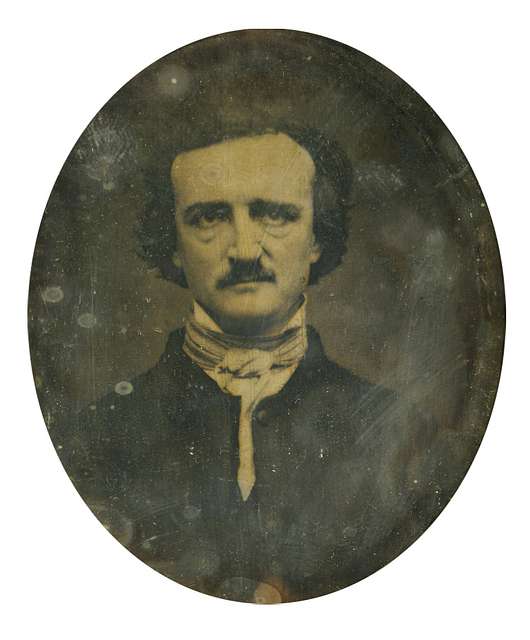
One scholarly example of someone who mastered this acrostic-poem style was Edger Allen Poe (1809–1849) with his well-known work An Acrostic.
Two works written by the legendary author, The Raven and The Tell-Tale Heart, are viewed as the architects of modern short stories curated by poetry and prose. As an American writer and poet, Poe is a major figure in world literature.
An Acrostic by Edgar Allen Poe
“Elizabeth it is in vain you say
An Acrostic, Poe (1829)
“Love not” — thou sayest it in so sweet a way:
In vain those words from thee or L. E. L.
Zantippe’s talents had enforced so well:
Ah! if that language from thy heart arise,
Breathe it less gently forth — and veil thine eyes.
Endymion, recollect, when Luna tried
To cure his love — was cured of all beside —
His folly — pride — and passion — for he died.”
Haiku Poetry: Mastered by Matsuo Bashō
Haikus are traditional Japanese poems with no set rhythm scheme but a specific shape. The poem consists of three lines composed of five syllables in the first line, seven in the second line, and five in the third line. Haikus usually explore the natural world, but these poems can range from anything the poet likes. Haikus are simple ideas with a touching message under the surface. One can’t mention haiku poetry without paying respect to Matsuo Bashō.
Matsuo Bashō (1644–1694) was a 17th-century Japanese poet whose poems are internationally renowned. In Japan, many of his poems are reproduced on monuments and traditional sites, such as the Basho Memorial Museum in Tokyo.
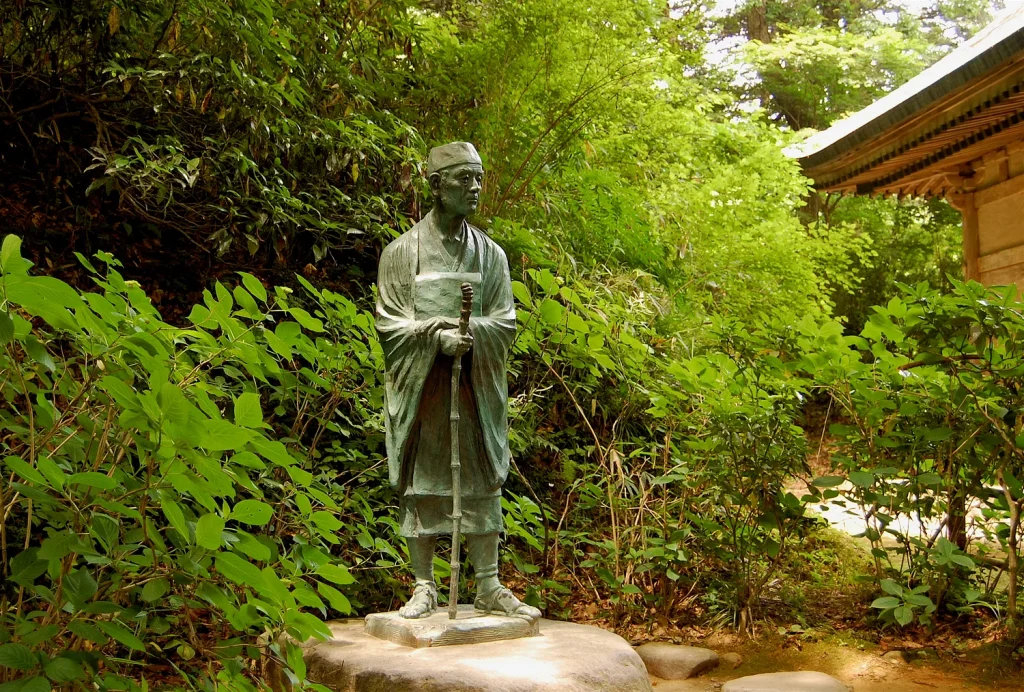
With Bashō’s past intertwined with Japan closing its borders, he grew fond of literature. He began to study Chinese poetry and Taoism, and soon began writing a form of linked verses composed in collaboration called haikai no renga. The opening form was called the hokku, and during the Edo period (1603–1868), it was taken as a template for composing small, standalone poems engaging in natural imagery, the haiku.
Bashō was the master of the form, for it was he who created it! With the evolution of the haikai no renga and hokku, they soon became the haiku. Bashō published several haiku’s, such as Tosei, or Green Peach, out of respect for the Chinese poet Li Po in the 1620’s.
Furuike Ya/ Kawazu Tobikomu/ Mizu No Oto by Masturo Bashō
“To an old pond
Furuike ya/ Kawazu tobikomu/ Mizu no oto, Bashō (1960s)
A frog leaps in.
And the sound of the water.”
Ode Poetry: Mastered by John Keats
Odes are one of the oldest types of poetry there is, and they’re straightforward. An ode is a form of celebratory poem that honors a person, thing, or idea. Differing from the simplicity of a haiku, odes are overflowing with intense emotion and powerful imagery. Odes aren’t heavily restricted; they can be used with formal meters and rhyme schemes, but they don’t have to be. This form is more of an open-ended poetry type to show appreciation to someone or something. During the Romanticism movement (1798–1837), John Keats took it upon himself to master the ode by reflecting on his own nature and experiences.
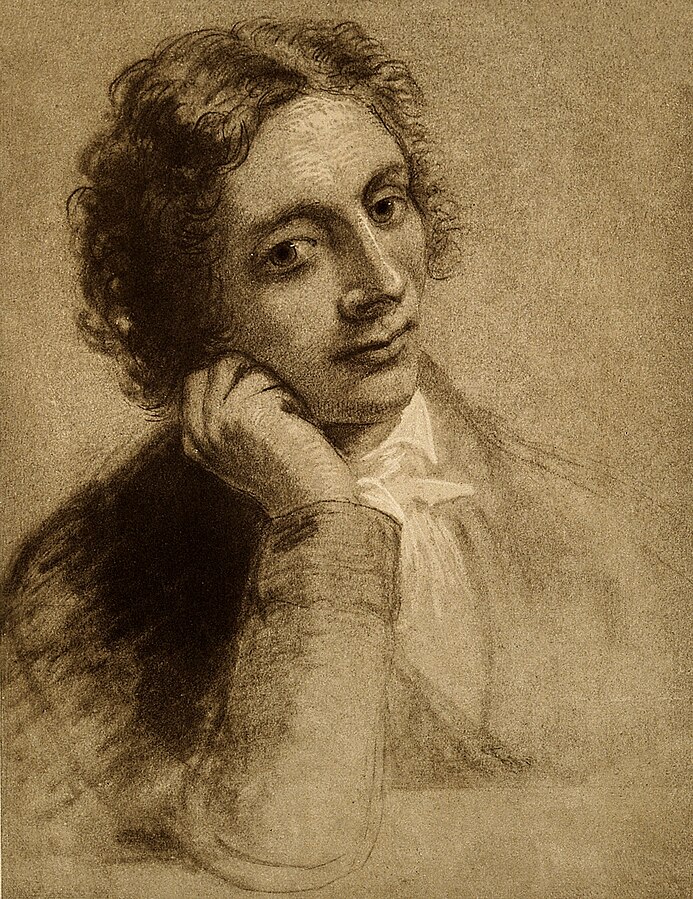
John Keats (1795–1821) was an English Romantic lyric poet who devoted his short life to the perfection of poetry marked by vivid imagery and an attempt to express philosophy through classical legend. Odes are Keats’s most distinctive poetic achievement, for they are lyrical meditations that confront the conflicting impulses of his inner self and reflect on his deep desires for the wider world around him. Keats was renowned for his odes, such as Ode to a Nightingale and Ode on a Grecian Urn. It’s bold to see poets use the form in their titles, which proves to be right to call Keats the master of the ode.
Ranging from the theme of human grief and sickness to the inevitable concomitant of human passion and happiness, the creations of Keats are rich and content with sensuous detail and depth.
Ode to a Nightingale by John Keats
“My heart aches, and a drowsy numbness pains
My sense, as though of hemlock I had drunk,
Or emptied some dull opiate to the drains
One minute past, and Lethe-wards had sunk:
‘Tis not through envy of thy happy lot,
But being too happy in thine happiness,—
That thou, light-winged Dryad of the trees
In some melodious plot
Of beechen green, and shadows numberless,
Singest of summer in full-throated ease…”
Ode to a Nightingale, Keats (1819)
Sonnet Poetry: Mastered by William Shakespeare
Sonnets originated in Italy. This type of poetic form derives its name from the Italian word sonetto, which means “little sound” or “little song.” There are many different types of sonnets, but we will focus on the English sonnet.
A sonnet is a lyric poem with only fourteen lines. In the English sonnet, it uses a rhyme scheme called the iambic pentameter, which emphasizes four distinctive parts that can be separate stanzas or linked together. The rhyme scheme goes: ABAB CDCD EFEF GG.
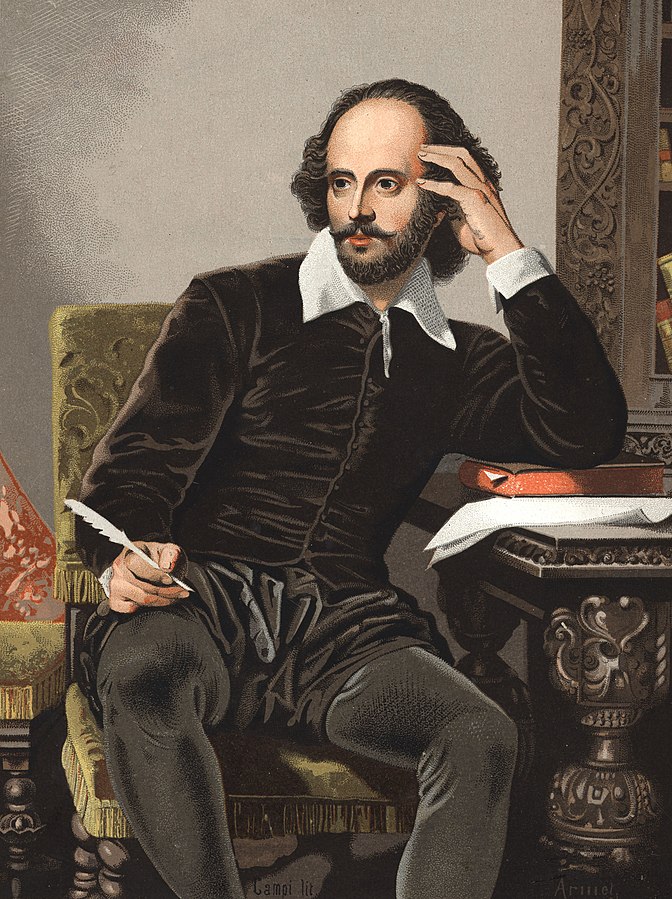
Of course, it comes as no surprise that English playwright and poet William Shakespeare, one of the most famous poets in modern history, would be on this list. He’s credited as the creator of the English sonnet, which came to be known as the Shakespearean Sonnet. These poems are written in the form of three quatrains and a couplet (a group of four lines followed by two lines). You can find the complete collection of his sonnets in All the Sonnets of Shakespeare. This collection is filled with not only Shakespeare’s 154 sonnets but also commentary that helps highlight the meaning of these profound poems about his life and professional expertise.
Shakespeare’s sonnets depict the inevitable decay of time and the immortalization of beauty and love in poetry.
Sonnet 27 by William Shakepere
“Weary with toil, I haste me to my bed,
The dear repose for limbs with travel tired;
But then begins a journey in my head
To work my mind, when body’s work’s expired:
For then my thoughts–from far where I abide–
Intend a zealous pilgrimage to thee,
And keep my drooping eyelids open wide,
Looking on darkness which the blind do see:
Save that my soul’s imaginary sight
Presents thy shadow to my sightless view,
Which, like a jewel hung in ghastly night,
Makes black night beauteous, and her old face new.
Lo! thus, by day my limbs, by night my mind,
For thee, and for myself, no quiet find.”
Sonnet 27, Shakespeare (1609)
Elegy Poetry: Mastered by Thomas Gray
Invented in the 16th century, the elegy is similar to an ode in how it celebrates a person or idea. However, elegies have no rules when it comes to rhyme scheme, the number of lines, or how long it can be. In this form of poetry, an elegy focuses on one subject: death!
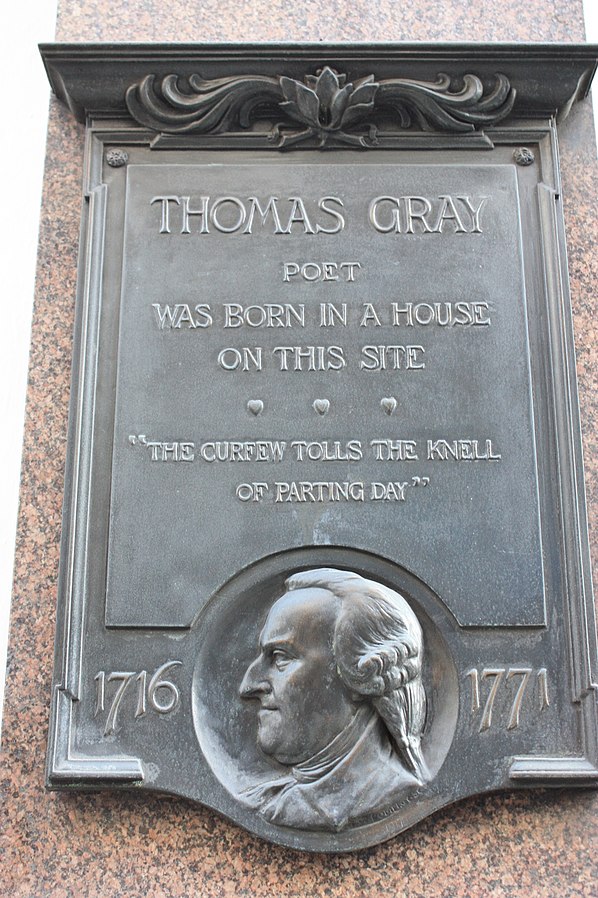
Elegies are usually written about a loved one who has passed, or they can also be written about a group of people. Even though they sound sad, elegies often end on a hopeful note. The man credited with writing the first elegy was named Thomas Gray.
Thomas Gray (1716-1771) was an English poet, letter-writer, classical scholar, and elegy writer. He is considered to be one of the most important English poets of the 18th century, with his best-known and most-love poem called Elegy Written in a Country Churchyard, the origin of the Elegy poetic form. Gray’s poetry is centered around the retention of sexual desire, for the narrator in his poems is often a lonely, alienated, and marginal individual.
Elegy Written in a Country Churchyard by Thomas Gray
“The curfew tolls the knell of parting day,
The lowing herd wind slowly o’er the lea,
The plowman homeward plods his weary way,
And leaves the world to darkness and to me…”
Elegy Written in a Country Churchyard, Gray (1751)
Villanelle Poetry: Mastered by Dylan Thomas
Drifting away from the theme of death, let’s focus more on a musical form. This form has a number of rules, unfortunately, but is a fortunate challenge. A villanelle is a type of French poem made up of nineteen lines grouped into six separate stanzas.
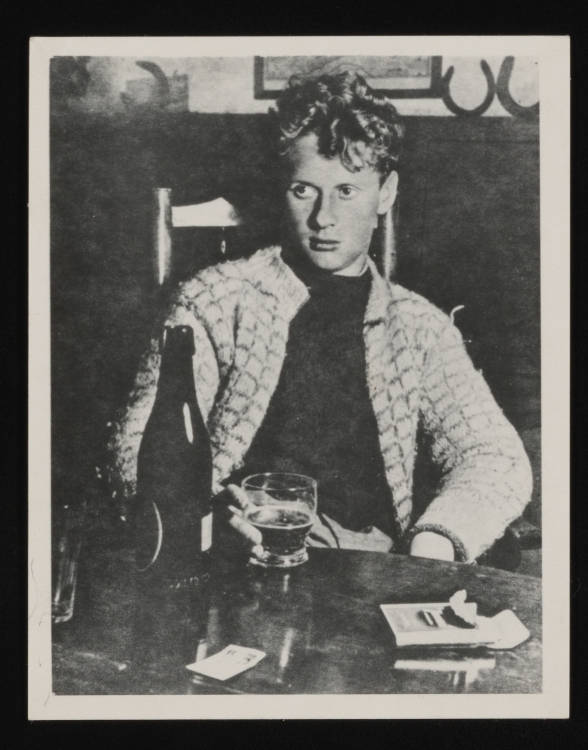
The first five stanzas of three lines (tercet) and a final stanza of four lines (quatrain). Each has a rhyme scheme of two rhyming sounds: ABA ABA ABA ABA ABA ABA ABAA. Although it takes extra effort to write 19 individual lines, the real challenge is to make meaning out of those repeated lines: a puzzle to one’s meaning just like poet Dylan Thomas.
Dylan Thomas (1914-1953) was a Welsh poet and writer. His works are famous for his acutely lyrical and emotional poetry, as well as his turbulent personal life. Thomas began writing poetry as a child and was published in his teens. Throughout many of his works, none of which were as well-known as Do Not Go Gentle into That Good Night, a poem that adapted the form of a villanelle. Its theme of dealing with nature in a way that echoes the way grief works leads to its reputation and representation of what a villanelle should be.
Do Not Go Gentle into That Good Night by Dylan Thomas
“Do not go gentle into that good night,
Old age should burn and rave at close of day;
Rage, rage, against the dying of the light…”
Do Not Go Gentle into That Good Night, Thomas (1951)
Limerick Poetry: Mastered by Edward Lear
For a comedic type of poem, a limerick is a short famous poetic form that consists of five lines that follow the rhyme form AABBA. Even though they are quite funny, they can sometimes be rude with their jokes.
The first two lines should have eight or nine syllables each, and the third and fourth lines should have five or six syllables each. The final line has eight or nine syllables and should be the final punchline to the story.
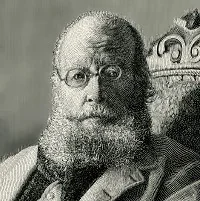
Edward Lear (1812-1888) was an artist and illustrator. As an author, he was particularly known for his nonsense collection of poems, songs, short stories, and botanical drawings. It was only by creating unreal beings and settings that Lear could write with unrepressed emotions about his own unhappiness and sense of isolation. Later on in life, Lear contracted a disease for which he would write his last limerick, Incidents in the Life of My Uncle Artly, a transparent autobiography. In his last moments, Lear’s last words expressed gratitude for the kindness of all his absent friends.
Lear popularized the limerick form with his whimsical and humorous poems. One of his most famous nonsense poems was The Owl and the Pussycat.
The Owl and the Pussycat by Edward Lear
“The Owl and the Pussy-cat went to sea
In a beautiful pea-green boat,
They took some honey, and plenty of money,
Wrapped up in a five-pound note.
The Owl looked up to the stars above,
And sang to a small guitar,
‘O lovely Pussy! O Pussy, my love,
What a beautiful Pussy you are,
You are,
You are!
What a beautiful Pussy you are!”
The Owl and the Pussycat, Lear (1870)
Ballad Poetry: Mastered by Samuel Taylor Coleridge
The ballad is another old and traditional form of poetry that typically tells a dramatic or emotional story. Its origins derive from Europe in the late Middle Ages, and it was originally meant to be set to music. Now, ballads are all in dialogue, where two characters speak back and forth. Ballads do have a set form: four lines (quatrain) and a rhyme scheme of ABAB or ABCB. Seemingly difficult, the form is looser than others, so it can be modified to the writer’s preference.
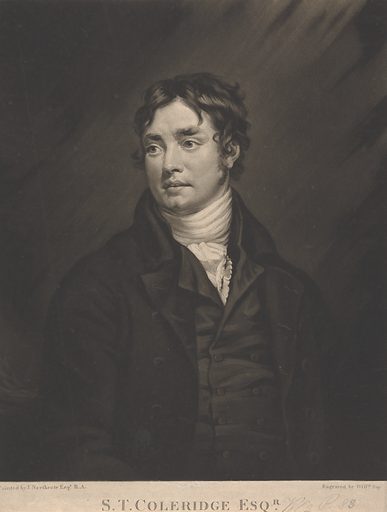
Similar to John Keats, Samuel Coleridge took it upon himself to master a poetic form during the Romantic movement. Coleridge (1772-1834) was a British poet, critic, and philosopher. He was also the leader of the British Romantic movement. His early work was celebratory and conventional. He began writing more in a natural style, using his intimate friends and their experiences as subjects. In 1798, a friend of Coleridge collaborated on a joint volume of poetry entitled Lyrical Ballads. The collection contains Coleridge’s famous poem, The Rime of the Ancient Mariner.
The Rime of the Ancient Mariner by Samuel Coleridge
“PART I
It is an ancient Mariner,
And he stoppeth one of three.
‘By thy long grey beard and glittering eye,
Now wherefore stopp’st thou me?
The Bridegroom’s doors are opened wide,
And I am next of kin…”
The Rime of the Ancient Mariner, Coleridge (1797–98)
In closing, I hope this offers a captivating exploration of poetic diversity and influence. With each introspective verse of many profound poets, each featured poem highlighted the immense impact of poetry in conveying human emotions and the prospective generation.
For more seasonal poetry, click here.
To browse our Poetry shelf on Bookshop, click here.