







Historically, disabled characters weren’t portrayed well. They were seen as helpless, villains, or tragic figures. But that’s not a reflection of reality, and as time goes on, we — thankfully — have much more positive representation. We see characters who have disabilities but aren’t defined by them, and they still live their lives. The seven listed below are only a handful of good examples.
Komi Shouko from Komi Can’t Communicate
Komi struggles with communicating with her classmates due to extreme anxiety and fear of rejection. She instead writes on a notebook to communicate, and when she doesn’t have anything to write on or with, her anxiety spikes. Others consider her to be the most beautiful girl at school; she gets a lot of attention from classmates and even strangers, which only makes her situation worse.

While Komi does struggle a lot, she decides at the beginning of the series that she wants to overcome her anxiety and talk to others. She sets a goal of making 100 friends, with the help of her classmate Tadano Hitohito, who’s the first to realize that Komi struggles to communicate.
Yuki Itose from A Sign of Affection
Yuki has congenital hearing loss, so she communicates with others via lip reading, sign language (though only with the select few who know it), and texting or writing down her thoughts. She can talk some, but she only does this with her family. Yuki also wears hearing aids even though they don’t really help her hear, but they let other people know that she’s deaf.

Yuki used to go to a school for deaf people, but now in university she’s around hearing people. Despite struggles with communication, and others not always being understanding, Yuki is determined to make her own way. She does well in her classes, makes good friends, gets a part-time job, and just lives normally.
Edward Elric from Fullmetal Alchemist
He loses his left leg during an experiment to revive his and his brother Alphonse’s mother back. He then loses his right arm in exchange for Al’s soul, which he then binds to a suit of armor. Luckily, their friend Winry and her grandmother save Edward, and Winry makes him advanced prosthetics called automail, which he often hides under clothes.
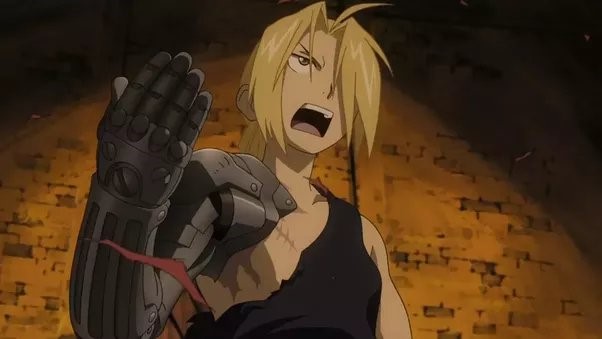
Despite losing two limbs and having to adjust to prosthetics, Edward never lets it bother him. It’s hard, especially when they break as he fights against enemies, and he has to endure Winry’s wrath before she fixes them. But every time he runs into a challenge, he faces it head-on and finds a way to work it out.
Toph Beifong from Avatar: The Last Airbender
Toph was born blind, and her parents and those around her treat her like she’s helpless and can’t look after herself. Her parents even hide the fact that they have a daughter to protect her. Toph resents this and frequently runs away. That’s how she encounters the badgermoles — masters in earthbending and her teachers in the art.

Toph learns to “see” by using earthbending to sense people and objects around her. She becomes a champion in an underground earthbending competition, and she runs away later on to become Aang’s earthbending teacher. Toph even goes on to invent metalbending in a moment of self-defense. She does what she wants when she wants, and she lets nothing hold her back.
Elide Lochan from the Throne of Glass series
After her mother sacrifices her life to save Aelin and her father is executed, Elide is forced to live with her uncle, who takes over her family’s territory and becomes Lord of Perranth. He is constantly cruel to her, such as refusing to call a healer when Elide falls down some stairs and seriously injures her ankle. It continues to get worse, and she develops a limp.
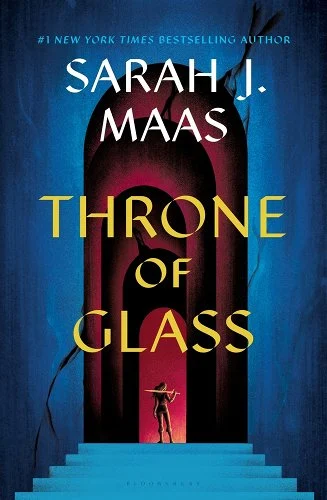
While Elide’s ankle does impede her in many ways, such as not being able to run or move quickly, she keeps going. She looks for ways to escape, tries to do her best, and always looks forward. Even when she’s held captive for ten years, she never gives up hope of escaping, and stays true to herself.
Lillian Pentecost from Fortune Favors the Dead
Three years before the book starts, Willowjean, “Will,” saves Lillian Pentecost’s life with her impressive knife skills. Lillian, New York’s best detective, then takes Will under her wing and trains her to be a detective. She has a hard time getting her work done alone with her multiple sclerosis diagnosis, so it seems like fate.
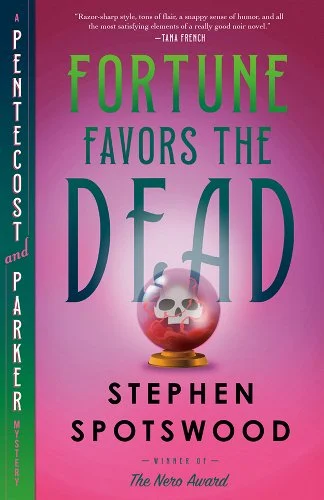
That said, Lillian doesn’t give up or stop her detective work. Some days she can’t physically do the job by herself, but there are other things she can do instead. And she never loses her spirit, constantly going back and forth with Will.
Effie Galanos from Where You See Yourself
High school senior Effie has cerebral palsy and uses a wheelchair to get around. Not only does she have to worry about accommodations at her high school — which are abysmal — but she also has to find the perfect college that is accessible to her, which are all things that her friends don’t have to worry about.
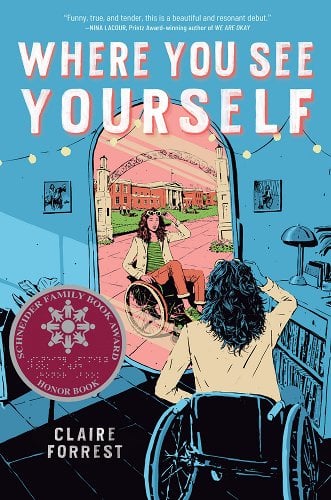
But she already has her perfect college: Prospect University in New York. She’s determined to go there to make her dreams come true, even as others try to dissuade her. She also gains courage as the novel goes on and learns to stand up for herself and others; not letting people push her needs aside anymore.
These seven characters are proof that we’re a step forward in disability representation. From here on out, I hope we continue to see more disabled characters portrayed in a positive light.
For more articles on disability representation, click here.
Check out our Bookstr Team Recs shelf on Bookstr’s Bookshop page.