













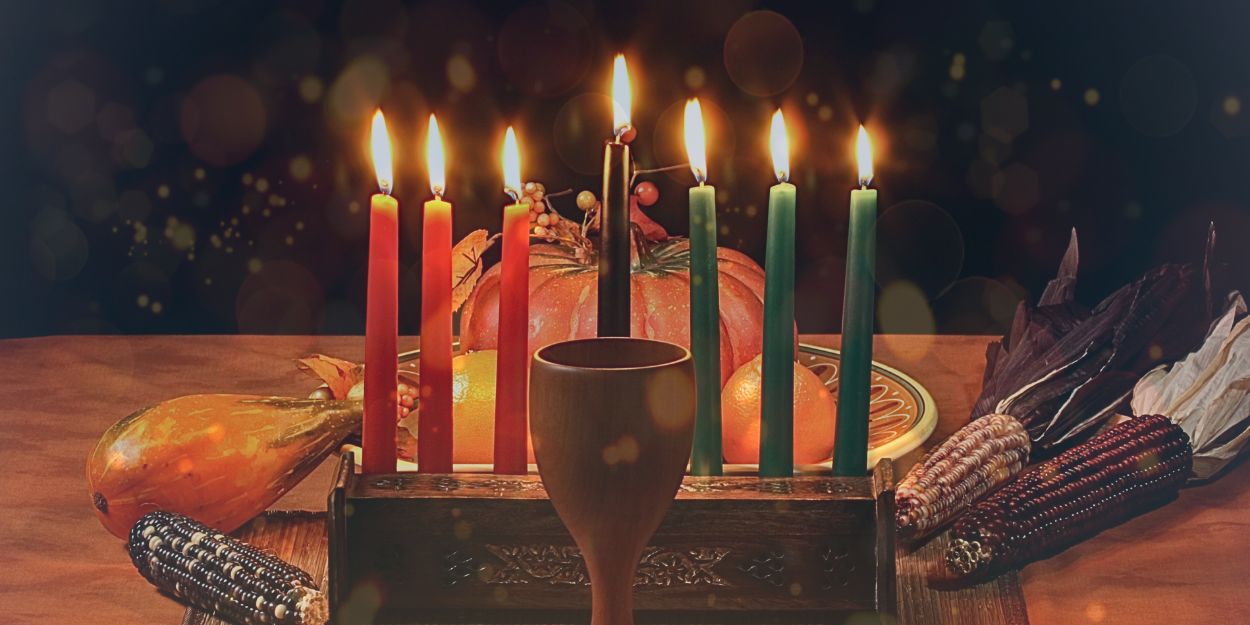
Derived from the Swahili phrase “matunda ya kwanza,” (“first fruits”), Kwanzaa imbues ideas of community and culture in Black people in the US during its week-long cultural holiday, which begins and ends each December 26th-January 1st. From the first day to the seventh day, many who celebrate embrace the seven principles that give the holiday its meaning and purpose. Like the term “Kwanzaa,” the principles also derive from the Swahili language. Each family celebrates the holiday in their own way, but the cultural aspects remain unchanged: one of the candles on the Kinara (candleholder) is lit each night, and one of the Nguzo Sabas (seven principles) is discussed. But where do the principles come from? And what is the meaning behind these seven principles? Let’s get into it.
A Brief History of the Seven Principles
Created by Dr. Maulana Karenga, founder of Kwanzaa and professor and chairman of Africana Studies at California State University, the seven principles are a set of ideals that are emphasized each day of the holiday week. These principles represent the values of Black culture and help contribute to building and reinforcing community among Black people. Along with the seven principles are seven symbols that reflect the values and concepts of African culture, such as the Ashanti and Zulu traditional celebrations, researched by Dr. Karenga to form the foundation of Kwanzaa. Each night during the candle-lighting ceremony, families gather together, and a principle of Kwanzaa is discussed along with the holiday’s meaning. Musical instruments are played, they sing and dance, and their tables are set with various foods from around the African Diaspora. The symbols of the holiday also decorate their tables:
“the Kinara (Candleholder), Mkeka (Mat), Muhindi (corn to represent the children), Mazao (fruit to represent the harvest), and Zawadi (gifts).”
The Seven Principles of Kwanzaa, National Museum of African American History and Culture
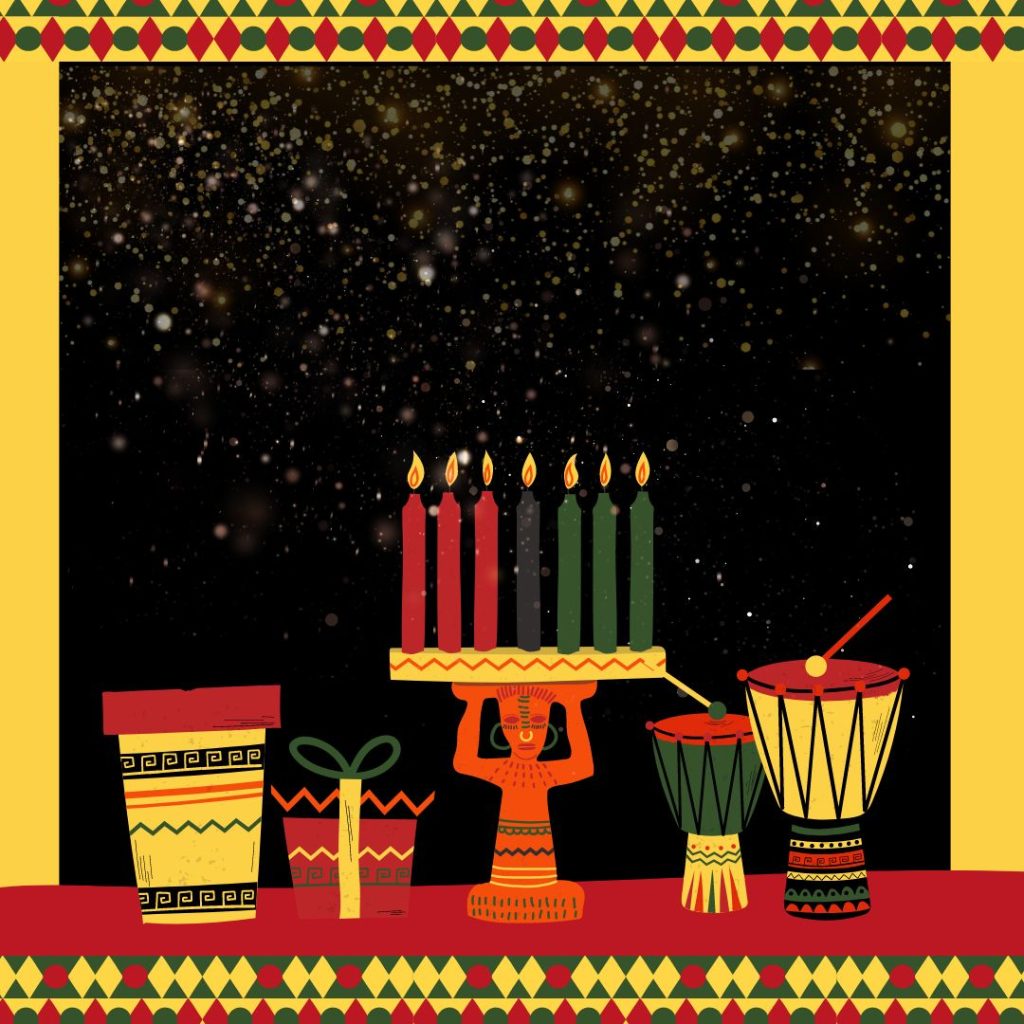
The Seven Principles
For a better understanding of the seven principles that form the basis of the holiday, let’s take a more in-depth look at their names and meanings.
• Umoja: Unity — “To strive for and maintain unity in the family, community, nation, and race.”
• Ujima: Collective Work and Responsibility — “To build and maintain our community together and make our community’s problems our problems and to solve them together.”
• Ujamaa: Cooperative Economics — “To build and maintain our own stores, shops, and other businesses and to profit from them together.”
• Nia: Purpose — “To make our collective vocation the building and developing of our community in order to restore our people to their traditional greatness.”
• Kuumba: Creativity —
• Kujichagulia: Self-determination — “To define ourselves, name ourselves, create for ourselves, and speak for ourselves.”
• Imani: Faith — “To believe with all our hearts in our people and the righteousness and victory of our struggle.”

7 Books For 7 Principles
Seven Spools of Thread (A Kwanzaa Story) by Angela Shelf Medearis

In this poignant narrative, seven brothers make life for their family members quite a pill with their constant arguing. But when their father passes, he leaves a will dictating that his sons find a way to turn seven spools of thread into gold, lest they be put out as beggars. It is up to the brothers, with the help of the “Nguzo Saba,” seven principles of Kwanzaa, to find a way to pull together for the good of the family and the community. A wonderful read that displays what it means to be a family with the use of the seven principles.
My Family Celebrates Kwanzaa by Lisa Bullard

A story filled with facts and a fun narrative, this is sure to be a treat for young children. My Family Celebrates Kwanzaa moves through the history of the Civil Rights Movement, from which Kwanzaa stems, bringing you thought-provoking questions and facts that make this story engaging and teach kids all about the holiday.
My First Kwanzaa by Karen Katz
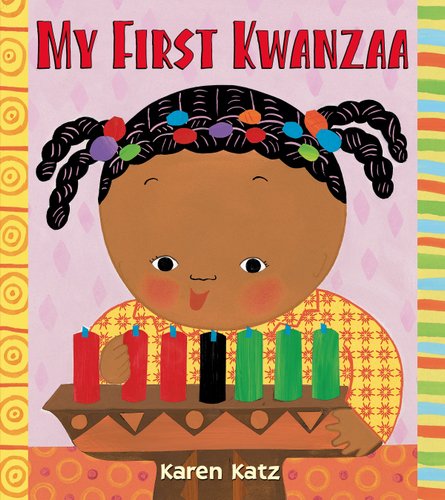
Peek inside this lovely story that celebrates the importance of family, friends, and community. A story for all ages, especially the youngest of children that showcases a lively introduction to Kwanzaa.
“Hooray! Hooray! It’s time to get ready for Kwanzaa.”
My Family Celebrates Kwanzaa, Karen Katz
Kwanzaa: 7 Principles, Celebration, Decorations, Traditions and Symbols: A Kwanzaa Book for Kids by L.A. Amber

Get into this wonderful rhyming narrative that teaches the history of Kwanzaa and breaks down the seven principles in a touching way that will inspire the whole family, especially the kids. You’ll get an immersive understanding of how to celebrate the holiday.
Kwanzaa Every Day by Shamelle and Neils Ribeiro-Yemofio
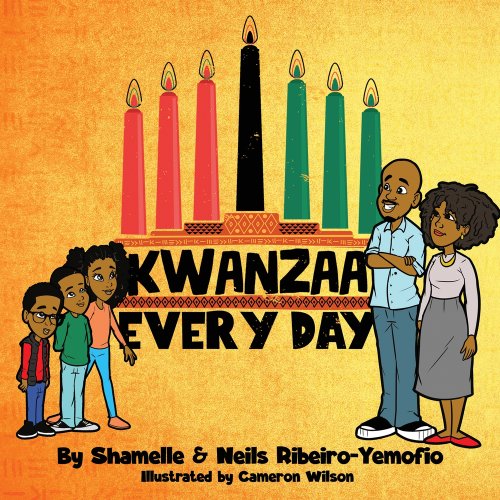
Celebrate culture, family, and the human spirit with young Nia, who brings us along on her journey to a world of discovery, wisdom, and what it means to live in harmony with the seven principles of Kwanzaa. Let this enthralling tale encourage you as a reader to embrace the ideals of unity, heritage, and shared values while enjoying a good book along the way.
The Children’s Book of Kwanzaa: A Guide to Celebrating the Holiday by Dolores Johnson

Here’s a fun read for the whole family to join in. Johnson takes care to illuminate readers on the story of Kwanzaa and its founding, the seven principles, and the symbols. This guidebook also includes recipes and crafts with detailed instructions on how to make everything from the symbols to the delicious Kwanzaa meal. A delightful read that invites everyone to join in the festivities and design a Kwanzaa celebration that’s right for your family.
Kwanzaa: From Holiday to Every Day by Maitefa Angaza

Traditionally, Kwanzaa is observed by millions of people of African descent during the winter, but it doesn’t have to be. Let the celebration continue throughout the year, bringing family, friends, and community together from season to season. Let Angaza’s helpful book, imbued with the rich culture of the Kwanzaa holiday, help make your observance a special one at any time of the year. Utilize this reference guide to help make you and your family’s Kwanzaa a special one. You’ll learn ways to plan for daily observance and gatherings, the seven principles, traditional recipe dishes, where to find Kwanzaa accessories, and much more. Let this guide be your intro to a way of life!
These books will certainly help you understand the seven principles in preparation for the holiday. With rich backstory and detailed information, children will enjoy getting to know themselves through these stories, as well as a better understanding of what Kwanzaa is and why this cultural holiday matters.
For more about the Kwanzaa holiday, click here. For more on the seven principles and the symbols that represent the holiday, click here and here.
Be sure to check out these Kwanzaa stories and others from our Young Readers and Children’s Holiday Recs bookshelf, as well as our Diversifying Your TBR: Beautiful Black Voices in Literature bookshelf on Bookshop.org.