












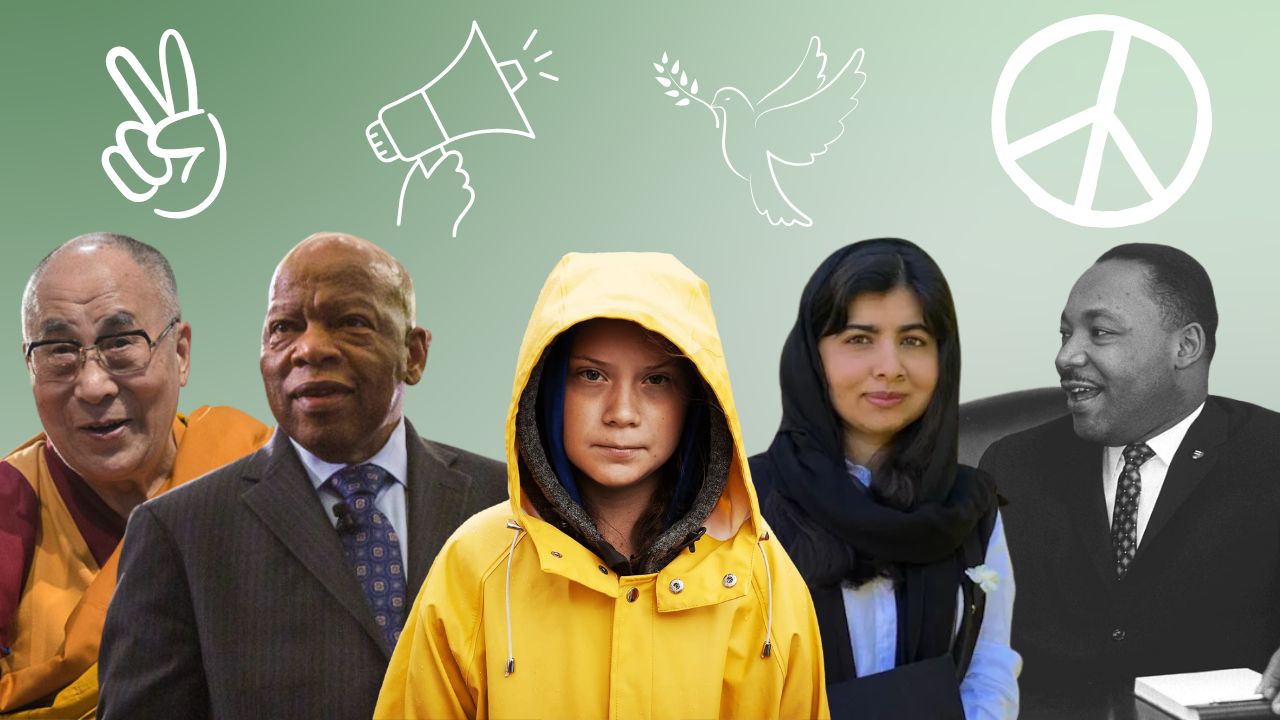
In a modern world ravaged by warfare, environmental destruction, and systemic discrimination, activism from everyday individuals can make a huge difference. One of the primary ways to advocate for a cause you care about is to write about it. In this article, we look at some of the most inspiring works by some of the world’s most legendary peacemakers from the past and present that are forever worth reading.
Greta Thunberg
In 2018, then 15-year-old Swedish political activist Greta Thunberg founded a movement called Fridays for Future, also known as School Strike for Climate, raising international awareness on the effects of climate change. Most recently, at age 22, Thunberg was deported by Israel after boarding a boat bringing humanitarian aid to Gaza. Through actions like these, she constantly compels both young and old to fight for their planet and global justice.

Thunberg’s latest book, The Climate Book, is all about creating the necessary change that the climate and humanity need for a safe future. She cites a variety of scientists and experts while sharing her own experiences with activism. She also wrote No One Is Too Small to Make a Difference, an inspiring collection of her speeches. While young, Thunberg is mighty. Her words convinced millions of fellow students to take action and have forced governments to listen.
Malala Yousafzai
As a young girl in Taliban-controlled Pakistan, Malala Yousafzai continued to fight for her right to education. In 2012, at age 15, she was shot in the head while riding the bus home from school, and miraculously lived to tell the tale. A year later, she became the youngest-ever Nobel Peace Prize laureate and a global symbol of peaceful protest.
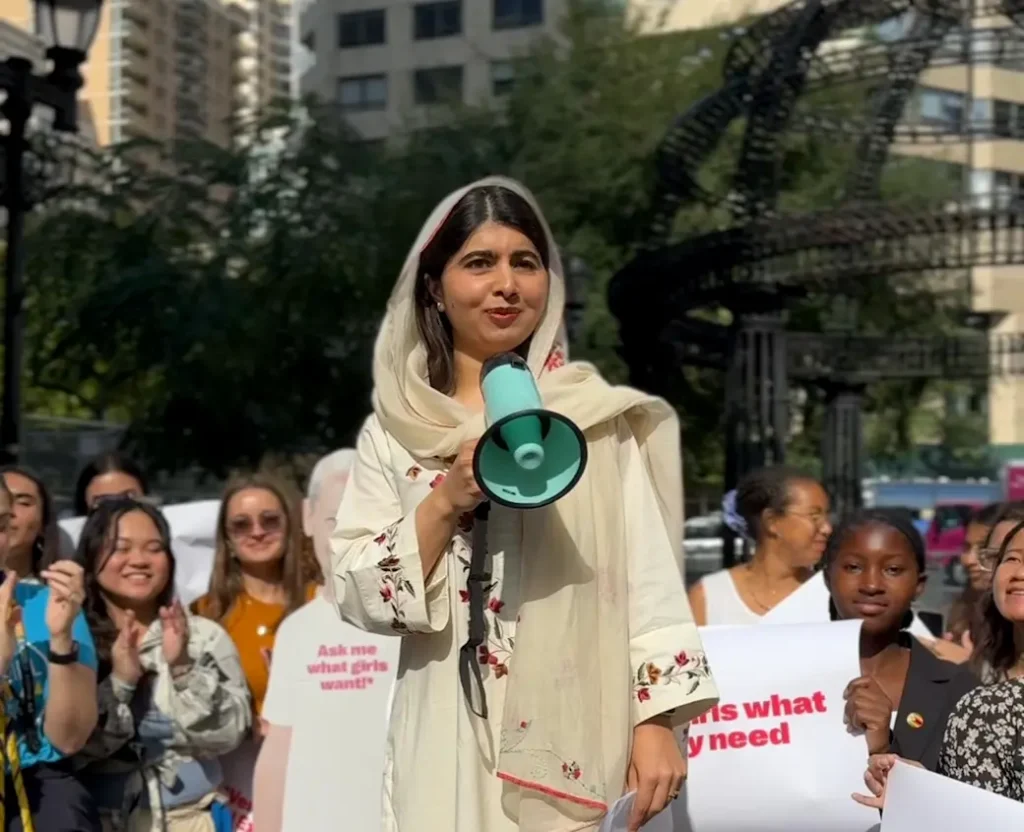
Yousafzai’s inspiring story can be discovered in further detail in I Am Malala: The Story of the Girl Who Stood Up for Education and Was Shot by the Taliban. Co-written with Christina Lamb, the book takes readers on Yousafzai’s fight for girls’ rights in a country taken over by terrorism. She shares how her father, a school owner, encouraged her to attend school and how her parents supported her in a society that privileged men over women.
John Lewis
As a prominent civil rights leader and United States congressman, John Lewis was unafraid to speak up for Americans. He was one of the “Big Six” leaders who led the legendary 1963 March on Washington and was the chairman of the Student Nonviolent Coordinating Committee. His legacy includes his unwavering commitment to social justice, peaceful protest, and prolific writing.

Along with Andrew Aydin and Nate Powell, he wrote the powerful March trilogy, a graphic memoir on his firsthand struggle for human and civil rights. Readers start at March: Book One, covering Lewis’ youth in Alabama, meeting with Martin Luther King Jr., and the Nashville Student Movement’s nonviolent demonstrations. March: Book Two continues the story, describing the young activists’ internal struggles, battles with police, and growing power. March: Book Three concludes the series as Lewis and other young activists start projects to combat white supremacists and help African Americans carry out their right to vote.
Martin Luther King Jr.
Famous American activist and minister Dr. Martin Luther King Jr. led the Civil Rights Movement and organized peaceful protests such as the 1963 March on Washington. A year later, he became the youngest at the time to win a Nobel Peace Prize. One of King’s main strengths was his way with words — you may know his famous “I Have a Dream” speech, calling for an end to racism in the U.S.
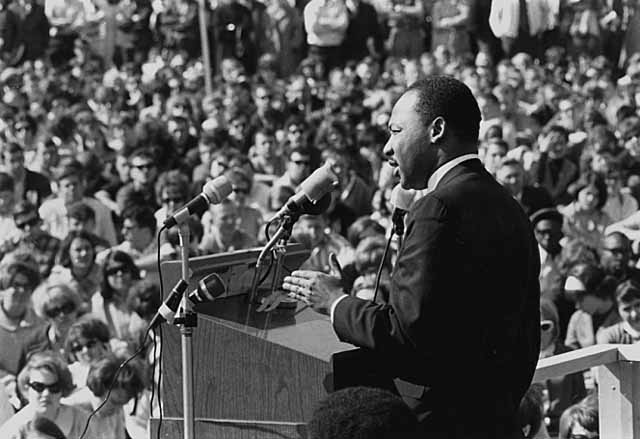
King’s writing skills are also witnessed in his book Stride Toward Freedom: The Montgomery Story, chronicling the Alabama bus boycott sparked by Rosa Parks’ refusal to give up her seat to a White man. King discusses what went right and wrong during the campaign, the reaction from White Americans, and eventually, the successful desegregation of the city bus service. Another one of King’s best works is Why We Can’t Wait, further exploring the events and individuals behind the Civil Rights Movement and the story of Birmingham, Alabama, perhaps the most racially segregated city in the country. The book includes his profound Letter from Birmingham Jail after King was arrested for peacefully protesting against bans on “race mixing”.
Dalai Lama XIV
The 14th Dalai Lama, the highest spiritual leader of Tibetan Buddhism, has established various cultural, religious, and educational initiatives and encourages dialogue across all religions. He was exiled to India in 1959 after China took over Tibet, yet continues to be a symbol of Tibetan resistance. In 1989, he won the Nobel Peace Prize for promoting the values of peace and non-violence.
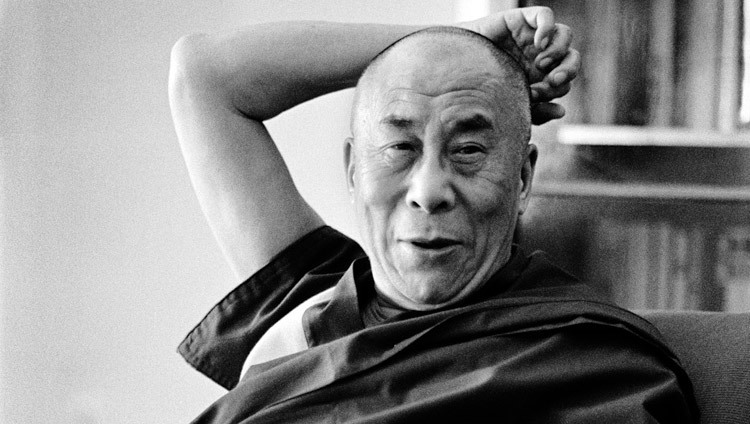
Through the book The Art of Happiness, the Dalai Lama and psychiatrist Howard C. Cutler explain how happiness is our ultimate purpose in life. The Dalai Lama’s stories and meditations show readers how they can achieve happiness and defeat daily anxieties and negativity. He also wrote an autobiography, My Land and My People, telling the story of what it was like to become a spiritual leader and to have to flee his country. This moving work gives readers first-hand insight into the country’s struggles and resilience.
These icons’ eloquence and motivation have changed and continue to change the world. Thunberg, Yousafzai, Lewis, King, and the Dalai Lama inspire me every day to advocate for peace and nonviolence in every way I can, and I hope they do the same for you, too.
Interested in empowering authors? Check out Kinsale Drake’s mission to inspire Native readers and writers.
Take a look at the Bookstr team’s non-fiction recommendations.