





Delving deeper into the feminist movements in Latin America, one realizes how complex and diverse the range of topics regarding sociopolitical factors can be. This is especially true of Mexico, where a complex history has unfolded, caught between the crossfire of the Indigenous population and the invading Spanish conquistadors. The emergence of Catholicism in this area constructed strict gender divides within society. Over the years, feminist movements have attempted to speak out against these rigid gender roles. While there is still much work to complete, a shift towards a more matriarchal society could be seen with the election of Mexico’s first female president, Claudia Sheinbaum Pardo.

In this article, we will outline a few Mexican feminist voices that have helped shape movements highlighting intersectional topics. As women continue to navigate these borders between identities and agencies, we consider those voices from the past, as well as those who have the potential to continue to lead the change.
Rosario Castellanos
Known as a fundamental pioneer for the voices of women writers of Latin America, Rosario Castellanos left her mark on a wide range of literature, which included poetry, fiction, drama, and essays. Her motivation stemmed from being born into an affluent European-Mexican family, as she witnessed the oppression of women and the lower class on her family’s sugar and coffee plantations. Regarding gender roles, she recognized their influence due to the treatment from her family in comparison to her brother.
Reflecting on these experiences, Castellanos expressed herself through poetry, leading a writing group in college called the 1950 Generation. After obtaining her education, she continued to teach literature to others as a professor in the United States, Mexico, and Israel. Her message to her students was to scrutinize the great male writers, instead of idolizing them — an example being Ernest Hemingway, in which she connected his destructive machismo with Mexican politics and culture.

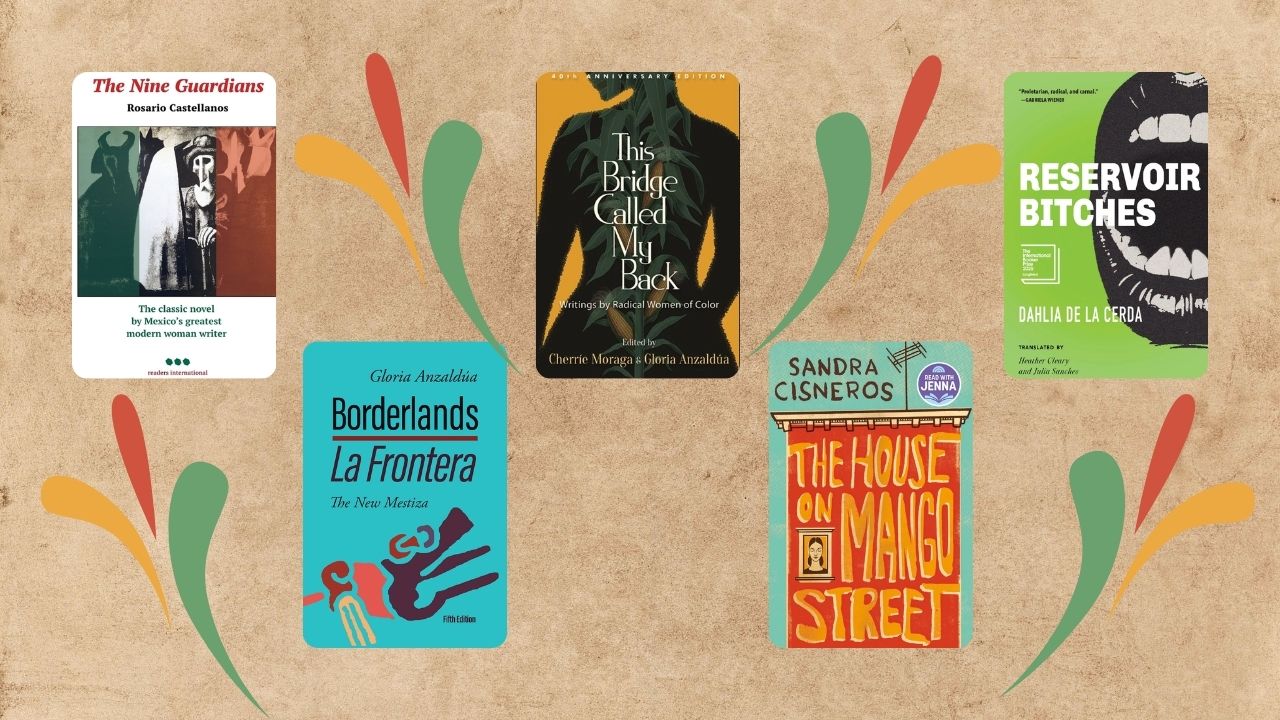
To dive into Castellanos’ work, begin with her 1962 classic The Book of Lamentations. This historical fictional epic highlights the battles between the Mayan empire and the invading Spanish conquistadors, as it explores a labyrinth of characters and plot lines. In Nine Guardians, Castellanos seems to use her childhood experiences to craft a tale of magic and power. Told through the perspective of a seven-year-old girl raised by an indigenous nanny, Nine Guardians explores the power struggles between the working class and the elite.
But if you are interested in obtaining a book that includes a variety of the media Castellanos explored, A Rosario Castellanos Reader: An Anthology of Her Poetry, Short Fiction, Essays, and Drama is perhaps your best bet. This collection includes a sampler of some of her best work, including her play The Eternal Feminine.
Gloria Anzaldúa
From a completely different upbringing than Castellanos, Gloria Anzaldúa was raised on farms located on the borderlands between Texas and Mexico. As the daughter of migrant farmers, Anzaldúa witnessed firsthand the racism inflicted on Mexican Americans caught between these borders. Her experiences shaped Anzaldúa to become one of the most influential Chicana (representing the Mexican American identity diaspora) voices of her time. Representing a range of intersectional identities, Anzaldúa was also an agent for the queer community, while also exploring topics of queer and postcolonial theory. It was at the University of Texas in Austin where she obtained a Master’s in English, where she later returned to hold a class entitled “La Mujer Chicana” (The Chicana Woman).
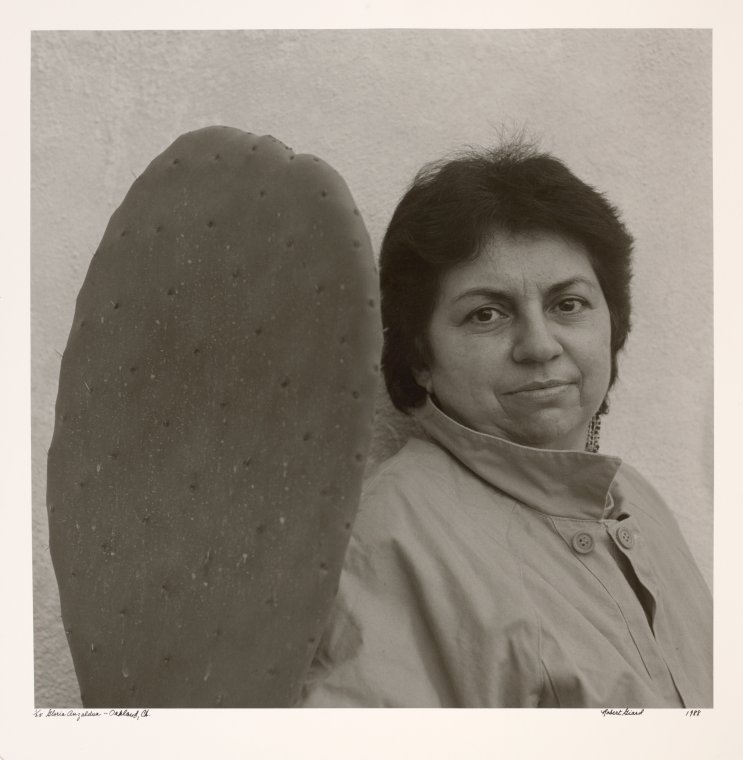
While she has produced poetry, nonfiction, and children’s fiction, her most famous publication is Borderlands: La Frontera. In this memoir, she dissects the emotions from her youth and later years, in which she experienced anger and isolation from living between identity borders. In a mix of poetic prose and essays, she investigates how to navigate through these borders created by society, from the perspective of cultures, gender, and sexual orientation.
“I write because I’m scared of writing, but I’m more scared of not writing.”
— Gloria Anzaldúa, Speaking in Tongues: A Letter to Third World Women Writers
Cherríe Moraga
Lending to Anzaldúa’s discussion on intersectional identities, Cherríe Moraga has also been spending her life enriching the landscape of feminist writers, as a queer Chicana born to a mixed Mexican American couple. Moraga has even partnered with Anzaldúa as editors on their anthology, This Bridge Called My Back: Writings by Radical Women of Color — a collection of essays analyzing the intersections of race, class, gender, and sexuality. In addition to writing a wealth of poetry, plays, and essays, Moraga has spent the past few decades at Stanford University as the artist-in-residence for the Departments of Drama, Spanish, and Portuguese.

Sandra Cisneros
Most of us grew up reading The House on Mango Street as required reading in school. But did you know the book is so influential that it is deemed required reading for academic courses from elementary school through university? I, for one, read it in middle school in Florida and then again for a college literature course at Dalarna University in Sweden. I think the reason why this book has been so beloved and promoted through the ages and internationally is that it is relatable for many girls growing up, no matter what culture or location.
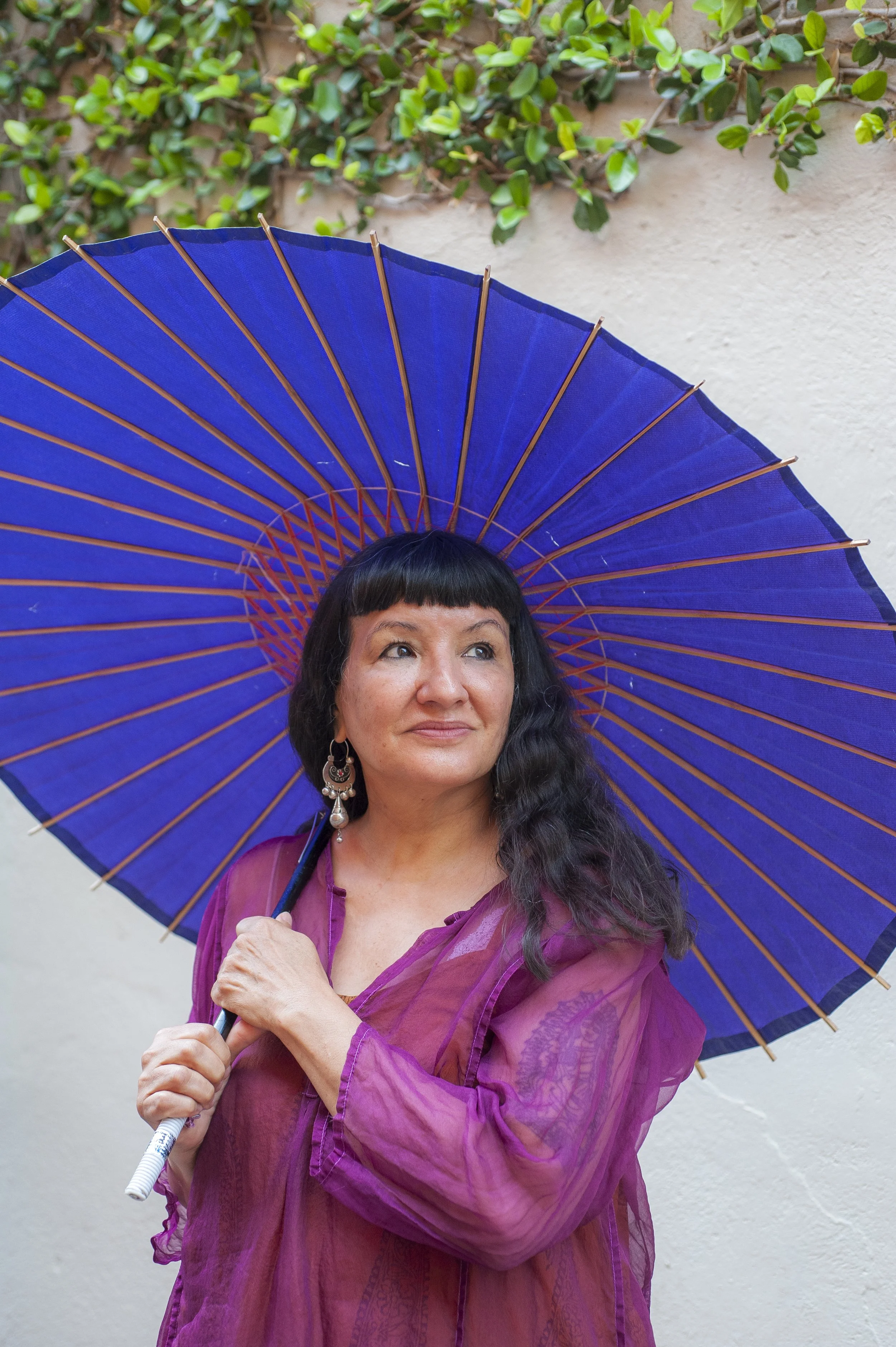
The voice behind this cherished work is none other than Sandra Cisneros, a Chicana woman born in Chicago. After obtaining her Bachelor’s in English at Loyola University in 1976 and her Master’s in Creative Writing at the University of Iowa in 1978, she has continued to make it her life’s mission to stress the importance of creative writing education, as she has continued to teach from grade school to university. Besides Mango Street, some of her other popular works have included Loose Woman, Woman Hollering Creek and Other Stories, and Caramelo.
Dahlia de la Cerda
Leading a new generation of Mexican feminist voices is Dahlia de la Cerda. Self-proclaimed Cholo-gótica on their Instagram, Dahlia represents the future of the intersectional feminist movement throughout Mexico and beyond. Living that hustle culture, Dahlia attempted a Bachelor’s in Philosophy, but was unable to complete it due to a lack of resources, while taking jobs ranging from call centers to Avon sales representative. She is also the co-founder of an organization called Morras Help Morras, an anti-racist and trans-inclusive feminist collective that features a podcast.
Her most successful work has been Reservoir Bitches — her debut that features the struggles and journeys of thirteen Mexican women. While Reservoir Bitches has already won the Comala Young National Short Story Award, it is also longlisted for the 2025 International Booker Prize and in development by Amazon Studios for an upcoming series. We look forward to seeing what projects are in Dahlia de la Cerda’s future!
As we have highlighted, the feminist movements have been complex and diverse within the Latin American realm. While these are only a few of the voices that have stood out over the years, there are many more women who have helped lead this cause and should be heard!
To discover more Latinx recommendations, read our article Discover the Rich Diversity of Latinos Through These Fascinating Recs.
For more Latinx recommendations, check out this bookshelf.