













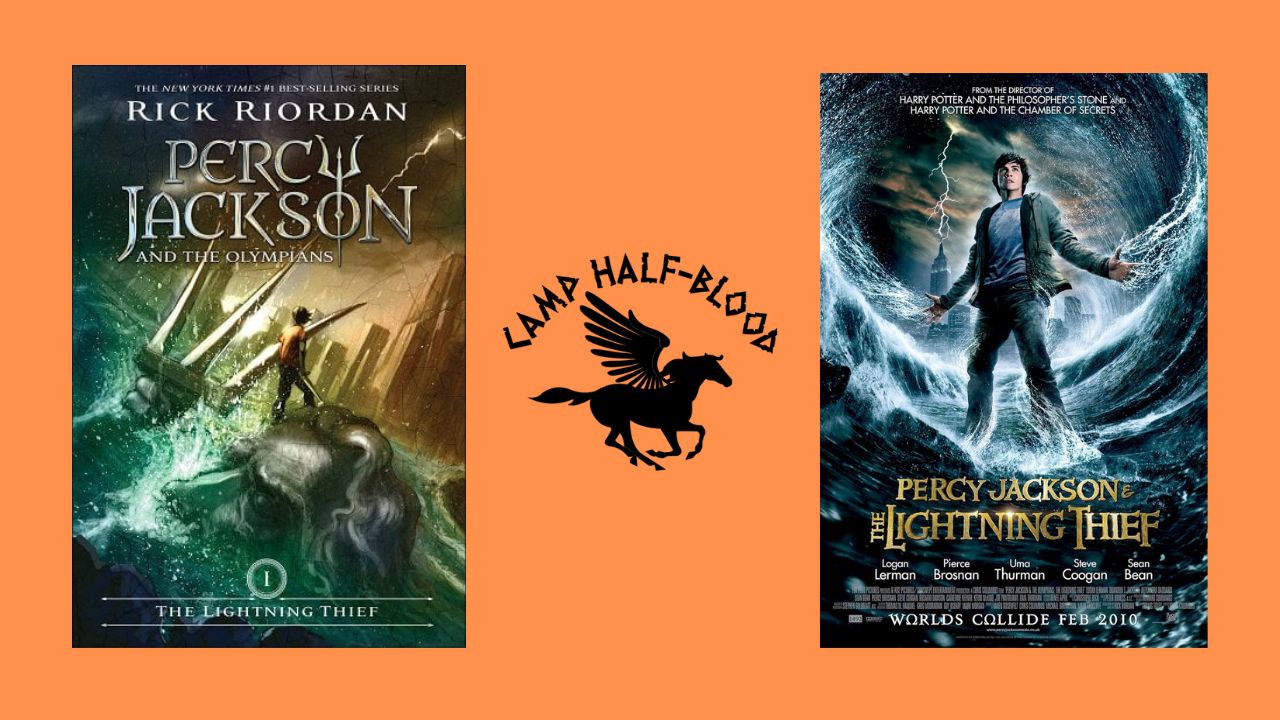
The Percy Jackson and the Olympians series on Disney+ has received much well-deserved recognition. However, movies still hold a special place in many hearts, with nostalgia resurfacing as Percy Jackson and the Olympians: The Lightning Thief premiered on February 12, 2010. To celebrate over a decade of demigods and the very first adaptation of the Percy Jackson and the Olympians series we got to see on screen, here are 15 Percy Jackson quotes from Rick Riordan’s book, Percy Jackson and the Olympians: The Lightning Thief, to remind us of all the magic we first witnessed 15 years ago! Spoilers ahead.
1. “Look, I didn’t want to be a half-blood.”
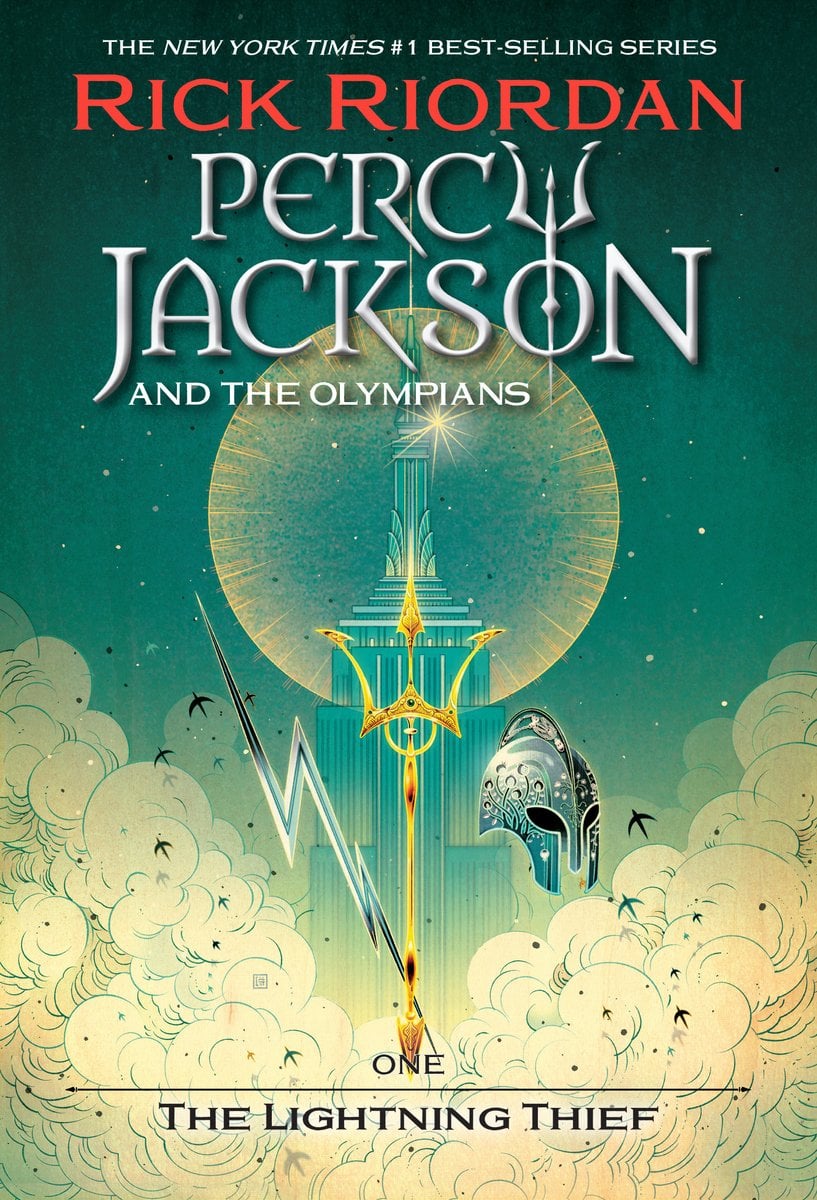
This is the opening line to the first book in the original series. Percy Jackson begins his tale with this admission. In eight words, Rick Riordan sets the tone for not only an iconic character but an entire world and series. As a reader, we get to know not only who Percy Jackson is — sarcastic, irreverent, and funny — but the path that has been thrust upon him and other half-bloods. They didn’t choose to be demigods. And yet, they have to deal with destiny anyway.
An ongoing theme of Percy Jackson and the Olympians is about making the right choices despite difficult circumstances. You can choose a new family, new friends, and even a new way to navigate the world despite what you may have been dealt in your “ordinary” life.
2. “Gods—the forces you call the Greek gods—are very much alive.”
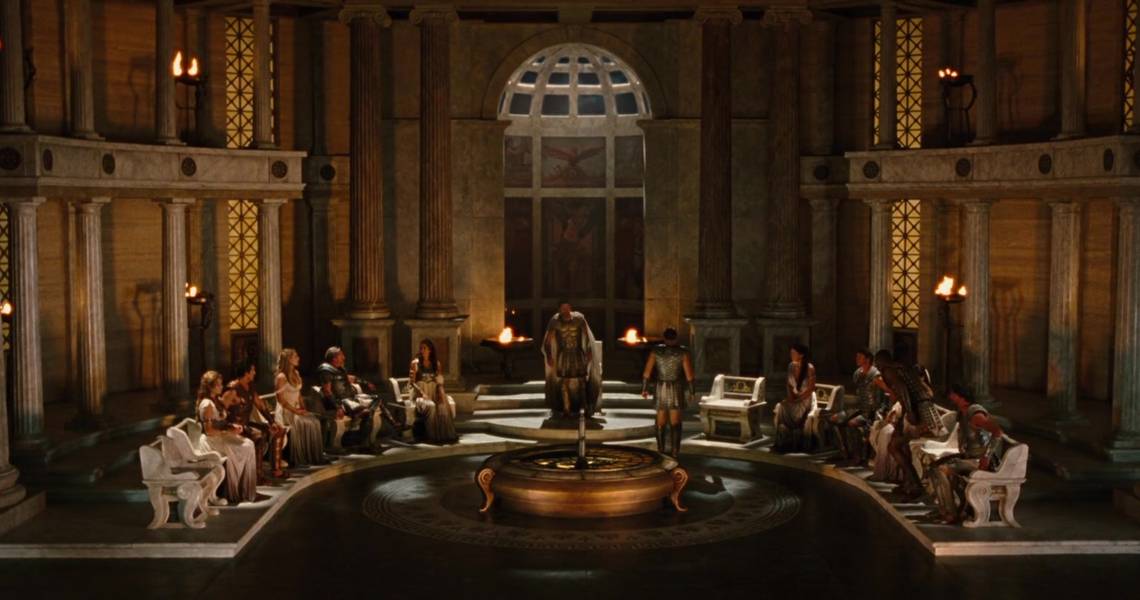
This revelation comes from Chiron — who Percy previously knew only as Mr. Brunner, his Latin teacher — as Percy struggles to make sense of his new place and life within Camp Half-Blood. He’s just murdered the Minotaur, he’s seemingly lost his mother, and now he has to become acquainted with an entire world previously unknown to him. Though, of course, Percy has grown up with glimpses. For better and for worse, his life is changing, and Percy Jackson gets to see what exactly he is capable of.
3. “I didn’t understand how. But the toilets had responded to me. I had become one with the plumbing.”
Despite his exciting entrance, Percy feels abandoned and alone at Camp Half-Blood. He doesn’t quite fit in yet; he’s yet to be claimed, and his allies are few and far between. Even Annabeth Chase still regards him with derision and suspicion. But this is the first moment we truly get to see how much potential Percy has, and that while being a demigod can feel like a curse, it can also be a gift. Of course, this revelation is delivered with classic Percy humor.
4. “I imagined she was going to say, ‘You killed a Minotaur!’ or ‘Wow, you’re so awesome!’ or something like that. Instead, she said, ‘You drool when you sleep.’”
An iconic line from Annabeth, one that has launched a thousand edits and fan theories before Percabeth was ever official. Part of the genius of Rick Riordan is how much he’s able to convey in moments like this. We get more insight into Annabeth and the dynamic between her and Percy as they grow closer. Percy is in awe of Annabeth right away, while she is initially disillusioned. Each newcomer to camp is her chance to start something new, and Percy’s arrival is promising. But he’s at the beginning of his journey, a kid who will be forced to grow up faster than he deserves.
In this moment, we’re reminded of the innocence Annabeth has had to lose growing up at camp. Her comment catches Percy off guard, but it has multiple layers and captures what makes their dynamic so special. They’re able to see each other in ways no one else can.
5. “‘Safety from what? Who’s after me?’ ‘Oh, nobody much,’ Grover said, obviously still miffed about the donkey comment. ‘Just the Lord of the Dead and a few of his blood-thirstiest minions.’”

While Grover is meant to be a protector, he is first and foremost Percy’s best friend. Despite the revelation that Grover is a donkey—ahem, goat—from the waist down (a satyr), the relationship between Percy and Grover doesn’t change too much. Both are scared, and both choose to be brave and stick together. The duo’s comedic timing and unwavering trust in each other are what make their friendship so special, and it’s why Grover is one of the best protectors out there despite being constantly underestimated. He and Percy have that in common.
6. “‘You’re Dionysus,’ I said. ‘The god of wine.’ Mr. D rolled his eyes. ‘What do they say, these days, Grover? Do the children say, “Well, duh!”?’”
Oh, Mr. D. Despite his lack of appearance in the movie (at least in The Lightning Thief), he has a lasting impression on Percy in the books. Their first encounter is certainly memorable, as Percy struggles to reconcile the revelation that Greek gods exist with the image of “this whiny, plump little man” (Rick Ridordan, The Lightning Thief) before him. While many fans cite Luke as the foil to Percy in the series (rightfully so), Mr. D still represents the path Percy avoids falling into. He insists on getting Percy’s name wrong because he gets who Percy is wrong — he believes that Percy is just like any other Greek demigod hero. In reality, Percy retains his humanity in a way no hero before him ever has.
7. “I felt so relieved I wanted to cry, though I didn’t think that would be very heroic. Grover was the only friend I’d ever had for longer than a few months. I wasn’t sure what good a satyr could do against the forces of the dead, but I felt better knowing he’d be with me.”
Percy is lucky, unlike other demigods; he grows up with a loving mother who protects him and has Grover, who looks out for him not only as a friend but also as a protector. That doesn’t stop him from facing the reality of feeling alone and abandoned like other demigods. But he recognizes here that he does have people on his side. What makes Percy a hero is the people around him and the fact that he recognizes their value even in the face of insurmountable odds.
8. “I thought maybe Annabeth and I both had the right idea. Even here in the Underworld, everybody—even monsters—needed a little attention once in a while.”

This quote encapsulates another theme of the series — that identity is ever evolving, and that everyone is capable of deserving either redemption or condemnation. To set things in stone, to abandon someone, only removes the ability for change. The gods are fickle and fallible and have committed monstrous deeds themselves. Luck, not fate, separates them from the Underworld and Tartarus. Percy’s ability to recognize the need to nurture and care for others is what makes him so human, even as a demigod.
9. “I looked at them both and felt really grateful. Only a few minutes before, I’d almost gotten them stretched to death on deluxe water beds, and now they were trying to be brave for my sake, trying to make me feel better.”
Percy grew up going through schools where he was constantly punished for who he was. The ADHD and the dyslexia were both products of being a demigod, but they constantly framed him as a problem child. Now he has friends who understand his intentions and stand by his side, even when he makes risky decisions. This is the moment when Percy starts to really feel he’s gained true friends and a chosen family.
10. “‘So if the gods fight,’ I said, ‘will things line up the way they did with the Trojan War? Will it be Athena versus Poseidon?’ She put her head against the backpack Ares had given us, and closed her eyes. ‘I don’t know what my mom will do. I just know I’ll fight next to you.’ ‘Why?” ‘Because you’re my friend, Seaweed Brain. Any more stupid questions?’”

Annabeth and Percy’s relationship becomes solidified in this exchange between them. The history of their parents and how they’ve been raised stretches out before them. By all accounts, they should be enemies. Annabeth was prepared for that reality. But they choose friendship instead, a lesson the gods could stand to learn from. Despite Annabeth’s flippant humor, she manages to show real care and regard for Percy in this moment.
11. “I felt like my heart was being ripped in two. They had both been with me through so much. […] I had spent thousands of miles worried that I’d be betrayed by a friend, but these friends would never do that. They had done nothing but save me, over and over, and now they wanted to sacrifice their lives for my mom.”
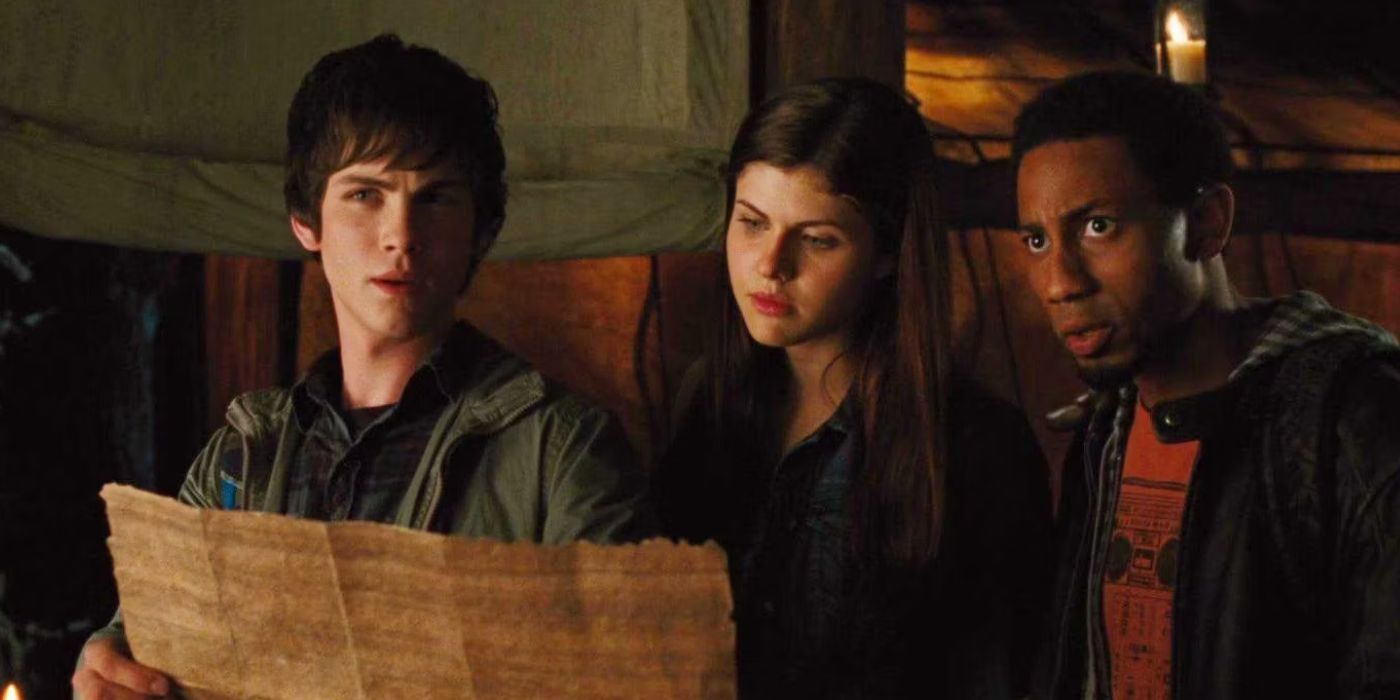
This moment of realization for Percy echoes a lesson Chiron tried to teach Percy early on: knowing too much of your future is never a good thing. The prophecy the Oracle gave him haunted Percy, affecting his confidence in his friends. At this moment, he realizes that his friends could never betray him and that they’d do anything for him. Trust is a choice, and he makes the right one in giving his friends his.
12. “Even strength has to bow to wisdom sometimes.”
Annabeth says this about Ares, and it’s an important lesson Percy has to learn. Strength alone hasn’t gotten the gods very far, nor will it help Luke or Kronos accomplish their missions. Percy learns to balance wisdom with strength through his friends, which makes him a better hero.
13. “Where’s the glory in repeating what others have done?”
Luke says this in a bitter diatribe to Percy at the end of The Lightning Thief, speaking about why he betrayed everyone at Camp Half-Blood and all the Greek gods. His father, Hermes, gave him a quest he had already given Hercules. Luke knows this means that his father thinks of him as replaceable, as another fungible demigod. The irony is that Luke is doing exactly what the Greek gods have done before: betraying his father for a chance at glory, thereby continuing a long cycle of disloyalty and violence. This is what makes Percy’s actions so special; he doesn’t care about glory but about people instead, even at great personal cost.
14. “If my life is going to mean anything, I have to live it myself.”
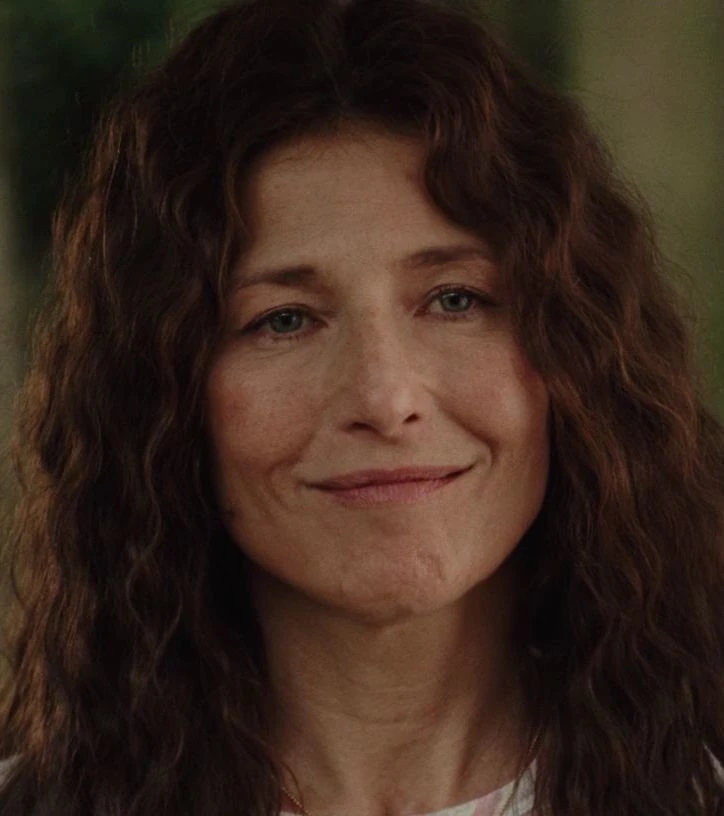
Sally Jackson, Percy’s mother, is largely the reason he is the hero he is. He offers her a way out of the relationship she’s endured. In an effort to protect her son from mythical monsters, she stayed with a human one. But she refuses to let her son or Poseidon solve her problems. She offers a healthy alternative to Luke’s embittered outlook on life. By saying this, she saves herself and teaches Percy how to be a real hero.
15. “I moved back into cabin three, but it didn’t feel so lonely anymore. I had my friends to train with during the day. At night, I lay awake and listened to the sea, knowing my father was out there. Maybe he wasn’t quite sure about me yet, maybe he hadn’t even wanted me born, but he was watching. And so far, he was proud of what I’d done.”
For the first time in a long time, Percy knows who he is and who he could be. His story isn’t over, but he’s made his peace with that. He is never lonely again because he’s never alone. He has Annabeth, Grover, his parents, and a whole camp that recognizes him as a hero. Not because of his godly parents or his achievements (though they help), but because he’s genuinely interested in saving everyone he can. At this moment, Percy can be proud, too.
And finally, in honor of the movie, here’s this iconic scene that even the most avid book fan can’t help but love:
Percy Jackson and the Last Olympians will always be a series near and dear to readers, young and old. The movies helped bring the books to a new audience and laid the path for the Disney+ adaptation. For that, the Lighting Thief Movie is well worth celebrating. And the books are always worth revisiting.
Want to explore more iconic scenes from the movie? Click here.
Browse our Book to Screen shelf on Bookshop.org for more amazing adapted stories!