

















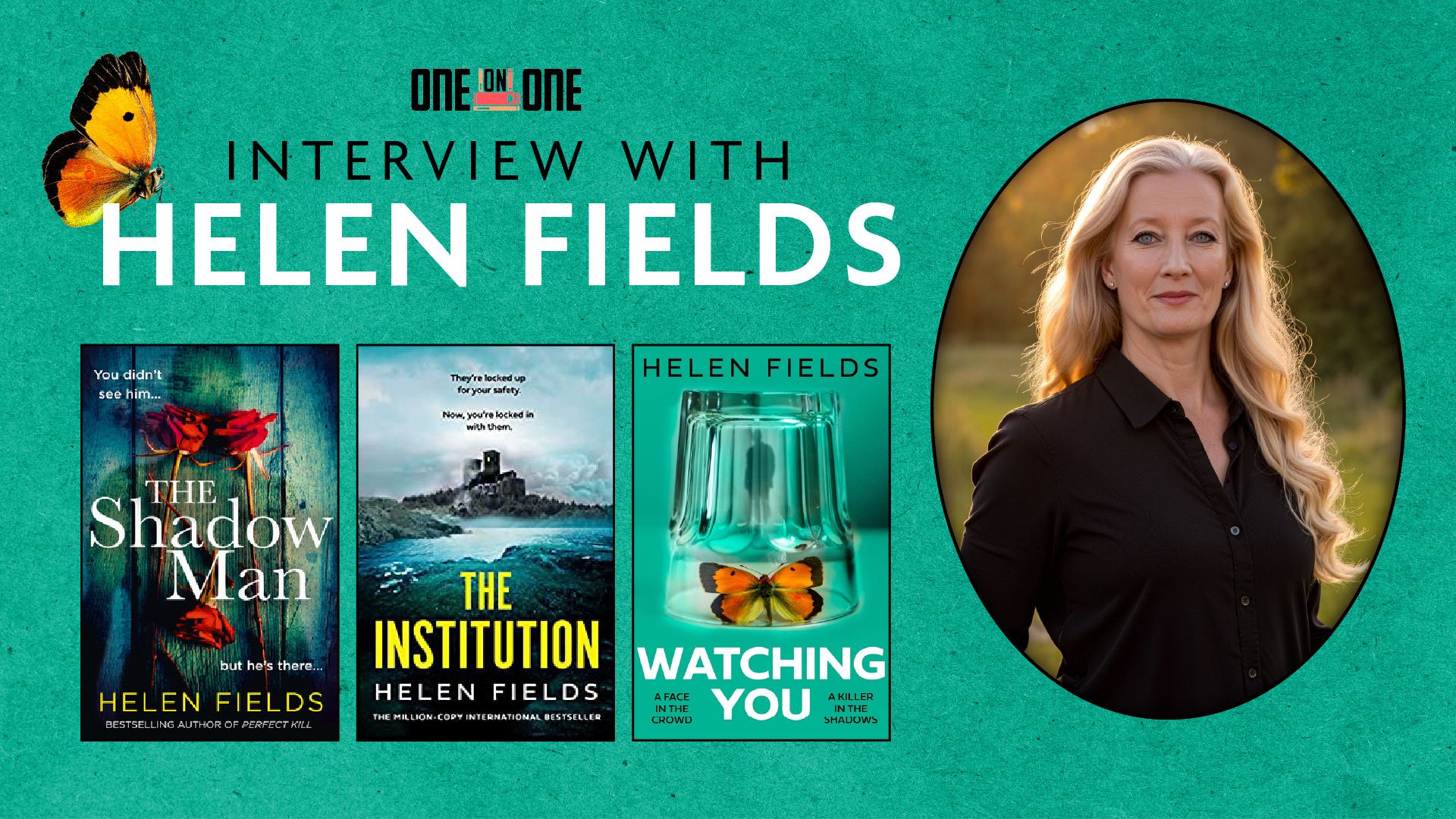
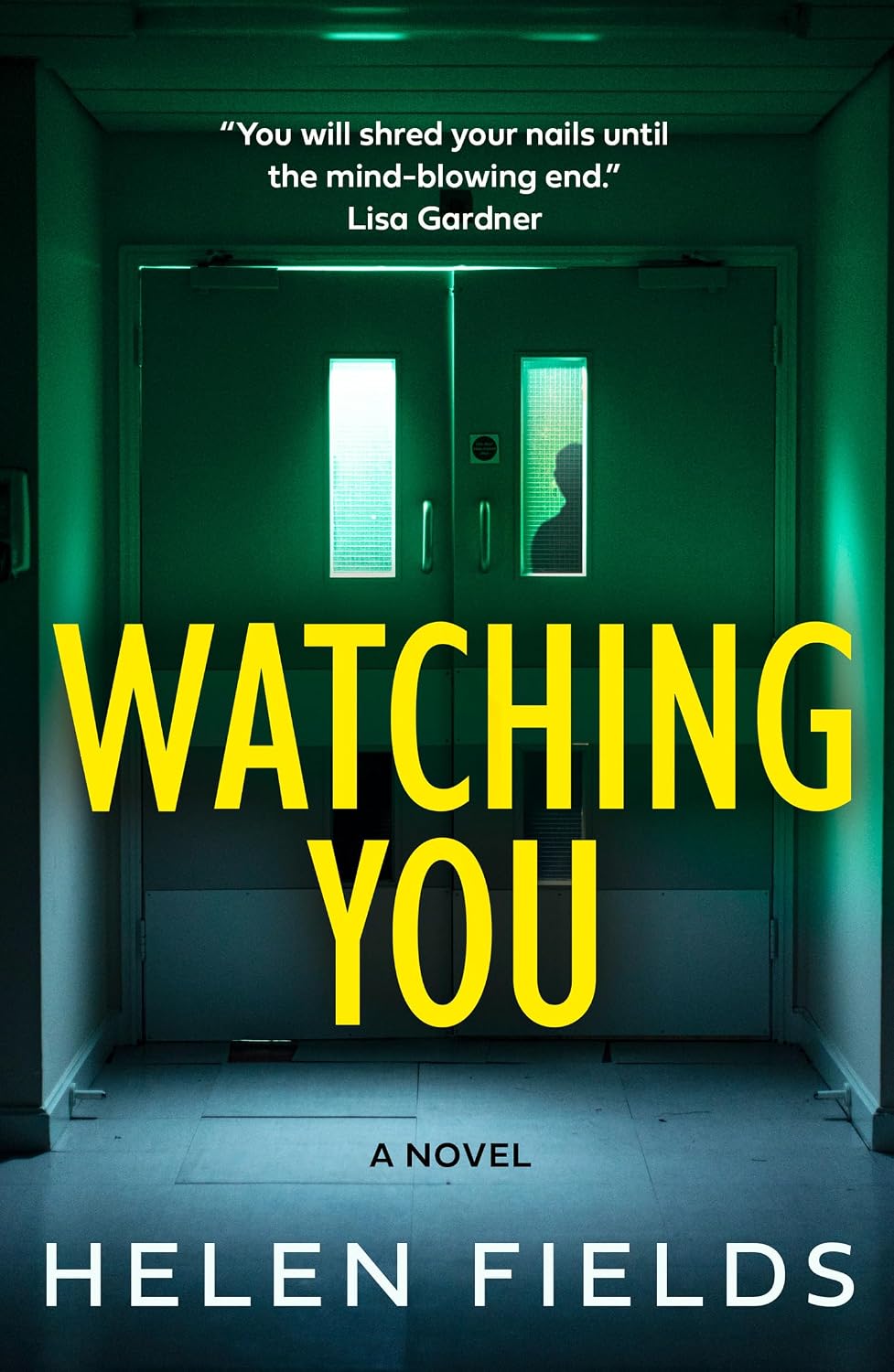
If there’s anyone who knows how to craft a nail-biting thriller, it’s Helen Fields. With over a dozen books to her name, Helen’s captivated scores of readers with her sprawling cast of fearless investigators and the killers they chase. After hooking fans with her Luc and Ava series, Helen’s shifted focus to a new sleuth: Dr. Connie Woolwine. Her upcoming release, Watching You, follows Connie as she hunts down a serial killer terrorizing Edinburgh. As we anxiously await Connie’s latest challenge, Helen takes us behind the (crime) scenes of her creative process and how she creates compelling heroes and villains alike.
About the Author
Helen Fields is a million-copy bestselling author of crime fiction and thrillers. She is a former criminal and family law barrister. Her books are translated into more than 20 languages. She is known for her Scottish-set crime series featuring D.I. Luc Callanach, but also for her profiler series with psychologist Dr. Connie Woolwine. She is a fierce advocate for women’s rights across the globe and often appears on television and radio news and features as a legal commentator. She has done a TEDx Talk about the importance of crime fiction and also writes short stories for magazines and anthologies.
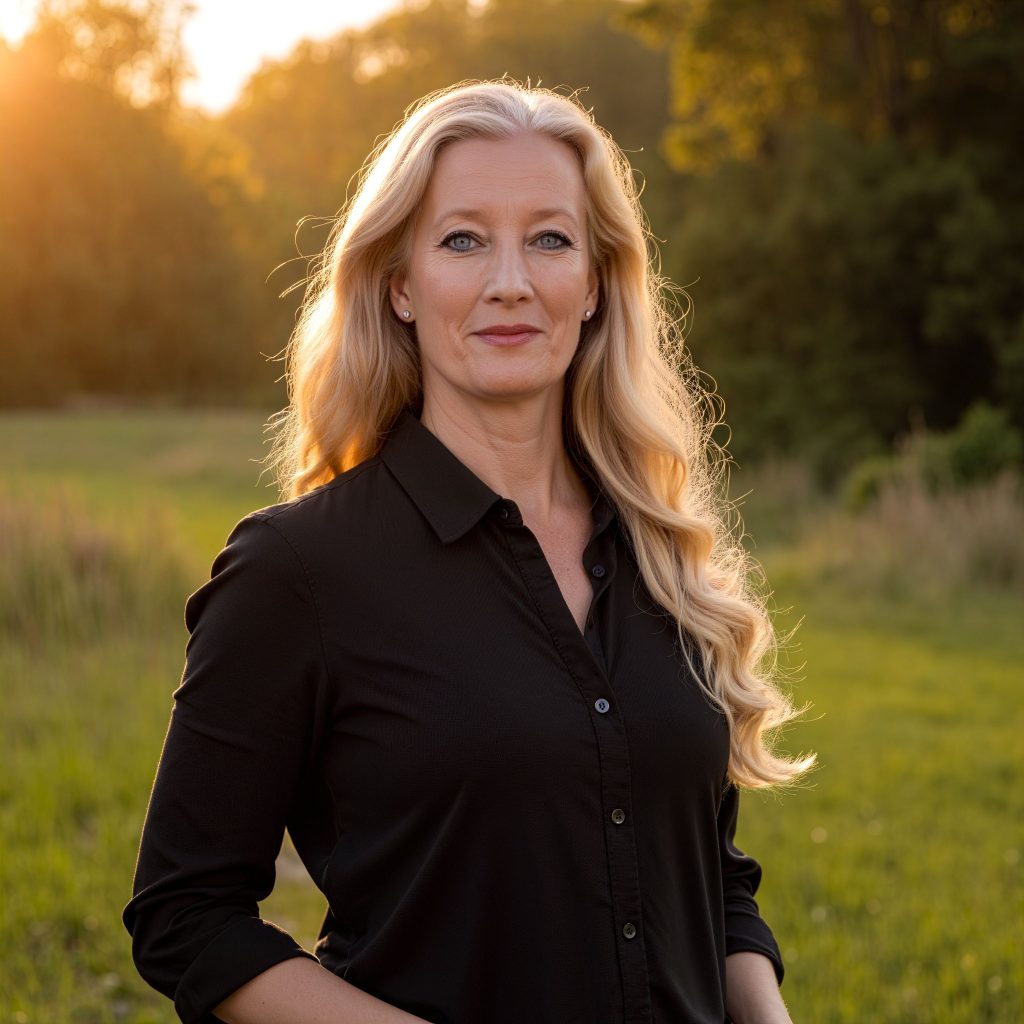
Thanks for joining us, Helen! Let’s get started.
For readers who are unfamiliar with your protagonist, Connie Woolwine, can you give us an introduction to her and what her experiences have been up to this point?
Dr. Connie Woolwine is a character I’m fascinated by — I’m never sure where she’ll take me. She’s an American forensic psychologist who was born in Martha’s Vineyard, Massachusetts. An accident rendered her unable to communicate, and she was committed to a psychiatric ward at 18 until she recovered after surgery. The insights she gained in her time in psychiatric treatment shaped her career choice and life. But the surgery also left her able to see only in black and white. So she’s a bit of an enigma. She’s very blunt but also sarcastic. She’s paired up with an upper-class English detective who’s quite a bit older than her, and I love the way the differences between them create this spark.
Connie has an intimate relationship with the dead. She lets their bodies tell her about their experiences, and she takes her job extremely personally. She’s tough but funny, and strong but vulnerable. I absolutely love her. It was so much fun returning to write Connie again in my new book, Watching You, especially shining a spotlight on her relationship with her partner, Brodie. And there’s a chance (fingers crossed) you’ll be seeing Connie on television sometime soon.
Did your background as a criminal law and family law barrister play any part in your inspiration to start writing? Where do you continue to find inspiration for each new story?
I think handling cases helped me learn how to sculpt a narrative. When you’re addressing a jury, you have to take a lot of information, pull out the crucial or interesting bits, be persuasive, keep up the pace, and take the jury on a journey with you. So much of what I did as a barrister was storytelling, albeit in a factual and much more high-stakes arena. But I also learned a lot about human nature and drama, about how corrupt and terrible, or how self-sacrificing and brave, people could be. I realised I had all the tools to write stories, I just had to learn the craft.
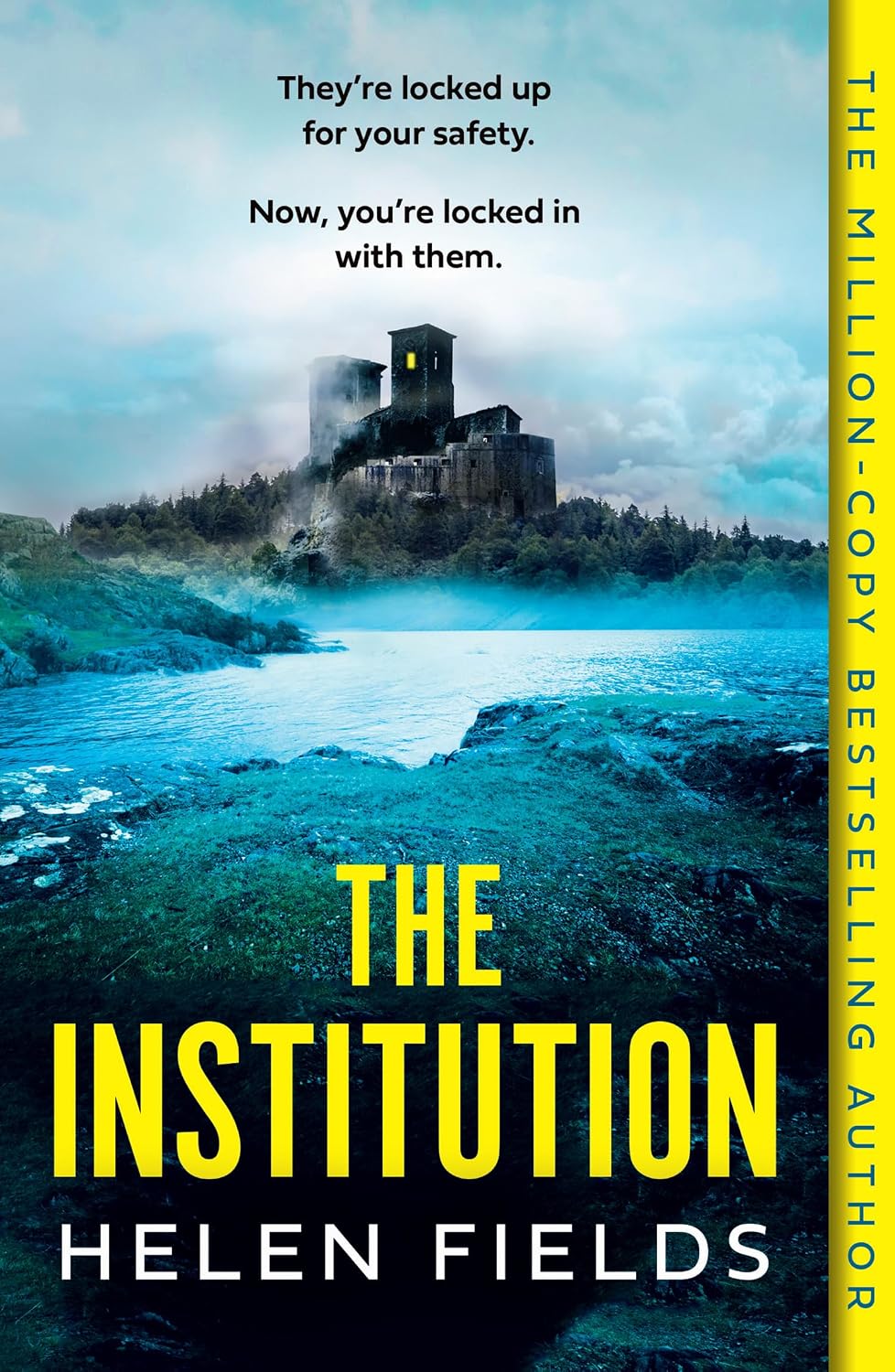
A lot of my story inspiration comes from the news, often weird and wonderful little side stories that don’t make the headlines. The inspiration for The Institution came from a news story that I heard when I first moved to live in California, about a stolen baby. The funny thing is that often I don’t write the book straight away — I might remember something I heard or read a couple of years later. And a lot of ideas are from ‘What if…?’ sentences. The sort of conversations you have at the airport, or at the cinema, or in a bank, or going into the operating theatre. That’s often real food for thought.
Your stories often feature strong yet flawed protagonists. What draws you to creating characters with such complicated personal lives?
I think one of the most useful things about coming to a writing career, having already worked in a couple of different industries and with three children, is that my life has been packed with interesting people. So I take aspects of people I met at the school gates (the good and the bad!), characteristics of the actors and crew I worked with in media production, plus everything from my legal career, and I get to pick and choose aspects of them for my protagonists. It’s the flaws in protagonists that make them interesting and accessible to readers — no one likes Perfect People, after all — and when we mess up, we’re human. Also, when we give our protagonists dragons to fight (not literally, as I don’t write fantasy these days), we give the reader one more reason to root for them. It’s about investment. When you create a broken character, you give yourself a chance to fix them, and that’s always interesting.
The psychological aspects in your stories, especially The Institution, often explore trauma and the darker sides of human behavior. How do you approach creating villains who are complex, believable, and genuinely unsettling?
I’m absolutely fascinated by human psychology, so it makes the research phase of my books easy. The thing I love about my villains is getting fully inside their heads, and that means thinking about the mundane as well as the extreme. It helps me to know what they like to eat, whether they shower or bathe, what relationship they have with their neighbours, and how they dress. Do they try to hide or want to be seen? Do they camouflage their psychopathy with intelligence or innocence, by socialising or by charity work?
We best find these characters in the small parts of their lives, and that’s how they feel real. Serial killers still have a preferred supermarket. They still have to spend hours looking for car insurance. The unsettling part comes from hearing their inner thoughts, so in most of my books, I’ll find a device to get my reader right inside their heads. The scariest thing in the world is looking at the person sitting next to you on the bus, and having no idea what they’re capable of.
How do you go about crafting plots that feel both believable and surprising, with endings that are satisfying and well-earned? Are you a plot planner, or do you start writing and see where the story takes you?
I start my writing process with lots of unanswered questions about the plot, but I always know my characters intimately. I also have a pretty good idea of how the story should conclude, even if I don’t know every part of the sequence of events. Reading should involve an element of giving yourself up to the book, so I don’t feel a need to make every single part of it absolutely lifelike. One of the things I don’t like seeing is complaints that a certain character absolutely would not make certain choices in real life. While I’m sure that’s true, fiction isn’t a documentary. Most mysteries and thrillers require some bad decision-making or risk-taking for a story to evolve.
Endings should be feasible, but always keep something back by way of a surprise. I think major twists can sometimes be a disappointment if they don’t ring true, so I’m careful about this, but there needs to be a satisfying payoff for having stuck with a book, and I work towards this with real intent. The best example of this might be my book The Last Girl To Die. I had no idea how I was going to finish the story until I wrote the key chapter, but then I knew it could never have ended any other way. (It did cause a bit of an outcry, though, but as a story ending, I felt it was exciting and original. I hope readers agree.)

In addition to Connie’s series, many readers are drawn to the D.I. Callanach series, which follows Luc, a former Interpol officer, and Ava, Detective Chief Inspector, as they work to solve Edinburgh’s disturbing crimes. What do you think makes Luc and Ava’s partnership resonate so deeply with your audience?
The thing that has been most interesting to me with the Luc and Ava series, as it’s become known, is that people contact me to ask about the next book, not for the crimes, but to find out what’s going to happen with my lead characters. Luc and Ava have a real push-and-pull relationship, and the fun thing to write is how that impacts investigations and the people around them. It allows for some comedy, plenty of drama, a love story, as well as high-stakes showdown scenes. But I think the thing a lot of readers love is that it’s Luc who is the more broken of the couple, and it’s very much Ava putting him back together. (Plus, there’s the benefit that Luc is half French/half Scottish, and excessively good-looking, with the whole dark, curly hair and a great body.)
From conception to publication, how long does it take for you to write a book, and what are some of the trickiest challenges you’ve found in that process?
From concept to actually seeing my book in a shop is usually about 18 months. Of course, in that time, I’m also editing a previous book and doing the preparation work for the next one. Most writers don’t have the luxury of only working on one book at a time. In terms of the bulk of the writing, that takes place within a six-month timeframe, sometimes faster. So the tricky thing is holding so much in your head. My day often consists of writing 2,000 words on my current manuscript, doing social media or interviews for a book that’s just come out, pulling together the details of the book I’ll write next, and maybe discussing a short story that is due to come out in an anthology or magazine. I have to be on top of all those details all the time, and I’d be the first to admit that sometimes it’s hard!
Are there any books besides your own that you’ve really enjoyed sinking your teeth into lately?
Books I’ve loved recently include The Women by Kristin Hannah, about a nurse who’s posted to Vietnam during the war and the fallout in her personal life when she comes back. It’s both a historical commentary, a love story, and a brilliantly female-led story that made me forget to breathe at times. Also, Broken Country by Clare Leslie Hall, written on a dual timeline. It’s a heartbreaking love story about class, grief, tragedy, and consequences. It’s stunning.
Finally, Stephen King’s You Like It Darker. I have always loved King’s short stories and novellas, and now that I’ve written some shorts, I understand how incredibly hard it is to write a compelling mystery or thrilling tale in just a few thousand words. This anthology combines the best of both worlds, with a few longer tales and some very quick reads, but always with King’s unique voice, his ability to whisper in his reader’s ear, and the darkness so many readers crave from time to time.
To close out, what advice would you give to those wanting to write their own thrillers?
The best advice I can give is to make a list of the elements that make you want to read a thriller when you pick up a book and look at the cover or read the blurb. When you write a story that sets your imagination on fire, that emotion will follow through to your readers. You should write as you most enjoy reading — fully immersed, on the edge of your seat, holding your breath, unable to look away from the page. You really don’t have to write what you know, but you do have to write what you feel passionately about.
Thanks again to Helen for chatting with us! To keep up with her work, visit her website or follow her on Instagram — and don’t forget to check out Watching You!
Click here to read our interview with horror writer Josh Winning.
Find more heart-pounding thrillers and mysteries at our Bookshop.
