






I first encountered Zadie Smith in my senior year AP Literature class, where we read White Teeth. I still think about that book often, mostly because it was the first adult book I read that felt seriously unhinged. That sort of roaring chaos isn’t for everyone — literary critic James Wood famously described Smith’s debut novel as “hysterical realism”. But White Teeth didn’t just speak to me: It grabbed me. It had bite, it had personality, it often felt unserious, but still had a meaningful message at its heart. (I’m also a sucker for a good motif, and Smith’s use of teeth and roots to represent heredity really scratches an itch in my writer brain.)
If you’re looking to explore Smith’s fiction, you’re in luck: We’ve got the perfect primer for you. Whether you’re looking for meditations on race, class, heritage, or family, Smith peels back the curtain on the complexities hidden in our ordinary lives.
Trigger Warning: The books discussed within this article contain references to or depictions of potentially distressing content, including racism, substance misuse, sexual abuse, violence, xenophobia, suicide, mental health issues, slavery, and 9/11. Please exercise care while reading.
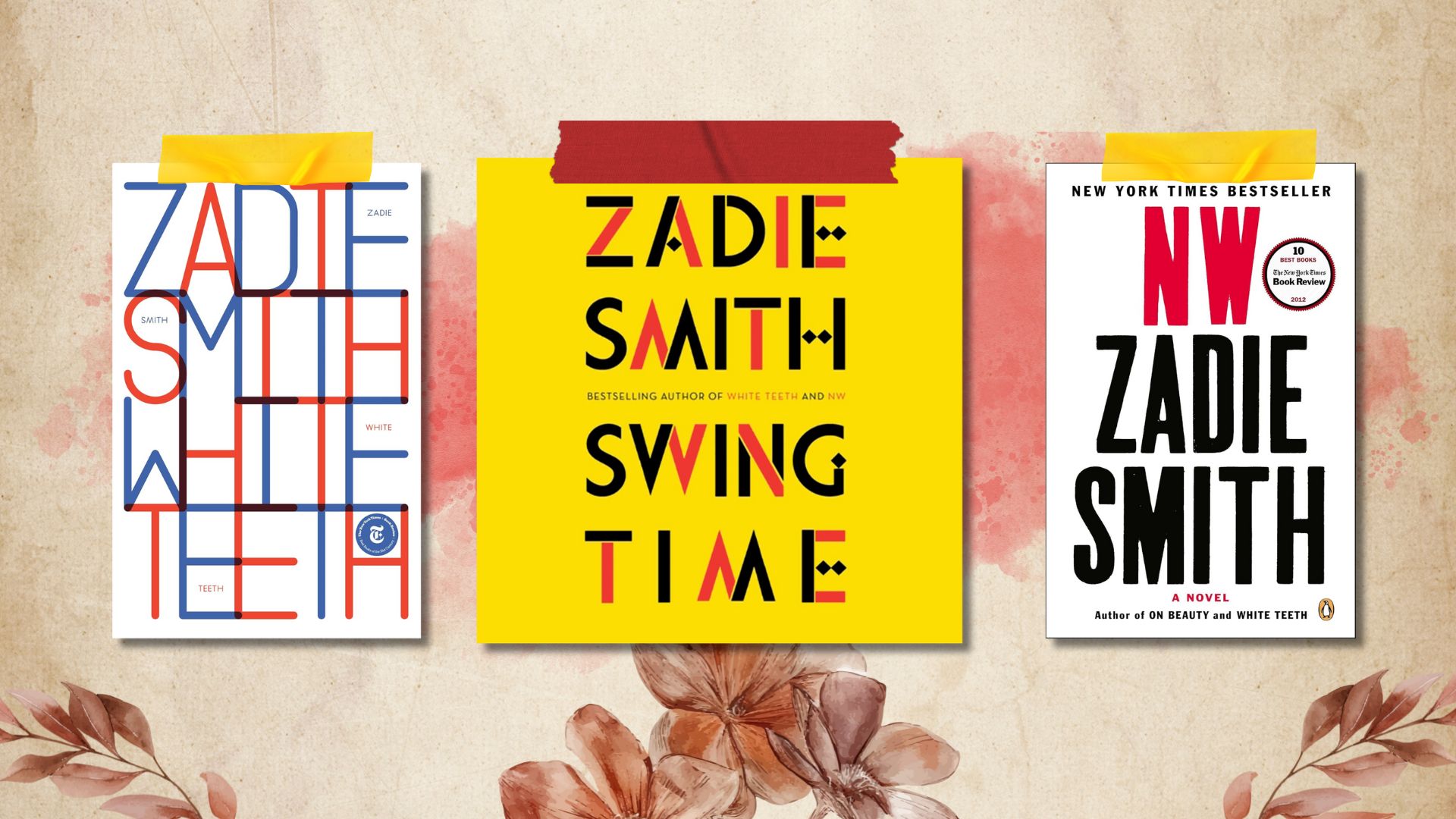
White Teeth (2000)
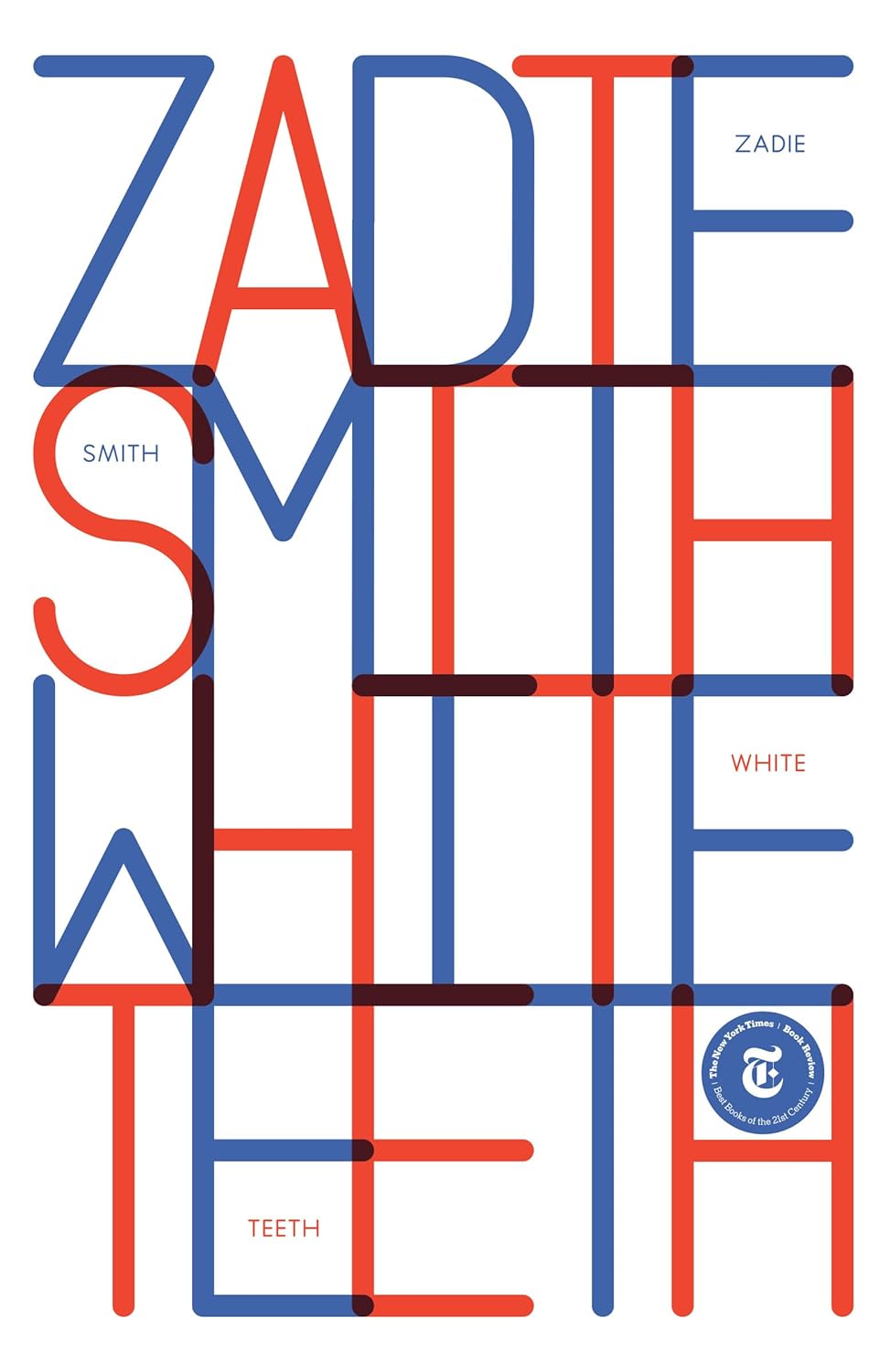
The book that started it all: Zadie Smith’s explosive debut follows two families, the Joneses and the Iqbals, as they struggle with their hybrid, multicultural identities. While Iqbal twins Magid and Millat suffer the consequences of their father Samad’s immigrant angst, Irie Jones reckons with English beauty standards as a half-Jamaican teenager. Irreverent and clever, White Teeth explores the search for belonging and identity in postcolonial London with wit and a dash (okay, a heaping) of absurd chaos.
The Autograph Man (2002)

Smith’s second novel follows autograph seller (and forger) Alex-Li Tandem as the anniversary of his father’s death approaches. Readers accompany Alex on his various misadventures: obsessing over obscure Old Hollywood actress Kitty Alexander, working on his book, and gradually embarking on a downward spiral of reckless substance use and infidelity in an effort to avoid confronting his persistent grief. Smith provides wry commentary throughout, along with meditations on the nature of fame and the attainability of immortality.
On Beauty (2005)

Described as an homage to E. M. Forster’s Howards End, On Beauty bitingly satirizes academia and intellectual communities. In the fictional university town of Wellington, just outside of Boston, live Professor Howard Belsey, his wife Kiki, and their three children. The five Belseys wrestle with questions of race, class privilege, and matters of the heart, further complicated when Howard’s academic rival, Monty Kipps, arrives from London with his own family in tow.
NW (2012)
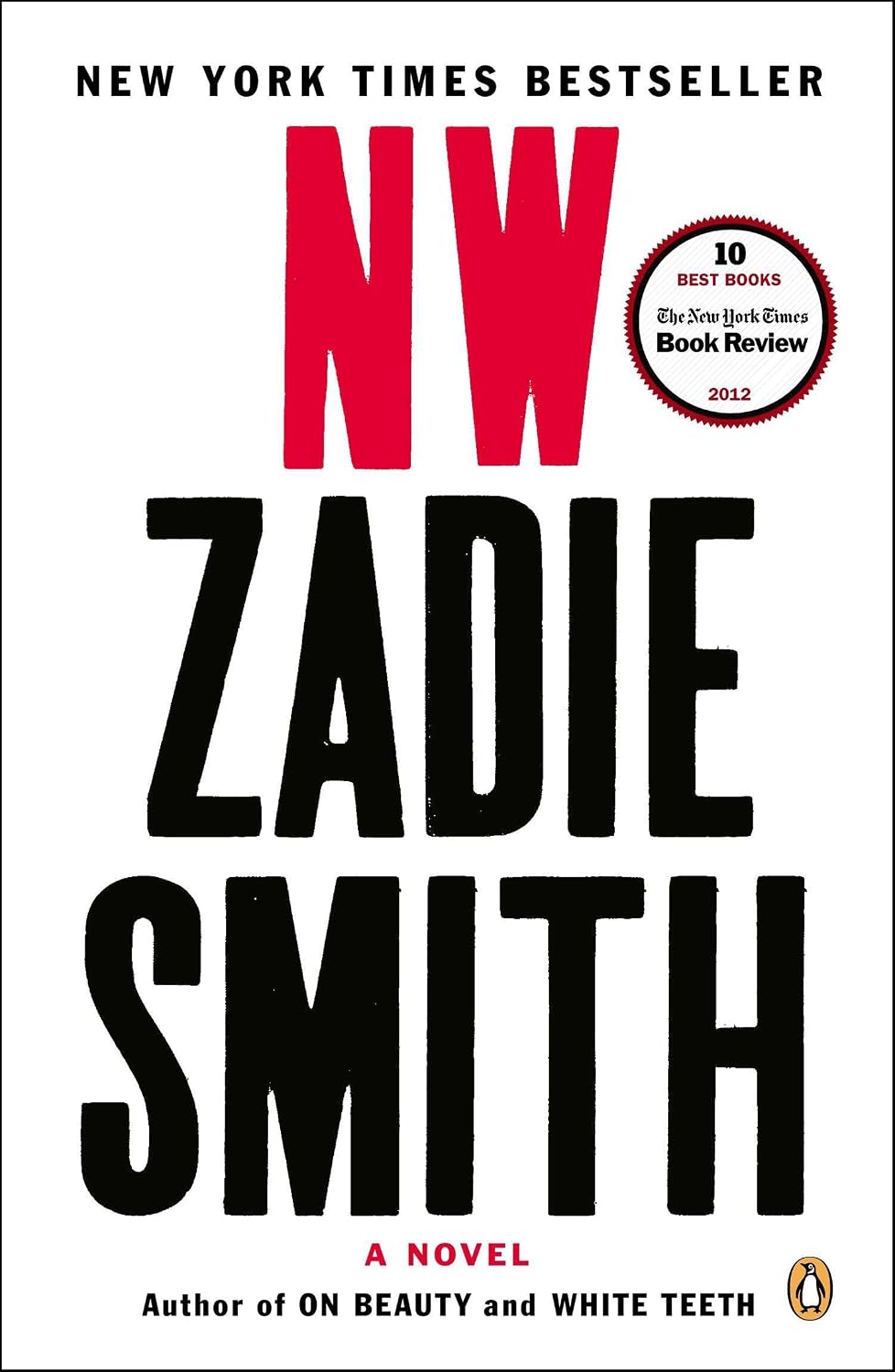
Smith turns her keen eye on the working class of North West London, tracking four friends as they carve out lives away from the council estate, Caldwell, where they grew up. NW is the author’s most experimental novel, employing various narrative perspectives and techniques to provide a compelling portrait of these characters’ intersecting struggles. The struggles and pressures experienced by Leah, Felix, Natalie, and Nathan will resonate long beyond the final pages.
Swing Time (2016)

Two young mixed-race girls meet in a tap dance class, but the skill difference between them soon becomes obvious. Prodigy Tracey is talented but troubled, grappling with childhood trauma and drug use. The unnamed narrator, meanwhile, becomes the globetrotting personal assistant to a singer named Aimee with philanthropic ambitions. The two never fall out of each other’s orbit even as they grow apart, a pas de deux of sorts spanning decades and continents.
Grand Union (2019)

Smith’s first short fiction collection compiles 19 of her stories, 11 of which were previously unpublished. As ever, the author proves herself unafraid to push boundaries, moving expertly between various forms and genres. Parents’ Morning Epiphany adopts the structure of a student’s creative writing homework, while Miss Adele Amidst the Corsets provides a character study of a beleaguered drag queen. Escape From New York is Smith’s take on an urban legend about Michael Jackson, Elizabeth Taylor, and Marlon Brando cramming into a Toyota for a cross-country road trip to LA in the wake of 9/11. Truly, Grand Union showcases Smith’s remarkable range as a storyteller.
The Fraud (2023)

In Smith’s most recent novel, her first foray into historical fiction, the author tackles a Victorian-era scandal. The Tichborne case, in which a butcher from Australia claimed to be the long-lost heir to a baronetcy, fascinated the people of mid-19th-century England. As the nation debates what is fact and what is fiction, Smith zeroes in on two particular figures: Eliza Touchet, housekeeper and in-law to the novelist William Ainsworth; and Andrew Bogle, an enslaved Jamaican and one of the Tichborne trial’s star witnesses.
Which of Zadie Smith’s works speaks to you the most? Let us know on Instagram, Facebook, or Bluesky!
Click here to dive into three of Audre Lorde’s poetry collections.
Find more Black authors to add to your TBR at our Bookshop.