
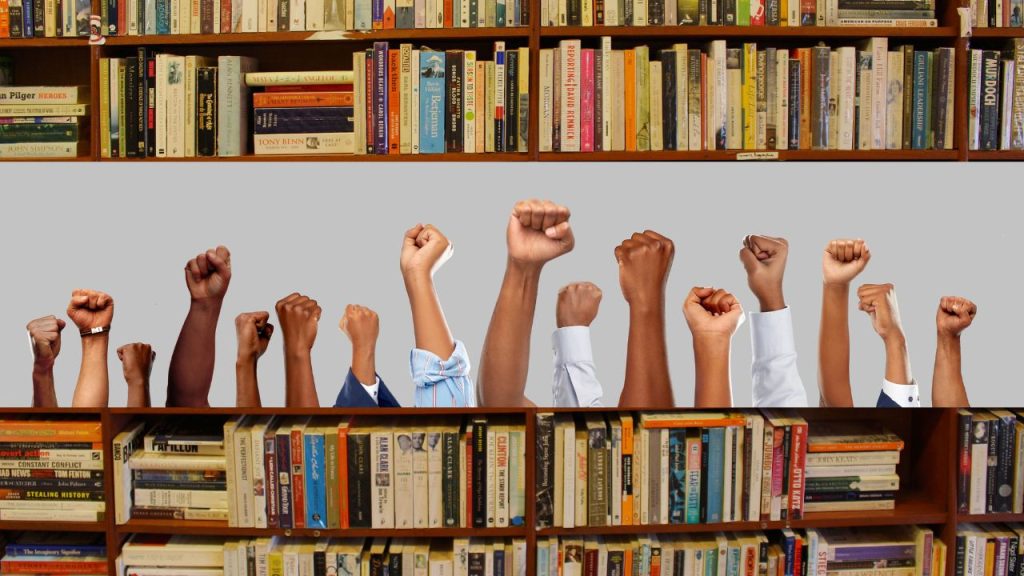

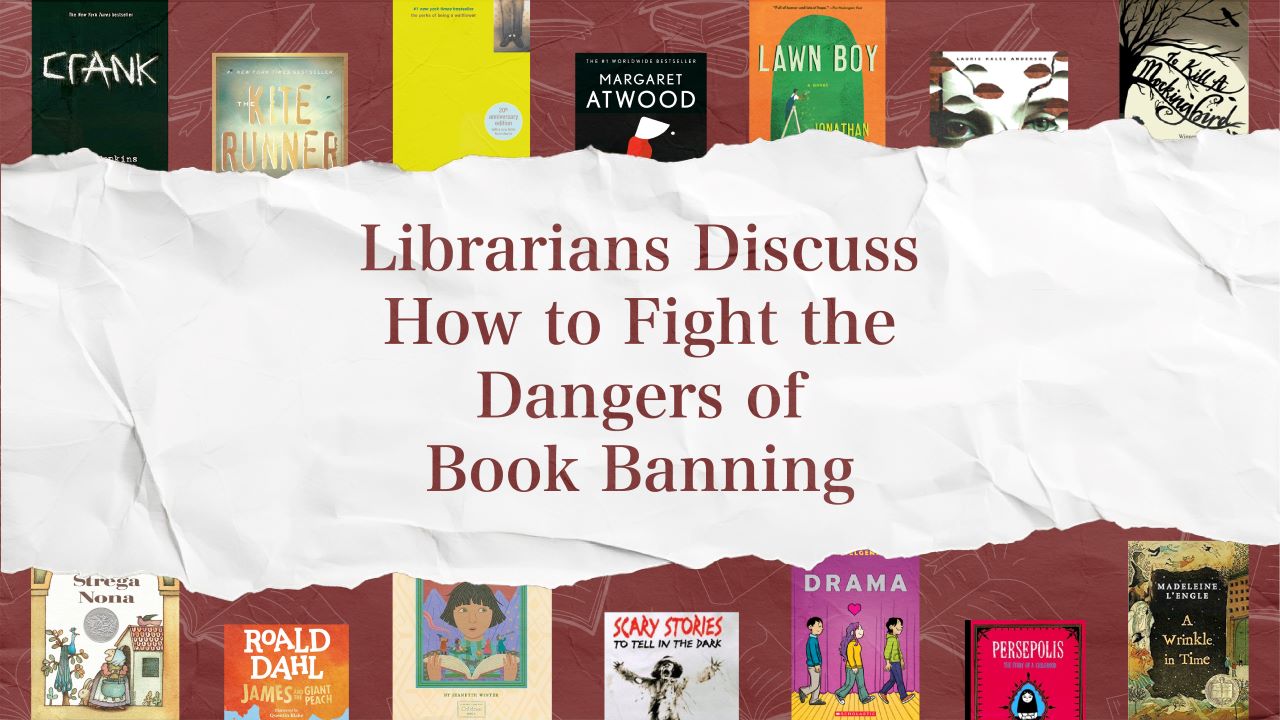
Censorship efforts continue to threaten schools and libraries across the United States. According to the American Library Association, 2,452 books were affected across 821 attempted bans in 2024. Recent data suggests that these attacks are part of a coordinated movement that has taken shape over the past four years, comprising school administrations, pressure groups, and government officials. As PEN America reports, these campaigns disproportionately target works that contain sexually explicit content or center marginalized experiences. They restrict learning and silence diverse perspectives under the guise of protecting children from “objectionable” content.
Today, we’re speaking with two guests on the frontlines of this ongoing battle. Our first guest, Matt, is an academic librarian working at a research university. Our second guest, who has opted to remain anonymous, is an elementary school teacher-librarian. Join us as they discuss the harmful impacts of book bans and the importance of preserving access to literature.
The Interview
1. Tell us a bit about what your profession is, how long you’ve been in it, and how you got into that position (i.e., if you moved up in your profession).
Matt: I am an academic librarian at a major East Coast R1 university. I started the position in February 2023, and it is my first professional librarian job out of graduate school.
Anonymous: I am a school library media specialist, more commonly referred to as a teacher-librarian, in an elementary school. This is my 23rd year in this career, and my 28th year working in public education. I came to this career due to an email I received from the Director of Curriculum when I was working as a district office secretary; at that time (early 2000s), a school librarian was a “critical needs” position in the state where I worked. The state’s [Department of Education] had introduced an alternative certification program, and I began taking classes at night. Soon, Blackboard was invented, and I was able to take my courses online during the school year and in person during the summers. There were vacancies in my district, and I passed the school librarian praxis before I had completed my Master’s in Library Science and Information Services. I was hired on a provisional license and achieved my permanent license once I’d completed my program, which included the full Library Master’s PLUS 36 graduate credits in curriculum and instruction. A lot of work, and very intensive for about two years, but entirely worth it. I love this career!
2. How do you see book banning affecting your everyday life both in the workforce and outside of it? How do you see book banning affecting your students or the people around you even outside of your profession?
Matt: As I am in a university setting, book bans are much more difficult for those wishing to ban them. Universities are not subject to some of the same challenges that public and K-12 libraries are, and as such do not have the same pressures. My work life has thus not been impacted too much by the bans. But what impacts my work and life is how the bans could affect higher education by limiting diverse viewpoints and thought. It may take a bit for this effect to come through, but I fear it is a possibility to consider.
Anonymous: I’m seeing a lot of soft censorship by staff under the guise of self-protection. Teachers refuse to read inclusive literature, and when I’ve recommended wonderful new (inclusive/diverse) books they’ve even said to me, “Are you TRYING to get me fired?!” This refusal to share current literature or to promote diverse books has a stifling influence on students’ choices, because they respect their teachers’ opinions. I have a wonderfully supportive principal now, who is very supportive of diverse and inclusive literature and I’m truly thankful. She has also helped turn around the opinions of staff, so it’s getting easier with her leadership. But in the recent past I had difficulty with a principal and it had a profound effect on my ability to do my job and my overall workplace satisfaction.

3. Book banning has skyrocketed in the US since 2021, for reasons ranging from sexually explicit content to the presence of witchcraft. What is the most surprising book you have seen banned, and what was the reason given for banning that book?
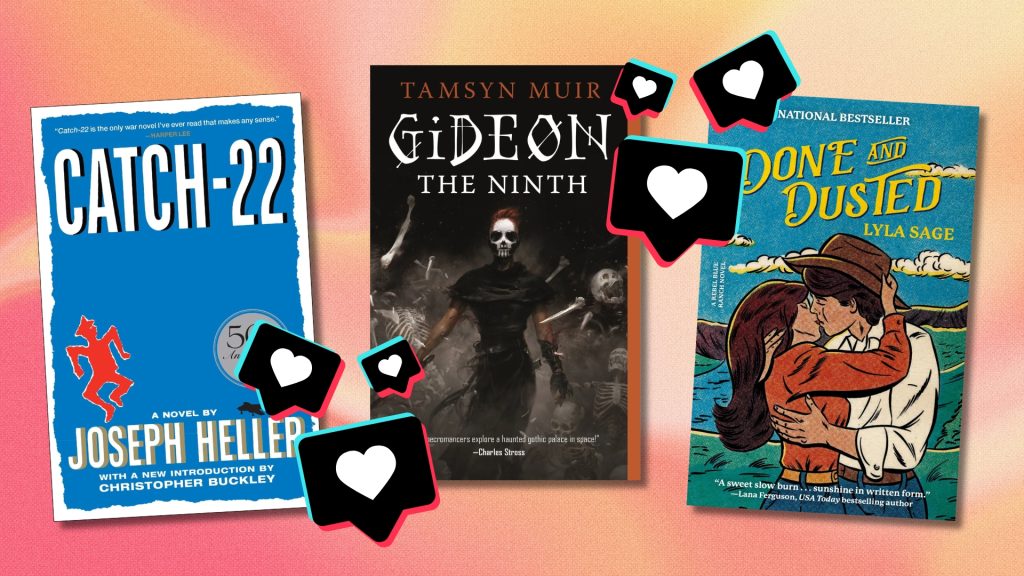
Matt: So many to count! I find the bans of popular authors like John Green (Looking for Alaska), Jodi Picoult (Nineteen Minutes), and Stephen Chbosky (Perks of Being a Wallflower) to be particularly puzzling. My most surprising ban, or at least ban attempt, is Alan Gratz’s Ban This Book. The Indian River County School Board in Florida voted to remove this children’s novel about a fourth grader who created a banned books library after her school board banned multiple titles. Ironic is an understatement.
Anonymous: The Hello, Jell-O! cookbook was pulled out of a child’s hands by two teachers and placed on the circ desk with the statement, “The recipes use booze; this shouldn’t be in the library!” I explained that the book was purchased from the Scholastic Book Fair, has circulated over 100 times without community complaint, and is in numerous collections throughout the district. They would not give the book back to the student, but I did return it to the shelf during the time they were in the library. I then sent the two staff members a detailed email explaining that there is board policy against censorship of students’ right to read and the banning of library materials, and that their actions could be seen as an effort for both; I also stated that there is a process in place should they wish to proceed with a book challenge.
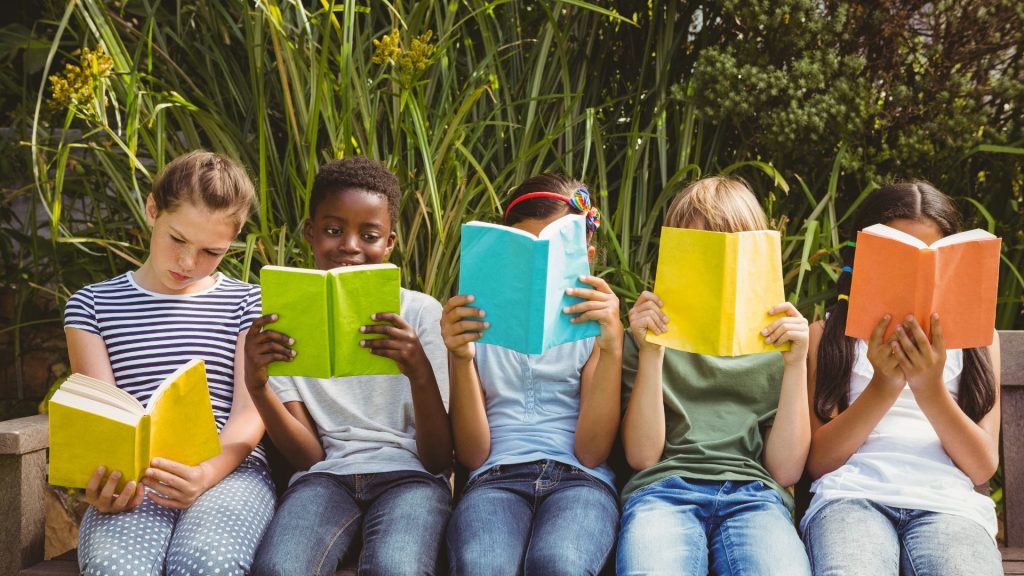
4. Some people will try to justify book banning by saying people can still access the banned books at public libraries or at bookstores. Do you think this minimizes the effects of book banning at all? What would you say to people who think like that?
Matt: It definitely minimizes the effects of book banning. I would say to these individuals that not all students have access to public libraries with vast resources, as many live in small and rural counties. My own experience is a testament to this. Because I lived in rural America, my parents were not subject to taxes to pay for the local library. Not to mention that it was small and about ten miles from my home. The library I did have access to was my school library. I do find it disingenuous to claim that people can get these books at public libraries when the same people arguing to ban the books in school libraries are also arguing to ban those books in public libraries. And do they think everyone can afford to buy dozens of banned books? The idea of a public library is to bring literature to the masses who would otherwise not have those resources.
Anonymous: It doesn’t even correlate. The impact of book banning, especially the current efforts, is to remove inclusive literature from school library shelves. The result is that many different, diverse students cannot see themselves in the literature available to them. Where censorship efforts have been effective, students will only see cisgender, white, able-bodied, middle-class, Christian, and (usually) male characters in the books they have access to. The messaging to diverse kids is, “You don’t matter, you don’t count, your lived experiences aren’t important.” This is shameful.
5. Is there ever a scenario where you have agreed with the banning of a book? Why or why not?
Matt: Not to date. I do think it is okay to check if a book is age-appropriate for students. But this can become a slippery slope as the individuals making the decisions on what is age-appropriate can disagree as to what age-appropriate means. That is why you need specialists in child education and library science to partner with parents to make informed decisions. Outside a school library, I do not think any book, no matter how vile or distasteful, should be banned. You can limit who can access them or whether they fit your collection’s policy, but to outright ban them is not okay, in my opinion.
Anonymous: Not yet. I look back at history, and book banning has never ended well for any society that has allowed this movement to gain power. Also, I still believe in the freedom to read, as guaranteed in the First Amendment.
Bonus Questions:
6. What role, if any, do you think people can play in advocating against the banning of books?
Matt: I think right now we need advocates from the same groups advocating for these bans to speak out. In many circumstances, parents and political leaders are leading the book-banning crusade. So we need parents and political leaders who are for intellectual freedom and the freedom to read to step up and be a counterpoint. All can advocate in their own way.
Anonymous: I think that every individual has a role to play by educating themselves about the harmful impacts of book banning and learning to speak out against bans and censorship. If we are silent, then the loud voices are the only ones in the room, and they mistake that for a mandate. We MUST practice speaking our truth, and become LOUD on behalf of all the vulnerable communities who are being erased through book banning.
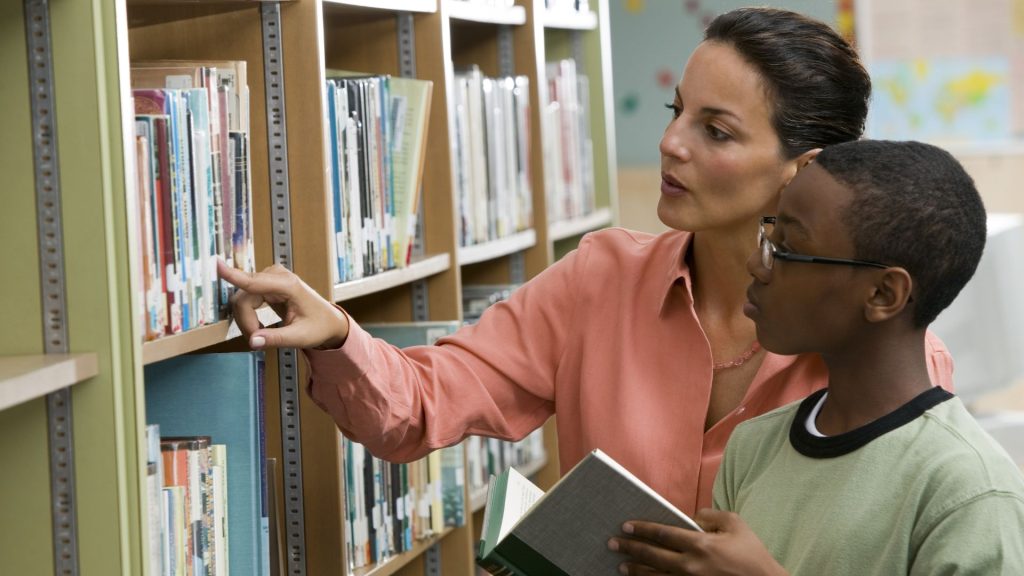
7. It is becoming more and more clear that people are reading less every day. How do you go about promoting or convincing people, especially children, to read more?
Matt: Reading has so many benefits. It promotes language and literacy skills and social and emotional development, amongst other things. I think part of it has to do with limiting phone and TV access and teaching them why reading is important. Reading also does not necessarily need to be an old-fashioned book, but can be any medium that promotes creativity and imagination while in written form. It is crucial that parents know the benefits of reading.
Anonymous: I am lucky to work with the youngest readers, and their joy over books is nearly limitless. In my job, I am a perennially enthusiastic book lover, and it’s contagious, even with the older kids, and especially when I read and gush over books the boys are into. I’ve also learned to buy the books kids love, the ones that some adults in my building are fond of calling “trash literature” (you probably know the ones: Dog Man, Pig the Pug, Diary of a Wimpy Kid, Dork Diaries, Goosebumps, Owl Diaries, Unicorn and Yeti, etc.) and I give them prominent placement in the shelves with the “quality literature.” Then I have students record themselves doing ads for some of the nearby “quality literature” and share those on announcements, and display those titles near the popular books. It becomes popular by proximity. I also share a lot of new titles and award winners in lessons, and incorporate books like sports bios into lessons. Then, these are displayed with my picture that includes a speech bubble, “Read a book from your library lesson!”
Thanks to our lovely guests for taking the time to speak with us! Their hard work to preserve access to diverse literature has not gone unnoticed. If you’d like to join them in the fight against book bans, visit Unite Against Book Bans for news updates and resources. The ALA’s Office for Intellectual Freedom also provides confidential support for library staff and educators looking to combat censorship.
For more information on book bans, click here.
Support authors threatened by censorship efforts by visiting our Banned Books shelf on Bookshop.