









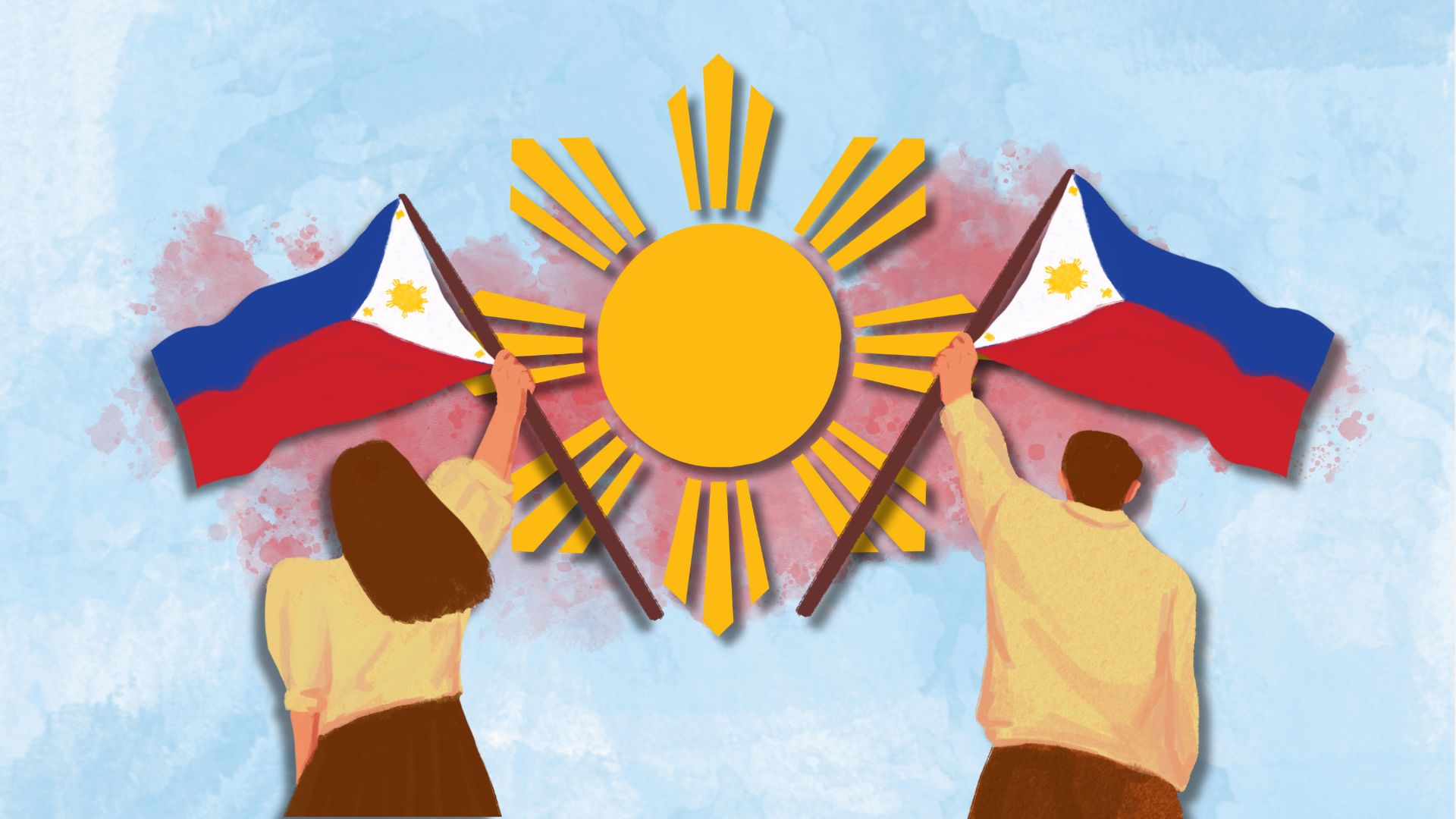
As a Filipino American, I grew up not knowing a lot of my own community’s history. I was in my second year of college when I finally took a class that centered Asian American history and experiences. We were in the thick of the pandemic, and as I attended class from the comfort of my own home, Filipino healthcare workers throughout the country worked around the clock saving lives, risking their own health and safety. Filipinos make up 4% of nurses in the U.S. and 24% of COVID-related deaths in the nursing industry. Members of my own family worked on the frontlines, in hospital wards and ICUs, while I learned about the first wave of Filipino migrants to the U.S., a community that does not receive nearly enough recognition for their contributions to this country’s success.
According to the 2023 census, around 4.6 million Filipino Americans live in the United States. Filipino Americans are the country’s third-largest Asian-origin population, making up 19% of Asian Americans. The Philippines and the U.S. have a fraught, deeply intertwined colonial history, the effects of which reverberate to this day. Yet that history, and the history of the Filipinos who crossed an ocean to seek new opportunities, often goes obscured. From farms to hospitals, Filipino Americans have helped shape this country and its culture for the better — and few people realize their impact.
Combining personal accounts with dedicated historical research, this rec list unearths some of the many stories that make up the Filipino American experience. Though by no means a complete picture, they nonetheless illuminate our unsung histories in striking fashion.
Trigger warning: The books discussed in this article reference or depict potentially distressing topics, including sexual violence, domestic abuse, war, racism, and xenophobia. Please exercise care while reading.
At Last She Stood: How Joey Guerrero Spied, Survived, and Fought for Freedom by Erin Entrada Kelly

Diagnosed with leprosy (now called Hansen’s disease), Josefina “Joey” Guerrero became an unexpected hero in World War II when Japanese forces invaded the Philippines. Her condition allowed her to evade detection and searches, making her a valuable member of the Filipino guerrilla resistance’s intelligence network. Though she earned the U.S. Presidential Medal of Freedom for her efforts, Guerrero struggled to find work after the war due to discrimination, ultimately dying in relative obscurity. At Last She Stood brings her remarkable achievements back to the forefront in vivid detail.
The Crucible: An Autobiography by Colonel Yay, Filipina American Guerrilla by Yay Panlilio
Note: This book contains derogatory language towards Japanese people.

Born to an Irish American father and a Filipino mother, journalist Valeria “Yay” Panlilio made a significant contribution to the Filipino war effort against the Japanese. From encoding secret messages in her radio broadcasts to devising strategies and propaganda for the Marking Guerrillas, “Colonel Yay” was a force to be reckoned with. The second edition of her autobiography features interviews with other women who fought in the resistance, adding their own perspectives to her firsthand account.
America Is in the Heart: A Personal History by Carlos Bulosan
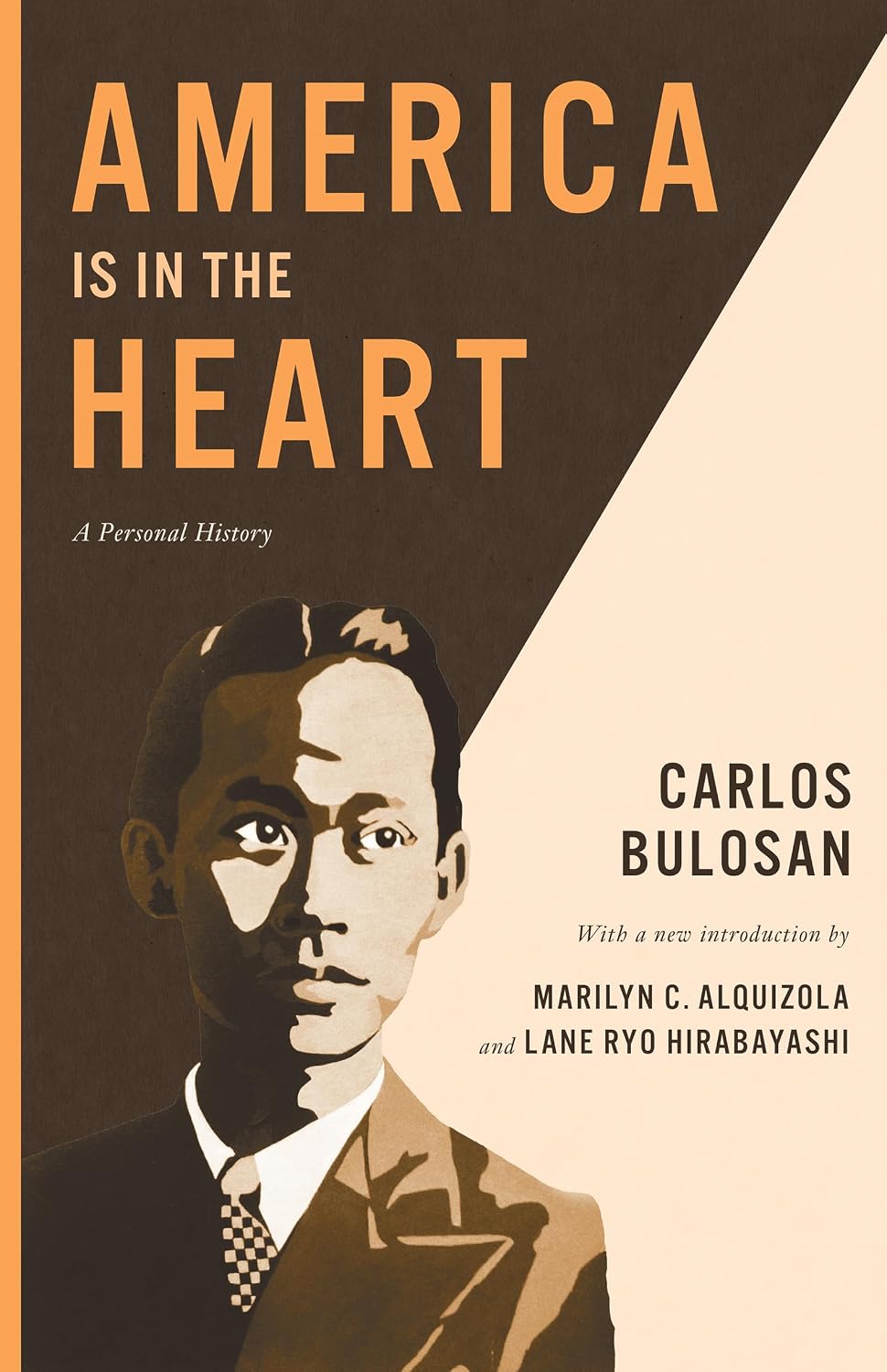
Perhaps the definitive Filipino American literary classic, this semi-autobiographical novel chronicles writer Carlos Bulosan’s migration to the U.S. America Is in the Heart provides a poignant look at the struggles of the working class both in the colonial Philippines and in the immigrant labor communities of rural America. Bulosan’s examination of racism and class struggle is one of the first examples of Asian American literature and has influenced generations of Filipino American writers in the decades since its publication.
Vanishing Filipino Americans: The Bridge Generation and Growing Up Brown: Memoirs of a Filipino American by Peter Jamero

Peter Jamero described himself as a member of the “bridge generation,” the children of the initial wave of Filipino labor migrants (the “manongs,” Ilocano for “older brother”) in the 1920s and ‘30s. While Vanishing Filipino Americans takes a general look at this overlooked population, Growing Up Brown details Jamero’s own upbringing in the farm labor camps and eventual foray into activism, as well as his long career in health and human services. Much like Bulosan before him, Jamero exposes the “two faces” of America that Filipinos encountered: that of promise and that of persecution.

Uncle Rico’s Encore: Mostly True Stories of Filipino Seattle by Peter Bacho

Writer Peter Bacho shines a light on the blue-collar Filipino community of Seattle, where he grew up, in this humorous essay collection spanning his childhood to his golden years. Uncle Rico’s Encore provides vibrant snapshots of Bacho’s life, his multicultural neighborhood, and its Filipino residents across various moments in time. Amid political chaos on both sides of the Pacific, one small but significant victory stands out: the dedication of Jose Rizal Park, named for the Philippines’ national hero.
Little Manila Is in the Heart by Dawn Bohulano Mabalon

The late Dr. Dawn Mabalon was the first Filipino to earn a PhD in history from Stanford. Little Manila Is in the Heart recounts the growth of Stockton, California’s thriving Filipino community, its eventual destruction, and the efforts of residents to organize for resources from the city. For Mabalon, a Stockton native with deep family roots in the city, this book was more than an archive: It was a love letter.
Images of America Series

Images of America spotlights the fascinating histories of different local communities and events, including various Filipino communities across the nation. Many of these are in California, the entry point for most Filipino immigrants. My own family’s roots are well-represented among these titles, from Stockton and Vallejo to San Francisco and its East Bay. However, the sheer number of books documenting these communities underscores the widespread diaspora in the United States alone.
Empire of Care: Nursing and Migration in Filipino American History by Catherine Ceniza Choy

In 1956, at just 17, my grandmother left her hometown of Santa Ana, Pampanga, to attend nursing school in Bismarck, North Dakota. For several decades, she worked tirelessly to support her immediate and extended family, many of whom stayed at her house in Los Angeles as they settled into life in the U.S.
Her story is not unique: In fact, my grandmother is one of generations of Filipinos who came to the U.S. to pursue nursing. Empire of Care traces the fascinating history of Filipino nursing migration, a comprehensive study bolstered by Catherine Ceniza Choy’s intensive research. Conducting over 40 interviews and even sitting in on nursing classes, Choy unpacks the colonial history and migration policies that drove the Filipino nurse phenomenon.
Taste of Control: Food and the Filipino Colonial Mentality under American Rule by René Alexander D. Orquiza, Jr.

Watching the explosive rise of Filipino cuisine in recent years has been surreal, to say the least. Now that ube and lumpia are trendy, it’s hard to believe that just over a century ago, the U.S. considered Filipino food nutritionally and culinarily inferior. Taste of Control highlights the effects of colonialism on the evolution of Filipino cuisine and how the U.S. weaponized food to enforce its imperialist agenda.
Dirty Kitchen: A Memoir of Food and Family by Jill Damatac

In 1992, nine-year-old Jill Damatac immigrated with her family to the United States. She lived as an undocumented immigrant (what Filipinos call “tago ng tago”/“TNT”, or “always hiding”) until self-deporting in 2015. Dirty Kitchen shares Damatac’s experience through food, each chapter structured around a traditional Filipino recipe. Blending her own memories with precolonial mythology, Damatac uses the dirty kitchen, where the real work is done (as opposed to the clean, visitor-presentable kitchen), as a metaphor for the lives hidden beneath the veneer of the American Dream.
Remembering Silme Domingo and Gene Viernes: The Legacy of Filipino American Labor Activism by Ron Chew

In 1981, cannery union organizers Silme Domingo and Gene Viernes were murdered for their efforts to reform their union from political corruption. Their murderers had been hired by Philippine dictator-president Ferdinand Marcos, who had held Domingo and Viernes’ home country in the iron grip of martial law for nearly a decade. Ron Chew, a close friend of both men, honors their memory and legacy in this book, filled with testimonials from those who knew them.
Philip Vera Cruz: A Personal History of Filipino Immigrants and the Farmworkers Movement by Craig Scharlin and Lilia V. Villanueva

Philip Vera Cruz was the vice president and highest-ranking Filipino member of the United Farm Workers, the union that secured a landmark victory for labor rights with the 1965 Delano Grape Strike. Authors Craig Scharlin and Lilia V. Villanueva met Vera Cruz during the construction of the UFW’s retirement home, Agbayani Village. This book tells the story of the Filipino labor movement through the eyes of one of its foremost leaders.
BONUS: If Only He Knew: The Legacy of Labor Leader Larry Itliong by Dhanika Pineda
Before Cesar Chavez became the face of the mid-20th-century farm labor movement, one man laid the groundwork for its success: Larry Itliong. An experienced organizer, Itliong established the Agricultural Workers Organizing Committee (AWOC) in 1956. The 1965 Delano Grape Strike began with AWOC, and it was Itliong who convinced a reluctant Chavez and his National Farm Workers Association to join their efforts.
Many people know Chavez’s name, but Itliong goes largely unrecognized. Dhanika Pineda provides an incredible portrait of the activist and his legacy, threaded with insights from his daughter Patty, who continues to keep his memory alive.
What aspects of Filipino American history are you most curious about? Which ones did we miss? Let us know on Instagram, Facebook, or Bluesky — and if you’re interested in more Filipino American history, check out the Filipino American National Historical Society here.
Click here for graphic novels that spotlight the Asian American and Pacific Islander community.
Find more great books from AAPI authors at our Bookshop.