

















Trigger warning: The books discussed in this article contain potentially distressing subject matter, including femicide, domestic and gender-based violence, sexual abuse and assault, queerphobia, cannibalism, and animal cruelty. Please exercise care while reading.
Contemporary Latin American literature has developed a fascinating horror tradition. Drawing heavily from the region’s history of authoritarianism, colonization, poverty, and violence, Latin American authors weave Gothic and folkloric influence into modern anxieties and dread. Spearheading this New Latin American Gothic movement are women turning their lenses on the patriarchy, providing chilling looks into the brutal reality of femicide and gender-based violence.
The ten books we’ve selected do more than unnerve and terrify. They amplify the voices of some of Latin America’s most vulnerable people, those who suffer at the margins and, often, the hands of the state.
[We] are experiencing a sort of coincidence of writings, above all by women, that manifest a specific sensibility: reality that is stained, that yields before the energy of the ghostly and the extraordinary.”
–Giovanna Rivero, Latin American Literature Today
Fever Dream by Samanta Schweblin, translated by Megan McDowell

Adapted for the screen in 2021, Fever Dream pulls readers into a dying woman’s surreal final moments. Amanda lies bedridden in a rural hospital with only another woman’s son, David, for company. David coaxes Amanda’s story from her in disorienting recollections, revealing a compelling psychological portrait of a mother desperate to protect her child from the poisons pervading their environment.
Tender is the Flesh by Agustina Bazterrica, translated by Susan Moses

After a virus rendered animal meat toxic to humans, the government legalized the consumption of “special meat” — cannibalism. Marcos works in a slaughterhouse, focusing on the numbers and trying not to think about too much else. But when he’s gifted with a live specimen, Marcos finds himself defying the laws and extending her the humanity she’s been denied. Not for the faint of heart, Tender is the Flesh takes overconsumption and capitalistic exploitation to their most gruesome extreme.
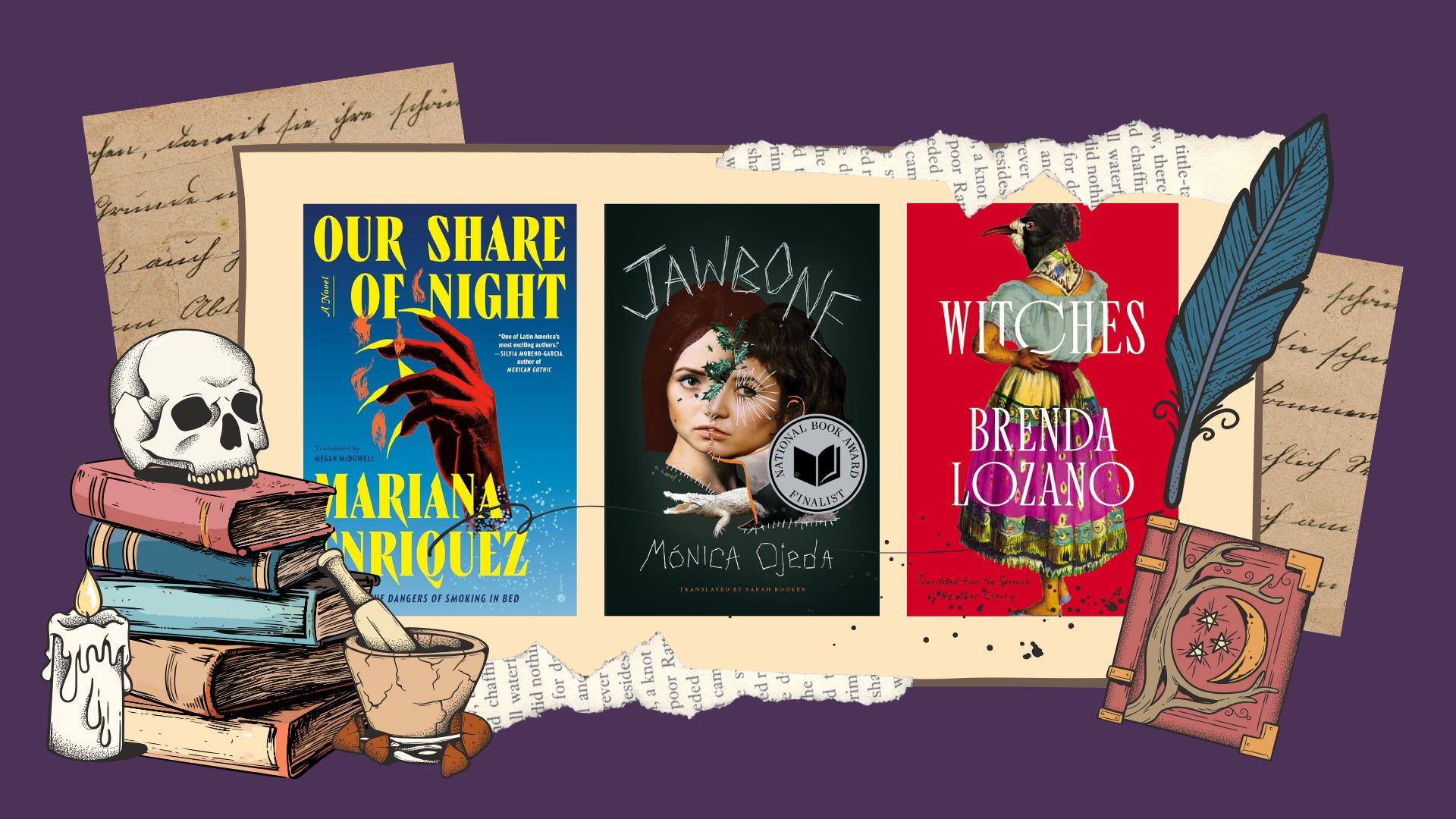
Our Share of Night by Mariana Enriquez, translated by Megan McDowell

After his mother, Rosario, dies in a bus crash, Gaspar and his father, Juan, embark on a road trip to her ancestral home. But the two aren’t the only family Rosario left behind: Waiting for them is the Order, the sinister immortality cult where Juan and Rosario grew up. Convinced Gaspar will inherit his father’s supernatural abilities, the Order is eager to exploit him for their own gain. Amid ongoing political turmoil in Argentina, Gaspar must fight to reclaim his fate for himself.
Jawbone by Monica Ojeda, Translated by Sarah Booker

When readers meet Fernanda, she’s awoken to find herself tied up in a cabin by her unstable literature teacher, Miss Clara. Before this, though, Fernanda is a student at Delta Bilingual Academy, where her best friend, Annelise, leads their classmates in after-school worship to her invented drag-queen deity, the White God. As the girls’ games escalate and their teacher’s sanity threatens to collapse, Jawbone dives headfirst into the horrors of adolescent girlhood, exploring the destructive nature of passion and desire.
Human Sacrifices by Maria Fernanda Ampuero, Translated by Frances Riddle
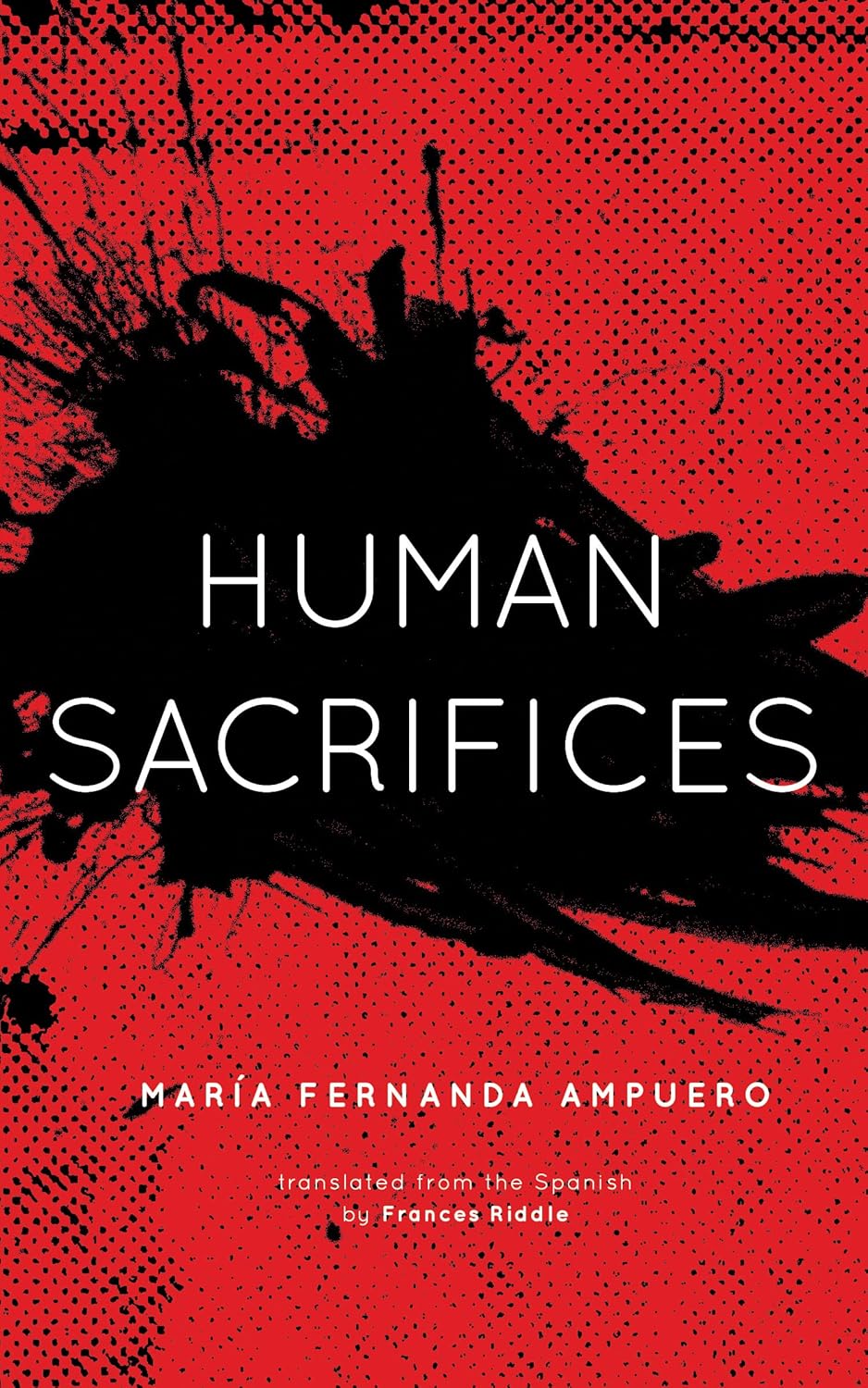
Described as “tropical gothic,” this collection from Ecuadorian journalist Maria Fernanda Ampuero highlights the struggles of undocumented and working-class women. The monsters in Ampuero’s stories alternate between the paranormal (a spirit inhabiting an Ouija board) and the all too human (kidnappers and abusive husbands). Yet despite society’s efforts to render them invisible, these Human Sacrifices demand to be seen.
It’s very difficult to write about Argentina using only realism… I think what happened to people like me who grew up in the ‘80s and ‘90s is that slasher movies, Stephen King and Twin Peaks all got mixed with our reality, which was already full of the language of horror: the disappeared, the children of the dead, children of the lost generation…”
–Mariana Enriquez, The Guardian
Eartheater by Dolores Reyes, translated by Julia Sanches

Compelled to eat the earth at her mother’s gravesite, a young girl experiences a disturbing vision: her father, beating her mother to death. As she grows up, more visions of the murdered and missing continue to haunt her, visions she hides until a policeman seeks out her help, bringing her gift to the community’s attention. Eartheater and its titular protagonist speak for the souls whose cries for justice too often go unheard — most notably, the victims and survivors of femicide, to whom the book is dedicated.
Witches by Brenda Lozano, Translated by Heather Cleary

Journalist Zoe arrives in the village of San Felipe to report on the murder of Paloma, a local healer and muxe. There, she meets Feliciana, Paloma’s cousin and mentee, who’s become a celebrated curandera in her own right. Alternating between Feliciana and Zoe’s voices, Witches is a powerful display of feminine solidarity, showing that stories of resilience under the patriarchy resonate across language barriers and cultural differences.
Hurricane Season by Fernanda Melchor, Translated by Sophie Hughes

When a group of children discovers the corpse of the village witch by the irrigation canals, the whole town descends into chaos. Through fragmented, lyrical prose, Melchor’s four unreliable narrators each share their side of the story. A difficult read in both structure and subject matter, Hurricane Season nonetheless provides gripping insight into a community ravaged by poverty and substance abuse.
Through the Night Like a Snake: Latin American Horror Stories, Edited by Sarah Coolidge

Featuring ten translated stories from authors spanning six countries, this anthology showcases some of the best horror Latin America has to offer. Weirdness abounds, from the vulture-man neighbor who may not be as friendly as he seems to a murderous Kermit the Frog puppet. But some of the most sinister terrors are the most familiar: cultists, dead fascists, unassuming nuns, and the casual cruelty those close to us can wield in our most vulnerable moments.
Thirst by Marina Yuszczuk

In the 19th century, a European vampire flees the continent and settles down in Buenos Aires, where she watches the city grow and develop into a bustling metropolis. Decades later, walking with her child and wrestling with her mother’s terminal diagnosis, a mortal woman named Alma encounters the vampire in a cemetery. Despite enduring different struggles in different times, the two women find connection in their mutual dissatisfaction — and their longing for something more.
These books represent only a handful of the incredible Gothic fiction Latin America has to offer, much of which has yet to be translated into English. From generations of trauma and fear, these writers have forged a riveting new canon, one that will haunt and captivate readers for years to come.
To hear from five more female horror authors, click here.
Find more excellent reads from Hispanic and Latinx authors at our Bookshop.
