

















Trigger Warning: This article discusses sexual violence, intimate partner violence, eating disorders, and acephobia. Please exercise caution while reading.
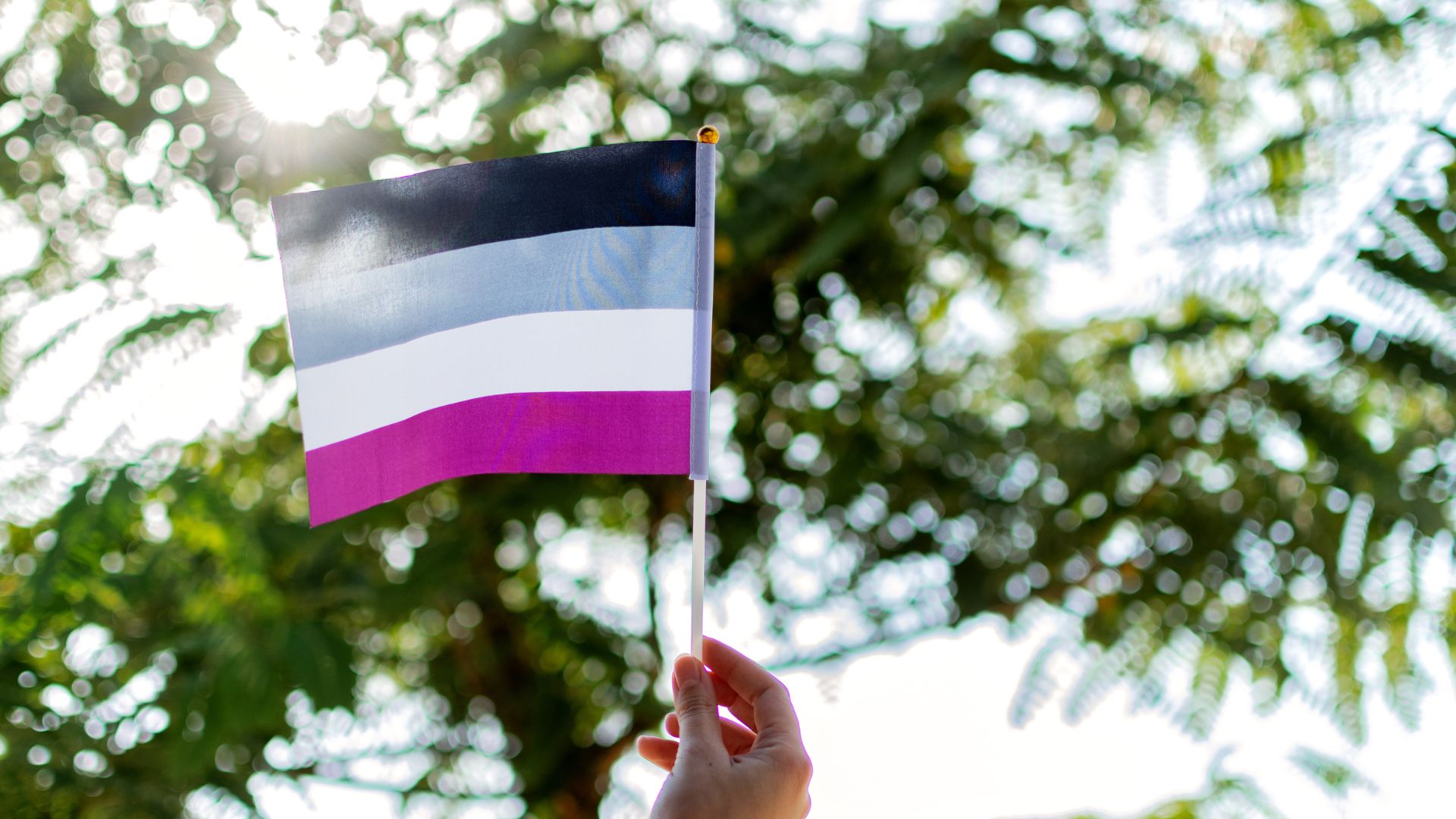
Asexuality is perhaps one of the most misunderstood sexual orientations, both outside and inside the queer community. It doesn’t get a lot of mainstream attention or representation, subjecting it to widespread misconceptions. While some of these can be fairly innocent, others perpetuate the harm and marginalization of the asexual community. As your friendly neighborhood gray-ace, I’m here to set the record straight—or ace!—on seven common myths about asexuality.
Myth 1: All Ace People Are Sex-Repulsed
Sexual attraction exists on a spectrum. On one end of the spectrum is allosexuality, what many would consider “normal” feelings of sexual attraction, regardless of gender. At the other end of the spectrum is asexuality, the absence of sexual attraction. People who identify as asexual or under the asexual umbrella experience lower degrees of sexual attraction than most people. But that doesn’t mean they don’t experience sexual arousal or desire.
Under the asexual umbrella, there are a variety of labels people use to reflect their specific preferences. Gray-asexual or graysexual people experience some degree of sexual attraction, but not enough to consider themselves allosexual. Demisexual people only experience sexual attraction to someone with whom they have an emotional bond. While it’s not necessary (and indeed quite difficult) to know every label, their existence reflects the wide variety of experiences within the asexual community.
An asexual person’s relationship to sex can exist independently of their sexual attraction to other people. Many asexual people have and enjoy sex or participate in sexual activities, such as masturbation. Some are part of kink communities, which may or may not involve sex. Some have children and families.
Ace people generally categorize their personal views toward sex on a spectrum of its own, with some being sex-favorable, some sex-repulsed, and still others sex-neutral or indifferent. Being sex-repulsed doesn’t mean viewing sex in general as disgusting or immoral—it just means you don’t like the idea of participating yourself.
And not having sex doesn’t automatically make someone innocent or “uwu baby”, either. Trust me, some of us love a good dirty joke as much as the next person. (And some of us really don’t want you to look at our AO3 histories.)
Myth 2: All Ace People Are Aromantic
Sexual and romantic attraction are often conflated because they tend to align. But people can experience one form of attraction without the other. The spectrum of romantic attraction is entirely distinct from that of sexual attraction. People can be asexual and aromantic, but they can also be asexual and panromantic. The 2015 Asexual Community Census found that around 25% of respondents identified as aro, but nearly as many identified as heteroromantic or pan/polyromantic. However, ace and aro people do tend to be stereotyped in similar ways, bringing us to our next myth.
Myth 3: All Ace People Look and Act a Certain Way
Society seems to expect asexual people to be shy, prudish, perhaps even cold and unfeeling. If you asked anyone in the late 2000s and early 2010s to name a character they viewed as asexual—assuming they knew what that meant—they’d probably say Sheldon Cooper from The Big Bang Theory.
As model and asexuality advocate Yasmin Benoit writes, however, anyone can be asexual:
Asexuality also tends to be associated with autism, and while research has indicated a connection between the two, it’s important not to overgeneralize. Not every autistic or otherwise neurodivergent person is asexual, nor is every asexual person neurodivergent. Being neurodivergent can certainly affect how one experiences sexuality and sexual attraction, but one is not a prerequisite for the other.
Myth 4: Asexuality Is a Result of Trauma
Though many people experience sexuality differently due to sexual trauma, asexuality itself is not inherently a trauma response. Someone’s attitudes and preferences regarding sex can certainly be influenced by their environment and upbringing, especially if they were raised in a sex-negative household or culture. But not every asexual person has experienced sexual trauma, just as not every survivor of sexual trauma becomes asexual as a result. That being said, having one’s asexuality shaped or influenced in some way by trauma doesn’t make it any less valid as an orientation.
Myth 5: Asexuality Is a Disorder
When I told one therapist I considered myself on the asexual spectrum, she attempted to characterize it as “sexual anorexia.” Sexual anorexia is a colloquial term that some practitioners use to describe a negative obsession with sex, using a disordered relationship with food as a point of comparison. Some find it a useful framework to discuss heightened anxiety and shame regarding sex, as well as related issues with physical and emotional relationship intimacy. But asexuality itself isn’t a psychological disorder, and asexual/aspec people aren’t broken. We just don’t experience sexual attraction or desire the same way that other people do.
Much like homosexuality or non-cisnormative gender identities, asexuality has historically been pathologized by the medical and psychiatric fields. The Diagnostic and Statistical Manual of Mental Disorders (DSM) has categorized it as a form of sexual dysfunction known as “hypoactive sexual desire disorder.” This diagnosis comes with the qualification that it doesn’t count as a disorder if the patient doesn’t feel emotional distress, which is meant to differentiate it from asexuality. But as any marginalized person knows, it’s incredibly difficult to be comfortable in your own skin if society at large is constantly telling you not to be. It’s important to distinguish people who are having issues with their sex drive from people who are struggling with a lack of desire because everyone around them is telling them they are abnormal.
Myth 6: Ace People Don’t Experience Prejudice, Discrimination, or Abuse
Though it often goes unacknowledged, asexual people do experience prejudice, discrimination, and even violence. The 2018 UK National LGBT Survey found that among cisgender respondents, asexual people were most likely to have undergone or been offered conversion therapy. Some of this comes from religious groups that push procreative sex in heterosexual marriages as an obligation that must be fulfilled. In other cases, as mentioned earlier, healthcare professionals who view asexuality as pathological may try to “cure” it through medication or psychological treatment. These uncomfortable, often invasive experiences can dissuade asexual people from seeking care.

Asexual people have also suffered from abuse and hate crimes. The 2021 Asexual Lived Experiences Survey found that 39% of respondents experienced intimate partner violence, usually from an allosexual partner. Around 25% said they had experienced sexual violence or were unsure, 44% of whom were out as asexual at the time. Many instances of sexual violence against asexual people could be classified as “corrective rape”—sexual assault perpetrated in order to “fix” the victim’s asexuality. Even if they haven’t been directly assaulted, asexual people still often experience harassment or even threats over their identity.
Beyond that, asexual people encounter a variety of microaggressions and verbal abuse. We’re told that we just haven’t found the right person, that we’re reinforcing purity culture, that we can’t possibly be asexual because of our relationships or sense of humor. We’re told that there simply must be something wrong with us—and that, dear reader, brings us to our final myth.
Myth 7: You Need Sex or Sexual Attraction in Order to Live a Fulfilling Life
Sex is such an integral part of many people’s lives that they simply cannot conceptualize living without it. I get it: it’s hard to put yourself in someone else’s shoes, to try to conceive a day-to-day reality you’ve never experienced and likely never will. But for many people, lack of sexual attraction or desire doesn’t impede their quality of life. I can’t imagine living without chocolate or listening to Wonderland by ATEEZ at least once a week. But plenty of people do, and that’s okay.
What impedes someone’s quality of life is telling them that there is something inherently wrong with them because they experience the world differently. It’s pushing them out of community spaces and refusing to acknowledge the challenges they face because of their identity. It’s imposing a way of life on them that they don’t want, whether through well-intentioned comments or more directly harmful force. It’s making them feel less than human.
Educational Resources
Much of the animosity toward the ace community is built on rigid attitudes around sexuality and a lack of understanding of what being asexual actually entails. Luckily, plenty of resources are available for people looking to educate themselves on asexuality. If you think you might be on the asexual spectrum, or simply want to learn more about the community, the Asexual Visibility and Education Network is a great place to start. It hosts the world’s largest online community of asexual people and has a number of accessible forums and resources. You can also check out the Indianapolis Public Library’s curated reading list for books that discuss asexuality in depth.
Sexuality and gender are far more nuanced and fluid than we tend to believe. Now that we’ve busted some common asexuality myths, hopefully, we’ve helped you gain more insight into this diverse community. If you come away from this article with a new understanding of sexuality, then I’d say we’ve, well, aced it.
Looking for books with ace representation? Click here.
Find excellent LGBTQ+ reading recs at our Bookshop.
