



When writers stop playing by all the rules, literature usually gets another surprise in the “interesting” department. From inventing new slang and reigniting cross-genres to successfully publishing their own way, these rebel authors dared to do things differently. Every age has its rule-breakers — the voices that twist accepted convention into something unforgettable — but in this whittled-down list, we’re celebrating seven literary misfits who scribbled outside the margins and reshaped what storytelling could be.
Where the Wild Things Are by Maurice Sendak (1963)
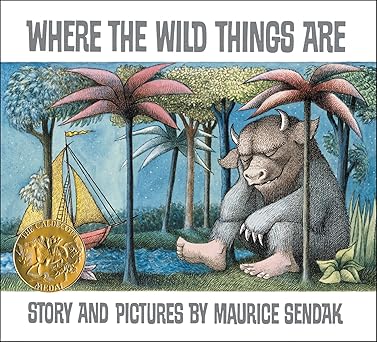
Before this book, children’s books were polite. They tucked you in, taught you manners, and promised that monsters, while exciting, were just make-believe. Then along came an author who said, “Actually… what if the monsters were real — and kind of relatable?”
Sendak shrank the word count and darkened the mood. His hero wasn’t an obedient cherub; he was furious, wild, and often sent to bed without supper — then rewarded at night with an imaginative odyssey that felt more honest than any moral lesson. Critics at that time (remember it would be many years before the youth were exposed to things like R.L. Stine or Stranger Things) called it too scary, too strange, and too subversive for kids. Children, of course, called it perfect. In an era of sugar-coated mischief stories, this story served something raw: a reminder that imagination is both refuge and rebellion.
The Subtle Art of Not Giving a F*ck by Mark Manson (2016)
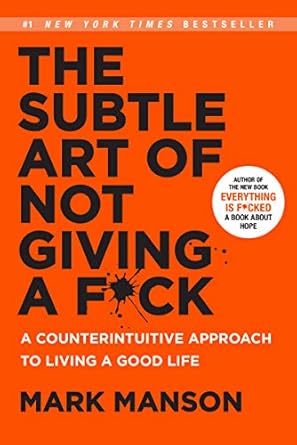
Most self-help books are all sunshine positivity, vision boards, and “you’ve got this!” affirmations. But there’s one bright orange book that tells readers to stop caring so much. Manson’s unfiltered honesty and four-letter words break many of the rules of the genre, and yet somehow, his book became the new gospel of modern self-help.
But that wasn’t even the real rebellion! That honor goes to the author’s publishing tactic. He built his empire backward: from viral blog posts on his self-hosted website to a major book deal with HarperOne, not the other way around. While others chased talk-show circuits and bookstore tours, he kept publishing free essays online, feeding his loyal digital audience who didn’t need flashy billboards to find him. No glitzy launch, no viral stunts, no Good Morning, America appearances — just consistent, candid writing that resonated explosively in this algorithm era. Over 15 million copies of his book have been sold worldwide, powered by word of mouth and web traffic. It wasn’t until 2020 that Larry King managed to snag him for his Larry King Now series, and Drew charmed him onto her show.
And the cherry on top? He got to play himself in the 2023 movie version, instead of an actor — and that hardly ever happens! Nowadays, you can enjoy more of his content via the Solved with Mark Manson podcast. Mark Manson is proof that in a noisy world, sometimes the loudest thing you can do is… not give a f*ck.
In Cold Blood by Truman Capote (1966)

Before Truman Capote hit Kansas, journalism was supposed to report facts, not use them for creative nonfiction writing. In Cold Blood blurred that sacred line, fusing investigative rigor with the pacing, tension, and psychological depth of a thriller. He did more than write about a murder — he dissected it, then stitched it back together with the tools of fiction.
He called it a “nonfiction novel,” a label that made both journalists and novelists clutch their pearls. The dialogue was reconstructed, the scenes cinematic, the prose almost too beautiful for such brutality. Fact became art, and art became unnervingly true. Yes, the spidey senses tingling down your spine are correct; he started a passion that led to the true crime thrillers and podcasts we all know and love today. But Capote’s rule-breaking masterpiece didn’t just invent a genre. Readers were forced to question what “truth” in storytelling really meant — because somewhere between reportage and imagination, he found a chilling new literary territory: the space where reality reads like a nightmare.
Outlander by Diana Gabaldon (1991)

When Diana Gabaldon started Outlander, she didn’t plan to reinvent the something — she just wanted to write “a practice novel.” Instead, she broke the publishing rulebook clean in half. Was it a romance? Historical fiction? Sci-fi time travel? Erotic adventure? The answer was yes.
She blended 18th-century Scotland with 20th-century science fiction, bodice-ripping passion with battlefield grit, folklore with physics. No one could shelve it neatly, and that’s exactly why readers devoured it. When publishers demanded she pick a lane, Gabaldon said, “Why not build a highway?” But she didn’t just cross genres — she sparked a tidal wave of historical-time-travel-romances for years to come. Love, lust, and a bit of quantum physics can share the same page, and the most revolutionary stories are the ones that refuse to choose just one shelf.
Project Hail Mary by Andy Weir (2021)

Andy Weir didn’t write Project Hail Mary — he engineered it. Literally. While most authors booked press tours and morning-show spots, Weir went full science guerrilla. He dropped early chapters into Reddit threads, answered astrophysics questions on forums, and released teaser content through YouTube science channels where the Venn diagram of “viewers” and “Weir fans” was already a perfect circle.
His anti–marketing campaign worked like rocket fuel. Instead of glossy ads, he leaned on his tribe of STEM readers, teachers, and space nerds — people who adored the math as much as the mayhem. With minimal traditional promo, the book became an instant global bestseller, earning critical acclaim and a film adaptation starring Ryan Gosling. Weir proved that in the internet age, you don’t necessarily need a PR orbit when you’ve got gravity. Sometimes, the best marketing strategy is to hype the real science before you even launch the ship.
Neuromancer by William Gibson (1984)
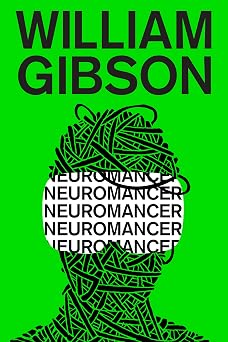
Before Neuromancer, “cyberspace” wasn’t even a word. William Gibson’s 1984 debut coined the term, wiring it into pop culture’s DNA. He fused noir grit with neon tech, street slang with silicon dreams, and ended up creating a subgenre that felt like a hacker’s fever dream: cyberpunk.
In a literary landscape perpetually orbiting around spaceships and clean-cut heroes, Gibson gave readers data thieves, console cowboys, and megacorporate dystopias that looked eerily familiar. His fractured prose mirrored code itself — clipped, stylish, and a little dangerous. Until then, no one had ever written the future with such grimy glamour. Gibson predicted the digital age and gave it an aesthetic. From the Matrix films to the Cyberpunk 2077 video game, the visual and verbal echoes of Neuromancer hum in every circuit. The future arrived wearing mirrored shades, speaking in slang, and quoting Gibson.
The Diary of a Wimpy Kid by Jeff Kinney (2007)

Before Diary of a Wimpy Kid, middle-grade fiction looked tidy—typed words and neat margins. Then Jeff Kinney doodled in those margins and made a publishing empire out of them. Half journal, half comic strip, it looked like a procrastinating sixth-grader’s secret notebook and read like one too — honest, awkward, and laugh-out-loud real.
The handwritten style of font and stick-figure cartoons made adults underestimate it at first, but kids recognized themselves instantly. Kinney cracked the code of tween psychology: make it look unserious, and they’ll take it seriously. His format drew new lines between novel and graphic narrative, opening the floodgates for illustrated hybrids that now dominate book fairs. What began as a webcomic kickstarted a billion-dollar genre and a new storytelling blueprint.
Write On, Rebels
From wild things to wimpy kids, these authors demonstrate that literary greatness often begins with breaking something. So here’s to the rebels with pens, the misfits with manuscripts, and every story that colored outside the lines to change bookshelves forever.
Working on finding your own writing voice? We can help! Read our article titled Voice in Writing: Finding Yours With 14 Famous Styles to help you get started.
Browse our bookshelf on bookshop.org for more books, tips, and tricks on becoming a better writer.