












Trigger Warning: The mention of drug and alcohol addiction, relapse, suicidal thoughts, and murder in this article may be triggering to some readers. Please engage in self-care as you read this article.
Where does the inspiration for novels and poems come from? The idea of the literary genius is inextricably linked to suffering. Titles like the suffering artist, the tortured artist, or the troubled artist prove as much. Both Baudelaire and Nietzsche agreed. To them, the existence of art was dependent on intoxication. Looking at famous authors and their lives, there is a distinct trend of heavy alcohol consumption or other addictive substances. The majority of the first American writers who won the Nobel Prize used alcohol as a creative crutch: William Faulkner and Ernest Hemingway, to name a few. But it is particularly notable when a writer falls into the trap of addiction and then successfully overcomes it. The following examples prove you don’t need substance abuse to make great art.
1. Stephen King
Stephen King has most certainly earned the nickname “The Master of Horror.” More than half of the novels currently published by this prolific writer are in the horror genre, The Shining and Misery, to name a few. His fame skyrocketed in the 1980s, during which some of his most iconic novels were released and adapted into film. One of these was Cujo, published in 1981, with the film adaptation only two years later.
Unfortunately, King’s addiction to alcohol and other illicit substances was also at its peak. So much so that the author does not remember writing his thrilling horror novel Cujo. King remarks that realizing this comes with a sense of loss and regret.
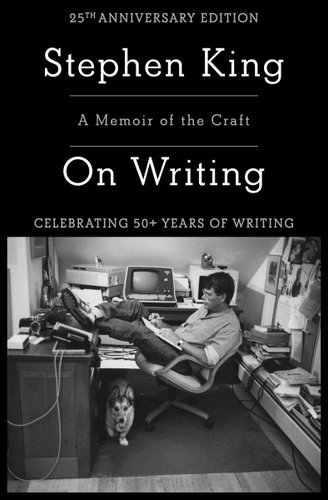
The writer battled with these dependencies for a long time. Stephen King’s addiction was so severe that he was lucid for about three hours a day. His relationship with his wife and his kids suffered in turn. The moment that he describes as “the rock bottom” was when he showed up drunk at one of his son’s Little League Games. The coach then asked him to leave. In an attempt to get her husband to get help, Tabitha King staged an intervention. She emptied a trash bag from his office. In it was a plethora of addictive substances like cocaine and alcohol and little else. This intervention was a turning point for King.
In his book On Writing: A Memoir of the Craft, King discusses his addictions and how they impacted his writing. He also talks about the lifelong struggle to maintain sobriety in his memoir which is a recurring theme in novels like Doctor Sleep. Stephen King is still as successful as ever. His recovery has arguably added more nuance to his work.
2. William S. Burroughs
William S. Burroughs’ name is synonymous with postmodern literature. His novel Naked Lunch is a prime example, as it completely rejects conventional storytelling techniques. The whole narrative is entirely chaotic and fragmented so that the chapters can be read in any order. After some colorful years in Europe enjoying the LGBT culture and a brief stint in the Army, Burroughs went to New York. He lived with two renowned authors: Jack Kerouac and Joan Vollmer Adams. His addiction to heroin and other illicit substances began in the 1950s and slowly but surely took over his life. Burroughs ended up drifting from city to city, focusing solely on his addiction. This caused many failed relationships and eventually led to him being in trouble with the law. He fled to Mexico to escape prison time.
During his time in Mexico, Burroughs would encounter his lowest point: in a drug-fueled incident, he accidentally killed his wife Joan. He later mentioned this as the formative moment that made him become a writer. Burroughs had a long and complicated recovery. After searching for many treatments that would promise a solution, he managed to achieve sobriety.
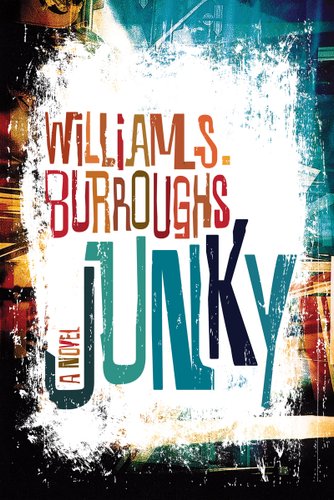
Burroughs spoke openly about his addiction before and after he became sober. His semi-autobiographical novel Junky was written during his time as an addict. It is a frank and honest account of his experience being addicted to heroin. Later novels like Naked Lunch were written during the height of his drug addiction. Naked Lunch deals extensively with drug use and withdrawal symptoms. Burroughs talked openly about his addiction and his search for various treatments against it, both in his novels and in public.
3. Raymond Carver
Raymond Carver is an author whose sobriety clearly changed the way he wrote. His short stories are often put into the category of “dirty realism.” They focus on people being faced with difficult situations, such as financial or marital trouble, and end ambiguously. Carver’s struggle with alcoholism started in his twenties, and by the 1960s and 1970s, his addiction worsened progressively. Carver himself called alcoholism “a creeping disease.” It caused his first marriage to end and many other strained relationships.
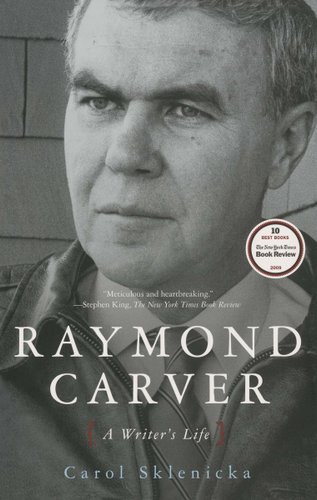
The characters in his short stories and poems during this time mirror his struggles. Themes such as substance abuse, complicated relationships, and a pervasive sense of despair and failure are evident in his writing. His decision to become sober happened in June 1977. Carver credits his family and friends, as well as the support from Alcoholics Anonymous, for his successful sobriety.
His sobriety changed the way he wrote. His short stories were now filled with hope and possibilities rather than despair. This sense of achievement was born of his ability to quit drinking. In his biography, he is quoted as saying, “I’m prouder of that, that I’ve quit drinking, than I am of anything in my life.” Gravy is a poem he wrote in his last years. It is a celebration of his ten years being sober, which was “Pure Gravy.”
4. David Foster Wallace
The novel Infinite Jest was arguably what put David Foster Wallace on the map. It is over 1,000 pages long and packed with endnotes and footnotes. The novel is set in a near-future dystopia and examines the idea of addiction. Wallace illustrates drugs and alcohol but also entertainment as a form of addiction. His own battle with addictive substances began in his early twenties, and as in Infinite Jest, it was a central theme in his writing. But all this came later.
Wallace struggled with depression and suicidal tendencies, as well as addiction. This led to multiple hospitalizations. In 1989, it happened to be in McLean Hospital for psychiatric care. The program there helped him overcome his addiction and start a path towards recovery. In the communal house, surrounded by others who are struggling with sobriety, Wallace found inspiration for his greatest novel, Infinite Jest.
While his battle with sobriety was a difficult one, he continued to write and inspire others. In 2005, he delivered a commencement speech at Kenyon College, reminding others of the importance of making the right choices: “It is about the choice to pay attention, to be conscious, and to care about others and to care about the meaning and purpose of life.”
5. William Woodard Self (Will Self)
Will Self is an acclaimed British novelist whose satirical work is celebrated worldwide. He has been a fan of science fiction from a young age, devouring books by Phillip K. Dick and Frank Herbert. During the same time, as he became more and more immersed in their fictional worlds, he also started experimenting with drugs. Self started smoking cannabis when he was only 12 years old and made his way through a variety of illicit substances before he started injecting heroin.
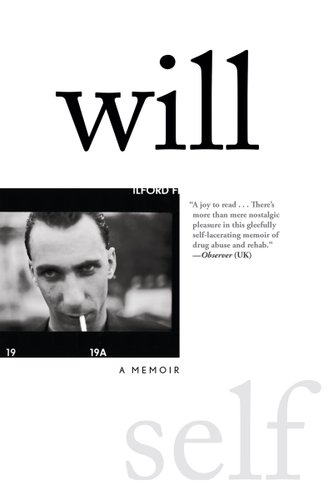
He became an outpatient at various mental wards due to his addiction, as well as his mental health issues. His personal experiences, his interest in science fiction, and literature on mental illness strongly inform his work. Most notably, his novels, Cock & Bull and The Book of Dave, both include addiction as a central theme and use it as a lens through which to view broader societal issues. Will Self has been sober since the late 1990s. His work is still filled with the exploration of addiction and recovery.
In interviews and public appearances, Will Self openly and honestly explores his struggles with mental health issues and his recovery. In his memoir titled Will, he recounts his experience as an addict. Written in the third person, it was a way to see himself through a different lens, with more empathy. The phrase that stuck the most was this: “There’s nothing remotely exciting about heroin addiction.”
There is no straight, simple road to recovery. There is no universal road either. Each of these authors has had their own complex relationship with addiction. However, the one thing they all have in common is that they are vocal advocates of recovery, with raw honesty that can only be admired.
If you or someone you know is battling with addiction-related distress, we urge you to be kind and hold space for them, and contact the 988 Suicide and Crisis Lifeline (confidential, free, available 24/7/365):
→ Call or text 988
→ Chat at 988lifeline.org
→ Connect with a trained crisis counselor
Addiction is a complex, multifaceted topic. It can come in many forms and sizes. If you want to inform yourself about gambling addiction in fiction, click here.
If you have gotten a taste for some in-depth memoirs, browse our bookshop bookshelf here.