




According to Arkham House Publishers, 70% of bookshoppers choose their book by genre before all else. Genre isn’t just a technicality; consciously or unconsciously, it influences the books we seek out, and those we avoid. Romance has been named 2025’s bestselling genre, followed by mystery/thriller and fantasy. And there’s a reason your favorite bookshop has extensive sections marking out these genres in bold font: genre-shopping feeds on itself. The downside to this, however, is that lesser-known, more meta forms often get swept under the rug — or simply re-labeled as general fiction.
Read on to discover five niche genres that we think it’s about time were popularized.
Ekphrasis
One of the older niche subgenres, ekphrasis explores the intersection between art and literature. Borrowing its name from the Greek ékphrasis — or “description” — ekphrastic literature describes, recreates, or takes inspiration from a physical work of art. One of the earliest examples comes from Homer’s description of the Shield of Achilles in The Iliad. Classic ekphrastic poems also include Robert Browning’s My Last Duchess, John Keats’ Ode on a Grecian Urn, and William Carlos Williams’ Landscape with the Fall of Icarus, which brings to life a Pieter Brueghel painting. Safe to say, poetry is an ekphrastic wellspring — but there’s no shortage of ekphrastic fiction, too, which readers may not initially identify.
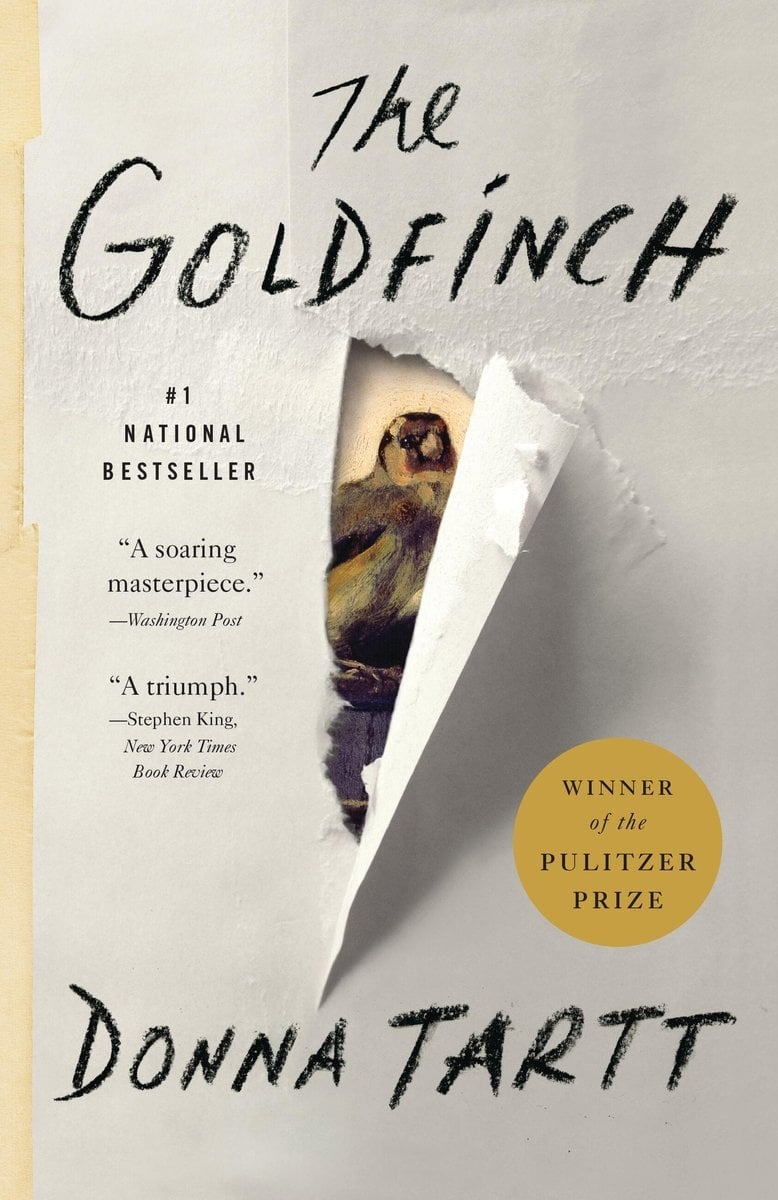
Donna Tartt’s The Goldfinch is, in many ways, a 21st-century The Catcher in the Rye. Thirteen-year-old Theo and his mother are on an impromptu visit to New York’s Metropolitan Museum of Art when a tragedy takes her suddenly from him — a loss for which, during the troubled teenage years that follow, Theo blames himself. He grows up tossed between his wealthy family friends, his alcoholic father in Las Vegas, and a kind-hearted antiques restorer he meets through the museum tragedy. The Goldfinch is often labeled a coming-of-age novel, exploring Theo’s destructive friendships, unrequited love, and wandering search for meaning.
But it’s also a work of ekphrasis. It is, after all, Fabritius’ 1654 painting — the Goldfinch — which provides the novel’s title, cover design, and the catalyst for Theo’s descent into the criminal underworld. He finds himself increasingly unable to give up the stolen painting; not only has he dug himself deeper and deeper into a hole of accountability, but it’s also his last remaining connection to his mother. The novel’s beauty is underscored by its stunning ekphrastic descriptions, which Donna Tartt read at a Waterstones event in 2013.
Plagiarism thrillers
“Good writers borrow, great writers steal.”
T.S Eliot
A plagiarism thriller finds its drama in a character stealing another’s creative work, passing it off as their own, and fighting to avoid detection. It may sound a little dry on paper — what’s so thrilling about copyright infringement and lawsuits? — but there are more examples across literature and film than you might think. Anonymous (2011) explores the conspiracy that Shakespeare didn’t write his plays. Irving Wallace’s The Word follows a new Gospel book falsely attributed to Jesus’ brother, James, and more recently, R.F. Kuang’s Yellowface explores cultural appropriation and literary cancel culture in publishing. Perhaps the most definitive example, though, is Jean Hanff Korelitz’s The Plot.

Jacob Finch Bonner, once a bestselling author, now teaches a third-rate creative writing course at a university — or, in his own words, “the special purgatory for formerly promising writers”. His career has reached a standstill, which is broken only by his most ambitious student. Evan Parker boasts of a novel-in-progress which is certain to launch his career. Naturally, Jacob is skeptical — until he reads “the plot”.
Years later, Jacob stumbles on the news of Evan’s death. Tempted by the undeniable star quality of his former student’s draft, he publishes it…under his own name. The ensuing success sees Jacob’s life as an award-winning author skyrocket. That is, until he receives a chilling email: “You are a thief”. The Guardian’s Lisa Allardice has described Korelitz’s novel as “a thriller about plagiarism”. It opens a discussion around writing and the ethics of ownership, and, as Korelitz quotes in her epigraph, T.S. Eliot’s counterintuitive claim that “good writers borrow, great writers steal”.
Children’s metafiction
Metafiction, most generally, draws attention to its own fictional form. Its characters often have a degree of self-awareness, recognizing that they’re in a book or a movie. For TV examples, think Jim in The Office (US), with his conspiratorial glances at the camera before he pranks Dwight. Or Fleabag’s anonymous protagonist, who consistently breaks the fourth wall by confiding in her viewers behind the screen, shooting us looks over dinner table gatherings, or over the shoulders of her more unhinged family members. As it turns out, though, nobody is too young for metafiction.
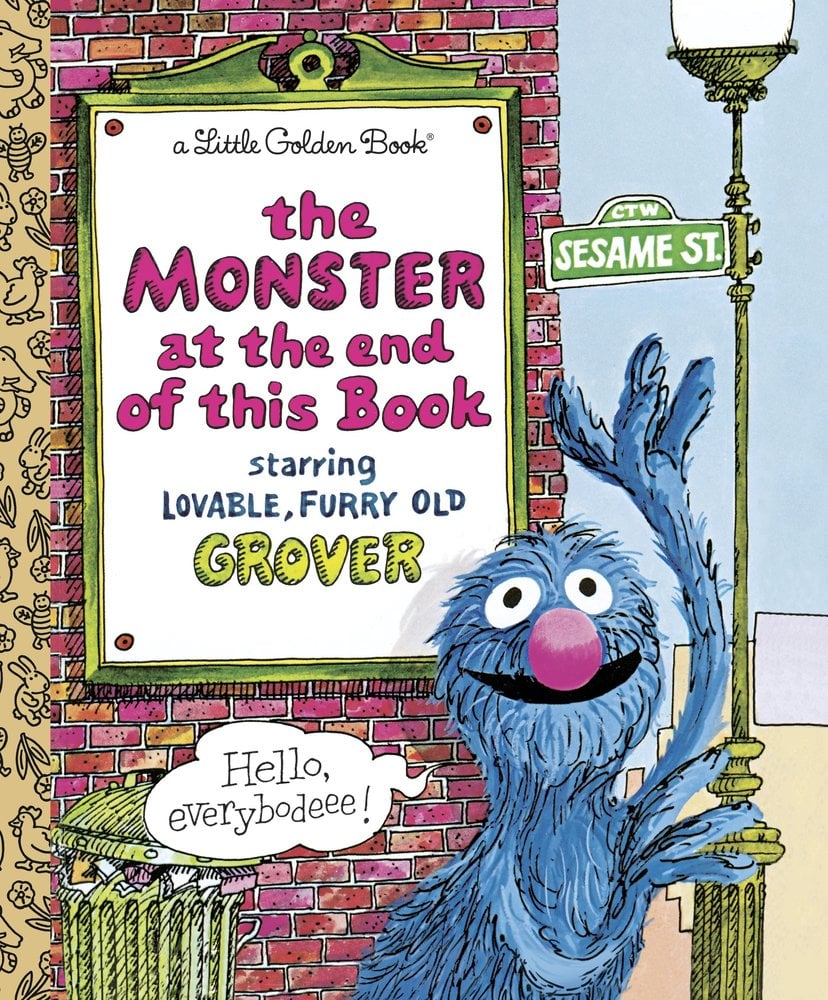
The title of Jon Stone’s picture book, The Monster at the End of this Book, sends a thrill through its young readers — and through its protagonist, too. Those of us who watched Sesame Street growing up will recognize Grover, the blue, slightly manic-looking muppet. This time, though, he’s trapped in the pages of a colorful children’s book. And he urges the reader not to turn its pages with increasing urgency. “Maybe you do not understand,” he reasons, “you see, turning pages will bring us to the end of the book. And there is a monster at the end of the book!” In the illustrations, Grover tries to tie the pages together with ropes and nails; inevitably tempting the child reader to turn more and more pages. Spoiler alert — the monster on the final page was just Grover all along. Phew.
Poioumena
If metafiction wasn’t a headache enough, poioumena add an interpretative layer, blurring the lines between fiction and reality. Coined by Alastair Fowler and taken from the Ancient Greek “product” or “a thing made”, a poioumenon essentially tells a story about storytelling. This often takes the form of fiction written about its own creation — or, in the case of Vladimir Nabokov’s Pale Fire, a text about another text.

Pale Fire takes its name from a poem by the fictional poet John Shade. Nabokov’s book itself is presented as a scholarly edition of Shade’s 999-line poem, edited by the narrator, Charles Kinbote, who adds his own foreword, index, and commentary. Pale Fire’s plot becomes as difficult to explain as poioumena itself. In his delusional misrepresentations of the final poem by his favorite writer and purported friend, Kinbote intertwines an apparent plot with the story’s true plot. Much like that one English teacher we’ve all had, he has a tendency to read meanings into the poem that almost certainly aren’t there.
Except he takes it several steps too far. In his interpretation, Shade is writing a poem about King Charles, the deposed king of Zembla. Kinbote has some interesting theories, believing himself to be King Charles, estranged from his fantastical homeland. And when a killer comes for Shade, Kinbote is convinced that he was out to assassinate him instead. None of this is true, of course — and it may take several re-reads to extract the facts from Kinbote’s fantasies.
Nabokov’s poioumenon is about unreliable narrators, encouraging his (albeit confused) readers to critically assess the filter through which the narrator dictates his account. Any student condemned to analyze Pale Fire enters a labyrinth of interpretations. If they have to bring in critical commentary, too, they would find themselves analyzing an analysis of an analysis of a poem that never existed. Nabokov, I hope you’re proud of yourself.
Flash fiction
This one’s for anybody speedrunning to meet their Goodreads reading target. Loosely defined as a story told in fewer than 1,500 words, flash fiction is an exercise in minimalist storytelling for the writer, and in reading between the lines for the reader. In many regards, its profundity comes from the ways it defies all we’ve been taught about creative writing and conventional storytelling. In fact, flash fiction demonstrates how, sometimes, even characters aren’t needed to tell a story. Take the six-word microfiction story attributed to Ernest Hemingway:
“For sale: baby shoes, never worn.”
Ernest Hemingway
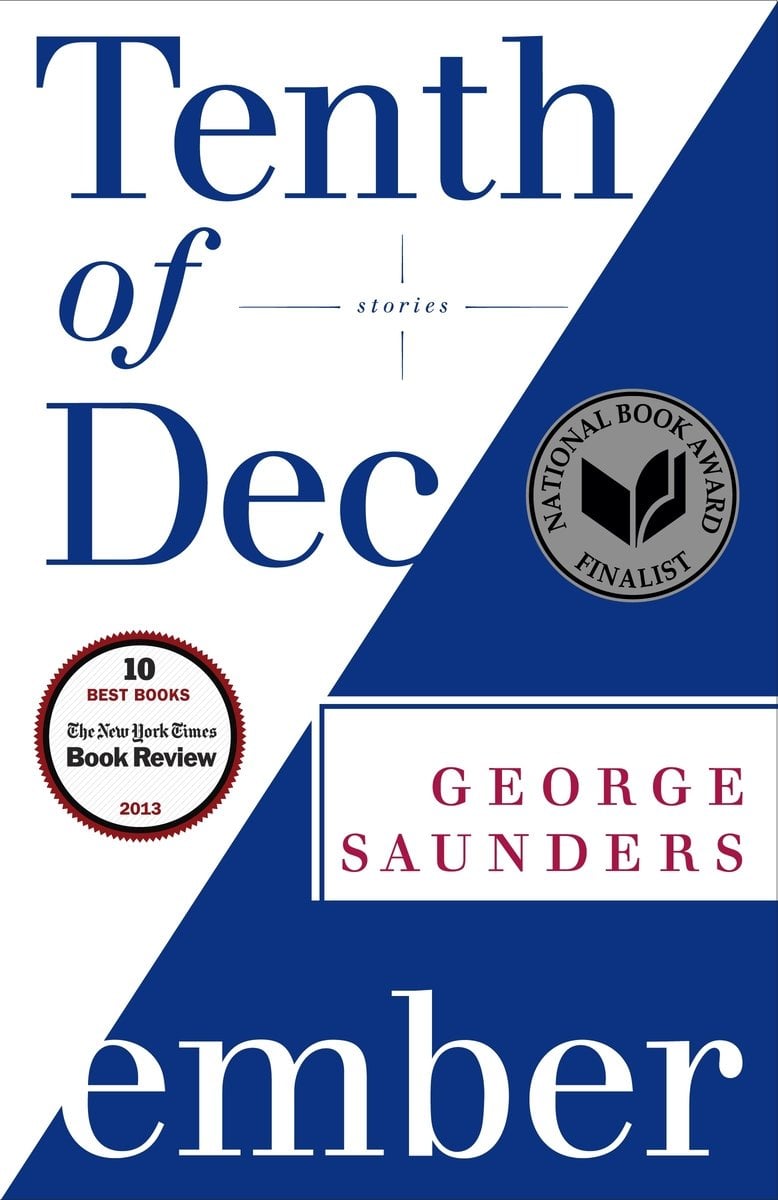
George Saunders’ 392-word story, Sticks, is another example of flash fiction that can tell a tragedy in fewer words. We never really learn much about the narrator. What we do learn about is the temperamental father they grew up with, and his inexplicable attachment to a metal rod he keeps in the family’s yard — “a kind of crucifix”. The father dresses this rod with ritualistic precision. “On the Fourth of July the pole was Uncle Sam, on Veteran’s Day a soldier, on Halloween a ghost.” The pole seems to become an erected symbol of his mentality; when the narrator’s mother dies, the pole is dressed as Death, and shortly before the father’s own passing, it’s adorned with letters of apology and reconciliation.
Saunders explained the inspiration behind Sticks: “For two years I’d been driving past a house like the one in the story, imagining the owner as a man more joyful and self-possessed and less self-conscious than myself. Then one day I got sick of him and invented his opposite, and there was the story.” Saunders’ tale, like Hemingway’s anonymous baby shoes, exhibits the understated power of flash fiction to capture a character’s life in a “flash” — and leave its readers with more questions than answers.
From flash fiction that fits onto one page to metafictional novels that make you question your sanity as a reader, there’s no shortage of convention-defying genres that prove that genre is a template, not a box. And there are many more out there, hiding between the general fiction and miscellaneous sections.
For more convention-defying novels, see 10 genre-bending recommendations here.
If you love reading beyond the bounds of genre, check out Bookstr’s bookshelf for wildly unique books here.