

















Whimsigoth, that dreamy blend of gothic mood and whimsical flair, has tiptoed out of fashion corners and Tumblr scrolls into the realm of books, screens, and spellbinding storytelling. But when BIPOC creators bring their rich cultural textures, ancestral echoes, and bold artistic vision into the mix, the results are hauntingly beautiful experiences worth dying for (and maybe also worth coming back from the dead to enjoy all over again). Their stories don’t just transport you somewhere — they entirely enchant you. That’s the heart of whimsigoth, where the aesthetic is so much a whole vibe that it’s a full-strength spell.
Blending cultural roots, visual poetry, and genre-bending brilliance, in a BIPOC whimsigoth story, worlds are lush, lyrical, and delightfully haunted. Light a candle. Set the mood. We’re about to dive into a whimsigoth listicle rich in soul, style, and stories that linger like a living charm in your pocket.
What Is Whimsigoth
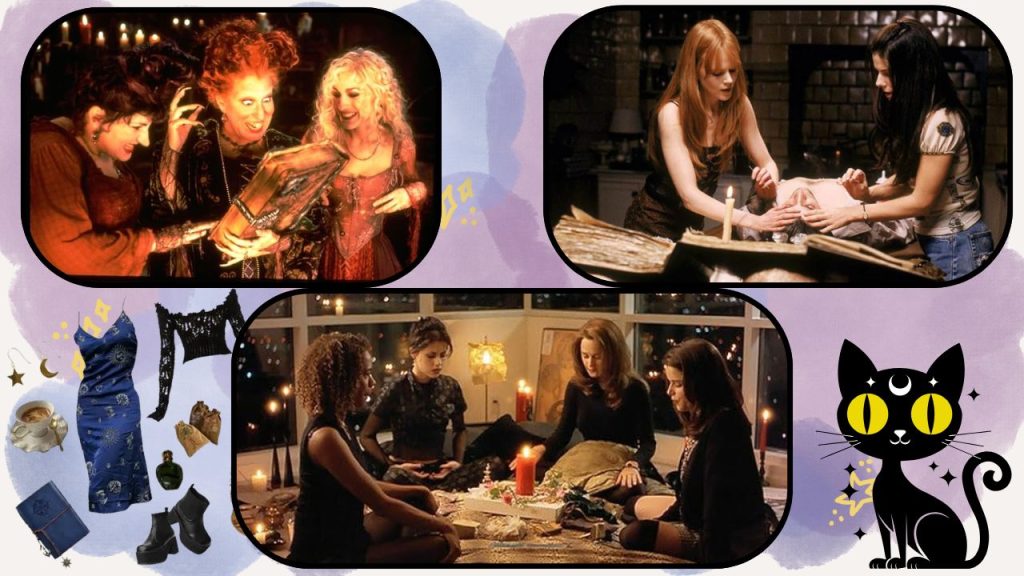
Back in the ‘90s, whimsigoth was a practical invention of gothic flair softened and cozy charm. Many cult classics from that era still define the aesthetic’s shadowy sparkle, their influence still humming in every moonlit indie film and cult coven today. Take Practical Magic (1998), nestled snugly in IMDb’s whimsigothic films list alongside hits like Charmed, Hocus Pocus, and Beetlejuice. This sister-coven story mixed romantic curses, astral love spells, and vintage Halloween sensibility, wrapping millennial heartache in magical mischief.
Meanwhile, The Craft (1996) brought storm-charged teen rebellion, candlelit glam, and black lipstick back to the mainstream, using the supernatural to conjure both dark magic and high-school angst. And let’s not forget Sabrina the Teenage Witch — she with the talking cats, spellbooks hidden in linen closets, fun wiccan aunts, and a wardrobe full of velvet chokers and charm — who taught us that teen magic can be fun, cozy, campy, and delightfully cursed.
Coined from whimsical + gothic, the vibe braids candle-lit melancholy with magic-dusted wonder, giving us stories that are equal parts awww and spoo0ooky. Whimsigoth is basically a fashion and setting aesthetic that marries the dark, romantic elements of the gothic style with the whimsical, playful nature of fairy-tale or bohemian artistic styles. It essentially combines the mysterious allure of gothic culture with quirky, colorful, and sometimes even fantastical details. Here are some key characteristics:
Fusion of Styles: It draws inspiration from both gothic subculture and broader historical periods like the Victorian era, as well as bohemian and fairy-tale aesthetics.
Dark and Light: It balances dark, moody textures with lighter, more playful elements like floral patterns, lace, rich colors, and flowing fabrics.
90s Influence: The style often references 90s fashion and pop culture, with nods to movies like Practical Magic or Hocus Pocus.
Maximalist Approach: It encourages layering and mixing different textures, patterns, themes, and colors to create a rich and visually interesting look.
Ethereal and Mystical: It incorporates elements of spirituality, fantasy, life and death, and the mystical, often featuring celestial imagery, crystals, and other symbolic motifs besides those of the occult.
Bewitched & BIPOC
Whimsigoth is a customizable style that allows for individual expression and creativity, making it a popular trend in fashion, interior design, and storytelling. But publishers once treated the Victorian era like a velvet-roped club: only ghosts of a certain lineage were allowed past the bouncer, while other storytellers were mostly left haunting the margins. Add in 1990s studio gatekeepers who stocked their spellbooks with “marketability” spells (read: white leads), and you get a century-long séance where diverse voices were largely uninvited. In short, this systemic unfairness kept creators from the gothic spotlight.
Things are way different now, though, and here are thirteen examples of BIPOC whimsigoth titles you should be checking out, if you know what’s good for you!
1. Jordan Peele’s Wendell & Wild
Wendell & Wild is a whimsigoth fever dream stitched together with stop-motion thread, punk-rock energy, and a soul-deep sense of cultural reckoning. Directed by Henry Selick (The Nightmare Before Christmas and Coraline) and co-written and produced by Jordan Peele (Nope, Get Out) — who also voices one of the titular demon brothers alongside his old Key & Peele partner, Keegan-Michael Key — this film cannonballs into gothic territory, boots laced, eyebrows arched, and hair black with emotional depth.
What makes it delightfully whimsigoth? For starters, our heroine Kat is practically the patron saint of the aesthetic: a grieving teen with a tragic past, black lipstick, towering platform boots, and enough righteous fury to power an entire haunted boarding school. She’s not your typical Final Girl or goth-lite trope, though — she’s a fully realized, trauma-scarred, Afro-punk Hell Maiden! The film’s visual language is all dusky tones, crumbling architecture, occult art, and demonic bureaucracy, balanced by zany, beautiful animation and unexpected humor. It’s death, but make it a fashion choice too.
And at its BIPOC core, Wendell & Wild is unafraid to tackle weightier themes — like the afterlife, grief, school-to-prison pipeline, gentrification, and systems of power — all while telling a deeply personal story through a Black protagonist whose pain, joy, and rebellion are centered, not sidelined. Peele and Selick conjure a world where the monsters are literal and fictionally structural, and the magic comes not from wands but from radical self-possession.
2. Dark Winds on AMC
At first glance, Dark Winds might not scream whimsigoth, but listen closely beneath the desert winds and you’ll hear it whispering in every shadowed canyon and ancestral echo. Based on Tony Hillerman’s Leaphorn & Chee novels, the AMC series follows Navajo Tribal Police officers in the 1970s Southwest as they investigate crimes that unearth not only dark secrets but spiritual unrest. With a predominantly Indigenous cast (like showrunner Graham Roland of the Chickasaw Nation), writers’ room, and creative team (plus executive producers George R.R. Martin and Robert Redford), this show delivers slow-burn mysteries steeped in cultural specificity, psychological depth, deeply haunting atmospheres, and just enough witchy-woo-woo to keep you on your toes.

So where’s the whimsigoth in all this? It’s in the mood: sun-bleached, unforgiving landscapes rendered unsettling; ominous cave paintings; supernatural encounters, and folklore woven into a police procedural. Dreams, visions, crimes, and generational trauma blur the line between witchy and psychological horror. It’s gothic, but make it Indigenous Gothic, where the land remembers, spirits linger, and justice is always more complicated than it looks on paper. As a BIPOC-centered narrative, Dark Winds stands out for its Indigenous representation and the way it roots genre storytelling in tribal identity, language, and lived experience. It’s mostly about solving crimes, but it’s about subtly confronting all kinds of unexplained supernatural elements related to Navajo culture.
Whimsigoth can take many forms. In this way, such stories don’t always need Victorian velvet capes or foggy modern graveyards to send a chill down your spine — just the sound of wind moving through sacred ground and a cursing dark spirit or two.
3. Cemetery Boys by Aiden Thomas

Cemetery Boys is pure whimsigoth gold, wrapped in marigolds, midnight rituals, and queer Latinx magic. Aiden Thomas crafts a story that’s not only steeped in the supernatural but absolutely drenched in heart. Set against the backdrop of Día de Muertos in East L.A., this YA paranormal pair of novels follows Yadriel, a trans brujo determined to prove his identity to both his conservative community and his traditional magical lineage. He summons a ghost to show he’s the real deal — except, of course, the ghost who answers is also the real deal and has opinions.
So what makes this series unapologetically whimsigoth? It’s got all the hallmarks: ancient cemeteries, ghostly mischief, candle-lit altars, and a tone best described as gothic gravitas and heart-eyed whimsy. But instead of castles and cobwebs, Thomas gives us crypts and quinceañera ghosts, blending cultural specificity with all the drama and longing a whimsigoth heart could crave. The romance between Yadriel and Julian (the snarky, misunderstood bad boy spirit he accidentally summons) crackles with teenage angst and spectral sweetness.
In this series, Thomas (a trans, Latinx author) centers a trans protagonist whose gender and cultural identities are not subplots, but the emotional engine of the story. Yadriel is doing magic — while fighting to be seen by his family, his ancestors, and himself. The story honors the beauty of Latinx traditions and also challenges the rigidity within them, while casting spells in both English and Spanish with lyrical fluidity. It’s pretty awesome!
Come for the ghosts, stay for the glow-up. These are two books where the veil between worlds is thin, but the love (familial, romantic, and self) is the most powerful magic of all.
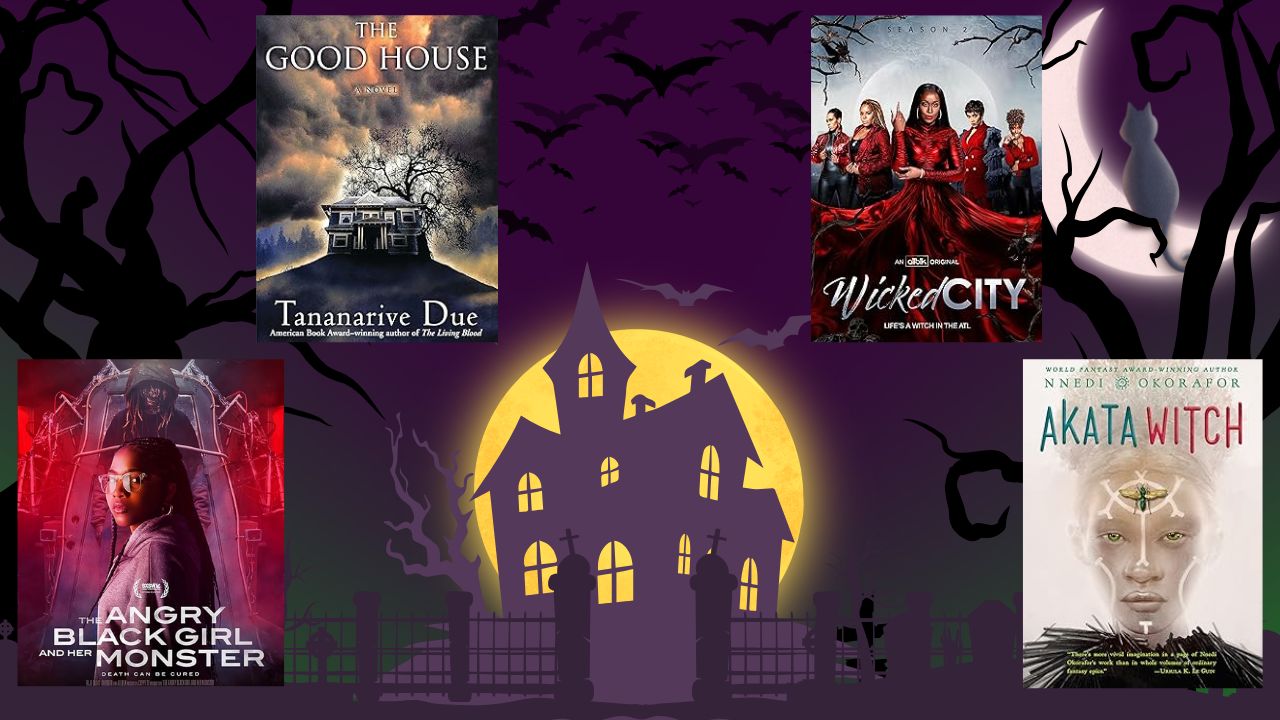
4. Bomani J. Story’s The Angry Black Girl and Her Monster
The Angry Black Girl and Her Monster takes Mary Shelley’s classic Frankenstein and zaps it back to life with a jolt of Afrofuturist electricity. Bomani J. Story’s debut follows Vicaria, a South-Central teen prodigy who calls death “a disease” — then decides to cure it after her brother is killed. Her bedroom-turned-makeshift lab glows with customized tech, rain-damp grave-dirt, and a punk-DIY aesthetic that feels as much mixtape perfect as morgue morbid chic — exactly the sort of playful gloom that defines Black whimsigoth.
What makes the film sparkle in the dark is Vicaria herself: a whip-smart, mad scientist heroine whose monologues mix biology, grief, and gallows humor. She’s a mad doctor, yes, and a big-sister protector, stitching together mythology and AP-Chem vocabulary while rocking tight braids in place of a Victorian up-do. That blend of pointed social commentary (police violence, systemic neglect) and “lightning-in-a-Mason-jar” spectacle gives the movie its sweet-and-spooky flavor.
Stylistically, Bomani leans into candle-lit corridors and storm-cloud color grading, but he swaps Euro-goth castles for cracked sidewalks and chain-link fences, turning urban blight into a whimsically haunted playground. It’s gothic, shot through with sly humor and a bone-deep belief in Black ingenuity, resurrection as rebellion, and grieving girls capable of both science and sorcery.
5. Elatsoe by Darcie Little Badger
Elatsoe by Darcie Little Badger, a Lipan Apache, is like a soft-spoken séance wrapped in a cozy hoodie. It’s a whimsigoth dream come true: a beloved ghost dog, shadowy family secrets, eerie small-town murders, and ancestral magic. But don’t let the pastel vibes fool you — beneath its sweetness lies a sharp emotional core and a deep reverence for Indigenous storytelling.

Elatsoe — Ellie to her friends — is a teen who can raise the dead (no big deal), navigating grief after her cousin’s suspicious death. What follows is a mystery drenched in Gothic mood: haunted mansions, cryptic dreams, and a town with more buried secrets. Framed as heritage not horror, Ellie’s ghost-summoning ability is a sacred gift tied to her Lipan Apache lineage. That level of uncanny and intimate is what makes Elatsoe whimsigoth: ghostly, grounded, and rich with cultural resonance.
Stylistically, the book is both lyrical and matter-of-fact, where Ellie’s dry wit balances the spooky with the sincere. She investigates a supernatural mystery with her best friend (a cinnamon-roll boyfriend type) and her loyal spectral dog by her side. The vibe is less monster-of-the-week and more spirit-of-the-generation, quietly powerful and deeply magical. Think gothic Americana, but told through an Indigenous lens, where every tree and shadow remembers something and some of them are willing to talk.
In the world of Elatsoe, death isn’t the end, but rather a conversation and the past is often reaching forward, asking to be understood. It’s that gentle, spectral connectivity that makes this whimsigoth an unusual kind of gothic, one where ghosts haunt and they help. For readers who like their magic with a side of mystery, ancestral strength, and a ghost dog who would absolutely win “Best Boy,” this is a must-read.
6. Charmed (The Reboot)
The original Charmed (1998-2006) helped write the whimsigoth playbook: the fashion, attic spellbooks, neon-lit night demons, and sisterly banter wrapped in Bay-Area fog. But that Halliwell manor featured white sisters. To be fair, the ingredients in the Power-of-Three cupboards were exotic, and many of the amazing actors on the show were BIPOC and such – especially Black and Asian – but the show did lack diversity in the main character lineage.
Enter the 2018 CW reboot, brujería chic, and centering on sisters of color: Melonie Diaz, Sarah Jeffery, and Madeleine Mantock as the Vera sisters — Latina and Black by canon, played by Afro-Latina and Afro-Caribbean women. From the pilot on, this show leans into BIPOC whimsigoth: Spanglish incantations, ofrenda-lit séances, and a house warded with both salt circles and social-justice posters, and a witchy attic housing the big family book of magical secrets. The writers’ room and cast touted Latinx and BIPOC cultural beats as core story elements, making ancestral magic feel lived-in rather than purely whimsical cosplay.
7. Kindred (Hulu Series)
Octavia E. Butler’s Kindred has always been gothic at its core — haunted not by ghosts, but by history. When FX/Hulu adapted this time-traveling tale for the screen in 2022, it brought her vision to a new generation, infusing it with an eerie, visual richness that leans beautifully into Victorian whimsigoth territory. The series follows Dana, a young Black writer who is violently pulled through time between present-day Los Angeles and a 19th-century plantation, tethered to an ancestor she’s fated to save. The horror is supernatural in the traditional sense but founded in the brutal legacy of slavery and the tangled, soul-deep connections between ancestors and descendants.
What makes Kindred whimsigoth is the way it marries haunting atmosphere with emotional introspection. The show is steeped in shadow — flickering candlelit hallways, creaking floorboards, blood-soaked linen — and Victorian Gothic fashion. There’s time travel, yes, but it’s not exactly a whimsical romp — it’s disorienting, ghost-like, more curse than time travel. And yet, like the best whimsigoth stories, there’s beauty in the bleakness. Dana’s struggle to assert her agency in both timelines becomes a kind of spellwork of its own.

Butler, a pioneering Black woman in science fiction, imagined stories where Black identity wasn’t an aside. Rather, it was pivotal to the architecture of the plot. The series adaptation holds onto that vision. It centers Black voices, Black bodies, and Black trauma with care, never flinching from the horror, refusing to strip away humanity. It’s a story about what we carry in our blood — rage, resilience, memory, and the like — and what happens when the past refuses to stay buried, as that age-old cliche saying goes.
8. Shutter by Ramona Emerson (Navajo)
Picture a supernatural mystery taking place on the Navajo Nation, with a forensic photographer who captures ghostly images and is haunted by crime-scene spirits. Whimsigoth becomes Indigenous noir glamour in *Shutter*, a story like *The Sixth Sense* that takes place at a forensic crime lab on Navajo land, rich in photographic memory and ghost management. The first in the *Rita Todacheene* series, this debut novel is a crime thriller and spectral memoir, laced with Navajo tradition and desert noir atmosphere. Rita works for the Albuquerque PD and doesn’t just take pictures of the dead — she can communicate with them, whether she wants to or not. Ghosts hitch rides in her psyche like stubborn passengers, whispering clues, confessions, and sometimes total drama.

What makes Shutter unmistakably BIPOC whimsigoth is its balance of grit and grace. Rita is not a tragic mystic or tortured medium. She’s sharp and especially dry-humored and deeply rooted in her Diné identity. The supernatural isn’t flashy; it’s simply part of her reality. The gothic creeps in through the lens: crime scenes bathed in sodium streetlight, spirits flickering in rearview mirrors, and ancestral warnings that echo louder than the autopsy reports. Instead of haunted castles, we get haunted mesas and lonely highways — liminal spaces drenched in desert silence and generational weight.
The book also pulses with what every good whimsigoth tale needs: emotional stakes cloaked in shadowy style. Rita’s backstory is a living force, steeped in her grandmother’s teachings and the push-pull of Indigenous tradition versus the cold demands of modern institutions. Her camera becomes a talisman, her ghosts both allies and agitators. In short, the mystery in Shutter is a whole mood. It gives you haunted desert landscapes, spiritual interference, cultural nuance, and a heroine who sees what others can’t (and wishes she didn’t). For the whimsigoth reader who likes their shadows sun-bleached and their ghosts with backtalk, this one’s a keeper.
9. Akata Witch (The Nsibidi Scripts Series) by Nnedi Okorafor
Akata Witch is whimsigoth through and through, if you replace the foggy moors and corseted séances of Victorian gothic with blazing Nigerian suns, ancestral magic, and a secret society that runs on juju, trickster spirits, and butterfly wings. The first book in The Nsibidi Scripts series introduces Sunny Nwazue, a Nigerian American girl born with albinism, who discovers she belongs to the Leopard People — a mystical society of magical scholars and spirit-wielders who walk the line between the mundane and the surreal. That’s some total BIPOC whimsigoth stuff right there!

Akata Witch beautifully combines deep cultural specificity with moody, magical worldbuilding. Sunny is an interesting type of wand-waving witch, as her power is as much about identity and intuition as it is about rituals and spells. She sees spirits, dreams the future, and navigates an underground world where charms carry weight, masquerades have teeth, and learning magic means confronting real, deep fear. There’s a haunted library, a ghost-infested forest, magical wrestling matches, and secret knowledge passed down like sacred inheritance — need we say more?
Okorafor’s prose walks that whimsigoth tightrope between lyrical and sharp, playful and ominous. The Leopard world is colorful, yes, but never safe. It pulses with unpredictability, secrets, and cosmic rules you break at your own peril. The dangers Sunny faces (including a terrifying serial killer who preys on children) are balanced by moments of wonder and laughter, giving the story that signature whimsigoth tone: dark but dreamy, eerie but enchanted.
What truly sets Akata Witch apart in the whimsigoth canon is its unapologetic Afrofuturist and Africanfabulist roots. Not borrowed from European tradition, the magic grows from Igbo cosmology, Nigerian folklore, and the lived experience of being “othered.” For readers looking for a moody, spell-laced coming-of-age story that swaps cobblestone streets for red clay roads and still hits every magical beat of emotional growth, ancestral legacy, and gorgeous weirdness, Akata Witch casts a spell all its own.
10. Soul by Disney & Pixar
Hear me out! Soul isn’t your typical gothic flick, but it absolutely exists in whimsigoth territory — think celestial gothic ideas meet smokey, jazzy daydreams. The film unfurls in two parallel realms: New York’s smoky jazz clubs and ethereal areas called “Great Before” and “Great Beyond.” Souls float like misty, richly colored phantoms in a realm where spectral counselors (all named Jerry, by the way) and experienced mentors prepare new souls for life on Earth. The story centers on Joe Gardner, a Black jazz teacher (voiced by Jamie Foxx), drawing deeply from Black cultural memory in its celebration of jazz, community, and soulful living. In short, it’s whimsigoth with a cerebral twist on moody (at times) metaphysics, music, spun in velvet-black existential wonder, and lit by heartfelt cultural resonance.
What gives it that whimsigoth twist? First, gothic moodiness: CHECK! After Joe’s literal fall down a Manhattan manhole, the story drapes us in contrast: dimly lit clubs, cosmic voids, the brightly lit afterlife, and ancient questions about life’s purpose. Next, whimsical play: CHECK! The Great Before’s soul boot camp is full of witty characters and surreal metaphysical bureaucracy, equally eerie and endearing.
Magical realism? CHECK! And it comes backed with a jazz soundtrack. The metaphysical visuals float between pastel clouds and cute forms of spiritual energy, scored by a lush blend of Jon Batiste’s piano and original jazz songs for the New York City-based segments of the film and the metaphysical scenes of the film composed by Trent Reznor & Atticus Ross (the guys from Nine Inch Nails) — balancing light and dark like a flickering candle.
The colors used are also true whimsigoth. Soul uses a deep color palette not just for beauty but as a kind of emotional spellwork. The film’s art identifies two richly atmospheric worlds: the dreamy metaphysical realms of the afterlife and the soulful jazz clubs of New York. The “Great Before” and “Great Beyond” are visual poems: awash in dusky purples, glowy teals, and soft cosmic whites suspended in velvety black. There’s a weightless, otherworldly beauty to these soulscapes, where existential dread is softened by whimsy and even death glows with gentle grace.
Meanwhile, back on Earth, the jazz clubs Joe Gardner inhabited are cloaked in a darker palette that feels gothic romantic: rich ambers, shadowy blues, and golden stage lights cutting through the darkness like candle flames in a crypt. These scenes are all mood and intimacy, draped in emotional chiaroscuro (an artistic technique that uses strong contrasts between light and dark to create a sense of volume and depth in two-dimensional works). This visual duality — dreamy otherworldly pastels above and rich, earthy shadows below — captures the soul of whimsigoth storytelling: a dance between the mystical and the grounded, the ephemeral and the embodied, life and afterlife, magic and souls. Through its color palette alone, Soul reminds us that the death’s unknown can be beautiful, and sometimes, the most magical thing is simply your soul.
11. The Good House by Tananarive Due
The Good House is a gothic novel set in a small Pacific Northwest town, following Angela Toussaint, a Black woman who returns to her late grandmother’s old house, once a place of warmth but now a site of unspeakable tragedy. What unravels is part horror, part family saga, part ancestral reckoning. This haunted house story is also a legacy story. And the vibes? You’ve got it all: creaking floorboards, creepy basements, mysterious family artifacts, and a haunting presence that doesn’t knock before it enters.

What elevates The Good House from classic horror to whimsigoth brilliance is how Due roots the supernatural in real heritage. The magic in this novel is passed down, misunderstood, and shaped by Black cultural memory. The spells have weight. The grief has teeth. And the horror lives in the dark corners of the house, in the fractures between generations, in secrets unsaid and powers left untended.
But don’t worry about Angela being some passive Final Girl. She’s a strong woman grappling with motherhood, grief, inheritance, and expectation. Her journey is emotional and mythic, full of rituals, revelations, and spiritual confrontations that feel as intimate as they are terrifying. And through it all, Due gives us language that is lush, precise, and soaked in moodiness — the perfect recipe for whimsigoth.
12. Wicked City (2022): An ALLBLK Original Series
Wicked City casts a spell straight from the BIPOC whimsigoth grimoire. Set in present-day Atlanta — a city already steeped in magic, music, and energy — the show follows a coven of young Black witches whose powers are as potent as their personal dramas. From candlelit rituals and cryptic dreams to psychic visions and protection sigils scrawled in lipstick, this show is unapologetically witchy with a sleek, modern edge.
What sets this series firmly in the whimsigoth canon isn’t just the aesthetics (though yes, there are plenty of dark florals, smudged eyeliner, and mood lighting to go around) — it’s the fusion of the mystical with the mundane. Each episode delves into friendship, grief, legacy, and survival, all under the smoky veil of supernatural threat. The magic is deeply rooted in cultural specificity, drawing from African diasporic traditions, hoodoo, and the real-world spiritual practices of Black women, which makes the stakes feel spiritually authentic as well as dramatically juicy.
It’s not about spectacle for spectacle’s sake, either. The Wicked City delivers meaningful magic in spellbinding doses. If you’re looking for a series where style meets soul and every glamour comes with a cost, this is the coven you’ve been waiting for.
13. Whimsigoth Sketches Featured on Key & Peele
When it comes to BIPOC comedic whimsigoth, few do it better — or stranger — than Key & Peele. While most people remember the duo for their sharp satirical comedy and wildly quotable characters, hidden among their sketches is a velvet-lined coffin full of gothic giggles, supernatural surrealism, and moody magical mischief. Lace-gloved goth teens, haunted roommates, fashion-forward slutty vampires, and wise, old Black warlocks — the show occasionally matches punchlines and pentagrams, draping its humor in dark eyeliner and ironic gothic atmosphere.
Key & Peele set out to prove that whimsy and the macabre are natural soulmates, especially in sketch form. Because even in five-minute bursts, they managed to summon sketches that channel pure BIPOC whimsigoth energy. Watch these!
“Magical Negro Fight” is one of Key & Peele’s most popular whimsigoth-adjacent sketches. It begins like a familiar scene: an old, wise Black magic-using character (played by Peele) appears to gently guide a young white protagonist on their journey. Moments later, another mystical Black figure (Key) shows up to do the exact same thing. The two butt heads and quickly realize they’re occupying the same archetypal role — cue the colorful, action-packed swirl of tension, mystic stances, and the inevitable wizard duel.
“Sexy Vampires” is a sketch that hilariously skewers the brooding glam of vampire lore, starring Peele and his posse as undead, hormonal fiends who take their sultry mystique way too seriously. Fog machines, swooshy capes, embarrassing displays of erotica, lyrically dramatic declarations of a dark eternity — it’s gothic camp at its finest. With its slick black-on-black leather and lace fashion, candlelit posturing, and mock-sexual supernatural menace, we’re talking pure whimsigoth satire, sinking its fangs into tropes with theatrical flair.
“Haunted Roommate Meeting” is Key & Peele at their most deadpan and delightfully dead. Set in a cheap, ghost-infested apartment, the sketch plays out like a reality show gone spectral. A group of college roommates holds a house meeting to discuss seemingly typical roommate issues. The twist is that one of them is a moaning, pale, levitating ghost (named Ping) who’s clearly causing literal supernatural disturbances… but everyone else thinks they are being pranked by one of the bad, human roommates. Even funnier — they act at first like they can’t see Ping…
With flickering lights, eerie wails, and a poltergeist roommate, the sketch balances spooky atmosphere with modern cohabitation bickering. It’s peak whimsigoth comedy with haunted-house aesthetics, absurd domestic tension, and gothic visuals (in a modern-day roommate style, granted, but all the elements are otherwise there). And funny enough to wake the dead!
To Be Enjoyed by Candlelight
So, whether you like using séance candles for mood lighting or just streaming with the lights off, BIPOC-centered whimsigoth has all the charm you need. The genre’s future is as rich and layered as an ancestral spellbook. Here’s to more stories that haunt, hex, and whisk you away — because real representation should be as eternal as a well-dressed vampire. Now go forth and let your pile labeled To Be Read and Watched get delightfully cursed.
Check out this Bookstr article: Epic Sci-Fi/Fantasy Worlds Created By Innovative BIPOC Authors.
Diversify your TBR with more beautiful Black voices in literature by browsing our bookshelf on bookshelf.org!
