
















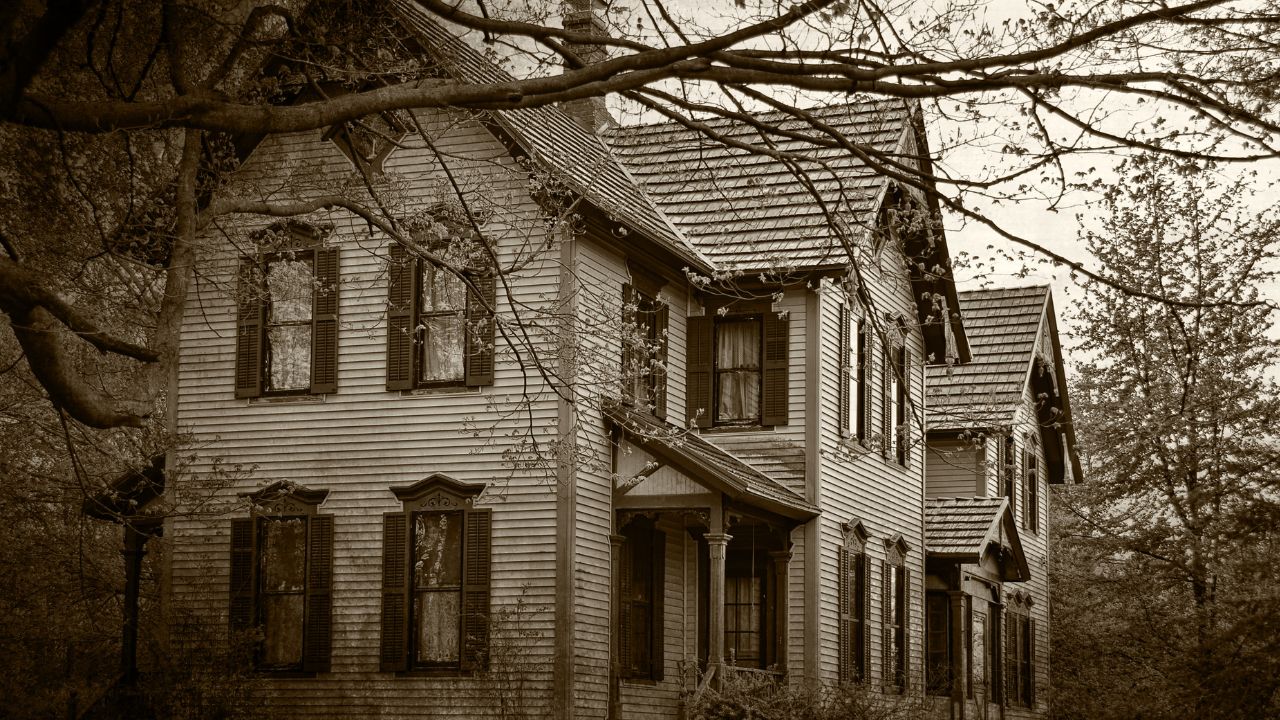
Did you know that a lot of your favorite horror classics are based on true events? If you love thrilling tales about paranormal activity and true stories about ghostly visitations, you’ll enjoy this deep dive into the origins of three well-known horror novels. We tend to think of reading thrillers as a form of entertainment. However, there is a more frightening side to the haunted houses described in these novels. In this trivia edition, we will take a closer look at a few of the most beloved ghost tales and the haunted homes from which they were inspired.
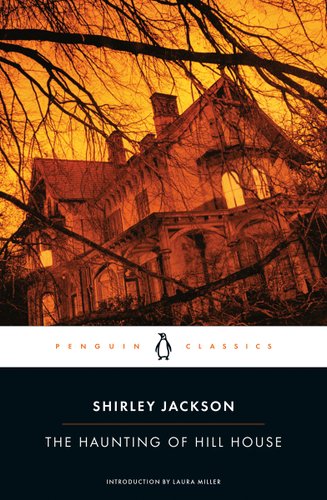
The Haunting of Hill House by Shirley Jackson
This 1959 horror classic is widely acknowledged as one of the greatest haunted house narratives of all time. Shirley Jackson’s compelling characters and gripping use of language are enough to keep readers on the edge of their seats. You may be familiar with Mike Flanagan’s 2018 Netflix miniseries with the same name, which attracts viewers with its modern retelling of the psychological thriller. Jackson’s story is an unforgettable tale of a home pervaded with vengeful spirits of the past.
Part of the novel’s inspiration is said to have also derived from a 1957 Harlem apartment fire that resulted in three deaths. After visiting the scene, Jackson felt a strong ghostly presence that influenced the feelings of terror she implemented within her novel. From this, the renowned horror author poured her own lingering sadness and inspiration from real-life events into her story.
According to Ruth Franklin’s book about Jackson’s life, the setting of Hill House is based upon the Winchester mansion. Its chilling background involves Sarah Winchester, who, after the death of her husband in 1881, inherited a $20 million fortune from his family’s gun business. After having lost all of her family, including her infant daughter, the widow felt the urge to start anew. However, with the weight of gun money on her shoulders, this task proved quite difficult. And so, Sarah made the choice to move across the country to San Jose, California in an attempt to start fresh in a brand-new home.

The Haunting of Hill House tells the story of four characters seeking solid evidence for the supernatural and are confronted with more than they bargained for. The terrifying real-life setting from Jackson’s thriller is sure to shock you to your core. For Sarah, this massive mansion (initially standing at seven levels) was built to appease the spirits of victims killed by guns sold through the Winchester rifle company, which is said to have haunted her. After destruction from an earthquake and decades of rebuilding in her lifetime, the author left behind a four-story 160-room mansion with 40 stairways, some of which lead nowhere. This mansion was designed to be haunted by Sarah Winchester’s ghosts — it doesn’t get much creepier than that.
The Amityville Horror by Jay Anson
Have you heard of Jay Anson’s retelling of the Amityville home hauntings? If not, you’re in for a terrifyingly great scare. In up-close, horrifying detail, Anson covers the spine-chilling 28-day experience of the Lutz family, who moved into the home at 112 Ocean Avenue, where, just a year before, Ronald Defeo shot and killed his parents and two siblings.
Since its release, the book has incited controversy over its truthfulness. Certain details within the book have been disputed, yet George Lutz and his wife, Kathy, maintain that the majority of the book is true. The couple sold the rights to author Jay Anson, who adapted the novel into a bestselling horror tale, which has since been transformed into popular films in 1979 and 2005.

When the newlyweds moved into the home with their three children in December 1975, they found it still furnished with the Defeos’ belongings. In the 28 days that followed, the family would encounter what they deemed the most terrifying experience of their lives. Before moving in, the couple decided to invite a priest to bless the home. George relates that an invisible force slapped the priest, and a sinister voice urged him to “get out.” Despite this warning, the family remained in the home and began to experience strange odors, cold temperatures, and slamming doors. For George and Kathy, their last night in the home was “too frightening” to discuss and could not be fully divulged due to its disturbing nature.

A Goodreads review by Jess the Shelf-Declared Bibliophile describes the novel’s dark themes, remarking that:
“the demons (whatever they were) didn’t just throw things around the house to creep the family out, they actually affected the family members’ individual personalities and seemed to truly bring out the worst in their humanity.”
She states that because the family avoided the press and instead,
“simply disappeared to live life in peace, I can’t agree with those who believe they made it all up.”
Whether or not you believe the Lutzes exaggerated the story of their brief stay in the Defeo residence, the novel is a terrifying read that details the events that occurred within the Amityville home — a place allegedly haunted by a presence evil enough to drive a family to flee after less than a month.
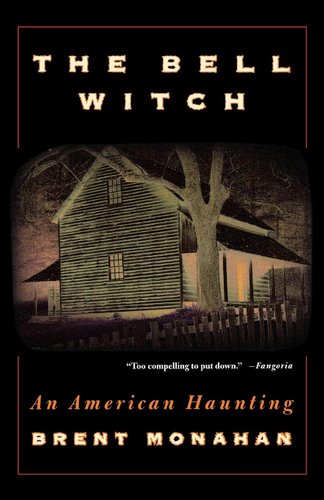
The Bell Witch: An American Haunting by Brent Monahan
As legend has it, an evil spirit overtook the home of John Bell and his family in 1818. Author Brent Monahan retells the story using the manuscript of Richard Powell, a local schoolteacher who witnessed the hauntings firsthand. This highly documented case was covered by local newspapers and became a quick sensation that has persisted in popularity to this day. The tale later inspired the films An American Haunting and The Blair Witch Project.
Speculation about the haunted home garnered a great deal of attention; it’s even said that former president Andrew Jackson, who was a U.S. general at the time, visited the Bell residence and faced the witch. While it’s difficult to know whether the legend rings true, there will always be a sort of spooky intrigue associated with this ghost tale. The book is not marketed as fiction but rather as a factual retelling of what occurred at the haunted Bell family residence. So, what exactly is the true story that Monahan covers in his book?
It all began when John Bell and his daughter, Elizabeth “Betsy” Bell, were targeted by the ghost. The spirit was assumed to be that of their neighbor Kate Batts, or “Old Kate,” with whom they shared a dispute about a land purchase. Upon accepting a proposal from suitor Joshua Gardner, young Betsy began to experience violent attacks from the witch, who disapproved of the arrangement and urged the two to break it off.
Townspeople would continue to witness strange sounds and sightings of the noisy, vengeful ghost, who would haunt the family until John Bell’s death by poisoning in 1820, which was attributed to the witch herself. Richard Powell, who later married his former student, Betsy, would pen the manuscript to leave it to their daughter in case something happened to either of them. The mere knowledge that this story of a relentless ghost derives from a firsthand account will no doubt chill you to the bone.

Regardless of the verity of this account, its legend lives on. You can still visit the Bell residence just a ways out from Nashville, Tennessee, where the home of this American haunting has been preserved for fans of the paranormal.
These horrifyingly delicious narratives about haunted houses are just a few inspired by real places that have sparked eerie ghost stories. There are plenty more authentic ghost stories out there that will surely surprise you. Can you handle reading these hair-raising horror novels knowing that they’re based on true events? Let us know what you think on our socials.
Click here for more horror novels that drew inspiration from real locations.
If you enjoyed this read, click here for more spine-chilling horror recommendations.