

















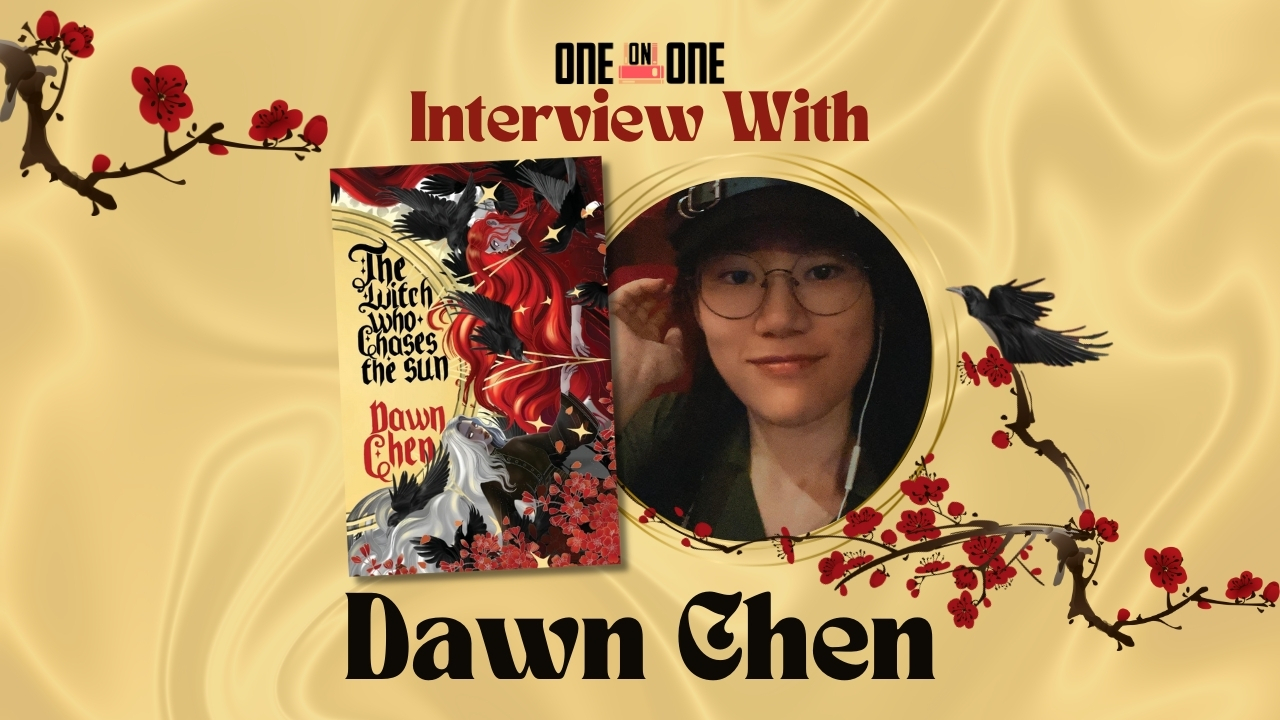
Today, we’re sitting down with Dawn Chen, the celebrated author whose work transcends genres and challenges conventions. Chen first captivated readers with her haunting short story collection, Dawn’s Cozy Horror Corner, and is now making waves with her forthcoming novel, The Witch Who Chases the Sun. This compelling new book is a genre-defying “Chinese-inspired anti-British colonial sapphic fantasy” that delves into themes that resonate with many, deepening the connection to its readership. Beyond her literary contributions, Dawn has become a powerful voice for change, using her platform to speak out against the persecution of LGBTQ authors in China. Today, we’ll dive into the world she’s built on the page and the real-world fight she’s championing.
About Dawn Chen
Dawn Chen is a sapphic fantasy and horror author who grew up in Beijing, China. When she was thirteen, she moved to Germany to live with her family. Since then, she has lived in both Canada and the UK. She writes in both Chinese and English, wishing nothing more than to keep writing, and has a perfectly healthy obsession with ghosts.
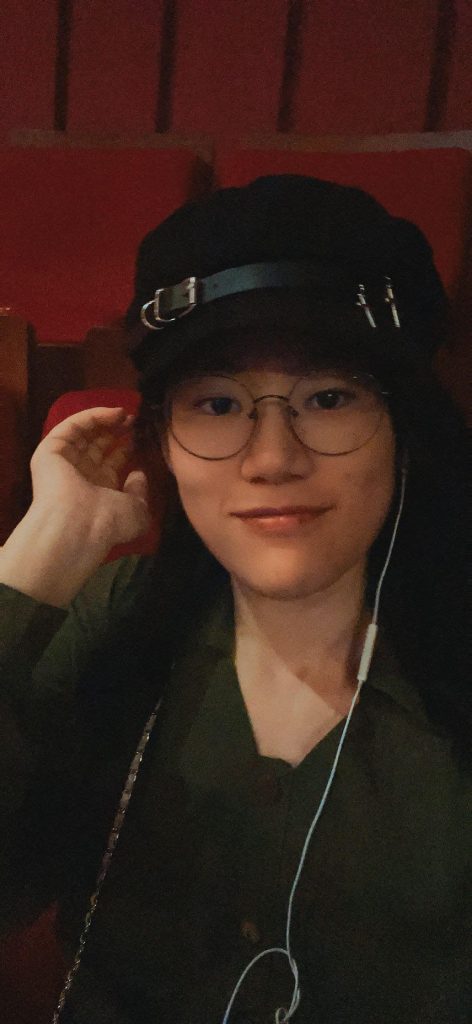
She’s the author of the Chinese queer diaspora horror short story collection, Dawn’s Cozy Horror Corner, the Chinese-inspired anti-British colonial sapphic fantasy, The Witch Who Chases the Sun (Contrarian Publishing, October 2025), and the upcoming sapphic vampire epistolary horror novel, A Vampire in Beijing (Graveside Press, January 2026).
You can follow Dawn on her Threads and Instagram.
Thank you for joining us, Dawn. Let’s get started.
The Witch Who Chases the Sun explores complex themes of war, grief, and identity. Could you tell us about the inspiration behind this story and what you hope readers will take away from it?
The inspiration for the story lies in the idea of wanting to explore what happens to heroes after a fantasy war. The idea of winning a fantasy war often comes with the resolution of believing warfare is the end of all characters’ stories, but I think there haven’t been enough stories asking the question of what happens after.
Each of the characters represents a kind of expansion on the character archetype that survives a fantasy war, which I imagine leading to different ways of how their story would continue to spiral beyond the end of a war.
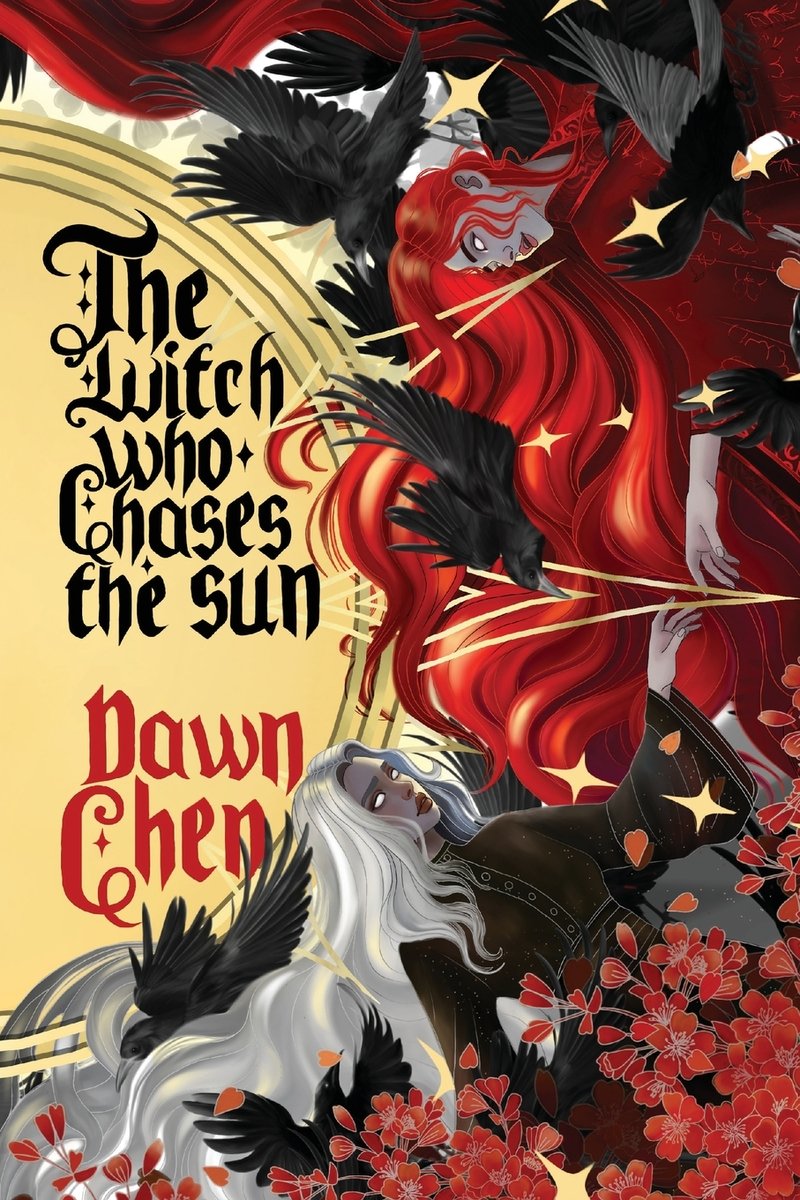
Other than that, the story is also heavily inspired by a mixture of Chinese mythology and European fantasy archetype and history, the idea of prophecy and deities and magic systems are mixed together to produce a world where I imagined that reflect a kind of mirror reality to our own where conflict does not resolve by a war ending, but rather in a cyclic aftermath that characters continue to live in.
Your book is described as a “Chinese-inspired anti-British colonial sapphic fantasy.” This is a powerful and specific combination. What was the process of weaving these elements together, and why was it important for you to tell this particular story?
Because I have lived in Britain for a huge duration of my life, from about when I was in the last two years of high school to about two years after I graduated from university, but I am also a born and raised Chinese person. Growing up in the UK as a Chinese person means there is a dissonance between what British culture wants to acknowledge about the colonial history they were a part of in China (aka the way they want to erase it), and what actually happened thanks to British colonialism that still left a mark on Chinese identity.
There is a simultaneous belief by the British that they owe no blood debt to us, and also a twisted sense of self-righteousness and obliviousness to history towards British colonization here. A lot of this manifests in day-to-day racism experienced by BIPOC in British society, anti-immigration sentiment, and discrimination, which is hysterical, as the British Empire was responsible for much of how culture is shaped in former colonized countries.
Britain and especially British white nationalists would love to discuss the politics of non-Western countries with an air of righteousness. [At the same time], they will literally scorn you if you ever mention how the British Empire destroyed our country in the Opium Wars, or even just racism within their own country. And there is a same sense of defeating sentiment within our own country as well, when studying western relationship with China regarding the history from Portuguese first arrived on the shores of Guangdong (Canton) to the breakout of Opium Wars, even our Chinese history lecturer in my university would say that any form of actual anger shown in essays regarding the subject shouldn’t be “post colonial” as if anger displayed at the British empire, about how its greed about the so called commerce regarding porcelain and tea (silly and comfortable things that the British thought they needed) leading to them hooking an entire people on opium to facilitate so called “trade”, because over about a century the Qing dynasty within China didn’t need commerce from the British to survive.
To learn that history, but then be told we aren’t meant to be angry about it, as we experience racism and hatred and ostracization. I know friends who were victims of hate crimes, I have seen workforce discrimination, and with a Prime Minister right now who will tell immigrants how living in the UK is a privilege, I think the identity of anyone who is Chinese diaspora in the UK has to come with either a certain level of denial or anger.
I remember going to the British Museum with friends and family and seeing what was stolen from us. They’d sigh and say, “at least our art ‘survived somewhere’,” as if the British didn’t literally destroy our identity because of their own greed. This story honestly started as a cozy fantasy at the beginning, but as it goes on, it feels dishonest not to let the anger surface, as it is like warring between two identities, like being in love with someone but also starting to see the ugliness of what lies beneath. That is the sapphic aspect of the story. As a sapphic Chinese diaspora, I think the inspiration is just this line of emotion that eventually becomes this story.
The relationship between the two main characters, Cai-Li and Anne, is central to the narrative. Can you discuss how their past and present interactions reflect the larger themes of the book, such as healing from trauma and the possibility of reconciliation?
I do not want to spoil the story, but I think it’s worth noting that the story is distinctly not about healing or reconciliation, but rather about how those things would be impossible in some circumstances.
The story is told in past and present interactions to highlight that divide of character relationship and motivation and thinking, as the past timeline follows Anne and Cai-Li from their childhood all the way up to during the war as they struggled through it, to the present timeline where you see how after the war they didn’t end up with the happily ever after that they hoped for and fought for in the past timeline despite peace being achieved in the greater context. I think that the divide is one between where there is a story about love and hope, and one where that love and hope are still there, but are proving to be falling short of bridging the gap of trauma and reconciliation.
View on Threads
I don’t think stories about the impossibility of reconciliation is necessarily devoid of love, and that not all healing is slow and constructive and ends as soon as the conflict ends, anger and rage do not end just because people survived to see a new day, war are usually just the end point of a lifetime of suffering and hostility, and without addressing the root cause of why the war was even started, then any promise of reconciliation is nothing but a lie, a beautiful veneer that asks people who survived the war to lay down arms to ensure that audience is happy and content. It is cruel, to be honest, to have to live in such a lie.
Before The Witch Who Chases the Sun, you wrote the short story collection Dawn’s Cozy Horror Corner. How did your experience writing horror and shorter fiction influence your approach to a full-length fantasy novel?
I think both horror and fantasy are a reflection of real life for me. We write in allegory in horror and fantasy, trying to explain in metaphors things we do not necessarily know how to tell in real life, to be understood by others. Shorter fiction within Dawn’s Cozy Horror Corner is written scattered throughout my years of being diaspora in the West. They are distinctly about diaspora and BIPOC experience (especially aimed at an upper YA audience) with racism and also trauma. They are short, but also told in an almost episodic, urban legend-style, what I would call dark urban fairy tales. And that helped me to contextualize.
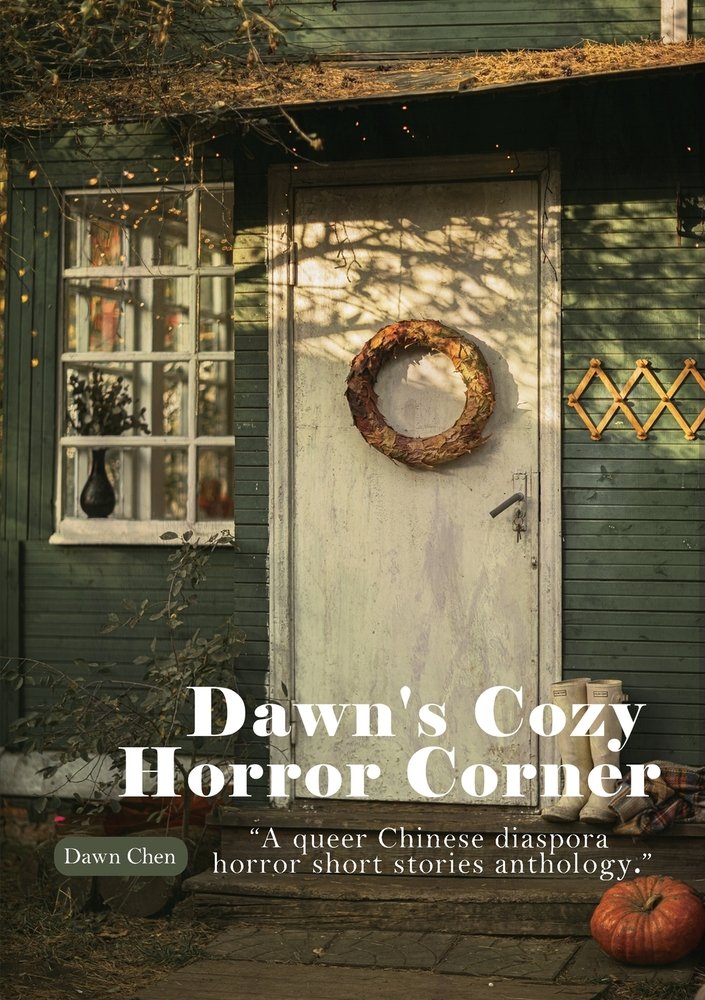
The Witch Who Cases the Sun and my other longer projects, which are often about more complicated feelings and characters and experience, and more distinctly, about what lives beyond just snapshots of short stories that are metaphorical to the diaspora experience, to actually explore the complexity of what it means to have to live with something in the long term. Writing short stories is often a cathartic experience, while writing longer projects can be more grueling. Shorter fiction is in service of an idea, while longer forms of fiction are stitching those ideas to tell a story that one feels like vomiting one’s soul.
What can you tell us about your next book, A Vampire in Beijing? How does it differ from your previous work, and what themes are you exploring in this new project?
I think A Vampire in Beijing is much more alike in tone and themes to that of Dawn’s Cozy Horror Corner, as it is a lot more horror-based and also in a contemporary setting rooted in reality, despite having speculative elements. While in The Witch Who Chases The Sun, everything feels a lot less grounded and more free. And while The Witch Who Chases the Sun is still a story about sapphic love in its essence, I think A Vampire in Beijing is a lot more about the clash of identities and healing from an unhealthy sapphic relationship. A Vampire in Beijing is also told in epistolary form, which means it is a lot more personal, to say the least, in the way it is told.
You’ve been very vocal on social media about the persecution of LGBTQ authors in China. Can you shed some light on what is currently happening and the specific challenges these writers are facing?
I have recounted a lot about what happened on social media. Essentially, starting in June of 2025, news exploded regarding the nationwide manhunt/crackdown of authors of queer web novels (danmei works in particular) across the entire country, on the webnovel site of Haitang. This isn’t the first report of criminalization of queer works, but it is definitely the most widespread and horrific to the degree the police are willing to go to in order to crack down on authors of queer works.
There was a huge wave of panic within the Chinese queer creative communities, which thrived for the past decades despite cases like the Haitang authors, who present a risk of writing queer works online and publication of such works offline. There was almost always an assumed risk (especially with 2024 Haitang Wenxue City saw the arrest of its top authors as well, and before that, even big names within the Chinese queer creative industry like Tianyi and Mo Xiang Tong Xiu were arrested and sentenced) with writing queer work. But none so have resulted in such horrendous national wide crackdown like the one started in June, where reports of forcing authors to sign false confessions, where readers were interrogated and reported to their schools or work place for discipline, and also of the degree of reported sentencing that we’re about to be carried out that led to huge media and also especially legal field tension within the country. The authors were being prosecuted for “anti-obscenity laws”, which basically criminalize and target queer works with the depiction of sex.
View on Threads
It is hard to talk about everything that happened within the past few months but a short version of the story is that lawyers who stood up for the authors were harassed, queer authors mass deleted their works from online platform (as web novels are the foremost read form of queer long form works in China due to physical and official publication being heavily censored), but also a huge wave of solidarity and anger shown by the community and the public towards the unfairness displayed during and after the crackdown. This is especially during a time where shortly after where huge leak of Chinese personnels being filmed illegally as porn and leaked onto Western Internet (MaskPark), where there were mass violations with no legal repercussion or investigation, as well as some of the Haitang authors were told they would be sentenced up to 5-10 years in prison, which are sentencings that rapists won’t even get, for essentially writing queer works.
There have been a lot of things happening across the world, especially in censorship of LGBTQ+ rights and art, of relegating queer works into “porn”, across the world in the past year or so, which is why I think it is important to not view this incident as an isolated incident, and especially important as it is personal to me as this community of Chinese queer creators and works brought a lot of us safety and community that otherwise wouldn’t be possible.
I’ve met sapphic couples within the community who got married after reading each other’s stories, I’ve seen proposals happening at queer in-person conventions, and I have seen a community of my own people that thrives despite what has happened. I think it’s worth noting that I wouldn’t have gotten into reading and writing without my community. When this community is under attack, it puts all of us in danger, which is why I think it is important to highlight this continuously and help my community. Again, please sign the petition and share the fundraiser available on my social media platform for queer writers who continue to suffer due to the crackdown, but also, I think there is a lot more to be said on the matter than I can do here.
The Chinese government’s crackdown on LGBTQ content, particularly the danmei genre, has made it incredibly difficult for creators to share their work. What are the legal and personal risks they face, and how does this censorship impact the broader LGBTQ community in China?
I’d say it definitely made it more difficult, as Haitang was a non-mainland web novel platform where more explicit queer works are written on with less censorship. But I think it is underestimating Chinese queer creators’ ability to keep creating and finding channels to share our works and even offline conventions to say the crackdown itself was the be-all and end-all to queer works. To be very honest, writing queer works has always come with legal and personal risks; for example, even before the crackdown, in-person queer conventions of indie queer creators have often had huge police presence, and also no one writing queer stories within the Chinese queer creative community has ever known a time when no censorship exists.
However, despite censorship, the popularity of danmei (MLM) and baihe (WLW) and other queer genres thrived online on various web novel platforms, and they even became some of the best-selling traditionally published books and novels in the past decade. But the crackdown definitely enhanced the reality of the presumed danger to a lot of queer creators, a number of other queer web novel websites had to issue official statement or basically cooperate with stricter laws regarding queer content, and I think a lot of queer creative space organizers are much more discreet (and some even hired lawyers to reassure and basically teach the average queer indie creator about the current law around queer works).
But personal risk is actually higher if one is what is called “in the structure” for queer authors and readers, like students and those who work in government-related systems (which is wider in China regarding employment than the West, I think). In extreme cases, disabled queer writers from low income backgrounds are disproportionately affected, for part of the penalty is basically paying a large amount of fines (about a few hundred thousand of Chinese yuan, for example the author we are fundraising for owes about 300k Chinese yuan which is about 42k usd) or face up to five years and up in terms of incarceration and sentencing. This led to a lot of Haitang authors who are disabled and rely on writing queer fiction as their only source of income having to pay back an impossible amount of money by going into huge debts with online loan sharks/submit to family who will “discipline them”. Web novels that were originally a lot of these authors’ way out of a life determined by someone else have become what trapped them in prison (if they can survive prison) or financially for basically the rest of their lives.
This is not to discount the social abuse and malice to which a portion of anti-LBGTQ within the public has hurled at not just the authors, but also the lawyers who dared to represent these authors, especially within the legal field.
In your social media posts, you’ve encouraged people to take action. What are some specific, tangible ways that people outside of China can support these persecuted authors and help amplify their voices?
Again, first there is the fundraiser for a Chinese queer disabled author whom I mentioned before, who is facing a huge amount of fines, and her case is currently ongoing and delayed, but if she cannot pay the fine through the fundraiser, she’ll likely be sentenced to a long incarceration, and she will likely not survive. The information can be found on my social media website, as well as that of @wchereads on Instagram and Threads, who is a Chinese queer diaspora reader and the creator and manager of the fundraiser.
Additionally, there is a petition created by @pedroparo2 on Instagram and Threads to hold Seven Seas Entertainment responsible for being the monopolizing publisher of foreign (English and other languages) rights of most danmei works due to their mistreatment of Chinese translators and silence regarding the crackdown on Chinese danmei authors.
Other than that, there is also a need to address the racism and anti-Asian sentiment within the English LGBTQ+ writing and publishing scene of portraying the crackdown on condemning all Chinese queer works (especially danmei) as fetishization or “porn”. Famous queer authors perpetuate this within publishing, like Alice Oseman, who centers Western queerness as a standard to judge all queer communities by, which is ignorant, to say the least.
This form of racism within the queer creative community also that surfaced as major English media outlets are reporting this crackdown as it’s against Chinese gay erotica in the same vein of 50 Shades of Grey which spread misinformation and racist stereotype that goes along with the rhetoric of homophobic criminalization of Chinese (and often other Asian) queer works rather than in solidarity, even if they meant to be reporting on an injustice.
Looking forward, what gives you hope for the future of queer and marginalized authors in both China and the global literary landscape?
Community. Because one thing that has become apparent since the crackdown is the true solidarity shown by those in the Chinese queer creative community, both within China and abroad. A lot of people came together to advocate for Chinese queer authors, more than I ever thought was possible, around June, when the news first broke. For a while, I was updating what was happening because I thought no one would care, but also because I felt I owed it to my community to speak up. But since then, a lot of the global LGBTQ+ community within writing and reading spaces, as well as art spaces, joined and showed that there is a community out there that truly wants the best for all queer creators. The same can be said for marginalized creators in China as well. I feel like at this time, the community is what makes continuing to create queer art possible despite the worst that could happen.
In a world that seeks to silence, marginalize, and erase, Dawn Chen’s words serve as both a mirror and a defiant banner. Through her genre-bending fiction and tireless advocacy, she has demonstrated that language is a powerful tool — not for division, but for connection. The Witch Who Chases the Sun may be a story of conflict and trauma, but the real-world fight she champions is one of hope. It’s a testament to the enduring power of community, showing us that even in the face of immense risk, the shared act of telling a story can forge a bond strong enough to defy censorship, challenge injustice, and ultimately light the way toward a more compassionate and inclusive future.
Want more author interviews? Check out our Author’s Corner to see who we’re talking to!
Find The Witch Who Chases the Sun and other amazing LGBTQ titles on our Bookshop shelves.
