


















Trigger Warning: This article references quotes and events that are explicitly homophobic. Please take caution while reading.
Now more than ever, we as a society are aware of the potential persecution we face simply for being ourselves. Attempts to police and even outright eliminate certain identities are sweeping across America. From the many book bans across schools and libraries to legislation banning the discussion of certain history, it’s becoming harder to live openly as members of certain communities.
Unfortunately, this is not a new phenomenon. Our present is just the latest chapter in a centuries-long book about identity, oppression, and freedom. It is daunting, and sometimes despairing, to look back on all the progress our country has made and then look ahead to all the progress that has yet to come.
But as hard as it can be sometimes to hold onto, there is hope. Many of the literary figures who’ve shaped our understanding of literature were born, lived, and wrote under intense levels of persecution. The same figures who made revolutionary gains in diversifying literature risked their careers (and sometimes their lives) to write the books we celebrate now.
Like James Baldwin.
One of several influential writers born in 20th-century America during one of the most politically fraught times in the country’s history, Baldwin soared to literary acclaim with his narratives about race, sexuality, and class. Baldwin’s novels were so influential that some even impacted the fight for civil rights and queer liberation.
Despite the threat it posed to his safety, Baldwin never shied away from discussing race and sexuality in his works. That, combined with his immense literary talent and knack for exploring relatable themes, like self-discovery and self-acceptance, is why he is a staple author of classic modern literature.
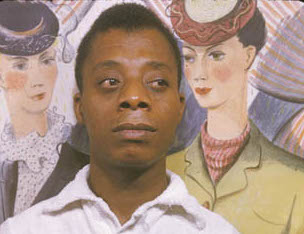
But the same themes we revere him for now were the same ideas that made Baldwin the object of intense scrutiny. The FBI targeted many politically involved African Americans and vocal advocates for the queer liberation movement, both of which Baldwin happened to be.
To the FBI, Baldwin’s political activities, personal life, and writings were all suspicious at best and criminal at worst. While Baldwin was not the only writer the government surveilled at the time, Baldwin’s file was the longest ever compiled on an author, ending at nearly 2,000 pages long.
Baldwin’s Life In Summary
James Baldwin wouldn’t capture the FBI’s attention until much later in his life, well into his adult years and after having published several essays, reviews, and novels. During his early and adolescent years, Baldwin’s life was similar to that of many other African Americans attempting to navigate life in a world divided by racial prejudice. Born at the Harlem Hospital on August 2nd, 1924, James was the eldest son of Emma Jones. Jones was a young woman fleeing to the North in the Great Migration, a period when many Black people escaped the South due to rampant racial segregation and discrimination.

While Baldwin never knew his biological father, he found a paternal figure in laborer and Baptist preacher David Baldwin, whom his mother married in 1927. Despite the tumultuous relationship David and James would have, James always called David “father,” cementing David’s role in his life.
Emma Jones and David Baldwin had eight children together, making James the eldest of nine siblings. His family had a large influence on how he spent his formative years. At fourteen years old, James took up preaching at Fireside Pentecostal Assembly, possibly inspired by his Baptist stepfather. Although the congregation welcomed James’s preaching style, he rejected the ministry three years later, when he was seventeen.
Baldwin spent the early 1940s between different jobs to help his family while struggling with his desire to write. He graduated from De Witt Clinton High School in 1942 but wouldn’t pursue higher education. Instead, he focused on providing for his family and working on his writing, yet the duty he felt to his family conflicted with the call to his art, leading him to drink and his mental health to suffer. With the help of his friend Beauford Delaney and a move to Greenwich Village, his mental state improved. Greenwich Village provided Baldwin with the freedom to explore his sexuality and offered him a place to make connections in the literary community that would aid him in his craft.

By 1948, Baldwin moved to Paris, France, to escape the rampant racism and homophobia he faced in the States. His mentor, Richard Wright, whom he met years earlier in 1944, was a familiar face in France, but Baldwin would also make new connections abroad, like his friendship with poet and author Maya Angelou.
Baldwin lived abroad for more than four decades, but he frequently traveled back to the United States and kept aware of American politics. He referred to himself as a “transatlantic commuter,” keeping residences in America and Europe. Although he left to escape the prejudices that marred his daily life, Baldwin remained invested in the cause of civil rights, forging friendships with several leaders of the civil rights movement: Malcolm X, Martin Luther King Jr., and Medgar Evans, to name a few.
Joining A Movement
It wasn’t the people who got Baldwin involved in the civil rights movement, but his writing. James joined the movement in 1957, after returning to the United States to report on the events in the American South. This would be the trip where he met Martin Luther King Jr., with whom Baldwin remained friends until King’s assassination.
By 1957, James had already published three of his major works: his first novel, Go Tell It on the Mountain, published in 1953; a non-fiction book, a collection of essays titled Notes of a Native Son in 1955; and his sophomore novel Giovanni’s Room in 1956.
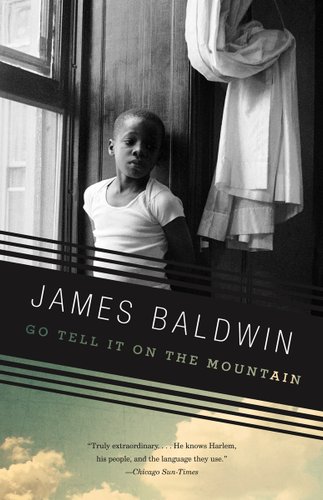
Baldwin covered the civil rights movement from a journalistic perspective, interviewing the people in Charlotte and Montogomery, Alabama. This helped him write essays that would appear in magazines like Harper’s, Parisian Review, The New York Times Magazine, and The New Yorker.
During this time, James became more than just a reporter on the movement. He joined organizations like the Congress of Racial Equality (CORE) and the Student Nonviolent Coordinating Committee (SNCC). As a member of CORE, Baldwin toured the United States, giving lectures on his racial ideology and his favorable view of socialism. He became a strong voice for change during this era. In 1963, during the Birmingham riot, Baldwin sent a telegram to then-Attorney General Robert F. Kennedy, arguing that the Kennedy administration caused the violence in Birmingham and the administration’s inaction was a betrayal to the American people.
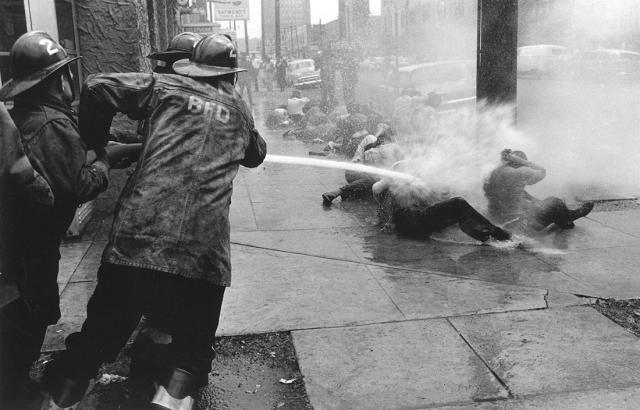
Although Baldwin caught Kennedy’s attention, and the two had met informally, they did not reach a satisfying solution. A group assembled by Baldwin met with Kennedy and Department of Justice lawyer Burke Marshall, a meeting that failed to start the dialogue between the Black community and the administration Baldwin was hoping for.
One thing did result from that meeting. After that fateful day, the FBI began to track Baldwin, led by director Edgar J. Hoover.
High Surveillance
James Baldwin wasn’t an exception to the FBI’s surveillance list. The government agency also surveilled several other authors from that time, including Truman Capote, Henry Miller, and Baldwin’s former mentor, Richard Wright. But Baldwin’s file was by far the largest one ever compiled about a writer, closing out at 1,884 pages.
Baldwin’s writing wasn’t the only reason he caught the FBI’s attention. In 1960, the FBI believed he had connections to the communist party due to his signing a petition for the Fair Play for Cuba Committee. For the next ten years, the FBI tracked Baldwin heavily, which Baldwin was aware of and regularly spoke out against.
In 1963, the FBI added him to the Security Index, which was “a list of citizens who would be arrested first in the event of a state of emergency.” Baldwin’s involvement in the civil rights movement and the gay rights movement was enough of a reason to make him a target of the government agency, but there was specific interrogation about Baldwin’s own sexuality. The year after they added Baldwin’s name to the Security Index, Hoover posed in a memo:
“Isn’t Baldwin a well-known pervert?”
In response to Hoover’s question, FBI Crime Records Section officer M.A. Jones reasoned:
“While it is not possible to state that he is a pervert… [Baldwin] has expressed a sympathetic viewpoint about homosexuality on several occasions, and a very definite hostility toward the revulsion of the American public regarding it.”
During this time, it was not uncommon for the FBI, and Hoover in particular, to weaponize homosexuality against gay activists and their allies. Not only was there the prevalent but inaccurate belief that homosexuality was indicative of deviancy or even pedophilia, there were tense relations between members of the queer liberation movement and the civil rights movement. This is evident in the homophobia Baldwin faced, even as an active member of the civil rights movement. In 1963, Baldwin was removed from the list of speakers at the March on Washington for known reasons. He also often faced backlash from the more conservative groups he spoke with.
Despite keeping a frank disposition during his lectures and speeches, the constant surveillance took a toll on Baldwin, eroding his mental state, turning him paranoid, and slowing his writing. The toll it took on him seems even more tragic when reviewing the FBI’s file on him, which is littered with inaccuracies: not only did the file give a false description of him (“white, early 20s, 6′, neat.”), it also misspelled the titles of his works; Go Tell It on the Mountain became “Go Tell It to the Mountains,” and Another Country became “Another World.”

The FBI eventually closed out their file on Baldwin in the early 1970s, but no legal action was taken against him. But the mental and emotional consequence of the surveillance did more damage than a criminal charge ever could.
Death and Legacy
Baldwin spent the later years of his life with France as his home base. He would pass away on December 1st, 1987, from stomach cancer in Saint-Paul-de-Vence but would be buried in Ferncliff Cemetary near New York City. He was 63 years old.
Although the heavy surveillance impacted him, Baldwin continued his work for the movement. In his later years, his activism included writing about the lives of his friends in the movement and how their friendships impacted them. One such project is a manuscript he wasn’t able to finish before his death. The project, Remember This House, was a memoir where Baldwin reflected on his memories of leaders, Medgar Evers, Malcolm X, and Martin Luther King Jr. Parts of this manuscript were never published, but the project transformed into the 2016 docufilm I Am Not Your Negro.

In the years since his death, James Baldwin has become one of the celebrated voices of that era. His words, whether it be through interviews, archival footage, or his own writing, live on in classrooms, libraries, and the work of other artists. He is a crucial entry point for sympathetic and diverse readers to dive into the world of Black and queer literature, but also a beacon of hope for those within the community.
A Crime To Be Yourself
Many of us may find similarities between James Baldwin’s story and our own. Some of us may empathize with the struggle of belonging to two identities that are sometimes at odds. Some of us may identify with the narratives we call home being deemed inappropriate or unnatural. And yet, he persevered. Even amid discrimination, Baldwin found his community, building connections that would span decades, some even to the end of his life. He wrote about his life and his passions and shared it with a world that didn’t always accept it. He traveled and searched and fought for a life of equality and peace.
As we travel and search and fight for our own lives of equality and peace, we can take a lesson from the life of James Baldwin:
There is beauty in persevering.
Learn more about James Baldwin and his works here.
Need a new read and don’t know where to start? Browse our Trivia shelf on our Bookshop store to get an idea of what to pick up next!
