
















“Aye, aye, Captain,” “Walk the plank,” “Shiver me timbers,” and the “Seven Seas” are all phrases you probably associate with the wild and swashbuckling world of pirates. But have you ever thought about where all this pirate lore derives from? How much of it is based on real life, and how much of it is made up? Satisfy your curiosity for pirate history with this week’s edition of Bookstr Trivia.
History of Pirates and the Golden Age of Piracy
Piracy is any form of theft or unauthorized violence committed against sea vessels — essentially, “robbery at sea” — for personal gain. Emphasis on the word “unauthorized,” seeing as committing the same acts under governmental jurisdiction made someone a privateer rather than a pirate. Unsurprisingly, the pipeline from privateer to pirate was a common route that many took. The life of a privateer was lucrative — pillaging and plundering enemy ships and splitting the spoils with the government. But what happened once the war was over, and the country no longer needed their services? Well, many made up their minds to commit to a full-fledged life of crime at sea.
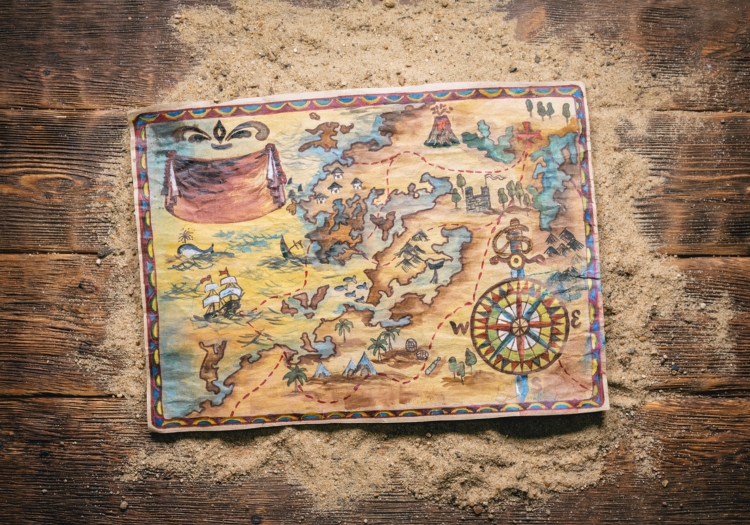
The golden age of piracy was a period between the 17th and 18th centuries when piracy was rife and fed by constant conflict between the colonial empires of Spain, Britain, Portugal, and other European nations, mainly across the Caribbean and American coasts. This era gave rise to many of the pirate legends (both real and fictional) that we know today.
Part of the allure of a pirate is the mystery surrounding them. Despite piracy’s well-known and widespread existence, especially during its so-called golden age, there are limited historical reports (especially firsthand accounts) documenting the tales of these fearsome seafarers. This leaves plenty of room to think up all sorts of imaginative and grisly tales of battle and adventure. A lot of the facts we do know about pirates today are a result of increased investigations into pirate history in the 1900s.

The Tale of The Infamous Blackbeard
As we dive into these investigations, we find that one of the most famous pirates, both in history and popular culture, is the infamous Blackbeard. But did you know that his real name was Edward Teach? Born around 1680, most likely in Bristol, England (or potentially somewhere in the West Indies or North Carolina, according to some sources), Blackbeard took up a life of piracy after his stint as a privateer in the service to the crown during Queen Anne’s War. One signature trait of his appearance, aside from the big black beard (hence the name), was the fuses he lit in said beard, producing smoke that surrounded him, creating an intimidating aura to invoke fear in his enemies.
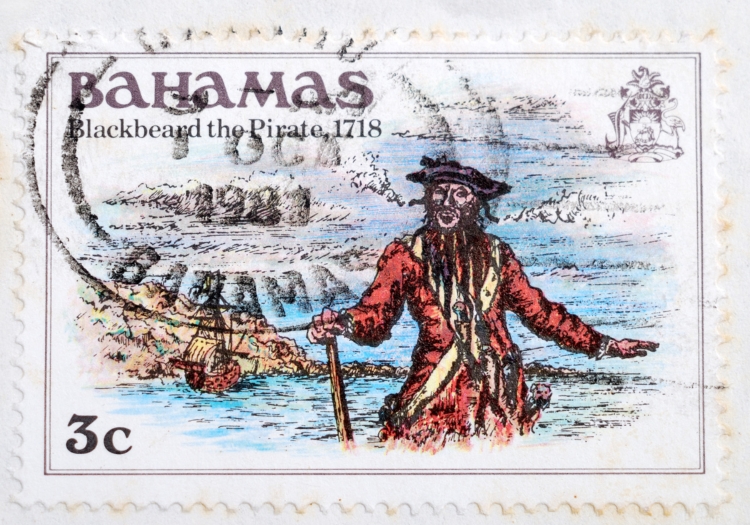
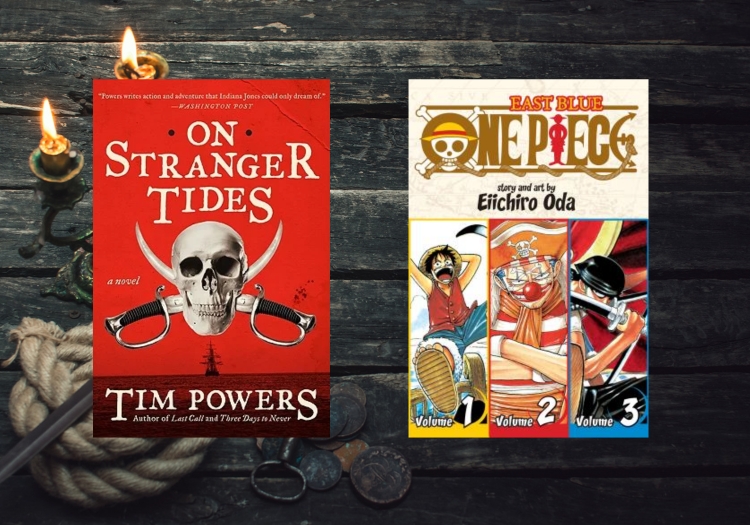
Blackbeard’s pirate legacy is particularly intriguing, given that his actual career barely lasted two years before his gruesome death at the hands of pirate hunters from the Royal Navy in 1718. In his final battle, he suffered at least five gunshot wounds and twenty stab wounds. And after he was beheaded, his rotting, severed head was hung from the bowsprit of the naval ship. Despite his short-lived pirate years, Blackbeard has been featured as a prominent character in many works of literature, including Tim Powers’ supernatural historical fantasy On Stranger Tides and the best-selling manga series, One Piece by Eiichiro Oda.
The Real Captain Jack Sparrow
Captain Jack Sparrow is the face of the Pirates of the Caribbean franchise, but did you know Sparrow was based on a real pirate that went by the name of John (Jack) Ward? Born in 1553, Ward was sometimes known as Birdy and Sparrow, hence the origins of the movie character’s name. Ward originally worked as a fisherman before starting his career as a privateer under Queen Elizabeth I, targeting and raiding Spanish ships during the Anglo-Spanish war. However, when the war ended and privateering licenses were cancelled during the reign of King James I, like many former privateers, Ward turned to piracy.
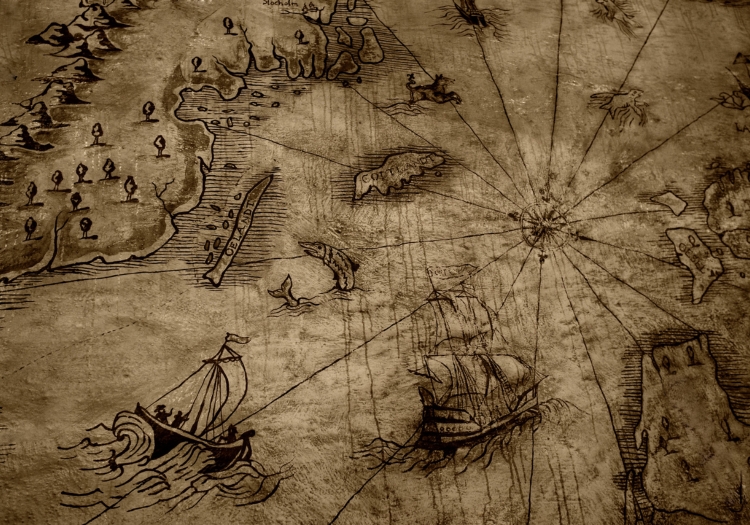
Ward had a colorful career as a pirate, originally voted captain of his crew in one of the first recorded instances of an election of a pirate captain. Unlike his fictional counterpart, Sparrow, Ward mainly operated in the Mediterranean Sea, and in 1607, he led an attack on and successfully seized a Venetian vessel. An instance that almost ignited a war between England and Venice.
Following his daring pirate endeavors, Ward requested a pardon from King James I, which was rejected (since he did almost start a war and all). He eventually settled down in Tunis, where he became acquainted with the religion of Islam and converted, changing his name to Yusuf Reis. His life’s story was captured in the play A Christian Turn’d Turk, written by Robert Daborne.
Origins of Other Pirate Literary Legends and Myths
Aside from Blackbeard and Jack Sparrow, literature has also immortalized a host of other pirate names, both real and fictional. A General History of the Robberies and Murders of the Most Notorious Pirates by Charles Johnson is one of the earliest texts that feature historical documentation of the lives of famous pirates. This piece of literature inspired the pirates featured in fictional works, such as J.M. Barrie’s Captain Hook from Peter Pan and Captain Long John Silver from Robert Louis Stevenson’s Treasure Island. Numerous tropes associated with pirate lore, like parrots perched on shoulders, eyepatches, and pegged legs, were popularized in Treasure Island and form the archetypical image most people picture when they think of pirates today.
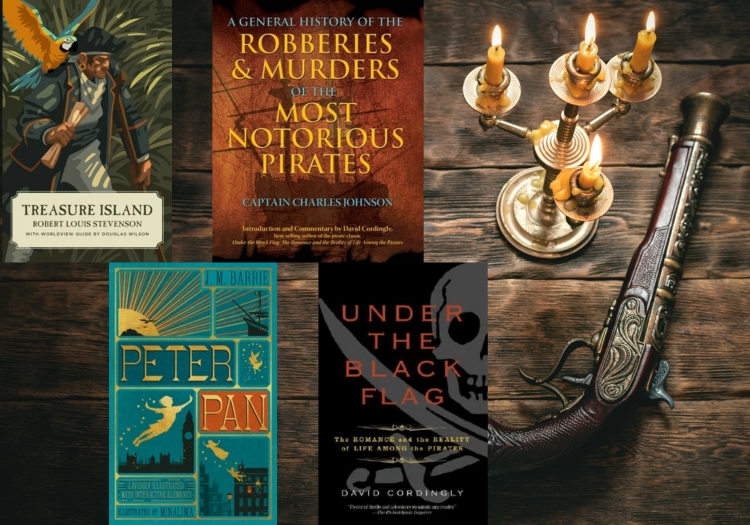
Other popular pirate cliches attributed to Treasure Island include the concepts of buried treasure and walking the plank, which is mostly unfounded. Historical evidence (or lack thereof) shows that most pirates did not bury their booty, nor did they practice walking the plank. Instead, marooning or throwing captives overboard was more common practice. Many more myths from the world of pirates are debunked in David Cordingly’s Under the Black Flag: The Romance and the Reality of Life Among the Pirates.
All in all, the fantastical world of pirates is built upon the ships of both history and myth. Blending fact and fiction, the stories of these infamous sea-robbers have had a lasting impression on popular culture that doesn’t seem to be going away anytime soon.
Love learning about all things bookish? Dive into more Bookstr Trivia.
Be sure to peruse our vast selection of books on our Bookstr Trivia bookshelf on Bookshop.org.