

















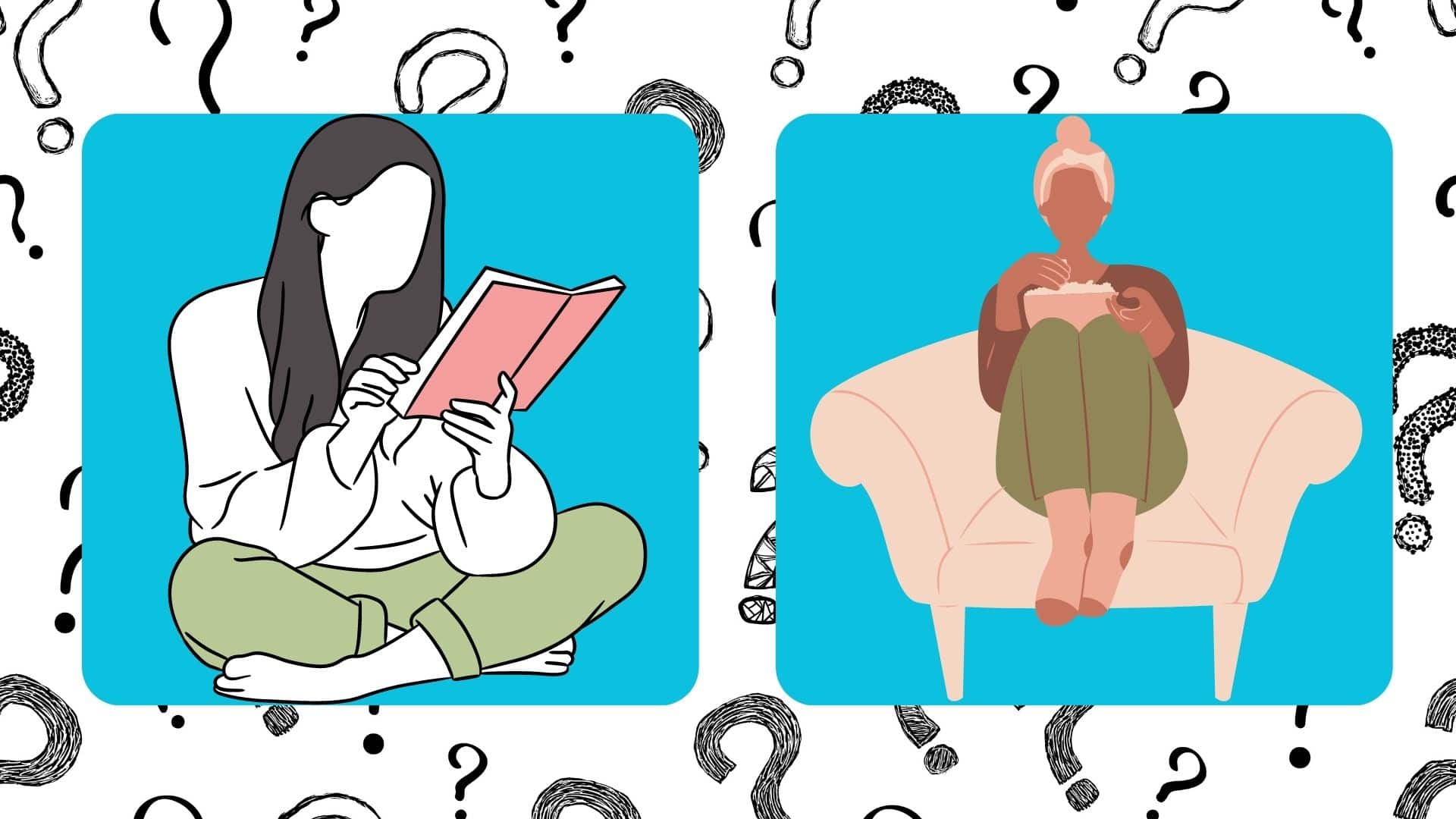
If you ask me which I prefer, books or movies, the answer has been the same since I was about eight. Books, duh. Don’t get me wrong, I do love a good movie or television series. But there is just something intrinsically magical about picking up a book and watching a movie play in my head that is completely my own. However, when I find out that a book I read and loved will be adapted to the big screen, I am simultaneously wary and squealing with excitement. But what about a book that I haven’t read yet that has been or is going to be adapted into a screenplay? It’s one of the biggest struggles I face as a reader. Should I read the book before the release, or wait to read it after I watch the movie/series?
Reading the Book First
The answer isn’t as black and white as some may think. What happens when I read the book and fall in love with it, only to be disappointed in the adapted version? Let’s not pretend that this hasn’t happened. Most adaptations are chopped and pieced together, and sometimes just barely resemble the material that inspired Hollywood in the first place. Christopher Paolini’s Eragon is a prime example of what not to do when adapting a book. They lost most of the substance of the book’s plot; it was Eragon in name only. Had I watched the Vampire Academy movie prior to reading the novels, I would never have picked them up. It was rushed into production amid the vampire craze of the 2010s, hoping for a stellar outcome, but ultimately fell flat because of the screenplay’s plot and character development.

Watching the Adaptation First
Then again, there are the movies that inspire me to read the book. Because if the movie is that good, the book can only be better, right? The 2019 adaptation of Little Women is one such example. The chemistry of the cast and the wit of the plot prompted me to finally pick up a book that’s been in my never-ending TBR pile for way too long. The differences in the structure of the movie and the book were glaring; for instance, Alcott’s novel was chronological, while Gerwig’s movie was fragmented. Honestly, I appreciated the movie’s take on this point.
Another point in favor of the movie may be the pleasant little surprises we find when we crack open the book. Anyone who watched the Harry Potter movies before reading the books was unaware of characters like Peeves and Winky the house-elf. More in-depth information appears in the novels, but cannot be included due to length or difficulty of adapting it to the screen. The Vampire Diaries book series is vastly different than the television show. And, I liked it far better. Caroline became a mix of two of the book’s characters, removing Meredith completely and changing her personality to something far more suitable. I enjoyed the series’s overall plot much more than L. J. Smith’s version.

And Then There’s This
Some books are just not enjoyable to some people, or the reader just can’t get into the book. So, they turn to the movie adaptation for help. Where are my high school and college students at? You know what I’m talking about. I was excited to read The Road by Cormac McCarthy for my Contemporary Literature course. Much to my dismay, there was nothing, and I mean nothing, that could make this Pulitzer Prize-winning novel pull me into its plot. So, I did the thing. I turned to the adaptation. Viggo Mortensen was cast, and I was like, here we go, I can get into this, get some context, and then go back and read the novel. Wrong, I was so wrong. Sometimes, neither is best when it comes to watching or reading first.
In the end, there are certainly pros and cons to either option. But as a true bibliophile, I will continue to read the books first when the opportunity arises and either be pleasantly surprised or sadly disappointed in the outcome. Despite the nature of adaptations to leave out relevant information and characters, I’ll still be awaiting a film version of all my favorites, with the hopes that the screenwriter does the book and its readers justice.
For more bookish content, visit Bookstr.
