


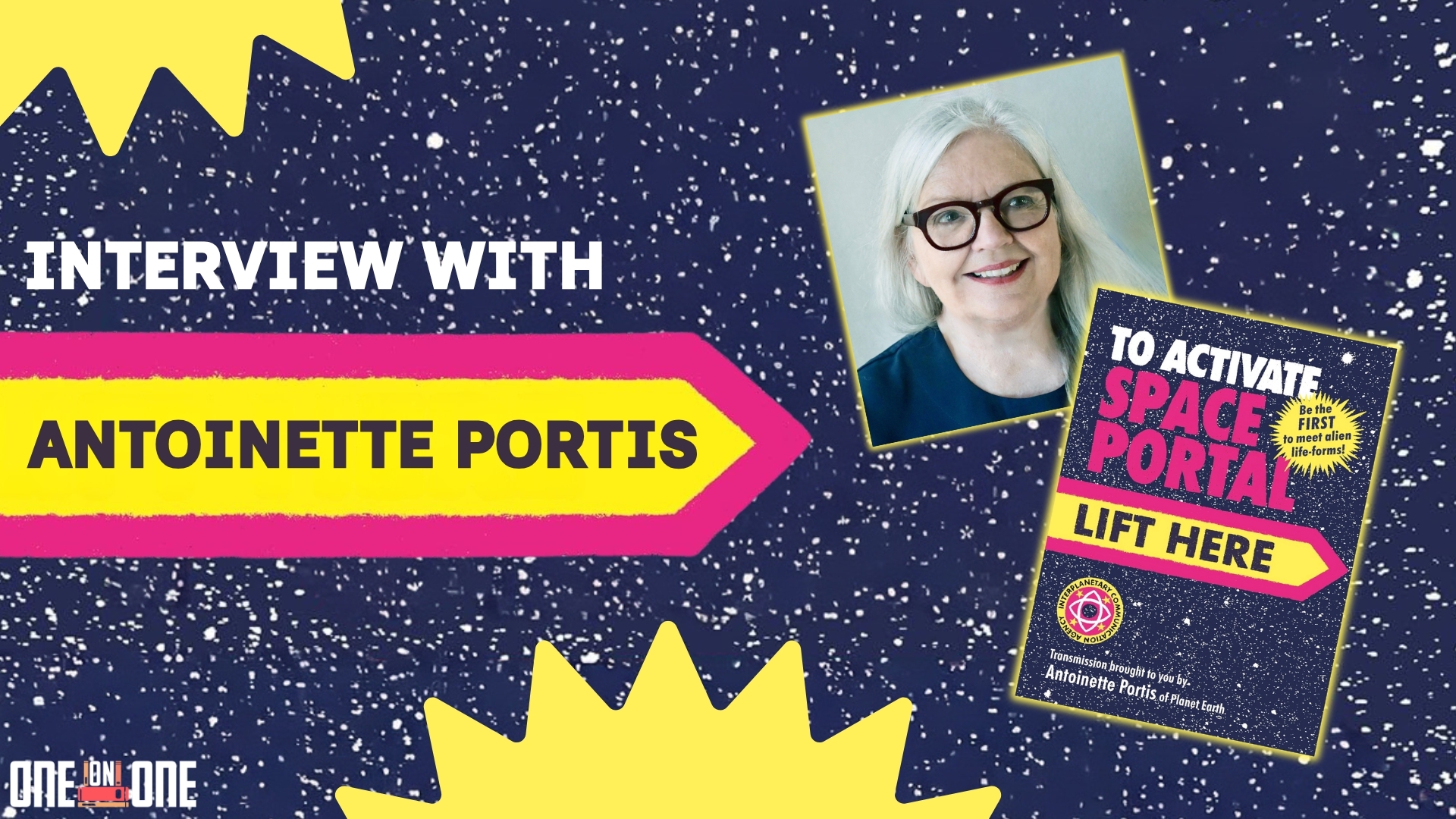
What would it be like to communicate with an alien species from a distant galaxy? What would you say to them? What might they be curious about? Would they ask things like, “What is your planet called?” or “Are you going to eat us?” In Antoinette Portis’s newest interactive picture book, To Activate Space Portal, Lift Here, young readers have the opportunity to open a communication channel to a far-off world and speak to some far-out creatures. We recently had the chance to chat with Antoinette about her latest work, her creative process, and the universality of curiosity and imagination.
About Antoinette Portis
Antoinette Portis is the author of many inventive books for children, including Not a Box, Hey, Water!, A New Green Day, and A Seed Grows. Her work has received a Sibert Honor and two Geisel Honors, as well as multiple Best Book of the Year designations. A recipient of the prestigious Sendak Fellowship, she lives in Southern California.
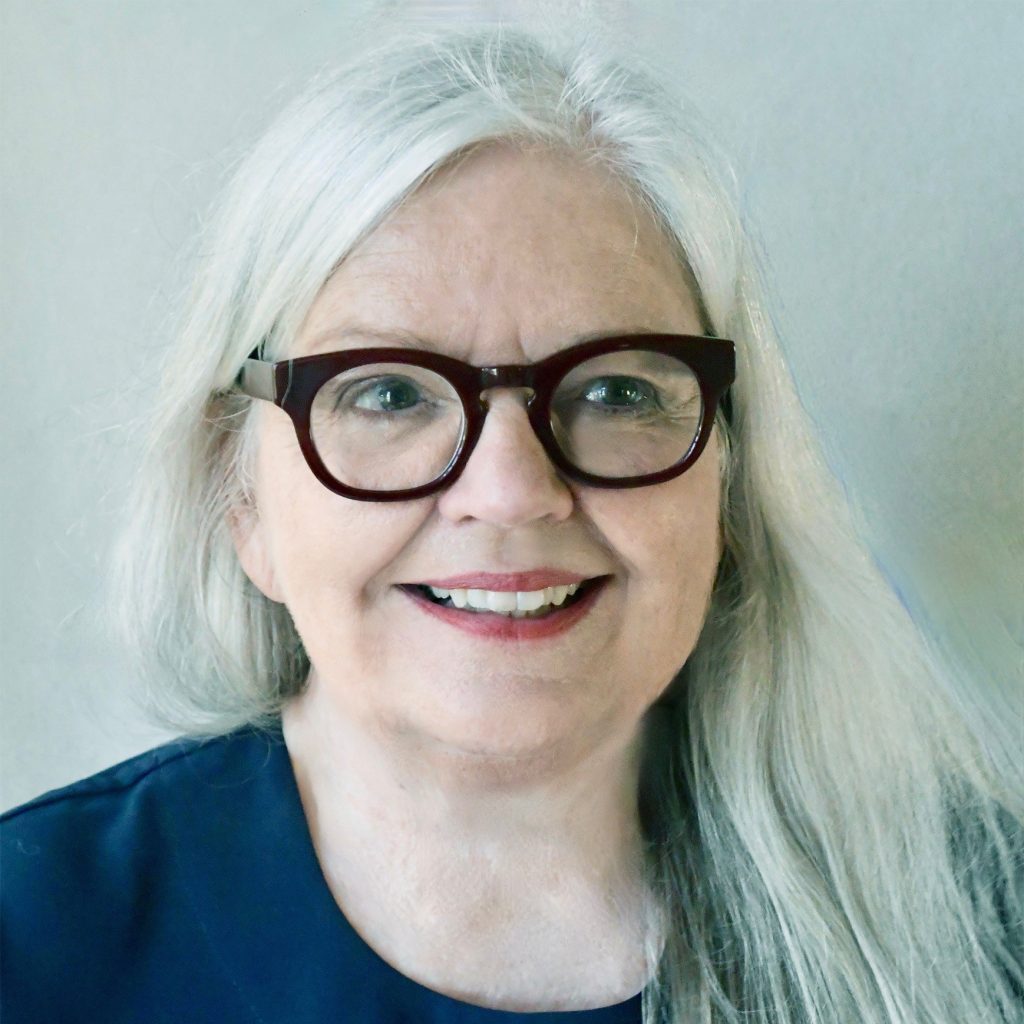
Thank you so much for joining us, Antoinette! Let’s blast off!
How did you come up with the concept for such a unique “communication device” as To Activate Space Portal, Lift Here, and how did you translate that idea to the page?
I woke up one morning with the image of looking through a window at a monster far in the distance, in a white field, with no frame of reference as to its size. So, it wasn’t scary. Cut to the monster standing right outside the window. Same monster, but now scary. So, I started thinking about the relativity of size to scariness. Then my mind just jumped to the idea of encountering an alien through some kind of window, and what would make them scary, or less scary?
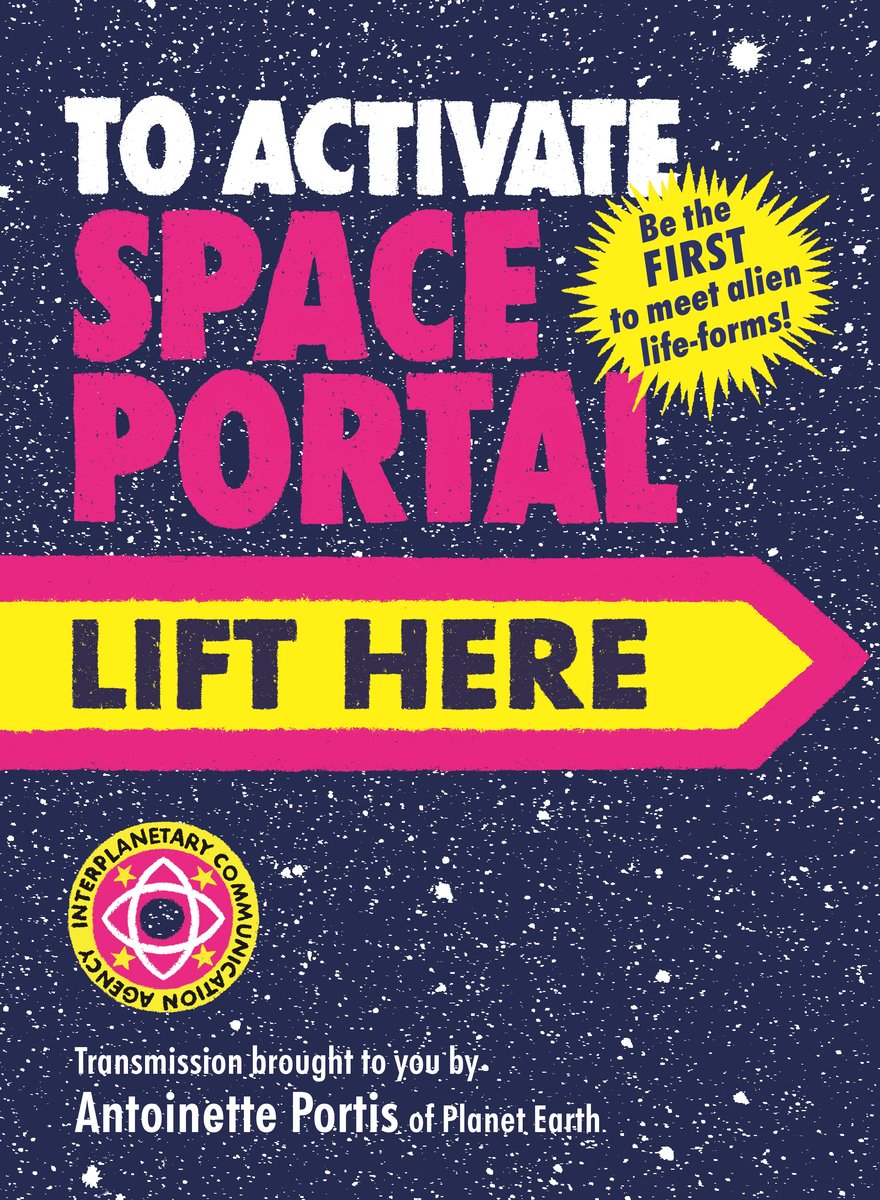
I liked the idea that to an alien, we would be the aliens. That kind of P.O.V.-flip intrigued me as a child, so I played around with it till a story emerged. I also loved that the book-as-portal trope brings to mind the idea that every book is a portal to a world, familiar or unfamiliar. All books are entry points to whatever world the author draws us into.
There’s something charmingly relatable about Zrk and Blrg, the extraterrestrial stars of the book. Why do you think little readers will connect to their sense of curiosity?

Blrg and Zrk embody the characteristics of kids — kids I know. Their curiosity outweighs caution. They’re playful, spontaneous, mischievous, a bit braggy, and always quick to find the fun in any situation. I really got to love them as I worked on the book! Their exuberance is endearing.
Many of your books center around the joy of using one’s imagination and a connection to the natural world. What draws you to these themes in particular when creating for young audiences?
In my childhood, playing pretend was mostly how I entertained myself, my siblings, and our neighborhood friends. I invented scenarios and we all got into it — pretended the bushes between our houses were caves, the puddle around a leaky sprinkler head was a rice paddy, and we hunted mastodons with sticks sharpened on the sidewalk. We played spies, detectives, pirates, knights, etc. Having the ability to imagine felt like a magical power. I could transport myself and others.
As a kid, I was always interested in the natural world. I collected leaves and seed pods and interesting rocks, and still do. My dad took us camping in the California mountains and deserts, and we often hiked in the hills above our town. I always felt connected to our California landscape, though I longed to live on the edge of a lush, leafy forest with ferns and a babbling brook like I read about in European fairytales. I had to settle for an empty lot on a busy street near our house (there were some broken bottles in the tall weeds, but those weeds were a play forest).
One of my favorite memories is walking down the street to a friend’s house with a strong breeze pushing at my back. I felt so close to being able to fly! Even as a child, nature represented refuge, peace, a place to think, a place to center myself outside of the school and family bustle.
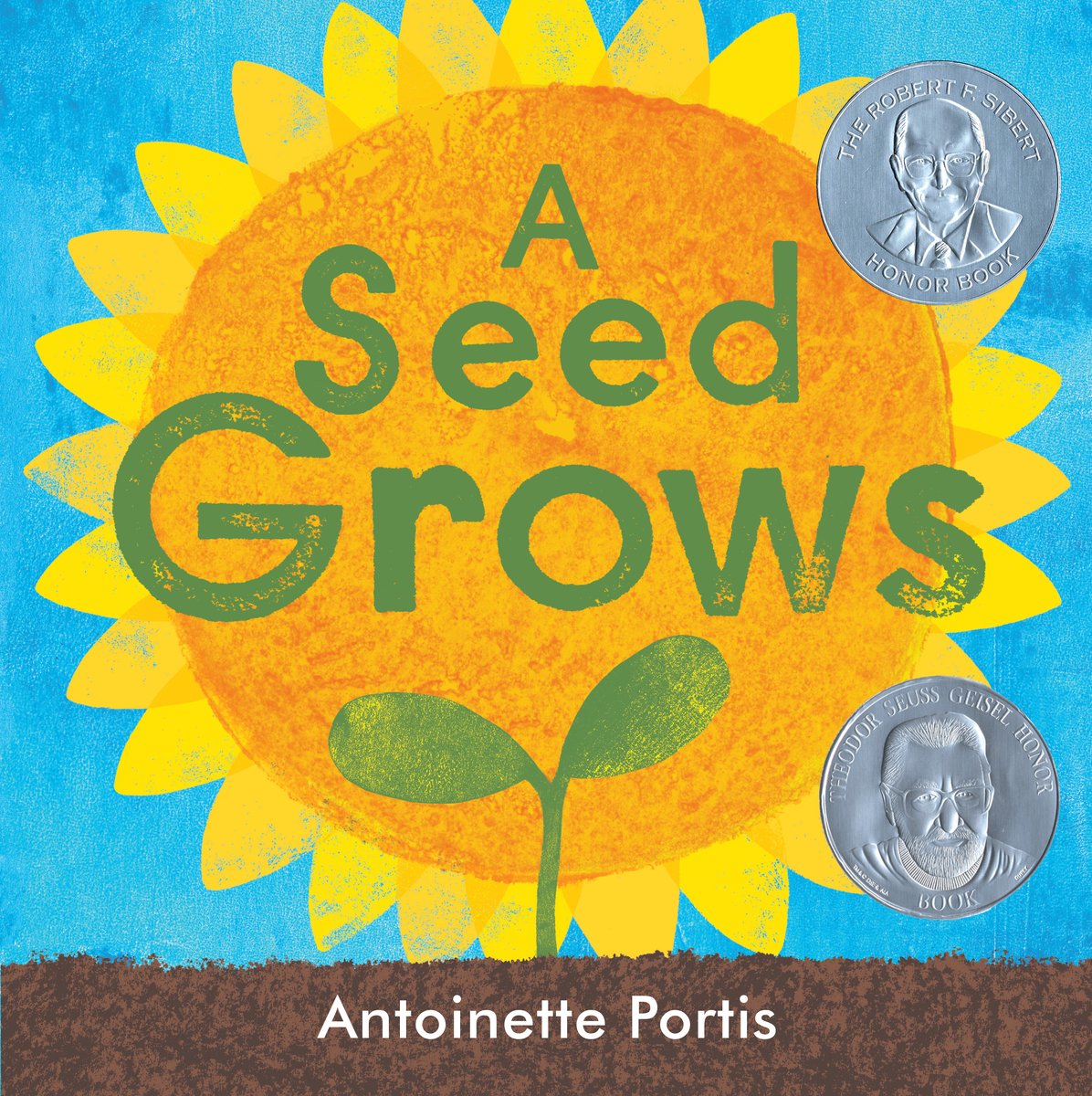
I always want to share with children the things that brought me joy when I was young, because they are universal joys. Children will always imagine. Children will always run around in the sunshine and breeze and dig holes in the dirt, and wonder how a seed grows.
When you are starting a new book, what comes first in your process: the words or the artwork?
I have friends who constantly draw in their sketchbooks, and ideas come to them through their drawings. I’m more likely to start with a word or an image that pops into my mind. Sometimes an image comes with a whole idea attached to it, and sometimes it remains just a brain-pebble. I tend to write a text and then go back and forth between images and words to build a dummy. It’s like playing ping pong with myself, bouncing between words and pictures, deleting, adding, to build text and image into an inseparable whole.
One of your books, Not a Box, was recently adapted into an animated series. What was it like to see your work take on this new life? Were you able to be involved with the adaptation process?
The show was in development for over a decade! I was involved in the beginning, but after a while, not (I had my own work to do — making books). The show is charming! The people who made it were sincere in their desire to make a show that’s true to a child’s spirit of imagination. They really captured the innocence and delight of a child playing pretend.

The book is a jumping-off place for kids to use their own imaginations, and analogously, the team used the book as a springboard for their own imaginings and brought them richly to life for viewers.
On your website, you talk briefly about the “dreams [you] did not achieve.” Do you think that discussing the roads not taken is important with audiences of all ages?
There are a few of us born knowing what we want to do — who are so gifted that their path is set. But most of us have to do some testing to find out what kind of work is the best fit. Trial and error! I’m not sure it’s helpful to share adult disappointments with children before they’ve even begun to identify their hopes and dreams. But it seems useful to share that finding what you love to do and what you’re good at — and can make a living doing — can be a long and winding road.
As I grew up, I imagined I’d be a ballerina, an archaeologist, a fantasy novelist, an organic farmer, a poet, a video artist, a commercial director, etc. I moved through various work fantasies — and actual practice — over the years and partially achieved some dreams. But even if a dream faded, changed, or didn’t pan out, I was building skills and confidence along the way. Even though I didn’t know it at the time, I can see that every job I had in the past prepared me in some way for the career I have now. It only took me till I was 50 to find my perfect job!
We always love to ask children’s creators about the books that spoke to them as youngsters. Is there a book or series that continues to hold a special place in your heart?
Little Bear by Else Minarik, illustrated by Maurice Sendak. I met that series when a younger sibling was learning to read. The melancholy in the illustrations really struck me. I hadn’t encountered that mood in an illustrated book before. You could see how much Little Bear longed for his mother’s attention, even though it’s never overtly stated. There was this depth and soulfulness that really hit home. Seeing that made me appreciate, even as a child, how moving a book could be with just a few pages of words and pictures together.

In elementary school, I obsessively read novels about children encountering magic in their ordinary lives. The library shelf filled with those titles, I plowed through from beginning to end, on repeat. C.S. Lewis, Edward Eager, E. Nesbit, so many more. The Narnia books were favorites. I still have the childhood copies my grandmother gifted me over the years.
Lastly, in honor of To Activate Space Portal, Lift Here, if you could ask any question of an extraterrestrial, what would it be?

“Is your planet peaceful, and are the beings there kind to one another? Can I go home with you?”
An out-of-this-world thank you to Antoinette for taking the time to share her work and insights with us! Be sure to find her online at AntoinettePortis.com and follow her on Instagram, Facebook, and Twitter/X. And, of course, don’t forget to check out To Activate Space Portal, Lift Here, and add it to your family’s reading list!
To check out more of our exclusive talks with authors, check out our entire One-on-One Interview series!
To see all of our recommendations for mini-bookworms, check out our Bookshop bookshelf.