










It’s been three years since Jordan Peele cursed us with nightmares and curdled our blood with a new film. Peele’s genre-bending blend of satire, social commentary, folklore, and horror has earned him an enviable reputation as a writer, director, and producer. Bursting onto the film scene with his Oscar-nominated and culture-defining Get Out, Peele has carved out his own space in the horror genre. Delivering dread through sensations, music, mise-en-scène, and the familiar, yet individualized close-up shots he has become renowned for, Peele goes beyond evoking a fleeting fear in his viewers by creating fear grounded in empathy for his characters.
A Jordan Peele film sticks with you, but that’s the problem, isn’t it? A feast for the eyes and the mind, and then they’re done. We’ll return to them time and time again in our minds for introspection, but there’s nothing like a new plot to get the fear factory up and running. While we wait him out, here are five recommendations based on your favorite Peele film.
Trigger Warning: The mention of racism, social injustice, and police brutality may be triggering for some readers. Please exercise personal care when reading.
Get Out
Generally considered his most popular movie, Get Out follows Chris (Daniel Kaluuya) as he goes to visit his girlfriend Rose’s (Allison Williams) family home for the weekend. At first, the parents’ overly accommodating behavior reads both to Chris and the audience as nervous attempts to show their comfort with their daughter’s interracial relationship. As the weekend goes on, Chris begins to notice the unorthodox behavior of the all-Black staff, the racist remarks, and the gawks of her family friends, and is unravelled by the appearance of an old acquaintance who had gone missing and who, now, is completely unlike himself and aloof. A series of disturbing events leads him to the grim reality of the trap he’s found himself in.
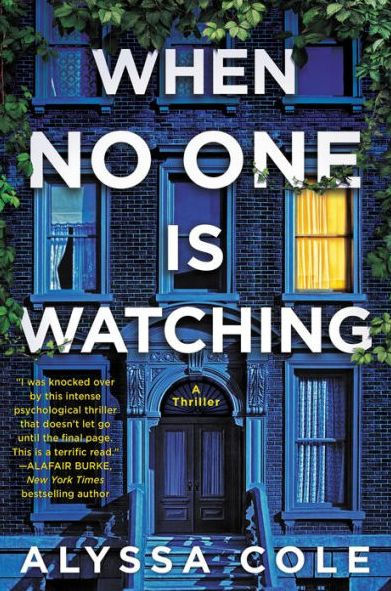
If you’re looking for a similar story, Alyssa Cole’s When No One Is Watching is a perfect place to start. Cole’s gripping thriller focuses on the gentrification of a Brooklyn neighborhood that is realized on a new, disturbing level. Sydney Green has lived in the same neighborhood her whole life, but due to increasing gentrification, it changes rapidly every day until soon she can hardly recognize it. Condos are constantly in development, homes are being sold left and right, and lifelong neighbors vanish into thin air. To hold onto her neighborhood’s history, Sydney starts a walking tour and finds an assistant in one of her new neighbors, Theo. Together, as they research the history of their borough, they quickly descend into a state of paranoia and fear. Maybe their neighbors didn’t just move out after all…
Us
Peele’s second film, Us, focuses on Adelaide Wilson (Lupita Nyong’o) as she returns to the beachfront home she grew up in with her family. Plagued by haunting memories of her past, Adelaide’s anxiety steadily grows as she fears something bad is coming. She’s right. Four masked strangers descend upon the Wilsons’ house as they fight to survive. When the masks finally do come off, the Wilsons are confronted with their exact replicas, or as the film calls them, their “tethers”, as they’re tethered to their mirror images. Though the speculation behind the meaning of the film could go on forever, Peele’s use of “tethered” people who live underground, cut off from society, is reminiscent of systematic oppression based on race and class.
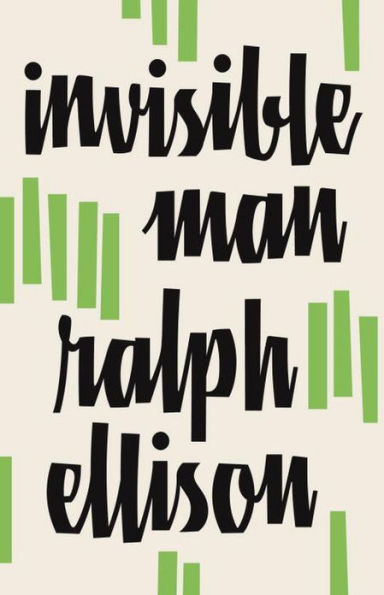
These themes are beautifully explored in Ralph Ellison’s 1952 masterpiece Invisible Man. Like the “tethers”, the narrator of Ellison’s protagonist is also devoid of a name. Ellison’s novel showcases the fracturing of the narrator’s identity as he navigates the harrowing racism of 1950s America through the segregated South, a distinguished black college, and the vibrant and dizzying Harlem. A story of self-discovery, disillusionment, and pain, Ellison’s novel is not easy reading, but it is essential. His words and the empathy they evoke will last a lifetime.
Candyman
Co-written by Nia DaCosta, Win Rosenfeld, and Jordan Peele, Candyman is a sequel to the original 1992 film of the same name, taking place in the now-gentrified Chicago neighborhood, Cabrini-Green, where the original Candyman legend began. When Anthony, a talented artist seeking inspiration, moves to Cabrini-Green with his partner, he discovers the true story behind the Candyman from a local launderette owner, William Burke (Colman Domingo). When Burke was a child, he watched as a hook-handed man, Sherman Fields, was beaten to death by the police who suspected he put a razor in a white girl’s candy.
When Fields was long gone and the razors kept coming, he was exonerated posthumously. Now a vengeful ghost, the legend goes that repeating “Candyman” in a mirror five times brings forth Sherman in the reflection and kills whoever uttered his name. Anthony becomes increasingly entrenched in the macabre history of the Candyman and slowly deteriorates as a result, mentally and physically.

If you love the Candyman’s premise being grounded in a Black horror legend, definitely pick up Out There Screaming: An Anthology of New Black Horror, edited by Jordan Peele. Peele curates this anthology with all-new stories of Black horror exploring, like in most of his work, not only the supernatural or the eerie, but also the frightening realities of injustice that lurk behind every corner of our nation. In the anthology’s description, a few teasers of the stories inside are given:
“A cop begins seeing huge, blinking eyes where the headlights of cars should be that tell him who to pull over. Two freedom riders take a bus ride that leaves them stranded on a lonely road in Alabama, where several unsettling somethings await them. A young girl dives into the depths of the Earth in search of the demon that killed her parents.”
— Out There Screaming: An Anthology of New Black Horror, edited by Jordan Peele
Just like in Peele’s films, everything we think we know about our world is turned on its head to expose the grim underbelly in this groundbreaking anthology.
Nope
With Nope, Peele steps into sci-fi horror. Siblings OJ (Daniel Kaluuya) and Emerald Haywood (Kiki Palmer), who own a ranch where they train horses for Hollywood, suspect a UFO is responsible for the ills that have fallen on their family. As they struggle to capture video evidence of the UFO for fame and fortune, things quickly go downhill. The UFO, Jean Jacket, is an enormous, saucer-shaped, and predatory jellyfish-esque entity that preys on all living things. Nope puts a rightfully horrific lens on the dangers of commodification, consumerism, and human exploitation.

For more thrilling sci-fi with themes of corruption grounding the story, try Tade Thompson’s Rosewater, the first award-winning novel in The Wormwood Trilogy, set in Nigeria. Rosewater, a town in Lagos, is a town on the edge, literally. A community is formed around the outskirts of an alien biodome composed of the hungry, helpless, and hurt, seeking the supposed healing powers of the mysterious dome. Kaaro, the protagonist, is a government agent with a dark past; he’s been inside the biodome and hopes never to be again. However, when something or someone begins killing those like himself, Kaaro sets out on a journey of defiance to find an answer. Gripping and magnetic, Thompson’s debut is astonishing.
As we wait for the next stroke of Peele’s genius, dive into stories with similar thrills, striking depth, and undeniable importance. Here you’ll find a way to delve into whatever aspects of Peele’s work you’re most drawn to: horror, mythology, social injustice, identity crisis, science fiction, and more. Maybe just read them during the day, though, you never know what’s out there in the night.
Loved Coogler’s Sinners? Click here for reading recommendations based on the horror film of the year.
Haven’t got your fill? Browse our Spine-chilling Horror Novels Not for the Faint of Heart bookshelf on Bookshop.