





Welcome back to Bookstr’s Three to Read Jr.! In this series, we’re exploring three books for young readers — one for early readers, one for elementary readers, and one for middle-grade readers. This week, in honor of Developmental Disability Awareness Month, we’re looking at books that provide children with authentic representations of disabled characters, written by authors with disabilities.
EARLY READERS
I Am a Masterpiece!: An Empowering Story About Inclusivity and Growing Up with Down Syndrome by Mia Armstrong, Illustrated by Alexandra Thompson

SYNOPSIS:
Mia tries to be patient with others; she knows people aren’t always used to seeing someone with Down Syndrome and that they can forget their manners. “Don’t whisper,” she advises them. “Don’t look away. Do say hello.” Yet, sometimes, people — both adults and kids — do things that make Mia feel invisible, such as when the sales clerk only talks to Mia’s mom when Mia goes to pick out new shoes or when her friends don’t understand a creative self-portrait in which she expresses both her inner and outer worlds. Mia does her best to be patient; after all, she’s happy and loves herself exactly how she is. And who knows? Maybe someday, the rest of the world will catch up.
WHY:
Based on the real-life experiences of child actor and activist Mia Armstrong, this story is a fantastically fresh and fearless tale that speaks to both adults and kids of all abilities. Armstrong’s perspective is empowering to children in the disabled community, particularly in the way it encourages self-adovocacy, assuring them that they are never too young to speak up for fair treatment and respect. Her writing also very slyly and effectively takes children and adults to task for condescending or dismissive behavior toward people with disabilities, pointing out that rude questions or stares are never an appropriate way to interact. (Though she very graciously answers some of the most frequently asked questions about Down Syndrome in the back matter.) Thompson’s cheerful illustrations are a perfect fit, capturing Mia’s personality and exuberance with aplomb. This one can spark some important discussions, especially in group settings, but it also makes for an affirming solo read for kiddos who may need a reminder that everyone is a masterpiece.
ELEMENTARY READERS
Flap Your Hands: A Celebration of Stimming by Steve Asbell

SYNOPSIS:
For neurodivergent people and/or people with hypersensitivity, processing the world around us can be an exhausting affair. Sights, smells, sounds, and textures are often amplified to an overwhelming degree, and even “big” emotions like frustration or joy can feel like a physical presence within the body. When this happens, there is a simple (and fun!) way to help release some of that pressure and stress: stimming! It’s easy to stim, and there are lots of different ways to try it. Some people like to tickle the air, some people like to kick their feet, and some people like to flap their hands. No matter what the motion, stimming can be a valuable way to feel happy, calm, and safe for the people who need it.
WHY:
Particularly beneficial to the neurodivergent community and those who know and love them, this joyful celebration of stimming — which is still discouraged in some settings despite its proven benefits — embraces the act while deftly explaining its purpose and power. Author and illustrator Asbell, himself autistic, does a particularly incredible job with the rich and highly textured artwork, which strikingly conveys the physical and emotional sensations of being overwhelmed by sensory stimuli in a visual format and just as skillfully creates a sense of warmth, comfort, and glee during scenes when the diverse group of core characters practice stimming behaviors. Most importantly, the book’s illustrations and rhythmic text combine to assure readers that stimming is a natural, healthy response to intense emotions and sensory overload, one that should be welcomed and recognized for the feelings of happiness and relief it can bring.
MIDDLE GRADE READERS
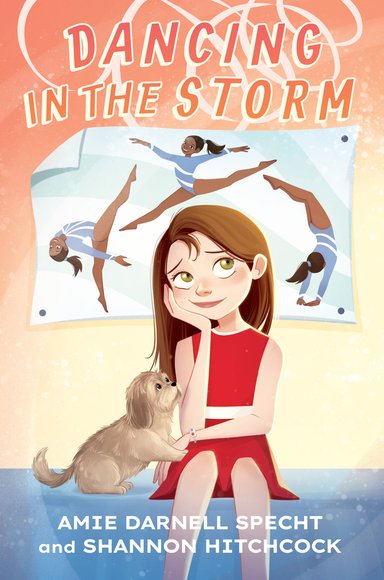
Dancing in the Storm by Amie Darnell Specht and Shannon Hitchcock
SYNOPSIS:
For 12-year-old Kate, life is a merry whirlwind of Girl Scouts, gymnastics, and time spent with friends and family. After winning a gold medal at a meet, things seem to be at an all-time high — except for a persistent shoulder ache that is painful enough to cause tears. At the doctor’s office, Kate is given the news that will change everything: She has fibrodysplasia ossificans progressiva, a rare genetic disorder that progressively turns the muscles and connective tissues in her body into bone. Suddenly, gymnastics is out (it can worsen her symptoms), her fellow Girl Scouts are treating her differently, and her best friend, Mindy, is upset that Kate won’t explain what’s going on. As she processes and comes to terms with her new reality, Kate will gain new friends, new perspectives, and a new understanding of who she is and what she’s made of.
WHY:
Fibrodysplasia ossificans progressiva, or FOP, is one of the rarest genetic disorders in the world and offers a lifelong prognosis that can be understandably distressing to a seventh-grader. Co-author Specht’s experience as someone with FOP is essential to this aspect of the story, as she and Hitchcock allow Kate to react realistically and genuinely to the changes in her life, both big and small. Her fear, resentment, and grief are palpable and feel justified; her worries over the future are treated with delicacy and sincerity. Yet, while Kate as a character is allowed to mourn, both she and the reader are given hope and a sense of empowerment through the support systems she develops, including the encouraging pen-pal relationship she establishes with Amie, a self-insert of Specht herself. What’s more, Kate and others with FOP are given dignity in the way the story unfolds: There’s no miracle cure, no rose-colored glasses that diminish the severity of the disorder. Instead, readers are offered a simple truth: Living with a disability is not a lesser existence, and there is just as much joy, friendship, and accomplishment to be found in it.
That’s it for this week’s Three to Read Jr.! We hope you’ll join us in future installments to see more of our recommendations for young bookworms.
To read our other Three to Read articles, click here!
Browse these books and more reads handpicked by the Bookstr team on our Three to Read bookshelf on Bookshop!