


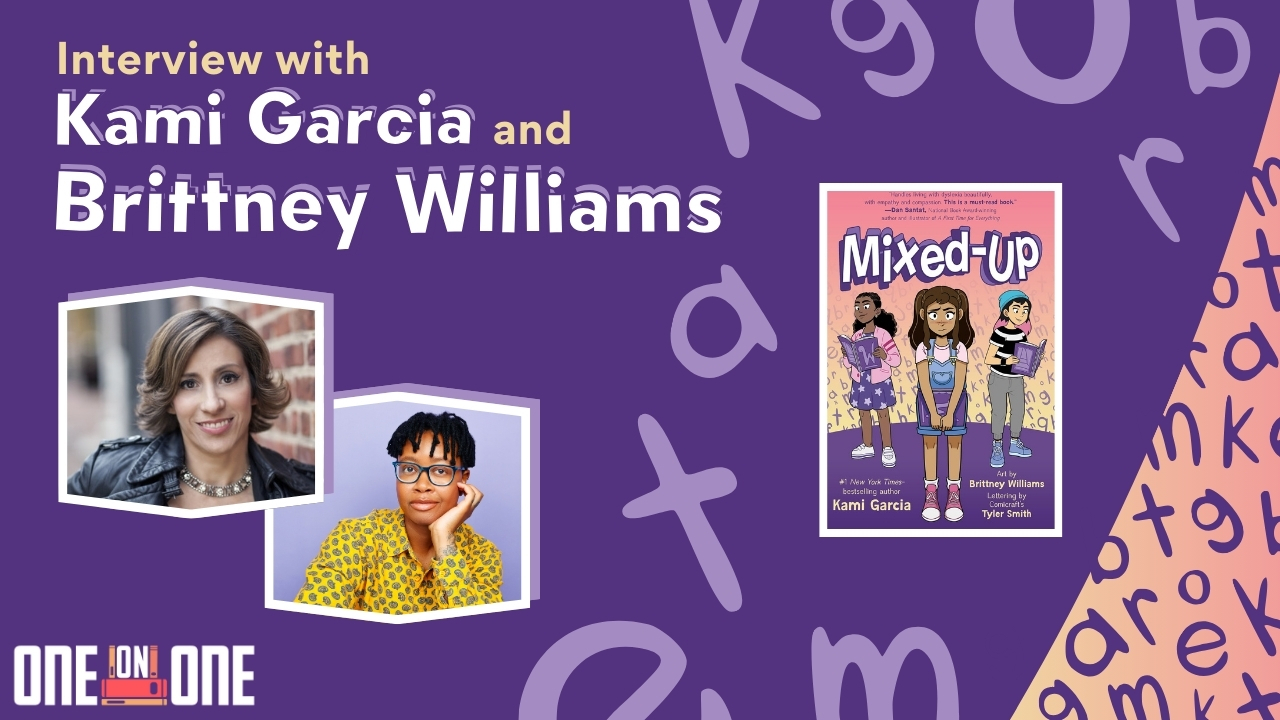
According to the International Dyslexia Association, perhaps as many as 15–20% of the world population exhibits symptoms of dyslexia, yet this common learning disability continues to be underdiagnosed. One reason is perhaps that those who find conventional reading methods and materials challenging feel too embarrassed or overwhelmed to speak up, especially at a young age. In the new middle-grade graphic novel, Mixed-Up, written by Kami Garcia and with art by Brittney Williams, the protagonist Stella is experiencing just such a dilemma. We had the opportunity to talk to Kami and Britt about Mixed-Up, as well as the importance of embracing one’s differences.
About Kami Garcia

Kami Garcia is a #1 New York Times, USA Today, and international bestselling author and comic book writer. As an award-winning young adult author, she has published seventeen novels and graphic novels in fifty-one countries and thirty-eight languages, and her books have sold more than ten million copies worldwide. Kami’s best-known works include the Beautiful Creatures series and the Teen Titans graphic novel series for DC. She is also a co-founder of the Kid Lit book festival YALLFest. Kami has an MA in education and was a teacher and reading specialist for seventeen years before co-writing her first novel on a dare from seven of her students.
About Brittney Williams
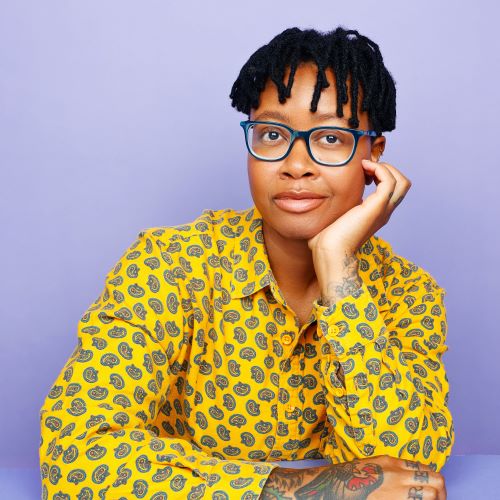
Brittney Williams is a storyboard and comic book artist who draws A LOT. In 2012, she interned at Walt Disney Animation Studios as a storyboard artist. Since then, she’s worked for a variety of animation studios and publishers, including DC Comics, Cartoon Network, Dreamworks TV, BOOM! Studios and Marvel Comics. As a two-time GLAAD award nominee, she loves to create things for kids and the queer community.
Kami and Britt, thank you both so much for taking the time to talk to us. Let’s get started.
Give us an introduction to where Stella is at the beginning of her fifth-grade year. What specifically is weighing on her?
Kami: Stella is about to start fifth grade, and she’s super excited. Her besties, Latasha and Emiko, are in her class, and they got the teacher they wanted. It seems like the start of a great year.
Britt: And her favorite TV series, Witchlin’s, is being adapted into a video game! Unfortunately, Stella soon finds keeping up with classwork practically impossible.
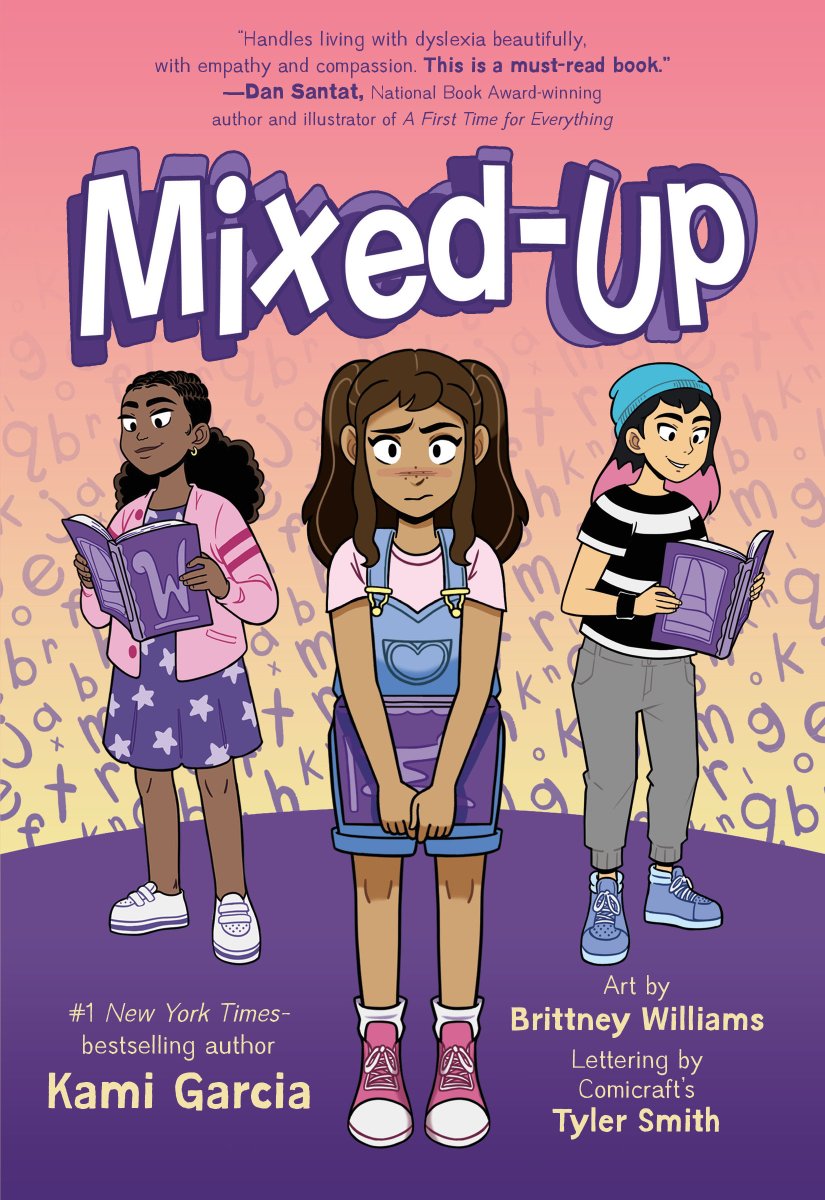
Kami: When Stella gets to school and sees the mountain of textbooks, she’s intimidated and quickly learns there is way more reading in fifth grade. She’s not a fast reader, though she doesn’t know why yet, and she quickly starts falling behind. Her unfinished classwork keeps piling up, and she’s struggling with reading comprehension. Within a few weeks, she goes from being a happy child who loves school to a very unhappy one who doesn’t think she’s as smart as her peers.
Kami, we understand that this book is inspired by your daughter’s dyslexia diagnosis and your own experiences with neurodiversity. Can you give us an example of how these experiences were reflected in Mixed-Up?

Kami: I worked with a lot of dyslexic students in my former career as a teacher and reading specialist, and I used that experience and aspects of my daughter’s journey to craft Stella’s behavior, reactions, and self-concept. Watching intelligent children struggle because of learning differences is heartbreaking because they often feel like their challenges are a reflection of intelligence. I wanted to capture that fear and self-doubt to let readers who are struggling know they aren’t alone and to help neurotypical readers understand how it feels. I have ADHD, and I deal with hyperfocus issues. While it’s completely different from dyslexia, I know what it’s like to feel different and wonder why my brain doesn’t work like everyone else’s. As a teacher, I learned that every brain is different, which helped me realize there was nothing wrong with me.
Britt, according to your illustrator’s note, your work in this book was also inspired in part by your experiences in school, particularly in feeling different and finding confidence. Can you elaborate on that?
Britt: Most of my childhood, I was selectively mute. I had trouble making friends because I didn’t understand the nuances of social interactions. It wasn’t until my cousin was diagnosed as autistic that I learned I was too. I always felt like an outcast, but at an early age, I found confidence through art. In that way, Stella and I are pretty similar!
How important was it to incorporate accessibility, such as the dyslexia-friendly lettering by Tyler Smith, into the final version of Mixed-Up?

Kami: It was a non-negotiable for me. There’s no way I would write a book about neurodivergence and make it inaccessible to the people I’m writing it for. Luckily, that was never an issue because the team at First Second completely agreed. We were all on the same page.
Britt: No words, I was so excited when I learned about this font! In a world where accessibility isn’t always considered, I’m honored we could do this.
Describe your collaborative process. How did you work together to harmonize the artwork and story, especially as first-time collaborators?
Kami: We spent a lot of time talking about the characters and the story before Britt started drawing. Then she sent me sketches of how she envisioned the characters and settings based on the script and our discussions. Our visions really aligned because the subject matter is so personal to us both. The interesting thing is that Britt’s art inspired me to add details and elements to the script because her work allowed me to visualize the characters and scenes on a completely different level. She is remarkably talented.
Britt: Kami is amazing to work with! She’s very considerate of ideas, and it’s great to collaborate with someone who cares so much about each aspect of the book! I would read the script and then draw layouts; from there, Kami and I would discuss or make changes where need be. We’re always chasing what’s best for the book!
There’s a pretty passionate argument in Mixed-Up for graphic novels and audiobooks being considered “real” ways to enjoy stories (we at Bookstr certainly agree). Why do you think that this is such an important message for readers of all ages and abilities?
Kami: Graphic novels level the playing field in so many ways. They allow neurotypical readers and neurodivergent readers, as well as children reading on different levels, to read the same books. This is not only important socially, but it also allows for richer group discussions. There are so many amazing non-fiction graphic novels now too. They can be used to support textbook reading and content area lessons in subjects like social studies, science, and language arts. When I tutored high school students and they were struggling with Shakespeare, I’d read a graphic novel of the play with them first. Then we would read the original play. It created context that allowed them to enjoy reading something they would’ve otherwise hated or misunderstood.
Britt: The “traditional” way of reading isn’t accessible for everyone, and that’s what makes graphic novels and audiobooks so special! Regardless of one’s reading ability, anyone should be able to pick up a book and enjoy it. I’ve always been an avid reader, but the immersive experience of graphic novels can’t be denied!
What do you most want young readers with learning differences to take away from Mixed-Up?

Kami: I want neurodivergent readers to realize they are not alone. Everyone has challenges and things they struggle with, even if we can’t see those challenges from the outside. I want them to know and believe that learning differences don’t make them any less intelligent than neurotypical students.
Britt: Being neurodivergent can sometimes feel very isolating, but you’re not alone. Don’t be ashamed of who you are and how you learn!
Lastly, in honor of Mixed-Up, what is the comic book or graphic novel that you read as a kid that sticks with you to this day?
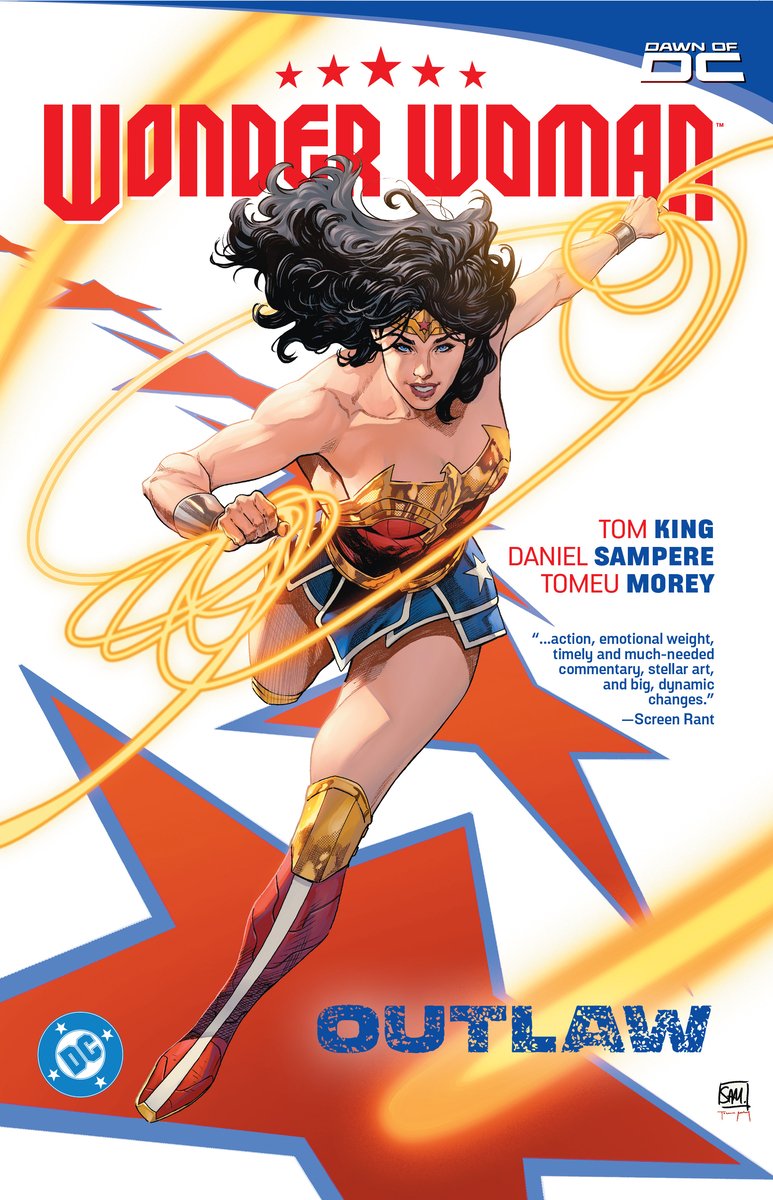
Kami: I was born in 1972, so I don’t remember seeing graphic novels as a kid, just collected editions of comics. But the comic I loved most was Wonder Woman. She made me feel like anything was possible. She also showed me that a woman could be the hero of the story and save herself and everyone else.

Britt: Ultimate Spider-Man by Brian Michael Bendis and One Piece by Eiichiro Oda. When I was in middle school in 2001, I discovered both comics and I was obsessed!
A huge thank you to Kami and Britt for sharing their time and insights with us! Readers can learn more about Kami’s work online at kamigarcia.com, or follow her on Instagram, Facebook, and X. You can find Britt’s work at brittneywilliamsart.carbonmade.com, as well as on Instagram. Lastly, don’t forget to add Mixed-Up to your family’s reading list.
To read more about the history of the graphic novel, check out our article on its origins and evolution.
To see all of our comics, manga, and graphic novel recommendations, check out our Bookshop bookshelf.